BrightStar
BlogI miei biglietti
Saved events
Aiuto e contattiRegistratiAccedi
Eventi
  • Sfoglia tutti i Eventi
  • Yoga
  • Meditazione
  • Breathwork
  • Qigong
  • Musica sacra
  • World music
  • Musica medicina
  • Sound healing
  • Danza estatica
  • Cerimonia
  • Medicina delle piante
  • Guarigione energetica
  • Satsang e saggezza
  • Tantra
  • Ritiri
  • Tutte le categorie →
Destinazioni
  • Bali
  • Sedona
  • Los Angeles
  • Costa Rica
  • Tulum
  • Byron Bay
  • San Francisco
  • Austin
  • New York
  • San Diego
  • Denver
  • Seattle
  • Portland
  • Miami
  • London
  • Maui
  • Boulder
  • Tutte le città →
Piattaforma
  • Per organizzatori
  • Unisciti al movimento
  • Sell Globally
  • Per i creatori
  • Per team
  • Per gli scrittori
  • Per gli insegnanti
  • Per gli artisti kirtan
  • Per gli studi
  • Per i festival
  • Per i centri ritiro
  • Per le no-profit
  • Ambasciatore del brand
  • Biglietteria gratuita
  • Pro
  • Amplify
  • L’ecosistema
Funzionalità

Biglietteria e acquisto

  • Ticket categories
  • Assigned seating
  • Custom questions
  • Coupon codes
  • Smart pricing
  • Ticket sharing
  • Waitlist
  • Flexible refunds
  • Digital waivers
  • Tip jar
  • Donations and sliding scale
  • Embed widget
  • Mindful checkout
  • Recurring events
  • Private sessions
  • Online courses
  • Summits
  • Rooms and stays
  • Ticket scanner

Marketing e crescita

  • Abandoned cart recovery
  • Visitor recovery
  • Upsells and add-ons
  • Affiliate engine
  • Upsell affiliate network
  • Brand ambassador
  • Meta retargeting
  • Verified buyer network
  • Outbound email marketing
  • Email sequences
  • SMS and WhatsApp
  • Event upsell network
  • Direct mail campaigns
  • SEO engine
  • Syndication
  • Event sharing
  • Custom event pages
  • Artist profiles
  • Link in bio
  • Event blog
  • Blog newsletter

Pagamenti

  • Payments, powered by Stripe
  • Buy now, pay later
  • Apple Wallet
  • Multi currency

Dati e operazioni

  • Team access
  • Message center
  • Reports
  • Analytics reporting
  • Performance reporting
  • Customer data
  • Integrations
  • Switch from another platform

IA

  • Assistant
  • AI FAQ assistant
  • Tutte le funzionalità →
Azienda
  • Chi siamo
  • Domande frequenti
  • Contatti
  • Blog
  • Glossario
  • Guides
  • Ispirazione
  • Centro assistenza
  • Documentazione API
  • Risorse del brand
  • Stampa
  • Termini di servizio
  • Informativa sulla privacy

Eventi

  • Sfoglia tutti i Eventi
  • Yoga
  • Meditazione
  • Breathwork
  • Qigong
  • Musica sacra
  • World music
  • Musica medicina

Destinazioni

  • Bali
  • Sedona
  • Los Angeles
  • Costa Rica
  • Tulum
  • Byron Bay
  • San Francisco
  • Austin

Piattaforma

  • Per organizzatori
  • Unisciti al movimento
  • Sell Globally
  • Per i creatori
  • Per team
  • Per gli scrittori
  • Per gli insegnanti
  • Per gli artisti kirtan

Funzionalità

  • Rete della comunità
  • Recupero carrelli abbandonati
  • Categorie di biglietti
  • Eventi ricorrenti
  • Posti assegnati
  • Sistema affiliati
  • Lista d'attesa / Notifica
  • Tutte le funzionalità →

Azienda

  • Chi siamo
  • Domande frequenti
  • Contatti
  • Blog
  • Glossario
  • Guides
  • Termini di servizio
  • Informativa sulla privacy
Leggi di più

Eventi

  • Sound healing
  • Danza estatica
  • Cerimonia
  • Medicina delle piante
  • Guarigione energetica
  • Satsang e saggezza
  • Tantra
  • Ritiri
  • Tutte le categorie →

Destinazioni

  • New York
  • San Diego
  • Denver
  • Seattle
  • Portland
  • Miami
  • London
  • Maui
  • Boulder
  • Tutte le città →

Piattaforma

  • Per gli studi
  • Per i festival
  • Per i centri ritiro
  • Per le no-profit
  • Ambasciatore del brand
  • Biglietteria gratuita
  • Pro
  • Amplify
  • L’ecosistema

Azienda

  • Ispirazione
  • Centro assistenza
  • Documentazione API
  • Risorse del brand
  • Stampa

Biglietteria e acquisto

  • Ticket categories
  • Assigned seating
  • Custom questions
  • Coupon codes
  • Smart pricing
  • Ticket sharing
  • Waitlist
  • Flexible refunds
  • Digital waivers
  • Tip jar
  • Donations and sliding scale
  • Embed widget
  • Mindful checkout
  • Recurring events
  • Private sessions
  • Online courses
  • Summits
  • Rooms and stays
  • Ticket scanner

Marketing e crescita

  • Abandoned cart recovery
  • Visitor recovery
  • Upsells and add-ons
  • Affiliate engine
  • Upsell affiliate network
  • Brand ambassador
  • Meta retargeting
  • Verified buyer network
  • Outbound email marketing
  • Email sequences
  • SMS and WhatsApp
  • Event upsell network
  • Direct mail campaigns
  • SEO engine
  • Syndication
  • Event sharing
  • Custom event pages
  • Artist profiles
  • Link in bio
  • Event blog
  • Blog newsletter

Pagamenti

  • Payments, powered by Stripe
  • Buy now, pay later
  • Apple Wallet
  • Multi currency

Dati e operazioni

  • Team access
  • Message center
  • Reports
  • Analytics reporting
  • Performance reporting
  • Customer data
  • Integrations
  • Switch from another platform

IA

  • Assistant
  • AI FAQ assistant
Scarica l'app
Scarica suApp StoreDisponibile suGoogle Play
© 2026 BrightStar. Tutti i diritti riservati. BrightStar Selection · Crediti fotografici · Registro delle modifiche ·
Inspiration

The Two Words That Start Every Spiritual Path

Beautiful Chorus
Beautiful Chorus
Mar 18, 2021
5 min di lettura

Da Beautiful Chorus

"I Am"—two words that sit at the threshold between language and silence, between the person we think we are and something unnamed beneath it all. These words appear in spiritual traditions across centuries: as the name God reveals to Moses in the Hebrew Bible, as the focus of inquiry in Ramana Maharshi's self-investigation, as the gateway to non-dual awareness in Advaita Vedanta. A new musical work carries this title into conversation with listeners seeking depth beyond the noise of daily identity.

Lettura · 6 sezioni

Why "I Am" Matters in Spiritual Practice

The statement "I Am" contains something deceptively simple: a reference to existence itself, stripped of all the qualities and stories we usually attach to ourselves. I am American. I am a parent. I am anxious. I am successful. These are all overlays on the bare fact of being. In meditative traditions, inquirers are often guided to look beneath these layers—to investigate who or what remains when all identity falls away. That remainder, that unshakeable awareness of existence, is what "I Am" points toward.

This isn't abstract philosophy. When a person sits with profound loss, for instance, they may notice that despite the grief, despite the absence, something in them continues to witness and endure. That witnessing capacity is prior to emotion, prior to story. It's the "I" that remains "I Am" whether in pleasure or pain, whether young or old, whether successful or devastated. Learning to rest in and recognize this baseline consciousness is considered by many contemplative traditions to be the foundation of authentic freedom and peace.

How Music Serves as a Gateway to Self-Recognition

Sound has always been a vessel for spiritual transmission. From the OM of Hindu chanting to the Sufi qawwali tradition to Christian hymns, music bypasses the intellectual mind and speaks directly to the nervous system, to memory, to longing. A musical exploration of "I Am" can function as what spiritual teachers call a "transmission"—a resonance that awakens recognition in the listener.

When you hear a piece devoted to this theme, you're not merely receiving information; the music can create a state in which recognition becomes possible. The drone, the rhythm, the vocal quality—these become pointers. If the work is crafted with intention, it can quiet the noise of thought enough that listeners catch glimpses of that background awareness, that "I Am" that has always been present, listening to everything, never disturbed by change.

The Lineage Behind the Concept

The teaching of "I Am" has deep roots. In non-dual Advaita Vedanta, beginning most formally with Adi Shankara in the eighth century, the investigation of the Self (Atman) became the central inquiry. Ramana Maharshi, a twentieth-century sage, brought this teaching into modern language, teaching seekers to ask the simple but piercing question "Who am I?" by persistently following the sense of "I" back to its source. Many who encountered Ramana's presence reported that without words, they experienced a profound recognition—a dropping away of the separate self into boundless awareness.

In Western spirituality, teachers like Neville Goddard popularized the affirmation "I AM" as a declaration of creative presence. Eckhart Tolle's work on "presence" also circles back to this understanding: consciousness itself, awake and aware, prior to any sense of "me." These threads—from ancient Vedantic inquiry to contemporary teachings on presence—all point to the same recognition.

Beyond Affirmation: Recognition as Awakening

It's important to distinguish between using "I Am" as an affirmation (consciously repeating it to reprogram beliefs) and using it as a pointer to direct recognition. In the affirmation approach, you're trying to install a new thought or feeling. In the recognition approach, you're not adding anything—you're pointing awareness toward what's already always true.

This is a subtle but crucial difference. When a spiritual teacher or a piece of music carries the vibration of genuine recognition—when it emerges from someone who has genuinely touched that baseline awareness—it can invoke the same in a listener. The music becomes a mirror. You hear not just notes and lyrics, but a resonance of someone's actual being, and in that resonance, recognition can spontaneously arise. "Oh," a listener might realize mid-song. "Yes. I'm here. I'm aware. That's what's always been true."

The Universality of This Recognition

What makes "I Am" so powerful as a theme is its universality. It's not culturally bound. A Christian mystic, a Sufi, a Buddhist, a Hindu, an atheist who simply values clarity—all can meet at the doorway of pure presence. You don't need to believe anything to recognize that you're aware right now. You don't need a particular theology to notice that something in you persists, witnesses, and knows.

This is why spiritual music dedicated to such themes has the potential to reach across traditions and touch people wherever they are in their spiritual unfolding. Whether someone is just beginning to wonder about the nature of mind, or whether they've spent years in meditation practice, the recognition of "I Am" as the ground of all experience has relevance and resonance.

Where to go from here

If "I Am" as a teaching calls to you, you might begin with simple inquiry: Sit quietly and notice the sense of "I"—not the story of who you are, but the bare sense of existence, of awareness. Follow that gently inward. You might listen to music that carries this theme, allowing the resonance to support the inquiry. You might explore texts from Ramana Maharshi, Nisargadatta, or contemporary non-dual teachers. Most importantly, let your own direct experience be your guide. The deepest truth isn't something you learn from outside; it's something you recognize as having always been intimate and immediate. A piece of music, a teaching, a moment of stillness—any of these can be the match that lights the recognition that was already waiting.

Commenti

Caricamento della conversazione…

Beautiful Chorus

Beautiful Chorus

Artista

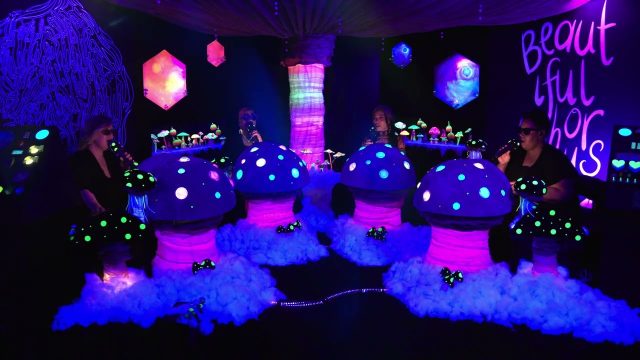
Alexandra Love leads Beautiful Chorus, a harmony collective whose High Frequency Love Music blends mantras, lullabies and sound healing meditations to calm the nervous system and reconnect listeners with presence and joy.

Vedi il profilo
Esplora i temi
I am presenceNon dualitySelf inquirySpiritual musicConsciousness
Domande frequenti

Domande frequenti

In spiritual inquiry, "I Am" refers to the bare sense of existence or consciousness itself—stripped of identity, story, and emotional content. It's the fundamental awareness that remains constant whether you're experiencing joy, sadness, or any life circumstance. Many contemplative traditions use it as a pointer to non-dual recognition.

Affirmations involve repeating a phrase to reprogram thoughts or beliefs, while "I Am" inquiry points to direct recognition of what's already true about your nature. Rather than adding a new belief, you're invited to notice the baseline awareness that's always present and aware.

Ramana Maharshi, a twentieth-century sage, made the self-inquiry "Who am I?" central to his teaching, guiding seekers to investigate the sense of "I" back to its source. This method has roots in Advaita Vedanta, formalized by Adi Shankara in the eighth century, and continues in modern non-dual teachings.

Yes, many traditions recognize music as a direct pathway to consciousness. When crafted with genuine recognition and intention, music can quiet the thinking mind and create the conditions for a listener to recognize their own baseline awareness—without needing to believe or understand anything conceptually first.

Yes. "I Am" points to universal presence and awareness prior to any belief system. Whether Christian, Hindu, Buddhist, or secular, anyone can recognize the bare fact of being aware, making this teaching accessible across all traditions and worldviews.

Potrebbe piacerti anche

Vedi Tutto
Light All Around Me: Mantra Medicine for Personal Power
Inspire

Light All Around Me: Mantra Medicine for Personal Power

Beautiful Chorus offers a high-frequency mantra meditation that awakens inner power through repetitive sonic affirmation and embodied presen…

4 min read
Mantra Medicine for Letting Go: Listening to "I Release"
Inspire

Mantra Medicine for Letting Go: Listening to "I Release"

A close listen to Beautiful Chorus's "Mantra Medicine: Release," a seven-minute sung affirmation built on "I release" and what repeating a s…

4 min read
Medicine Buddha Practice: Feeling Beneath the Thinking
Inspire

Medicine Buddha Practice: Feeling Beneath the Thinking

Lama Rod Owens opens a Monday-night Medicine Buddha session six years into the practice, teaching how to feel an experience instead of think…

10 min read
We Are All Visitors to This Material World: A Gita Reflection
Inspire

We Are All Visitors to This Material World: A Gita Reflection

In a 22-second clip, Radhika Das frames human life as a temporary visit, not a permanent residence. The idea draws on Bhagavad-gītā 8.15 and…

3 min read
Vedi tuttiPotrebbe piacerti anche→

Continua il tuo viaggio

Altra saggezza e altri incontri da tutta la directory BrightStar.

Altri articoli

Sfoglia l’intera raccolta di insegnamenti, interviste e guide.

Torna a tutti gli articoli →

Insegnanti e artisti

Esplora i lignaggi, i musicisti e le guide del mondo consapevole.

Esplora gli artisti →

Trova un evento

Kirtan, ritiri, sound bath, breathwork, festival: in arrivo presto.

Sfoglia gli eventi →

