BrightStar
BlogI miei biglietti
Saved events
Aiuto e contattiRegistratiAccedi
Eventi
  • Sfoglia tutti i Eventi
  • Yoga
  • Meditazione
  • Breathwork
  • Qigong
  • Musica sacra
  • World music
  • Musica medicina
  • Sound healing
  • Danza estatica
  • Cerimonia
  • Medicina delle piante
  • Guarigione energetica
  • Satsang e saggezza
  • Tantra
  • Ritiri
  • Tutte le categorie →
Destinazioni
  • Bali
  • Sedona
  • Los Angeles
  • Costa Rica
  • Tulum
  • Byron Bay
  • San Francisco
  • Austin
  • New York
  • San Diego
  • Denver
  • Seattle
  • Portland
  • Miami
  • London
  • Maui
  • Boulder
  • Tutte le città →
Piattaforma
  • Per organizzatori
  • Unisciti al movimento
  • Sell Globally
  • Per i creatori
  • Per team
  • Per gli scrittori
  • Per gli insegnanti
  • Per gli artisti kirtan
  • Per gli studi
  • Per i festival
  • Per i centri ritiro
  • Per le no-profit
  • Ambasciatore del brand
  • Biglietteria gratuita
  • Pro
  • Amplify
  • L’ecosistema
Funzionalità

Biglietteria e acquisto

  • Ticket categories
  • Assigned seating
  • Custom questions
  • Coupon codes
  • Smart pricing
  • Ticket sharing
  • Waitlist
  • Flexible refunds
  • Digital waivers
  • Tip jar
  • Donations and sliding scale
  • Embed widget
  • Mindful checkout
  • Recurring events
  • Private sessions
  • Online courses
  • Summits
  • Rooms and stays
  • Ticket scanner

Marketing e crescita

  • Abandoned cart recovery
  • Visitor recovery
  • Upsells and add-ons
  • Affiliate engine
  • Upsell affiliate network
  • Brand ambassador
  • Meta retargeting
  • Verified buyer network
  • Outbound email marketing
  • Email sequences
  • SMS and WhatsApp
  • Event upsell network
  • Direct mail campaigns
  • SEO engine
  • Syndication
  • Event sharing
  • Custom event pages
  • Artist profiles
  • Link in bio
  • Event blog
  • Blog newsletter

Pagamenti

  • Payments, powered by Stripe
  • Buy now, pay later
  • Apple Wallet
  • Multi currency

Dati e operazioni

  • Team access
  • Message center
  • Reports
  • Analytics reporting
  • Performance reporting
  • Customer data
  • Integrations
  • Switch from another platform

IA

  • Assistant
  • AI FAQ assistant
  • Tutte le funzionalità →
Azienda
  • Chi siamo
  • Domande frequenti
  • Contatti
  • Blog
  • Glossario
  • Guides
  • Ispirazione
  • Centro assistenza
  • Documentazione API
  • Risorse del brand
  • Stampa
  • Termini di servizio
  • Informativa sulla privacy

Eventi

  • Sfoglia tutti i Eventi
  • Yoga
  • Meditazione
  • Breathwork
  • Qigong
  • Musica sacra
  • World music
  • Musica medicina

Destinazioni

  • Bali
  • Sedona
  • Los Angeles
  • Costa Rica
  • Tulum
  • Byron Bay
  • San Francisco
  • Austin

Piattaforma

  • Per organizzatori
  • Unisciti al movimento
  • Sell Globally
  • Per i creatori
  • Per team
  • Per gli scrittori
  • Per gli insegnanti
  • Per gli artisti kirtan

Funzionalità

  • Rete della comunità
  • Recupero carrelli abbandonati
  • Categorie di biglietti
  • Eventi ricorrenti
  • Posti assegnati
  • Sistema affiliati
  • Lista d'attesa / Notifica
  • Tutte le funzionalità →

Azienda

  • Chi siamo
  • Domande frequenti
  • Contatti
  • Blog
  • Glossario
  • Guides
  • Termini di servizio
  • Informativa sulla privacy
Leggi di più

Eventi

  • Sound healing
  • Danza estatica
  • Cerimonia
  • Medicina delle piante
  • Guarigione energetica
  • Satsang e saggezza
  • Tantra
  • Ritiri
  • Tutte le categorie →

Destinazioni

  • New York
  • San Diego
  • Denver
  • Seattle
  • Portland
  • Miami
  • London
  • Maui
  • Boulder
  • Tutte le città →

Piattaforma

  • Per gli studi
  • Per i festival
  • Per i centri ritiro
  • Per le no-profit
  • Ambasciatore del brand
  • Biglietteria gratuita
  • Pro
  • Amplify
  • L’ecosistema

Azienda

  • Ispirazione
  • Centro assistenza
  • Documentazione API
  • Risorse del brand
  • Stampa

Biglietteria e acquisto

  • Ticket categories
  • Assigned seating
  • Custom questions
  • Coupon codes
  • Smart pricing
  • Ticket sharing
  • Waitlist
  • Flexible refunds
  • Digital waivers
  • Tip jar
  • Donations and sliding scale
  • Embed widget
  • Mindful checkout
  • Recurring events
  • Private sessions
  • Online courses
  • Summits
  • Rooms and stays
  • Ticket scanner

Marketing e crescita

  • Abandoned cart recovery
  • Visitor recovery
  • Upsells and add-ons
  • Affiliate engine
  • Upsell affiliate network
  • Brand ambassador
  • Meta retargeting
  • Verified buyer network
  • Outbound email marketing
  • Email sequences
  • SMS and WhatsApp
  • Event upsell network
  • Direct mail campaigns
  • SEO engine
  • Syndication
  • Event sharing
  • Custom event pages
  • Artist profiles
  • Link in bio
  • Event blog
  • Blog newsletter

Pagamenti

  • Payments, powered by Stripe
  • Buy now, pay later
  • Apple Wallet
  • Multi currency

Dati e operazioni

  • Team access
  • Message center
  • Reports
  • Analytics reporting
  • Performance reporting
  • Customer data
  • Integrations
  • Switch from another platform

IA

  • Assistant
  • AI FAQ assistant
Scarica l'app
Scarica suApp StoreDisponibile suGoogle Play
© 2026 BrightStar. Tutti i diritti riservati. BrightStar Selection · Crediti fotografici · Registro delle modifiche ·
Inspiration

The Space Between Grasping and Pushing Away

Jack Kornfield
Jack Kornfield
Jan 23, 2026
7 min di lettura

Da Be Here Now Network

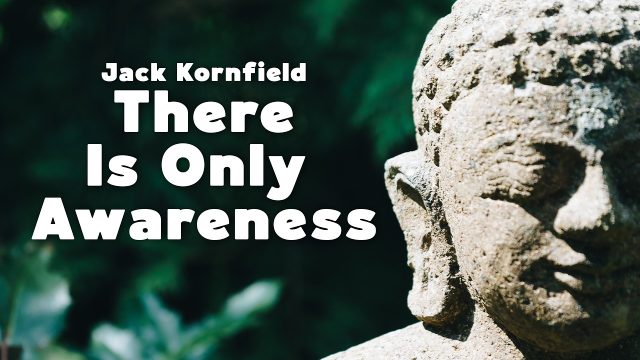
In this brief teaching, Jack Kornfield explores one of Buddhism's core insights: the suffering that arises from our habitual patterns of grasping at what we like and pushing away what we dislike. Rather than oscillating between these two poles, a liberatory practice involves discovering the spacious awareness that can hold both pleasant and unpleasant experiences without contraction. This middle path—neither clinging nor aversion—is accessible through mindfulness and represents a radical shift in how we relate to life itself.

Lettura · 7 sezioni

What Does It Mean to Grasp and Push Away?

In Buddhist psychology, two fundamental reactivity patterns shape human suffering: attachment (grasping) and aversion (pushing away). These are not moral failures but deeply conditioned responses. When we encounter something pleasant—a pleasant sensation, a compliment, a moment of comfort—the mind naturally contracts around it, trying to hold on, secure it, make it permanent. When we encounter pain, criticism, discomfort, or threat, we immediately push it away, resist it, try to get rid of it. Both movements spring from the same root: a sense that the present moment is incomplete, unsafe, or unacceptable as it is.

Kornfield's teaching points to the exhaustion these patterns create. The effort required to maintain what we grasp for is enormous. We must constantly defend our possessions, our relationships, our identities, our pleasant feelings. Simultaneously, the energy expended in pushing away unpleasant experience is equally draining. We cannot fully push away pain—the very act of resistance tends to amplify it. We end up caught in a cycle of perpetual tension, always trying to rearrange reality to match our preferences rather than meeting what is actually present.

Why Does the Mind Oscillate Between These Two Poles?

The oscillation between grasping and pushing away reflects a fundamental misunderstanding: the belief that happiness lies in securing what we like and eliminating what we dislike. This belief is so deeply embedded that it operates largely outside conscious awareness. We are taught from childhood that the path to contentment is acquisition and avoidance. Advertising, social conditioning, evolutionary biology all reinforce these patterns.

But there is a deeper cost. This binary thinking divides experience into two categories: good (to be grasped) and bad (to be avoided). The mind cannot rest; it is always in motion, always judging, always reaching or recoiling. This constant mental activity itself becomes a source of suffering, even when external circumstances are favorable. A person can have every material comfort and still feel unsatisfied because the underlying pattern of grasping remains unaddressed.

What Is the Space Between These Two Extremes?

Kornfield's central insight concerns what exists in the gap between grasping and pushing away: equanimous awareness. This is not indifference or numbness. Rather, it is a quality of presence that can fully perceive and engage with experience without the contraction of either attachment or aversion.

Imagine observing a sunset. The typical mind might grasp at the beauty, trying to capture it, wishing to possess the moment permanently. Or, if the sunset reminded us of loss or mortality, we might push away that feeling. But there is another possibility: to simply be present with the sunset as it unfolds, to see its colors and light, to feel any emotion that arises, all without trying to grab or reject it. This is the space Kornfield points to.

This middle way is not a compromise or a half-measure. It is actually where full engagement with life becomes possible. When we are not consumed by grasping, we have mental space to respond creatively to situations. When we are not defending against what we dislike, we can work with difficulty directly and intelligently. The heart becomes available. We can love without desperate clinging; we can protect ourselves without rigid walls.

How Does Mindfulness Reveal This Space?

Mindfulness—careful, non-judgmental attention to present-moment experience—is the primary tool for discovering the space between grasping and pushing away. In meditation or daily practice, we notice when grasping arises: the tightening around a pleasant sensation, the storyline of wanting more, the slight anxiety about losing what feels good. We simply notice. We do not judge ourselves for the grasping. We do not try to force it away (which would be pushing away the pushing away).

Similarly, mindfulness reveals the moment aversion activates. We see the recoil, the desire to escape, the judgment that something is wrong and must be fixed. Again, we notice without acting on the impulse immediately.

Over time, through sustained practice, a subtle shift occurs. We realize we can be present with a painful sensation—physical pain, emotional hurt, fear—without the added layer of resistance that usually accompanies it. Pain is present; the story and struggle around it need not be. We can be with a pleasant experience—warmth, joy, success—without grasping. The pleasant is here; the desperate need to hold it is optional.

This is not a permanent achievement but a growing capacity. The old patterns do not disappear entirely. But they loosen their grip. We gain degrees of freedom we did not know were possible.

What Are the Practical Benefits of This Teaching?

The shift from oscillation to equanimity has tangible effects on daily life. Relationships improve because we stop demanding that others remain exactly as we need them to be. We can accept growth, change, and difference without immediate reactivity. Work and creative pursuits become more fluid because we are not paralyzed by fear of failure or desperate to prove our worth through success.

Physically, the nervous system down-regulates. The chronic low-level tension that grasping and aversion generate begins to dissolve. Sleep improves. Anxiety diminishes. This is not suppression—we are not pretending difficulty does not exist—but rather a genuine relaxation that comes from ceasing to fight reality.

Emotionally, there is a quieting of the inner critic. We spend less energy judging ourselves for our grasping or our inability to push away unwanted feelings. Self-compassion becomes more natural when we see these patterns as universal human conditioning, not personal flaws.

How Does This Teaching Connect to Wider Buddhist Thought?

Kornfield's brief teaching articulates the second and third noble truths of Buddhism: the understanding that suffering arises from craving (tanha) and that liberation comes through the path of wise relationship to experience. The space between grasping and pushing away is the beginning of that wise relationship. It is not about becoming ascetic or withdrawn; it is about being fully alive without the exhausting overlay of compulsive preference.

This also echoes the Buddhist concept of the Middle Way, originally taught by Buddha as a path between extreme asceticism and indulgence. Applied to mental life, it becomes a path between extreme attachment and extreme denial. The equanimity Kornfield describes is one of the four brahmaviharas (divine abodes) in Buddhist psychology, alongside loving-kindness, compassion, and sympathetic joy.

Where to Go From Here

If this teaching resonates, the next step is direct exploration through practice. Begin by noticing, in a single day, how many times you grasp at something pleasant or push away something unpleasant. Do not change anything; simply observe. Over days or weeks, awareness itself begins to shift the pattern. You might explore a formal sitting meditation practice, where these dynamics become very clear in a concentrated way. Or you might bring mindful attention to ordinary moments—eating, walking, conversation—noticing the texture of grasping and aversion as they arise.

Consider also how this teaching applies to your greatest struggles. Is there something you are desperately trying to hold onto? Is there something you are fighting hard to avoid? The space between these poles may be exactly where relief and wisdom are waiting. Finally, Jack Kornfield's full episode, "Clouds of the Mind," offers deeper context for this teaching and invites sustained reflection on the nature of mind itself.

Commenti

Caricamento della conversazione…

L'artista di questa storia

Jack Kornfield

Jack Kornfield

Meditation Teacher

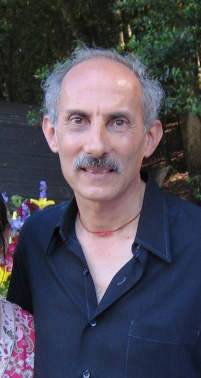
Jack Kornfield, Ph.D.

Vedi il profilo
Esplora i temi
EquanimityAttachment aversionBuddhist practiceMindfulness meditationNon resistance
Domande frequenti

Domande frequenti

Grasping (attachment) and pushing away (aversion) are two fundamental patterns where the mind contracts around pleasant experiences, trying to hold them, or recoils from unpleasant ones, resisting them. Both arise from the belief that happiness depends on securing what we like and eliminating what we dislike, creating constant mental tension and suffering.

Mindfulness practice is the primary tool. Simply notice, without judgment, when grasping or aversion arises—the tightening around a pleasant sensation or the recoil from something uncomfortable. Over time, sustained observation reveals that you can be present with experience without acting on the impulse to grab or reject it, gradually loosening these patterns' grip.

The space between these extremes is equanimous awareness—a quality of presence that can fully perceive and engage with experience without contraction. You can appreciate something pleasant without desperate clinging or meet difficulty directly without rigid resistance, creating room for genuine connection and intelligent response.

The equanimity described is a direct expression of the Middle Way—a path between extremes. Rather than oscillating between grasping and pushing away, the Middle Way in mental life means meeting experience with balanced, non-reactive awareness that neither clings nor denies.

No. Equanimous awareness actually enables clearer, more creative response. When you stop fighting reality through aversion, you can work with difficulty intelligently. When you cease desperate grasping, you respond more flexibly. Acceptance of what is present is the foundation for genuine change, not avoidance of it.

As grasping and aversion loosen, relationships improve because you stop demanding others remain exactly as you need them to be. You can accept growth, change, and difference without immediate reactivity, allowing space for authentic connection rather than controlling behaviors based on fear or need.

Potrebbe piacerti anche

Vedi Tutto
Creating Inner Peace During Conflict and War
Inspire

Creating Inner Peace During Conflict and War

Learn how to maintain an open heart and inner peace even amid external war and suffering. A Buddhist teacher's guidance on compassion and re…

7 min read
Buddhist Psychology: Awareness as the Foundation of Mind
Inspire

Buddhist Psychology: Awareness as the Foundation of Mind

Buddhist psychology teaches that awareness is ever-present and foundational to our experience. By quieting the mind and opening the heart, w…

8 min read
The Lotus Principle: Growing Through Life's Mud
Inspire

The Lotus Principle: Growing Through Life's Mud

The lotus flower teaches us that beauty and transcendence grow not despite hardship, but through it. Snatam Kaur explores an ancient spiritu…

4 min read
Kirtan as Sacred Thirst: A Closing Ceremony with Krishna Das
Inspire

Kirtan as Sacred Thirst: A Closing Ceremony with Krishna Das

Krishna Das closes NYC's annual kirtan weekend with a final ceremony of devotional chanting, blending musical innovation with timeless Hindu…

6 min read
Vedi tuttiPotrebbe piacerti anche→

Continua il tuo viaggio

Altra saggezza e altri incontri da tutta la directory BrightStar.

Altri articoli

Sfoglia l’intera raccolta di insegnamenti, interviste e guide.

Torna a tutti gli articoli →

Insegnanti e artisti

Esplora i lignaggi, i musicisti e le guide del mondo consapevole.

Esplora gli artisti →

Trova un evento

Kirtan, ritiri, sound bath, breathwork, festival: in arrivo presto.

Sfoglia gli eventi →