BrightStar

Sfoglia tutti i Events

Scopri incontri consapevoli

events

Yoga
Meditation
Breathwork
Qigong
Tai Chi
Sacred Music
World Music
Medicine Music
Sound Healing
Ecstatic Dance
Destinazioni popolari
BaliSedonaLos AngelesCosta RicaNew YorkSan FranciscoAustinMiamiJoshua TreeTulum
Vedi tutte le categorieVedi tutte le destinazioni

Esplora tutte le funzionalità

Strumenti potenti per far crescere i tuoi eventi

Funzionalità della piattaforma

Prezzi dinamici intelligenti
Categorie di biglietti
Posti assegnati
Recupero carrelli abbandonati
Recupero visitatori
Donazioni e prezzi variabili
Sistema affiliati
Scanner biglietti
Codici sconto
Domande personalizzate
Condivisione biglietti
Upsell e componenti aggiuntivi
Analisi e report
Sequenze email
Lista d'attesa / Notifica / Promemoria
Persone e Luoghi
Artists & TeachersEvent OrganizersVenues & StudiosKnowledge BaseGlossaryInspiration
Vedi tutte le funzionalitàChi siamo
PrezziBlog
Language
Saved events
Sfoglia tutti gli eventi

events

YogaMeditationBreathworkQigongTai ChiSacred MusicWorld MusicMedicine Music

Destinazioni popolari

BaliSedonaLos AngelesCosta RicaNew YorkSan Francisco

Persone e Luoghi

Artists & TeachersEvent OrganizersVenues & StudiosKnowledge BaseGlossaryInspiration

Funzionalità della piattaforma

Prezzi dinamici intelligentiCategorie di bigliettiPosti assegnatiRecupero carrelli abbandonatiRecupero visitatoriDonazioni e prezzi variabiliSistema affiliatiScanner bigliettiCodici scontoDomande personalizzateCondivisione bigliettiUpsell e componenti aggiuntiviAnalisi e reportSequenze emailLista d'attesa / Notifica / Promemoria
Vedi tutte le funzionalitàChi siamo
PrezziBlog
AccediRicercatoriCreatori
  • Sfoglia tutti i Eventi
  • Per i ricercatori
  • Yoga
  • Meditazione
  • Breathwork
  • Qigong
  • Tai chi
  • Musica sacra
  • World music
  • Musica medicina
  • Sound healing
  • Danza estatica
  • Ritiri
  • Workshop
  • Tutte le categorie →
  • Bali
  • Sedona
  • Los Angeles
  • Costa Rica
  • Tulum
  • Byron Bay
  • San Francisco
  • Austin
  • New York
  • San Diego
  • Denver
  • Seattle
  • Portland
  • Miami
  • Tutte le città →
  • Join the Movement
  • Why we list
  • Sell Globally
  • Per i creatori
  • Per team
  • Per gli scrittori
  • Per gli insegnanti
  • Per gli artisti kirtan
  • Per gli studi
  • Per i festival
  • Per i centri ritiro
  • Per le no-profit
  • Ambasciatore del brand
  • Biglietteria gratuita
  • Elevate
  • Amplify
  • Rete di 500K+ acquirenti
  • Recupero carrelli abbandonati
  • Prezzi dinamici intelligenti
  • Categorie di biglietti
  • Eventi ricorrenti
  • Posti assegnati
  • Sistema affiliati
  • Lista d'attesa / Notifica
  • Scanner biglietti
  • Widget incorporabile
  • Distribuzione eventi
  • Centro messaggi
  • Integrazioni
  • Report
  • Tutte le funzionalità →
  • Chi siamo
  • L’ecosistema
  • Blog
  • Glossario
  • Ispirazione
  • Centro assistenza
  • Contatti
  • Documentazione API
  • Risorse del brand
  • Carriere
  • Stampa
  • Termini di servizio
  • Informativa sulla privacy

Eventi

  • Sfoglia tutti i Eventi
  • Per i ricercatori
  • Yoga
  • Meditazione
  • Breathwork
  • Qigong
  • Tai chi
  • Musica sacra
  • World music
  • Musica medicina
  • Sound healing
  • Danza estatica
  • Ritiri
  • Workshop
  • Tutte le categorie →

Destinazioni

  • Bali
  • Sedona
  • Los Angeles
  • Costa Rica
  • Tulum
  • Byron Bay
  • San Francisco
  • Austin
  • New York
  • San Diego
  • Denver
  • Seattle
  • Portland
  • Miami
  • Tutte le città →

Per i creatori

  • Join the Movement
  • Why we list
  • Sell Globally
  • Per i creatori
  • Per team
  • Per gli scrittori
  • Per gli insegnanti
  • Per gli artisti kirtan
  • Per gli studi
  • Per i festival
  • Per i centri ritiro
  • Per le no-profit
  • Ambasciatore del brand
  • Biglietteria gratuita
  • Elevate
  • Amplify

Funzionalità

  • Rete di 500K+ acquirenti
  • Recupero carrelli abbandonati
  • Prezzi dinamici intelligenti
  • Categorie di biglietti
  • Eventi ricorrenti
  • Posti assegnati
  • Sistema affiliati
  • Lista d'attesa / Notifica
  • Scanner biglietti
  • Widget incorporabile
  • Distribuzione eventi
  • Centro messaggi
  • Integrazioni
  • Report
  • Tutte le funzionalità →

Azienda

  • Chi siamo
  • L’ecosistema
  • Blog
  • Glossario
  • Ispirazione
  • Centro assistenza
  • Contatti
  • Documentazione API
  • Risorse del brand
  • Carriere
  • Stampa
  • Termini di servizio
  • Informativa sulla privacy
BrightStar
Scarica l'app
Scarica suApp StoreDisponibile suGoogle Play
© 2026 BrightStar. Tutti i diritti riservati.
Inspiration

Enlightenment's Evil Twin: DP/DR and the Pit of the Void

Shinzen Young
Shinzen Young
Dec 4, 2009
9 min di lettura
Guarda · 7

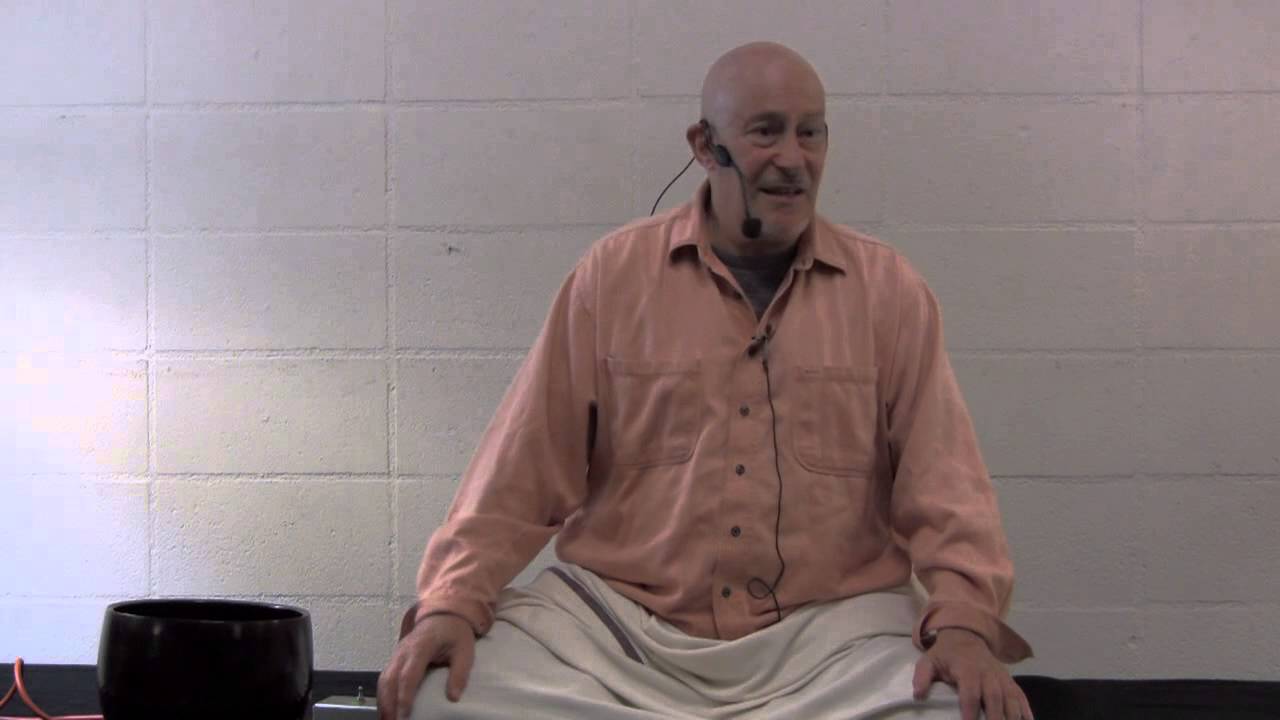
Filmed in November 2009 at Mt. Carmel Spiritual Centre in Niagara Falls, a short teaching by Shinzen Young takes up one of the least comfortable subjects in contemplative practice: what happens when meditation goes somewhere nobody intended. He opens with an abbreviation, DP/DR, and a provocation. Depersonalization/derealization disorder, he says, is "enlightenment's evil twin." The two experiences can share the same raw material, a sense that the self is empty and the world is paper-thin, yet they land in opposite places. For one person, that emptiness is the most fulfilling event of their life. For another, it becomes a pit. Young's answer is practical rather than theoretical: a skilled guide can recognize the drift, use the same tools of mindfulness and concentration to loosen the fear, and then help rebuild a positive sense of self from what remains.

Lettura · 6 sezioni

What is DP/DR, and why call it enlightenment's evil twin?

Young starts with the good news, because the comparison only makes sense if you see what the "good twin" looks like. As the result of successful practice with classic mindfulness, he explains, a person comes to an experience of "the no-thing-ness of themselves and the no-thing-ness of their world." For that person, this is "the most fulfilling and empowering event of their life." He says it allows them to live "ten times the size that they would have lived otherwise," and frees them from fears and concerns.

"It's a kind of rich and wonderful and empowering nothingness." (Shinzen Young, 2009 teaching, 2:00)

Then he turns to the other side. DP/DR is also an experience of the nothingness of self and the insubstantiality of what you formerly thought was the world. Young is careful to note that it is not a folk notion. It is, in his words, "a recognized psychopathology," a diagnosis that appears in the Diagnostic and Statistical Manual. And the effect of that same kind of emptiness on a person with DP/DR, he says, is "the exact opposite" of what enlightenment produces.

That is what makes the phrase work. The vocabulary overlaps almost completely. Both states describe a self that is not a solid thing and a world that is not as solid as it seemed. The difference lies entirely in how the experience is held and what it does to the person living inside it.

Why would the same emptiness empower one person and terrify another?

This is the question that Young keeps circling back to. He puts it plainly: "And it is possible that the nothingness is the same nothingness. What's the difference?" (3:04) He calls it "a huge, huge question," both theoretical and practical, and he is honest that the theoretical side has no settled answer. "No one knows the answer to that," he says.

He does suggest why the question matters. The theoretical side, he argues, asks listeners to look "in a new way, and in a deeper way, at what enlightenment is." If the same nothingness can be a liberation for one person and an injury for another, then the simple picture of enlightenment as "emptiness is good" is incomplete. Something about the person's relationship to the emptiness, not only the emptiness itself, appears to decide the outcome. Young does not claim to have mapped that something. He leaves it open, and that openness is itself part of the lesson: practitioners should not assume that every encounter with emptiness is the same encounter.

How often does meditation drift toward the pit of the void?

Here Young is deliberate about his wording, and it is worth following him closely. He says that "very, very occasionally," people doing a meditative practice find their experience moving in the direction of DP/DR. (4:06) He knows the statement can frighten people. Meditation is not something most people know well, and a listener might reasonably imagine ending up "in the pit of the void" in "this horrible nihilistic dysfunctional state." So he asks his audience to listen carefully.

"In my entire career of teaching, which is long, into my fourth decade now, I have encountered this in students only a few times. In the few times I've encountered it, with maybe one or two exceptions, I've been able to cure it." (Shinzen Young, 2009 teaching, 4:42)

His account is measured. In the few cases he has seen, he says, "through giving the right direction, it ended up eventually becoming the empowering and fulfilling experience." He puts the odds for a student working under a competent guide as "very remote." He is careful not to claim zero. There is "a nonzero probability," he says, and he compares it to other remote risks in life, adding that it is "really not highly probable." The condition for that reassurance is the guide. Young's advice for anyone considering the meditative path is conditional: the risk is manageable when the teacher is "a senior, competent guide that has dealt with this problem successfully and has some idea of how to work with it."

What happens to people who never meditated at all?

The most striking section of the talk concerns the cases Young has not handled. He says the great majority of people who develop DP/DR "do not develop it as the result of having done a meditative practice." It simply arrives. "One day, suddenly, the somethingness of the self is gone, and the world is paper thin, and everything that ever gave them meaning has now vanished." (6:20) He describes such people as flailing "for the rest of their lives trying to get back to normalcy."

Young is clear about the limits of his experience. He has never tried to cure someone who developed the condition spontaneously using mindfulness methods, and he does not know whether that is possible. He also says he has "the impression" that there is no drug-based or therapy-based cure, and then adds that he could be wrong and hopes he is.

From that gap comes his most unusual idea. He wonders whether the strategies he uses with meditators could be tried on the general population. He uses the word "homeopathic" for the experiment, and the context makes his meaning clear: he means applying the meditator's methods to non-meditators, not a remedy in the pharmacological sense. (7:25) He says he has no idea whether it would work, and he admits that if he had another lifetime he would like to find out. It is a rare moment in the talk where a teacher openly describes an experiment he has not run.

What does a teacher actually do when someone falls into the pit?

Young places the phenomenon inside an older vocabulary. In Buddhism, he notes, this drift is traditionally called "falling into the pit of the void," and descriptions of it can be found in the classical literature, including the Pali Canon. (7:59) The name is old. What he adds is a practical response that treats the pit as something a student can work through rather than simply endure.

He describes two moves he usually makes.

  • Negate the negative. If the person is freaking out because of the emptiness, Young reasons, then something is not empty: the freak-out itself. He has the student see that the freak-out reaction is also empty. "So that's sort of negating the negative." (8:19)
  • Systematically develop the positive. Using concentration skills, the student creates positive feel, image, and talk, deliberately and repeatedly. Young presents this as a reframing: "good, now you have nothing, and from that nothing, that's the ideal place to reconstruct a completely new self."

The second move is where his imagery becomes most vivid. He compares himself to a physical therapist.

"You can still, at will, create positive feel, image, and talk, and now, like a physical therapist would exercise atrophied muscles, and in a systematic way rebuild that person's ability to move. So, I sort of push them, very much like a PT." (Shinzen Young, 2009 teaching, 8:39)

The analogy repays attention. A physical therapist does not argue an atrophied limb back to health. The therapist sets repetitions, measures progress, and pushes slightly past comfort. Young describes doing the same with attention and language: pushing the student to build positive feel, image, and talk "over and over and over again, until they literally build a new, and indeed better, self." The emphasis falls on repetition and training, not insight alone. The student is treated as someone whose capacities have weakened and who can rebuild them.

There is also a quiet logic in the first move. The fear feels total, but it is an object of awareness, and objects of awareness can be seen as empty. Seeing the fear that way does not deny that it hurts. It removes the sense that the fear is a solid fact that cannot be examined or moved.

Where to go from here

Young's talk is short, under ten minutes, and it leaves much unresolved. That is an honest feature of the material rather than a flaw. For readers who want to go further, a few steps follow directly from what he says.

  • Read the difference between a "rich and wonderful" nothingness and the same nothingness experienced as a pit. Young asks the question without answering it, so writing down your own sense of what separates the two is a useful exercise.
  • If you practice meditation and notice fear arising alongside emptiness, treat the two as separate objects. Young's first move suggests that the fear itself can be observed.
  • If you are considering intensive practice, look for a teacher who can speak directly about this risk. Young's reassurance depends on the guide being experienced and having some idea of how to work with it.
  • Explore the classical sources he names, including the Pali Canon, where descriptions of falling into the pit of the void are said to appear.
  • If you are supporting someone with DP/DR who has never meditated, consult a qualified clinician first. Young himself says he has never tried to cure such a case with mindfulness and is unsure whether it is possible.
Comments

Loading the conversation…

Transcript

[0:06] DPDR — It's an abbreviation for depersonalization-  derealization disorder, and it is a subject that I  

[0:20] am very interested in, as a teacher of meditation.  I sometimes refer to it as enlightenment's evil twin.

[0:35] As the result of successful  practice with classic mindfulness,  

[0:43] a person comes to an experience of  the no-thing-ness of themselves and  

[0:54] the no-thing-ness of their world, and that is for  that person the most fulfilling and empowering  

[1:08] event of their life. It allows them to live ten times  the size that they would have lived otherwise.  

[1:16] It frees them from fears and concerns.  It — "it" meaning the emptiness, the nothingness,  

[1:27] the paper-thin-ness of the world, and  the non-existence of self-as-thing — those  

[1:38] fulfill that person. They give that person a sense  of absolute freedom. They give that person  

[1:50] a sense of profound repose and direct  contact with their spiritual Source.  

[2:00] It's a kind of rich and wonderful  and empowering nothingness.

[2:06] The evil twin of that is DPDR. It's also  an experience of the nothingness of self  

[2:19] and the paper-thin-ness and insubstantiality  of what you formerly thought was the world.  

[2:28] However, the effect on the person that has this  condition — and by the way, it is a recognized  

[2:37] psychopathology, it's a diagnosis, it's in the manuals,  in the Diagnostic and Statistical Manual —  

[2:46] the effect of this experience of emptiness  and nothingness on a person that has DPDR  

[2:54] is the diametric opposite, it is the exact  opposite, of the effect of enlightenment.  

[3:04] And it is possible that the nothingness is the same nothingness.

[3:11] What's the difference?  

[3:15] To me, this is a huge, huge question, both  a theoretical question and a practical question.  

[3:24] The theoretical question asks us to  look in a new way, and in a deeper way,  

[3:31] at what enlightenment is. Why can  it be so empowering and fulfilling  

[3:42] — the "it" meaning this nothingness — for one person  and have the opposite effect on another?  

[3:48] That's sort of the theoretical question,  and no one knows the answer to that.

[3:54] There's also the practical question,  

[3:57] because every once in a while  (I want to be very clear in my use of language.)  

[4:06] very, very occasionally, it happens that people  who are doing a meditative practice,  

[4:16] their experience moves in the direction of DPDR.  Now why I have to be very careful about  

[4:21] saying that is, of course, people are afraid, right.  Because meditation is not something that's known  

[4:31] to most people, so it's like, oh my God! I don't  think I want to try that if I could end up in the  

[4:36] pit of the void and in this horrible nihilistic  dysfunctional state. So please listen carefully.  

[4:46] In my entire career of teaching, which is long, (decades,  into my fourth decade now) I have encountered this  

[4:57] in students only a few times. In the few times I've  encountered it, with maybe one or two exceptions,  

[5:07] I've been able to cure it. In other words,  through giving the right direction, it ended up  

[5:19] eventually becoming the empowering and fulfilling experience.

[5:24] The chances that you're going to  

[5:27] develop this bad effect that I just described, as  a result of doing mindfulness under a competent  

[5:37] guide, the chances of that happening to  you are very remote. I mean, yes, there's  

[5:44] a nonzero probability, but there's also a  nonzero probability that you're going to,  

[5:50] you know, be killed in a terrorist attack in  North America, but it's really not highly probable.  

[5:59] So, this is not something to worry  about from a practical point of view  

[6:04] for someone that's considering the meditative path,  assuming that they have a senior, competent guide  

[6:10] that has dealt with this problem successfully  and has some idea of how to work with it,  

[6:17] which I'll talk about in a moment.

[6:20] What I have never done is attempt to cure somebody  

[6:24] that developed this condition spontaneously, using  mindfulness methods. I don't know if that's  

[6:31] possible. I don't know enough about the nature  of it. In other words, most people that develop  

[6:38] a depersonalization-derealization disorder do  not develop it as the result of having done  

[6:44] a meditative practice. It just happens to them.  One day, suddenly, the somethingness of the self  

[6:54] is gone, and the world is paper thin, and everything  that ever gave them meaning has now vanished.  

[7:02] And they flail for the rest of their lives trying  to get back to normalcy, unable, apparently, to do so,  

[7:10] From what I can tell, and I could be wrong  about this, and I sort of hope I'm wrong about this,  

[7:16] but I have the impression that there's not  a drug-based or therapy-based cure for this.

[7:25] It might be interesting to attempt a  homeopathic cure. By that, I mean to use the  

[7:32] strategies that people like me use with meditators  when this happens. See if they work on the general  

[7:39] population. I have no idea whether it would or not,  although I've sometimes entertained the notion of,  

[7:45] if I had another lifetime, that I would work with  some of these people and see if the methods that  

[7:55] usually work on meditators would  actually work on the non-meditators.

[7:59] What usually works for meditators if their practice  starts to move in this direction, which by the way  

[8:06] is traditionally in Buddhism called "falling  into the pit of the void", and can be found —  

[8:12] descriptions of it can be found in the classical  Buddhist literature, including the Pali Canon.  

[8:19] Well, in any event, what I usually do is two  things. If they're freaking out because of  

[8:25] the emptiness, then there's something that's not  empty. What's not empty is the freak out. I have  

[8:32] them see that their freak-out reaction is itself  empty. So that's sort of negating the negative.

[8:39] And then the other thing is systematically develop  the positive. So you just use your concentration  

[8:46] skills and so forth to do a lot of creating of  positive feel-image-talk, and you basically —  

[8:55] I actually put it in a positive framework for  them. I say, good, now you have nothing  

[9:00] and from that nothing, that's the ideal place  to reconstruct a completely new self. You can  

[9:09] still, at will, create positive feel, image, and talk,  and now, like a physical therapist would  

[9:17] exercise atrophied muscles, and in a systematic  way rebuild that person's ability to move.  

[9:26] So, I sort of push them, very much like a PT,  push them to develop positive feel-image-talk,  

[9:32] over and over and over again, until they  literally build a new, and indeed better, self.  

Shinzen Young
ArtistShinzen Young

Shinzen Young is an American mindfulness teacher and neuroscience research consultant who developed Unified Mindfulness, a systematic approach to teaching meditation that draws on…

Vedi il profiloSito web
Esplora i temi
Dp-drDepersonalization-derealizationPit-of-the-voidEnlightenmentMindfulness

Hai domande?

Domande frequenti

Shinzen Young describes DP/DR (depersonalization/derealization disorder) as enlightenment's evil twin because both involve an experience of the self as empty and the world as insubstantial. He says the effect is opposite: enlightenment is empowering and fulfilling for many people, while DP/DR is a recognized psychopathology that leaves the person feeling cut off and disoriented.
Young says that very occasionally, meditators' experience moves in the direction of DP/DR, but he considers it rare. In his decades of teaching he has encountered it only a few times, and with a competent guide he considers the chances of it happening to a student very remote.
Young says the pit of the void is the traditional Buddhist name for the experience of falling into emptiness in a distressing way, and that descriptions of it can be found in classical Buddhist literature including the Pali Canon. It is the territory where the experience of emptiness turns from liberating to frightening.
Young describes two methods. First, help the person see that their freak-out reaction is itself empty, which negates the fear. Second, use concentration to systematically build positive feel, image, and talk, comparing this to a physical therapist rebuilding atrophied muscles until a new, better self is formed.
Young says he has the impression there is no drug-based or therapy-based cure, though he admits he could be wrong. He has not attempted to cure someone who developed the condition spontaneously with mindfulness methods, and he does not know whether that is possible.
Young calls this the central theoretical question and says no one knows the answer. He suggests it forces a deeper look at what enlightenment is, implying that the person's relationship to the emptiness, not only the emptiness itself, may determine whether it is empowering or distressing.

Continua a leggere

More from Shinzen

Vedi Tutto
Strong Determination Sitting: The Meditation Shortcut Explained
Inspire

Strong Determination Sitting: The Meditation Shortcut Explained

Shinzen Young explains strong determination sitting, a committed, unmoving practice he calls one of the quickest routes to deep transformati…

1 min read
Yaza: Why the All-Night Sit Turns Sleepiness Into Meditation
Inspire

Yaza: Why the All-Night Sit Turns Sleepiness Into Meditation

A dharma talk on the Yaza, the all-night sit, explains how waves of sleepiness can become a doorway into meditative absorption. Here is what…

1 min read
This Belongs: The Ocean Meditation for Meeting Every Wave
Inspire

This Belongs: The Ocean Meditation for Meeting Every Wave

Tara Brach's guided meditation "Everything Belongs" turns a body scan into an ocean metaphor and a two-word practice. Here is how "This belo…

1 min read
Hate Cannot Drive Out Hate: Tara Brach on Courageous Presence
Inspire

Hate Cannot Drive Out Hate: Tara Brach on Courageous Presence

Tara Brach shows how to meet anger and fear without hardening, using the "strong back and soft front" practice to turn reactivity into compa…

1 min read

Continua a esplorare

Continua il tuo viaggio

Altra saggezza e altri incontri da tutta la directory BrightStar.

Altri articoli

Sfoglia l’intera raccolta di insegnamenti, interviste e guide.

Torna a tutti gli articoli →

Insegnanti e artisti

Esplora i lignaggi, i musicisti e le guide del mondo consapevole.

Esplora gli artisti →

Trova un evento

Kirtan, ritiri, sound bath, breathwork, festival: in arrivo presto.

Sfoglia gli eventi →