BrightStar
BlogI miei biglietti
Saved events
Aiuto e contattiRegistratiAccedi
Eventi
  • Sfoglia tutti i Eventi
  • Yoga
  • Meditazione
  • Breathwork
  • Qigong
  • Musica sacra
  • World music
  • Musica medicina
  • Sound healing
  • Danza estatica
  • Cerimonia
  • Medicina delle piante
  • Guarigione energetica
  • Satsang e saggezza
  • Tantra
  • Ritiri
  • Tutte le categorie →
Destinazioni
  • Bali
  • Sedona
  • Los Angeles
  • Costa Rica
  • Tulum
  • Byron Bay
  • San Francisco
  • Austin
  • New York
  • San Diego
  • Denver
  • Seattle
  • Portland
  • Miami
  • London
  • Maui
  • Boulder
  • Tutte le città →
Piattaforma
  • Per organizzatori
  • Unisciti al movimento
  • Sell Globally
  • Per i creatori
  • Per team
  • Per gli scrittori
  • Per gli insegnanti
  • Per gli artisti kirtan
  • Per gli studi
  • Per i festival
  • Per i centri ritiro
  • Per le no-profit
  • Ambasciatore del brand
  • Biglietteria gratuita
  • Pro
  • Amplify
  • L’ecosistema
Funzionalità

Biglietteria e acquisto

  • Ticket categories
  • Assigned seating
  • Custom questions
  • Coupon codes
  • Smart pricing
  • Ticket sharing
  • Waitlist
  • Flexible refunds
  • Digital waivers
  • Tip jar
  • Donations and sliding scale
  • Embed widget
  • Mindful checkout
  • Recurring events
  • Private sessions
  • Online courses
  • Summits
  • Rooms and stays
  • Ticket scanner

Marketing e crescita

  • Abandoned cart recovery
  • Visitor recovery
  • Upsells and add-ons
  • Affiliate engine
  • Upsell affiliate network
  • Brand ambassador
  • Meta retargeting
  • Verified buyer network
  • Outbound email marketing
  • Email sequences
  • SMS and WhatsApp
  • Event upsell network
  • Direct mail campaigns
  • SEO engine
  • Syndication
  • Event sharing
  • Custom event pages
  • Artist profiles
  • Link in bio
  • Event blog
  • Blog newsletter

Pagamenti

  • Payments, powered by Stripe
  • Buy now, pay later
  • Apple Wallet
  • Multi currency

Dati e operazioni

  • Team access
  • Message center
  • Reports
  • Analytics reporting
  • Performance reporting
  • Customer data
  • Integrations
  • Switch from another platform

IA

  • Assistant
  • AI FAQ assistant
  • Tutte le funzionalità →
Azienda
  • Chi siamo
  • Domande frequenti
  • Contatti
  • Blog
  • Glossario
  • Guides
  • Ispirazione
  • Centro assistenza
  • Documentazione API
  • Risorse del brand
  • Stampa
  • Termini di servizio
  • Informativa sulla privacy

Eventi

  • Sfoglia tutti i Eventi
  • Yoga
  • Meditazione
  • Breathwork
  • Qigong
  • Musica sacra
  • World music
  • Musica medicina

Destinazioni

  • Bali
  • Sedona
  • Los Angeles
  • Costa Rica
  • Tulum
  • Byron Bay
  • San Francisco
  • Austin

Piattaforma

  • Per organizzatori
  • Unisciti al movimento
  • Sell Globally
  • Per i creatori
  • Per team
  • Per gli scrittori
  • Per gli insegnanti
  • Per gli artisti kirtan

Funzionalità

  • Rete della comunità
  • Recupero carrelli abbandonati
  • Categorie di biglietti
  • Eventi ricorrenti
  • Posti assegnati
  • Sistema affiliati
  • Lista d'attesa / Notifica
  • Tutte le funzionalità →

Azienda

  • Chi siamo
  • Domande frequenti
  • Contatti
  • Blog
  • Glossario
  • Guides
  • Termini di servizio
  • Informativa sulla privacy
Leggi di più

Eventi

  • Sound healing
  • Danza estatica
  • Cerimonia
  • Medicina delle piante
  • Guarigione energetica
  • Satsang e saggezza
  • Tantra
  • Ritiri
  • Tutte le categorie →

Destinazioni

  • New York
  • San Diego
  • Denver
  • Seattle
  • Portland
  • Miami
  • London
  • Maui
  • Boulder
  • Tutte le città →

Piattaforma

  • Per gli studi
  • Per i festival
  • Per i centri ritiro
  • Per le no-profit
  • Ambasciatore del brand
  • Biglietteria gratuita
  • Pro
  • Amplify
  • L’ecosistema

Azienda

  • Ispirazione
  • Centro assistenza
  • Documentazione API
  • Risorse del brand
  • Stampa

Biglietteria e acquisto

  • Ticket categories
  • Assigned seating
  • Custom questions
  • Coupon codes
  • Smart pricing
  • Ticket sharing
  • Waitlist
  • Flexible refunds
  • Digital waivers
  • Tip jar
  • Donations and sliding scale
  • Embed widget
  • Mindful checkout
  • Recurring events
  • Private sessions
  • Online courses
  • Summits
  • Rooms and stays
  • Ticket scanner

Marketing e crescita

  • Abandoned cart recovery
  • Visitor recovery
  • Upsells and add-ons
  • Affiliate engine
  • Upsell affiliate network
  • Brand ambassador
  • Meta retargeting
  • Verified buyer network
  • Outbound email marketing
  • Email sequences
  • SMS and WhatsApp
  • Event upsell network
  • Direct mail campaigns
  • SEO engine
  • Syndication
  • Event sharing
  • Custom event pages
  • Artist profiles
  • Link in bio
  • Event blog
  • Blog newsletter

Pagamenti

  • Payments, powered by Stripe
  • Buy now, pay later
  • Apple Wallet
  • Multi currency

Dati e operazioni

  • Team access
  • Message center
  • Reports
  • Analytics reporting
  • Performance reporting
  • Customer data
  • Integrations
  • Switch from another platform

IA

  • Assistant
  • AI FAQ assistant
Scarica l'app
Scarica suApp StoreDisponibile suGoogle Play
© 2026 BrightStar. Tutti i diritti riservati. BrightStar Selection · Crediti fotografici · Registro delle modifiche ·
Inspiration

Biblical Infallibility: Why the Doctrine Collapses Under Logic

AA
Aaron Abke
Nov 12, 2026
8 min di lettura

Da Aaron Abke

Guarda · 6

In a conversation between Aaron Abke, James Benefico, and David the Nazarene, a deceptively simple question becomes a sledgehammer: Can a book be infallible? The answer, they argue, is no—not because the Bible lacks truth or value, but because the concept itself is logically incoherent. What unfolds is not an attack on scripture but a demolition of a doctrine that has shaped Christian belief for centuries, exposing the circular reasoning at its heart.

Lettura · 8 sezioni

The Fundamental Problem: A Fallible Being Cannot Write an Infallible Text

The core argument is almost childlike in its directness. David the Nazarene puts it plainly: "Once a human being writes anything, it's human. Humans are not infallible. So how can a fallible creature write an infallible text?" This isn't clever wordplay—it's axiomatic. If infallibility means absolute freedom from error, and humans are demonstrably capable of error, then no human-authored text can be infallible by definition. The furthest one can go, he suggests, is to claim a text is true or false. But truth and infallibility are not synonymous. A statement can be true without being infallible; infallibility is a category reserved for God alone.

Aaron Abke extends this further into the epistemological wasteland where infallibility doctrine operates. Even granting, hypothetically, that the original texts were infallible, there is no mechanism by which a reader in the present day could verify that claim. The instrument doing the measuring—the human brain—cannot measure something as precise as infallibility. As Abke notes, "It is like if you had something where you had to measure the length of something to the nearest millimeter, but you only had a tape measure that measured in kilometers. You can't get down that precise."

The Interpretation Problem: Your Brain Cannot Escape Subjectivity

Even if the words on the page were somehow guaranteed perfect, the moment a human being reads them, subjectivity enters. Language is not a transparent medium. Each word carries baggage—cultural context, personal experience, the reader's own conditions and presuppositions. As Abke explains, "Even if it was infallible, you still can't get past the fact that your brain has to interpret it subjectively according to what you think words mean and all these things. And so again, you're back to appealing to your own subjective interpretation either way."

This reveals the trap many Christians fall into without realizing it. When they claim to defend the infallibility of the Bible, they are not, in fact, defending the infallibility of the text itself. They are defending the infallibility of their interpretation of the text. And that is precisely the opposite of what they claim to believe. It is a subtle but total inversion of their stated position—a logical fallacy wrapped in the language of faith.

The Textual Problem: False and Questionable Writings in the Canon

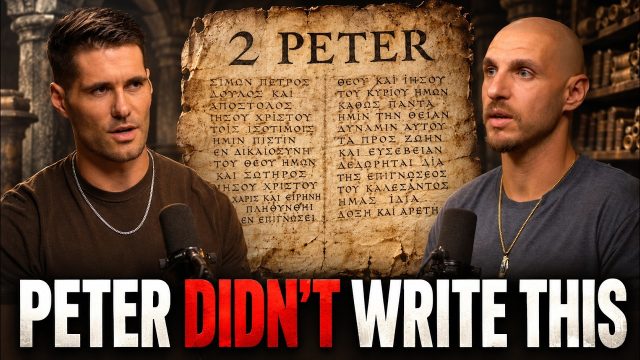
The conversation also addresses a historical elephant in the room: the Bible contains texts that scholars widely recognize as pseudepigraphical—falsely attributed to their claimed authors. Second Peter is examined as a case study. The epistle claims to be written by the Apostle Peter, but scholars have identified numerous reasons to doubt this attribution. If pseudepigraphical texts are present in the canon, and pseudepigraphical means false, then false texts sit within what Christians claim is an infallible collection.

When pressed on this contradiction, some Christians employ a rhetorical move: they suggest that if we acknowledge false or questionable texts, we might as well discard entire gospels and books. David the Nazarene captures the absurdity: "They say, 'Oh, so we need to get rid of Luke and we need to get rid of Peter and we need to get rid of Acts... and we need to get rid of the Wizard of Oz, we need to get rid of Star Wars, we need to get rid of the American Revolution.'" The slippery-slope argument collapses under its own overreach.

But the conversation clarifies an important distinction: scholars do not "reject" texts in the sense of throwing them away or refusing to study them. Academic study treats ancient texts as historical documents worthy of careful examination, regardless of their authorship or authority claims. David notes, "No academic rejects a text. It's an ancient text. We study it as an ancient text." To study something critically is not to reject it; it is to understand it more deeply.

The Circular Reasoning Trap: Proving Infallibility with the Infallible Text

Perhaps the most damaging critique is the charge of circular reasoning. How does one know the Bible is infallible? Often the answer is: because the Bible says it is. This is begging the question—using the conclusion as evidence for itself. Abke articulates the problem: "You can only beg the question. And so we think that, hey, why would I want to base my entire salvation on a question-begging claim that can't be proven? Surely God would not create such a universe."

The conversation points out that this exact same argument structure is used by other faiths. Mormons appeal to the infallibility of the Book of Mormon. Muslims appeal to the infallibility of the Quran. Each religion employs proof-texting from its own sacred text to defend the authority of that text. If a Christian dismisses the Mormon or Muslim approach as circular reasoning while employing the identical method themselves, they have surrendered the high ground. They have become, in Abke's words, indistinguishable from the very thing they claim to critique.

What Would Prove It? The Epistemological Challenge

A central question hangs over the entire discussion: How would you even know if you were reading an infallible text? What would be the litmus test? The speakers argue that there is no such test. No objective standard exists by which a fallible human being could verify infallibility in a text. This is not a problem with their skepticism; it is a problem with the doctrine itself. The doctrine makes a claim that is, by its own logic, unfalsifiable and unverifiable.

This leads to a troubling implication for believers who stake their salvation on this doctrine. If a stranger on the internet tells you that you must believe in biblical infallibility or face damnation, you are being asked to trust that they—a fallible person you do not know—have correctly identified an infallible text. Abke captures the absurdity: "I don't trust you that much. I don't even know you. You're some guy on the internet and I'm supposed to believe that you know an infallible text exists."

The Fruits Standard: A Different Epistemology

The speakers propose an alternative epistemological standard, one they trace to Jesus himself: "You just know a tree by its fruits and by no other way." This suggests evaluating truth not by abstract doctrinal claims but by the actual effects of a belief system in the world. Does it produce love, justice, healing, humility? Or does it produce harm, division, control, and certainty masquerading as wisdom?

This framework also addresses a subtler danger: the infiltration of partial truth with partial deception. As the conversation notes, "The devil loves to use truth and sprinkle in a little bit of deception. I'm going to give you 90% truth, 90% light, and then I'll just sprinkle in a little bit of darkness into it." This is why proof-texting—selecting verses that support a predetermined conclusion while ignoring context—is so dangerous. It becomes a mechanism by which error can be hidden inside apparent truth.

Beyond Infallibility: What's Actually at Stake

The speakers are careful to emphasize that their critique of infallibility is not a critique of the Bible's value or its spiritual truth. "All truth is God's truth," Abke states. The claim is not that the Bible is false or useless, but that treating it as infallible is a category error—a logical impossibility that actually obscures the more important work of discernment, study, and spiritual practice.

What matters is not that every word is perfect, but that the text contains genuine wisdom, genuine encounters with the divine, and genuine moral and spiritual teaching. These can coexist with historical inaccuracies, attributional problems, and human limitations. In fact, acknowledging these limitations may actually deepen faith rather than undermine it, by moving faith from intellectual assent to doctrines toward trust in a God who works through imperfect vessels.

Where to go from here

If the doctrine of biblical infallibility collapses under scrutiny, what replaces it? The conversation suggests several directions. First, engage with the Bible as an ancient text, using the tools of scholarship and criticism not to diminish it but to understand it more fully. Second, develop a coherent epistemology—a clear standard for how you arrive at truth—rather than accepting claims simply because they are wrapped in religious language. Third, evaluate spiritual teachings by their fruits: Do they produce love, justice, freedom, and genuine transformation? Or do they produce control, certainty, division, and harm? Finally, recognize that faith in God and critical thinking about doctrines are not enemies. The God worthy of worship is not threatened by questions, scholarship, or honest doubt. A doctrine that requires the suspension of reason to maintain itself may be worth questioning.
Commenti

Caricamento della conversazione…

Transcript

[0:01] David, what are

[0:03] what do you think are the implications

[0:05] of

[0:06] what we're talking about here, the the

[0:09] inclusion

[0:10] of pseudepigrapha if we're going to be

[0:13] kind

[0:14] or just the of false scriptures in the

[0:18] in the Canon?

[0:20] >> Well, I I think that

[0:23] Aaron's right. Anything that's false is

[0:25] not of God.

[0:27] So

[0:28] if there is text that we know is false

[0:32] in the scripture or in the Canon, it

[0:34] should be removed, right?

[0:36] Like why would you want to keep

[0:37] something false in it?

[0:40] And ironically, this is one of those I

[0:42] guess light bulb moments that

[0:45] a lot of the the Paul followers have

[0:48] when we bring up the the problems with

[0:49] Paul is suddenly they want to get rid of

[0:51] all the text

[0:53] that's questionable.

[0:54] >> Mhm.

[0:54] >> I guess it's like a light bulb goes off

[0:56] and then they're like, well, we need to

[0:58] get rid of Luke and we need to get rid

[1:00] of Peter and we need to get rid of

[1:03] Acts and this and that and we need to

[1:06] get rid of, you know, the the Wizard of

[1:08] Oz, we need to get rid of Star Wars, we

[1:11] need to get rid of the revolution the

[1:12] American Revolution. We got to get rid

[1:14] of everything.

[1:17] [laughter]

[1:18] And and they say that like

[1:21] like the I mean the question is like,

[1:23] okay, so we're like we're not really

[1:25] advocating for getting rid of the books,

[1:27] right? Because

[1:28] >> Not at all.

[1:28] >> why would we want to get rid of it?

[1:29] Because the best evidence against Paul

[1:32] is in his letters, so why would we get

[1:34] rid of that?

[1:35] I don't have a problem with Luke. I

[1:36] think Luke just wrote what Paul told him

[1:38] to write.

[1:39] >> Mhm.

[1:40] >> You know, and

[1:42] and with 2 Peter,

[1:45] you just went over all these reasons why

[1:47] we know it's it's not a genuine letter,

[1:49] but even if we

[1:52] we're going to treat it as a genuine

[1:53] letter,

[1:56] just going off that theory, just because

[1:58] Peter said something about Paul doesn't

[2:01] we have to get rid of Peter.

[2:03] Um.

[2:04] >> Right.

[2:04] >> But but on the other hand,

[2:06] if someone is saying, oh, so now that we

[2:09] realize that there's questions about

[2:11] Paul, then we should get rid of these

[2:13] others because they're false. Well,

[2:15] absolutely. Like, why would you want to

[2:18] keep something that's not true?

[2:21] >> Right.

[2:21] >> So so it doesn't seem to be as much of

[2:23] like a gotcha as they try to

[2:26] to use it as.

[2:27] >> Yeah.

[2:28] Yeah, again, it's always a a projection

[2:30] of how they believe or their

[2:32] presuppositions onto us. And every time

[2:34] I get this argument,

[2:36] this is how I respond. It's always, oh,

[2:38] so you just reject Luke and Acts and all

[2:40] this stuff? Oh, you so you just reject?

[2:43] And I say,

[2:44] what do you mean reject? What does that

[2:45] mean? I don't understand what that

[2:47] means.

[2:48] Like I study the Bible academically. No

[2:50] academic rejects a text. Like it's an

[2:52] ancient text. We study it as an ancient

[2:54] text. What do you mean reject?

[2:56] And I I've never had a response to this.

[2:58] Either it's that that's the last, you

[3:00] know, comment that they exchange with me

[3:02] or they'll kind of pivot to something

[3:04] else because I think they realize when I

[3:06] ask them that, oh, you really say I

[3:08] don't mean I don't take it to be an

[3:09] infallible text written by God.

[3:12] That's what they mean when they say you

[3:13] reject it.

[3:15] I'm not rejecting it. I don't think it's

[3:16] an infallible text written by God for

[3:19] these kinds of reasons. Now, would you

[3:21] like to defend all these arguments that

[3:23] scholars make and debunk them? And then

[3:25] maybe you can convince me it's

[3:26] infallible. But until you can do that,

[3:28] I'm going to air on the side of what

[3:29] appears to be true because again, all

[3:32] truth is God's truth. And so if there's

[3:34] all these problems appearing around a

[3:36] text or someone's gospel or whatever,

[3:40] I'm going to have I'm going to be

[3:41] suspicious of it. And of course, I don't

[3:43] think there's such a thing as an

[3:44] infallible text. As you've pointed out,

[3:46] David, you literally can't even claim a

[3:48] text is infallible. Language doesn't

[3:51] even work that way. You can only claim

[3:53] or appeal to your subjective

[3:55] interpretation of the text being

[3:57] infallible, which is of course a total

[4:00] logical fallacy.

[4:03] >> Yeah, I mean

[4:03] >> once once a human being writes anything,

[4:08] it's human. You know, humans are not

[4:11] infallible. So how can how can a

[4:13] fallible creature write an infallible

[4:16] text?

[4:17] >> Exactly.

[4:18] >> I think the furthest you could go with

[4:20] it is is it true or is it false?

[4:22] But you can't go past true to to the

[4:25] level of infallible unless you're

[4:27] talking about God himself.

[4:29] >> Right.

[4:30] There there's so many problems with

[4:32] claiming that a text is inerrant and

[4:34] infallible. It's like

[4:36] how would you even know if you were

[4:38] reading an infallible text? You know?

[4:40] Like what would be your litmus test to

[4:42] know that a text is inerrant in the

[4:44] first place?

[4:45] >> And and uh an individual could take a a

[4:49] true statement in a text

[4:51] and interpret it completely wrong. Like

[4:54] every person has free will and their own

[4:56] conditions. So

[4:57] >> Exactly.

[4:58] >> worshiping the Bible for that alone is

[5:00] an issue.

[5:01] >> Right. Even if it was infallible, you

[5:03] still can't get past the fact that your

[5:05] brain has to interpret it subjectively

[5:08] according to what you think words mean

[5:10] and all these things. And so again,

[5:11] you're back to appealing to your own

[5:13] subjective interpretation either way. So

[5:15] it's just a claim that you can never

[5:17] prove and you can only beg the question.

[5:20] And so we think that, hey, why would I

[5:22] want to base my entire salvation on a

[5:24] question-begging claim that can't be

[5:26] proven?

[5:27] Surely God would not create such a

[5:29] universe, you know?

[5:32] >> Yeah, well, it it's like um

[5:35] using your fallible brain or your

[5:37] fallible intellect to measure whether a

[5:40] text is infallible.

[5:43] It's not possible [laughter] because the

[5:44] instrument the instrument you you're

[5:47] using to read it [laughter]

[5:49] can't even measure that. It is like if

[5:52] you were trying if you had something

[5:53] where you had to

[5:55] um measure the length of something

[6:00] to the nearest millimeter,

[6:02] but you only had a tape measure that

[6:04] measured in kilometers.

[6:06] Like, you you can't get down that that

[6:08] precise. And so you can't do that with

[6:11] um

[6:12] you you could like we're not even

[6:13] capable of determining if a text is

[6:16] infallible.

[6:17] >> We're broken, dirty sinners, and we've

[6:20] cracked the code. The book is perfect.

[6:22] [laughter]

[6:23] >> Totally. It's like when a Christian uh

[6:26] you know hits me with uh also you you

[6:28] know deny the word of God. You better

[6:30] you better believe the word of God.

[6:32] It's like okay, so you're telling me

[6:34] that you know the Bible is infallible.

[6:36] It's written by God. Every word written

[6:38] by God. You know that that's true and

[6:40] you are telling me hey, you better

[6:42] believe this too or you're going to

[6:43] hell.

[6:44] It's like so now you're stacking another

[6:46] problem on top of these problems where I

[6:49] have to trust that you would even know

[6:51] an infallible book if it slapped you in

[6:53] the face.

[6:54] I don't trust you that much. I don't

[6:56] even know you. You're some guy on the

[6:57] internet and I'm supposed to believe

[6:59] that you know an infallible text exists.

[7:00] It's like guess what? Mormons say that

[7:02] about the Book of Mormon. Muslims say

[7:04] that about the Quran. So if you just

[7:06] proof text Bible verses at me, you're a

[7:08] Muslim appealing to the Quran or a

[7:10] Mormon appealing to the Book of Mormon

[7:12] as far as I'm concerned. You have to do

[7:13] more than just that because that's what

[7:15] you accuse them of doing and then you

[7:17] turn around and do it to me, right? We

[7:19] have to have better standards for this

[7:21] of how we arrive at truth. What is our

[7:23] epistemology of how we arrive at truth?

[7:26] And I think Jesus gave us the best

[7:28] epistemic standard which is you you just

[7:31] know a tree by its fruit and by no other

[7:33] way because the only other way is

[7:35] believe what this person is saying and

[7:37] and espousing with their mouth, right?

[7:40] You cannot hang your hat on what anybody

[7:42] says alone, right? Even if it's even if

[7:45] it echoes the truth. It's like we know

[7:47] that the enemy loves to use truth and

[7:50] sprinkle in a little bit of deception

[7:52] and that that's how the devil wins

[7:54] people over is I'm going to give you 90%

[7:57] truth, 90% light, and then I'll just

[8:00] sprinkle in a little bit of darkness

[8:01] into it, a little bit of evil. And

[8:03] because you're distracted in you know

[8:06] shiny object syndroming over the light,

[8:08] you won't see the evil I've woven into

[8:10] it and then I've captured you into my

[8:12] thought system. So, it's very dangerous

[8:14] to just go around espousing doctrines.

[8:17] We have to have a better standard than

[8:18] that and there is no better standard by

[8:20] which to judge truth than how someone is

[8:22] living. The truth is based in what is

[8:26] good for all beings equally, right? What

[8:28] is based in love, what is based in

[8:30] righteousness, what does no harm, and

[8:32] what loves its neighbor as itself.

[8:34] [music]

[8:34] And you can't miss that if that's your

[8:36] standard, right?

[8:45] >> [music]

Aaron Abke

Artista

Watch more from Aaron Abke on YouTube.

Esplora i temi
Biblical infallibilityCircular reasoningBiblical criticismFaith and reasonEpistemology
Domande frequenti

Domande frequenti

No. Humans are fallible by nature, so anything written by a human being is inherently human and therefore fallible. You can claim a text is true or false, but infallibility—absolute freedom from error—is a category reserved for God alone, as the speakers explain.

Scholars study ancient texts academically regardless of their truth claims or authorship. Studying the Bible as an ancient text with historical questions is not the same as rejecting it spiritually or morally; it's a neutral scholarly approach that seeks understanding rather than dismissal.

You can't. A fallible human brain cannot measure something as precise as infallibility. The only instrument you have to read the text is your own mind, which is subject to error, misinterpretation, and subjective understanding—making verification of infallibility logically impossible.

Yes. Using a text's own claims about itself to prove its authority is circular reasoning—begging the question. Mormons, Muslims, and other faiths use the same method with their texts, so this approach offers no unique evidence for any particular scripture's authority.

No. The speakers argue that truth and infallibility are different categories. A text can contain genuine truth, wisdom, and spiritual insight without being infallible. Acknowledging human limitations and historical inaccuracies doesn't negate the real spiritual and moral value within scripture.

The speakers propose evaluating teachings by their fruits—the actual effects they produce in the world. Does a belief system produce love, justice, freedom, and healing? Or does it produce control, division, and harm? This creates a more practical and observable standard for discernment.

The doctrine provides a sense of certainty and stability for faith. Letting go of infallibility requires embracing more nuanced, uncertain ground—trusting God while acknowledging that texts and interpretations are human. This shift can feel destabilizing, even if it's more logically coherent.

Yes. Infallibility is a doctrine, not a requirement for faith. Many scholars, theologians, and sincere Christians hold the Bible in high regard and find deep spiritual truth in it without claiming it's infallible. Faith in Christ and critical engagement with texts are not mutually exclusive.

Potrebbe piacerti anche

Vedi Tutto
Does 2 Peter 3:16 Really Endorse Paul? A Closer Look
Inspire

Does 2 Peter 3:16 Really Endorse Paul? A Closer Look

The verse apologists cite as Peter's endorsement of Paul sits in a letter the video dates well into the second century. We examine the Greek…

6 min read
The Law of Balance: How Refusal Works Against Manipulation
Inspire

The Law of Balance: How Refusal Works Against Manipulation

Evil can only operate with tacit consent. Standing up and declaring non-consent calls the universe's forces to your aid—a principle rooted i…

5 min read
Medicine Buddha Practice: Feeling Beneath the Thinking
Inspire

Medicine Buddha Practice: Feeling Beneath the Thinking

Lama Rod Owens opens a Monday-night Medicine Buddha session six years into the practice, teaching how to feel an experience instead of think…

10 min read
Sanctuary Live: Becoming a Living Sanctuary in Song
Inspire

Sanctuary Live: Becoming a Living Sanctuary in Song

Donna De Lory's acoustic performance of "Sanctuary" builds a six-minute prayer out of one request: prepare me. Here is how the lyric, the sh…

7 min read
Vedi tuttiPotrebbe piacerti anche→

Continua il tuo viaggio

Altra saggezza e altri incontri da tutta la directory BrightStar.

Altri articoli

Sfoglia l’intera raccolta di insegnamenti, interviste e guide.

Torna a tutti gli articoli →

Insegnanti e artisti

Esplora i lignaggi, i musicisti e le guide del mondo consapevole.

Esplora gli artisti →

Trova un evento

Kirtan, ritiri, sound bath, breathwork, festival: in arrivo presto.

Sfoglia gli eventi →