BrightStar
BlogI miei biglietti
Saved events
Aiuto e contattiRegistratiAccedi
Eventi
  • Sfoglia tutti i Eventi
  • Yoga
  • Meditazione
  • Breathwork
  • Qigong
  • Musica sacra
  • World music
  • Musica medicina
  • Sound healing
  • Danza estatica
  • Cerimonia
  • Medicina delle piante
  • Guarigione energetica
  • Satsang e saggezza
  • Tantra
  • Ritiri
  • Tutte le categorie →
Destinazioni
  • Bali
  • Sedona
  • Los Angeles
  • Costa Rica
  • Tulum
  • Byron Bay
  • San Francisco
  • Austin
  • New York
  • San Diego
  • Denver
  • Seattle
  • Portland
  • Miami
  • London
  • Maui
  • Boulder
  • Tutte le città →
Piattaforma
  • Per organizzatori
  • Unisciti al movimento
  • Sell Globally
  • Per i creatori
  • Per team
  • Per gli scrittori
  • Per gli insegnanti
  • Per gli artisti kirtan
  • Per gli studi
  • Per i festival
  • Per i centri ritiro
  • Per le no-profit
  • Ambasciatore del brand
  • Biglietteria gratuita
  • Pro
  • Amplify
  • L’ecosistema
Funzionalità

Biglietteria e acquisto

  • Ticket categories
  • Assigned seating
  • Custom questions
  • Coupon codes
  • Smart pricing
  • Ticket sharing
  • Waitlist
  • Flexible refunds
  • Digital waivers
  • Tip jar
  • Donations and sliding scale
  • Embed widget
  • Mindful checkout
  • Recurring events
  • Private sessions
  • Online courses
  • Summits
  • Rooms and stays
  • Ticket scanner

Marketing e crescita

  • Abandoned cart recovery
  • Visitor recovery
  • Upsells and add-ons
  • Affiliate engine
  • Upsell affiliate network
  • Brand ambassador
  • Meta retargeting
  • Verified buyer network
  • Outbound email marketing
  • Email sequences
  • SMS and WhatsApp
  • Event upsell network
  • Direct mail campaigns
  • SEO engine
  • Syndication
  • Event sharing
  • Custom event pages
  • Artist profiles
  • Link in bio
  • Event blog
  • Blog newsletter

Pagamenti

  • Payments, powered by Stripe
  • Buy now, pay later
  • Apple Wallet
  • Multi currency

Dati e operazioni

  • Team access
  • Message center
  • Reports
  • Analytics reporting
  • Performance reporting
  • Customer data
  • Integrations
  • Switch from another platform

IA

  • Assistant
  • AI FAQ assistant
  • Tutte le funzionalità →
Azienda
  • Chi siamo
  • Domande frequenti
  • Contatti
  • Blog
  • Glossario
  • Guides
  • Ispirazione
  • Centro assistenza
  • Documentazione API
  • Risorse del brand
  • Stampa
  • Termini di servizio
  • Informativa sulla privacy

Eventi

  • Sfoglia tutti i Eventi
  • Yoga
  • Meditazione
  • Breathwork
  • Qigong
  • Musica sacra
  • World music
  • Musica medicina

Destinazioni

  • Bali
  • Sedona
  • Los Angeles
  • Costa Rica
  • Tulum
  • Byron Bay
  • San Francisco
  • Austin

Piattaforma

  • Per organizzatori
  • Unisciti al movimento
  • Sell Globally
  • Per i creatori
  • Per team
  • Per gli scrittori
  • Per gli insegnanti
  • Per gli artisti kirtan

Funzionalità

  • Rete della comunità
  • Recupero carrelli abbandonati
  • Categorie di biglietti
  • Eventi ricorrenti
  • Posti assegnati
  • Sistema affiliati
  • Lista d'attesa / Notifica
  • Tutte le funzionalità →

Azienda

  • Chi siamo
  • Domande frequenti
  • Contatti
  • Blog
  • Glossario
  • Guides
  • Termini di servizio
  • Informativa sulla privacy
Leggi di più

Eventi

  • Sound healing
  • Danza estatica
  • Cerimonia
  • Medicina delle piante
  • Guarigione energetica
  • Satsang e saggezza
  • Tantra
  • Ritiri
  • Tutte le categorie →

Destinazioni

  • New York
  • San Diego
  • Denver
  • Seattle
  • Portland
  • Miami
  • London
  • Maui
  • Boulder
  • Tutte le città →

Piattaforma

  • Per gli studi
  • Per i festival
  • Per i centri ritiro
  • Per le no-profit
  • Ambasciatore del brand
  • Biglietteria gratuita
  • Pro
  • Amplify
  • L’ecosistema

Azienda

  • Ispirazione
  • Centro assistenza
  • Documentazione API
  • Risorse del brand
  • Stampa

Biglietteria e acquisto

  • Ticket categories
  • Assigned seating
  • Custom questions
  • Coupon codes
  • Smart pricing
  • Ticket sharing
  • Waitlist
  • Flexible refunds
  • Digital waivers
  • Tip jar
  • Donations and sliding scale
  • Embed widget
  • Mindful checkout
  • Recurring events
  • Private sessions
  • Online courses
  • Summits
  • Rooms and stays
  • Ticket scanner

Marketing e crescita

  • Abandoned cart recovery
  • Visitor recovery
  • Upsells and add-ons
  • Affiliate engine
  • Upsell affiliate network
  • Brand ambassador
  • Meta retargeting
  • Verified buyer network
  • Outbound email marketing
  • Email sequences
  • SMS and WhatsApp
  • Event upsell network
  • Direct mail campaigns
  • SEO engine
  • Syndication
  • Event sharing
  • Custom event pages
  • Artist profiles
  • Link in bio
  • Event blog
  • Blog newsletter

Pagamenti

  • Payments, powered by Stripe
  • Buy now, pay later
  • Apple Wallet
  • Multi currency

Dati e operazioni

  • Team access
  • Message center
  • Reports
  • Analytics reporting
  • Performance reporting
  • Customer data
  • Integrations
  • Switch from another platform

IA

  • Assistant
  • AI FAQ assistant
Scarica l'app
Scarica suApp StoreDisponibile suGoogle Play
© 2026 BrightStar. Tutti i diritti riservati. BrightStar Selection · Crediti fotografici · Registro delle modifiche ·
✨ Il profilo di Purbayan Chatterjee è ancora da rivendicareRivendica il profilo
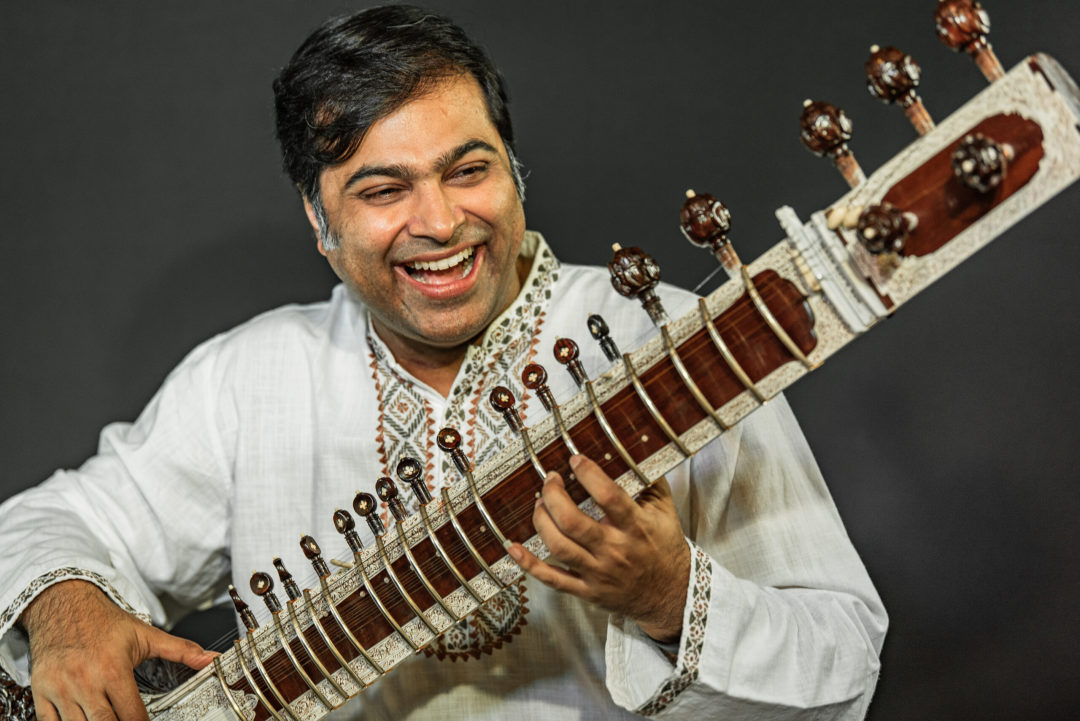
Purbayan Chatterjee (1/18)
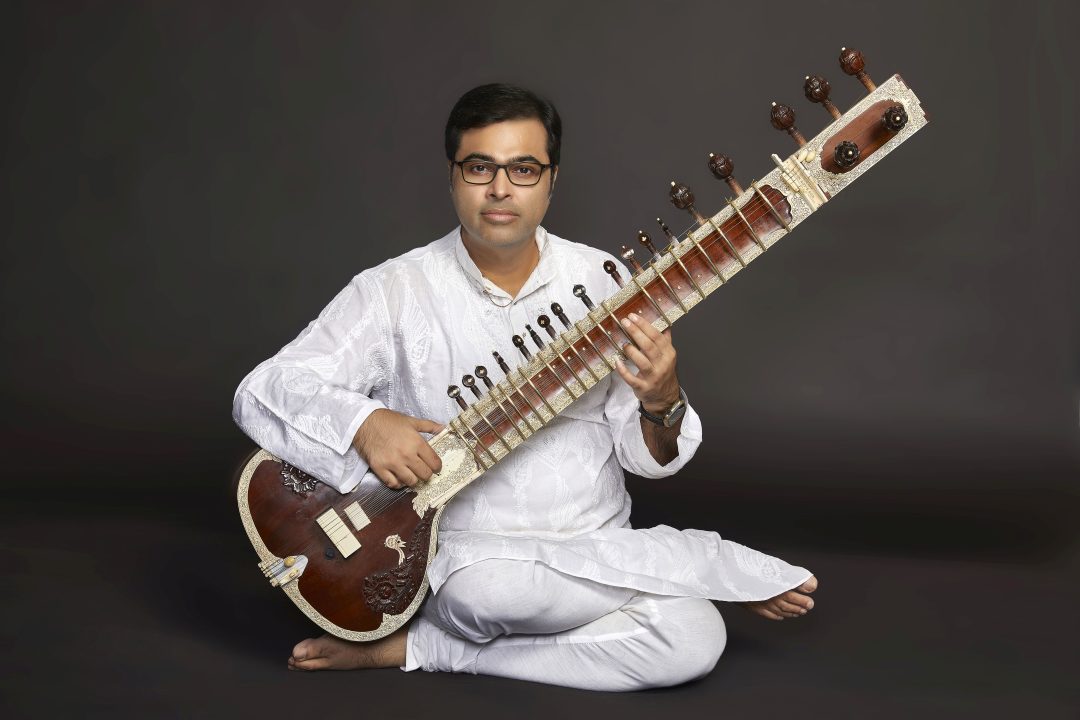
Purbayan Chatterjee (2/18)
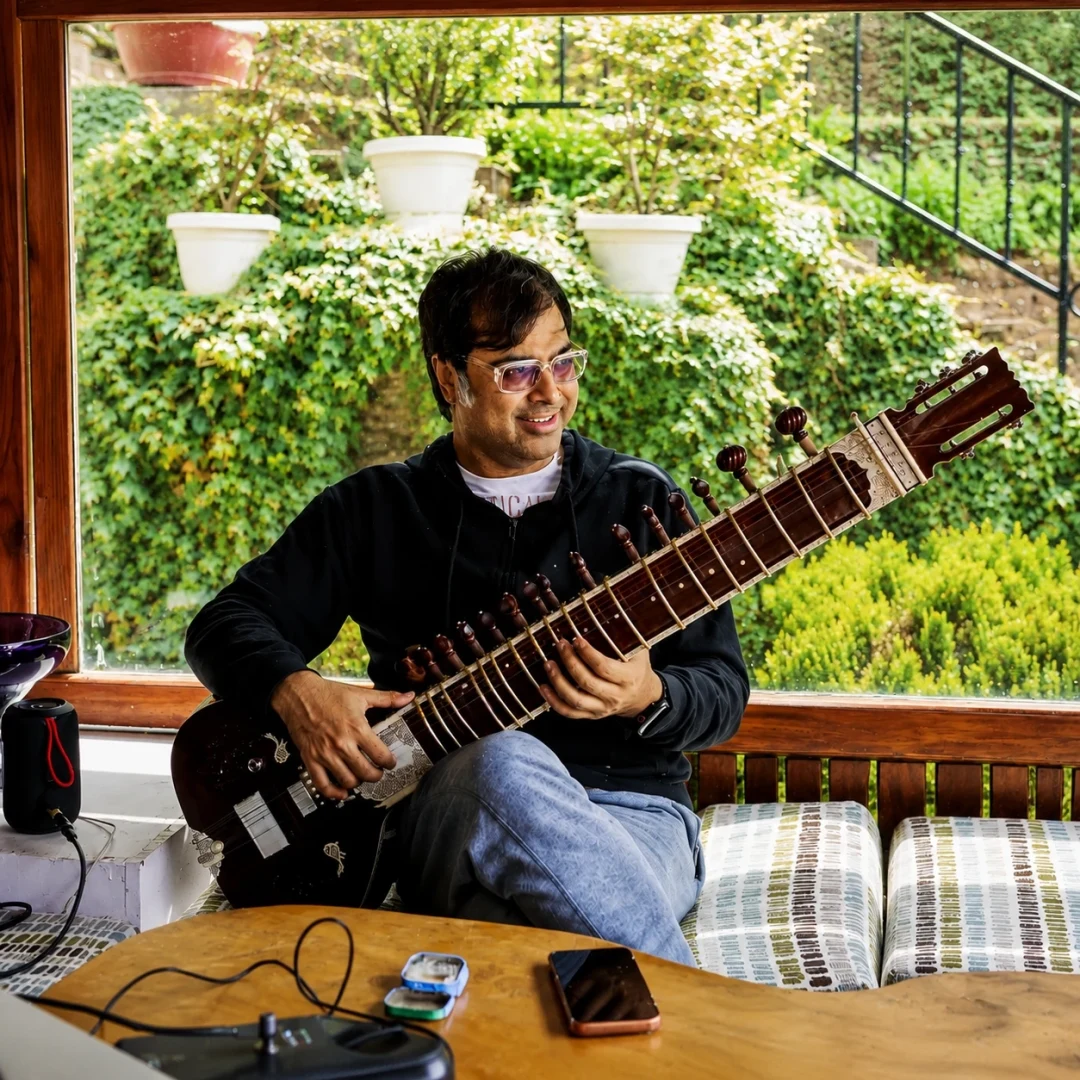
Purbayan Chatterjee (3/18)
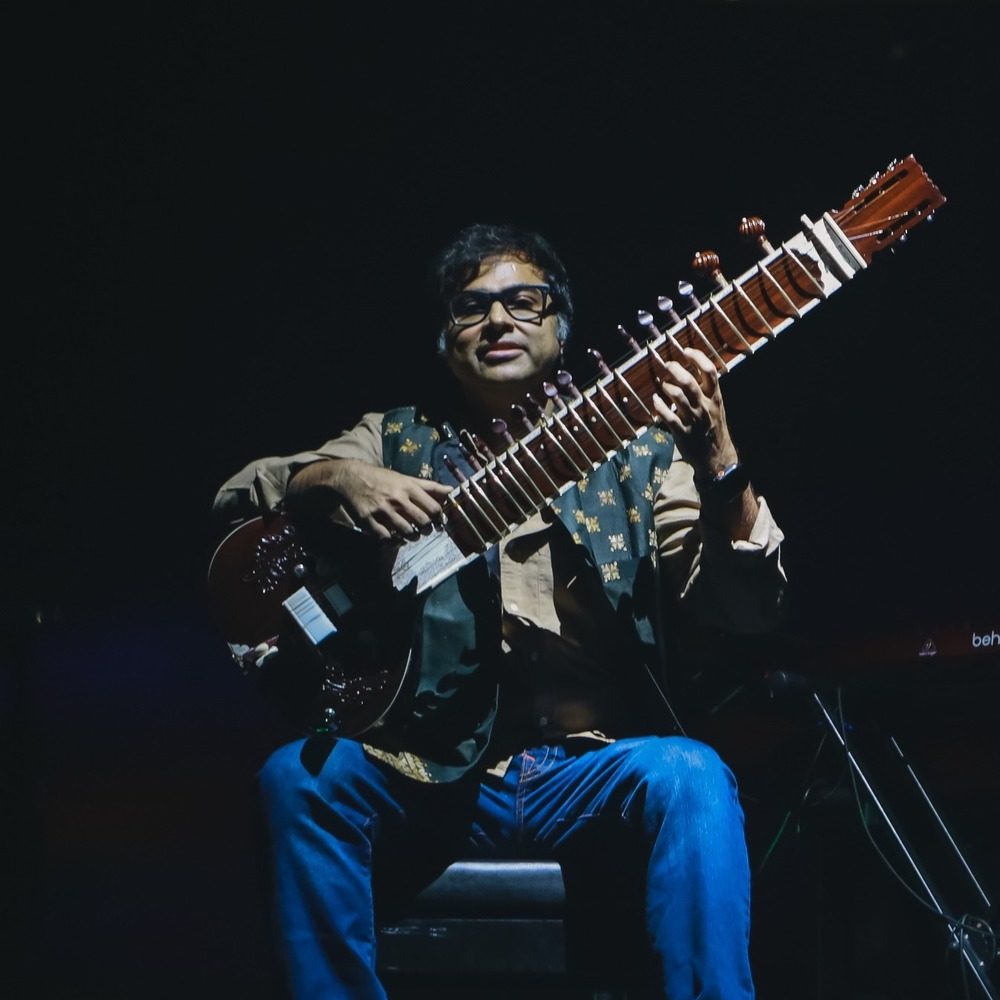
Purbayan Chatterjee (4/18)
Purbayan Chatterjee (5/18)
Purbayan Chatterjee (6/18)
1 / 18
Purbayan Chatterjee

Purbayan Chatterjee

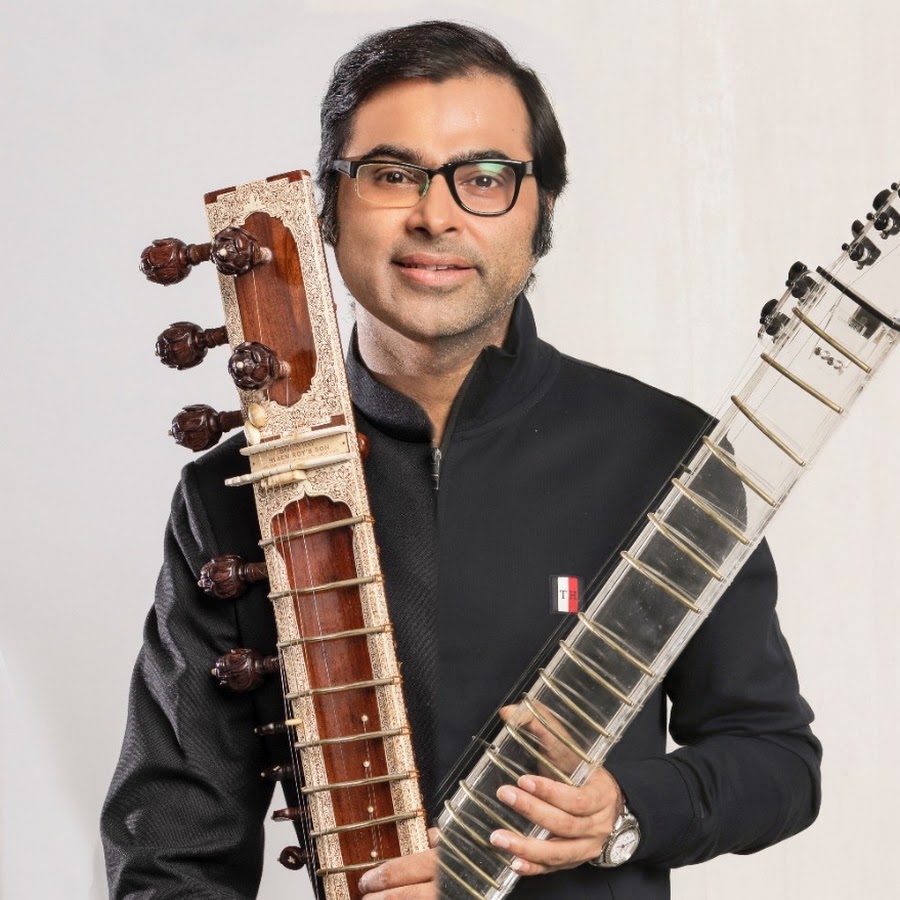
Sitar Virtuoso

Sito web

Chi è

Purbayan Chatterjee is a sitar virtuoso who has built his career on a foundation of Hindustani classical music while consistently exploring the boundaries where raga meets contemporary sound. Rooted in the guru-shishya parampara—the traditional teacher-disciple lineage that remains the backbone of Indian classical training—Chatterjee performs repertoire spanning Raag Mishr Kafi, Raag Shyam Kalyan, Raga Bhairavi, and Raga Bageshree, alongside experimental collaborations that place the sitar in dialogue with jazz, rock, and world music idioms.

His approach to the sitar distinguishes itself through a willingness to move fluidly between concert hall tradition and studio experimentation. Where many classical sitarists focus exclusively on the purity of raga exposition, Chatterjee treats the instrument as equally at home in a jugalbandi with tabla or in layered studio arrangements with electric guitar and synthesizers. This dual identity has earned him invitations to perform at India's most respected classical music venues—including the Sawai Gandharva Bhimsen Mahotsav in Pune and Narad Gana Sabha in Chennai—while also opening doors to collaborative projects with musicians outside the Indian classical sphere.

His recorded work includes Sitar Stories (2024), Classicool, Milaap, Unbounded, and Antar - The Transformation. These albums document both his command of traditional raga performance and his interest in fusion formats that layer sitar over contemporary production. He has collaborated with guitarist Mark Lettieri on tracks including Feathered Creatures and 9000 Miles, and worked with mandolin virtuoso U Rajesh and a rotating ensemble of tabla and percussion artists. The projects range from strictly classical recitals to studio experiments that test how far the sitar's microtonal language can stretch without losing its core identity.

Chatterjee's training followed the guru-shishya model, the centuries-old system in which a disciple lives and learns in close proximity to a master. This lineage has shaped not only his technical facility but also his commitment to preserving the transmission system itself. He organizes UMANG, an annual event in Mumbai dedicated to celebrating the guru-shishya parampara and providing a platform for younger artists trained in this tradition. The event functions both as a concert series and a public affirmation of the pedagogical model that produced him.

His performances attract audiences across India's classical music circuit, and his streaming presence has introduced his work to listeners outside the traditional sabha system. He continues to tour nationally, performing both solo recitals and ensemble collaborations, and maintains an active recording schedule that balances classical releases with fusion projects.

Chatterjee's catalog is divided roughly between purist raga performances and collaborative albums that re-imagine the sitar's role in ensemble contexts. His classical concerts follow the traditional structure of alap, jor, jhala, and gat, often running two hours or more. His fusion projects compress that architecture into shorter, produced tracks that retain the melodic and rhythmic vocabulary of Hindustani music but add harmonic and textural layers drawn from other genres.

For listeners discovering his work today, Chatterjee offers a entry point into Hindustani classical music that does not require choosing between tradition and experiment—his catalog demonstrates that the same musician can honor the raga system's rigor while testing its adaptability to new contexts.

Sitar VirtuosoClassical MusicianFusion ArtistClassical Indian RagasSitar PerformanceRaga FusionGuru Shishya ParamparaContemporary Music Collaboration
69K on Spotify1.1M on Instagram

Stories & Insights

All articles
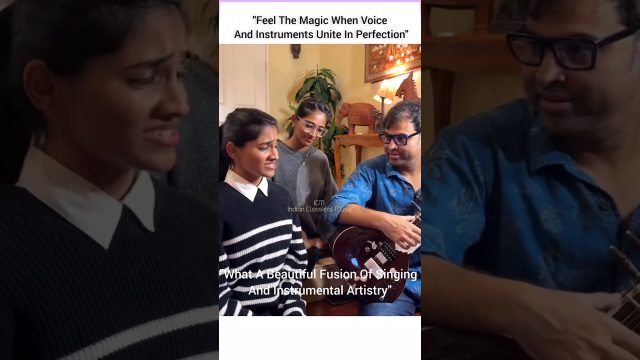
Garaj Garaj Cover: Sitar, Vocal & Tabla Fusion
Video

Garaj Garaj Cover: Sitar, Vocal & Tabla Fusion

Three Indian classical virtuosos recreate Garaj Garaj through vocal, sitar, and tabla fusion, blending tradition with contemporary ensemble …

Watch →
Soul of Indian Music: Slides, Chromatic Glides & Tradition
Video

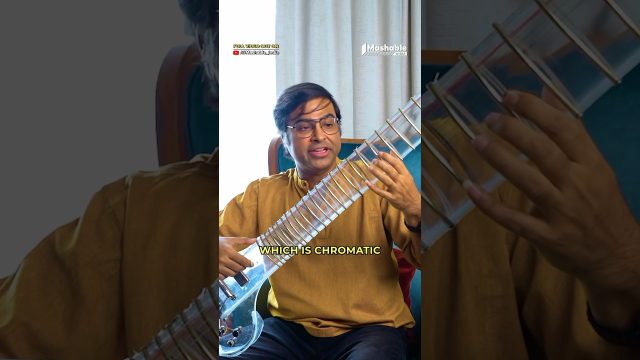
Soul of Indian Music: Slides, Chromatic Glides & Tradition

Purbayan Chatterjee explores how chromatic slides and glides define the essence of Indian classical music and how modern instruments can hon…

Watch →
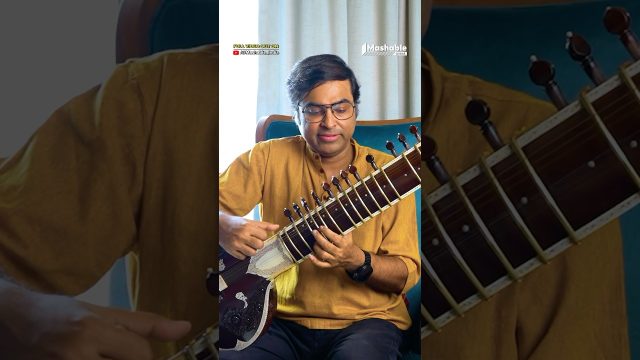
Garaj Garaj: Purbayan Chatterjee's Sitar Performance
Video

Garaj Garaj: Purbayan Chatterjee's Sitar Performance

Purbayan Chatterjee performs the raga Garaj Garaj live, showcasing contemporary Indian classical sitar technique. A 31-second showcase of vi…

Watch →
Vedi tuttiStories & Insights→

Connect

Official Websitelinktr.ee
Spotify69K followers
YouTubeVideos & talks
Instagram1.1M followers
FacebookCommunity
X (Twitter)Latest updates

Moments with Purbayan Chatterjee

About Purbayan Chatterjee

  • For Beginners

    Where to Start with Purbayan Chatterjee: A Beginner's Guide

    3 min read

  • Discography

    Essential Purbayan Chatterjee Albums: A Listening Guide

    1 min read

  • Music

    The Music of Purbayan Chatterjee: Sound, Sacred Texture, and Lineage

    4 min read

  • Biography

    Who Is Purbayan Chatterjee? Life, Work, and Legacy

    4 min read

Domande

Questions

Purbayan Chatterjee is a sitar virtuoso whose practice sits at a rare convergence: he performs classical Indian ragas with the rigor of the guru-shishya parampara tradition while simultaneously pursuing fusion and contemporary collaborations that push the instrument into unexpected sonic territories. His performances at prestigious venues like the Sawai Gandharva Bhimsen Mahotsav and Narad Gana Sabha signal deep classical credentials, yet his recorded work—spanning albums like 'Sitar Stories' (2024), 'Classicool,' and 'Antar - The Transformation'—demonstrates an artist willing to sit with both tradition and experimentation. What distinguishes him in a crowded field of classical sitar players is his lack of puritanism: collaborations with guitarist Mark Lettieri on tracks like 'Feathered Creatures' and '9000 Miles' show he's genuinely curious about what the sitar can become outside the raga framework. Listeners follow him because he refuses the false choice between authenticity and innovation, and because his technical mastery of raags like Mishr Kafi, Shyam Kalyan, Bhairavi, and Bageshree grounds every experiment in real classical knowledge. His work appeals equally to classical Indian music devotees seeking fresh interpretations and to listeners of contemporary instrumental music looking for genuine cultural dialogue rather than appropriation.

Purbayan Chatterjee operates squarely within the guru-shishya parampara—the master-disciple transmission lineage that has been the spine of Indian classical music for centuries. This is not a casual affiliation: his performances at revered institutions like Narad Gana Sabha (one of India's oldest music academies, founded in 1821) and his role in organizing UMANG, an event celebrating the guru-shishya tradition in Mumbai, underscore his commitment to preserving and advancing this pedagogical model. The parampara demands a student spend years absorbing ragas not as abstract scales but as living organisms with their own moods, performance ethics, and seasonal appropriateness—knowledge that cannot be downloaded but must be absorbed through patient listening and repetition under a master's guidance. His classical repertoire—the raags he performs like Bhairavi, Bageshree, Shyam Kalyan, and Mishr Kafi—are themselves centuries-old lineage inheritances, each with documented genealogies and regional schools of interpretation. When he ventures into fusion projects, he does so not as someone abandoning tradition but as someone secure enough in his lineage knowledge to test its boundaries; the classical foundation remains the non-negotiable floor.

'Sitar Stories' (2024) is the logical entry point for listeners unfamiliar with either classical sitar or Purbayan's aesthetic, as the album's title itself signals an approachability that pure raga performance sometimes lacks. This album likely balances the demands of classical Indian music—the patient unfolding of melodic and rhythmic ideas—with the narrative momentum that contemporary listeners expect, making it less intimidating than diving directly into a 45-minute raga performance. From there, listeners curious about his fusion sensibility should explore his collaborations with Mark Lettieri, particularly 'Feathered Creatures' and '9000 Miles,' which showcase how the sitar's sustain and expressive capability can dialogue with electric guitar without either instrument dominating. For those ready to sit with unaccompanied classical work, exploring performances of Raga Bhairavi or Raga Bageshree via his YouTube channel provides direct access to his command of the raga framework—these are emotionally accessible raags that don't require deep prior study. The progression from 'Sitar Stories' to fusion to classical will build intuition for how Purbayan thinks about the instrument and the tradition itself, rather than asking newcomers to choose one lane immediately.

In a field dominated by sitar players who have chosen to honor either the classical tradition or the fusion impulse, Purbayan Chatterjee operates across both with equal conviction and skill, a rarity that distinguishes him from purists and from fusion-first artists alike. Most sitar virtuosos stake a claim to one aesthetic—Anoushka Shankar leaned heavily into orchestral fusion; Vishwa Mohan Bhatt invented the Mohan Veena partly to escape sitar constraints—but Purbayan's body of work suggests someone genuinely invested in both languages without treating one as a stepping stone to the other. His collaborations, particularly with Mark Lettieri, bypass the 'world music meets Western musician' cliché by creating actual musical conversations where the sitar isn't costuming the proceedings but fundamentally shaping them; 'Feathered Creatures' and '9000 Miles' aren't sitar-flavored guitar music or guitar-adorned raga music but something genuinely neither and both. His willingness to organize UMANG, an event celebrating guru-shishya parampara traditions, signals that his fusion work isn't a escape from tradition but an outgrowth of it—he's committed to the transmission of classical knowledge even as he experiments. This integration—refusing the partition between 'serious classical' and 'playful fusion'—is what resonates with listeners fatigued by false choices in world music discourse.

Purbayan's classical sitar work employs the traditional sonic palette: the sitar's 18-20 strings (sympathetic strings adding a shimmer underneath the primary melodic and drone strings), tabla and percussion accompaniment, and often a sarangi or bowed strings for harmonic depth, with performance architectures that unwind over 20-45 minutes as a single raga deepens through exposition (alap), rhythm-cycle development (jor and jhala), and eventually explosive rhythmic interplay (tihai). The pacing is patient and non-linear by Western pop standards—a raga doesn't build toward a chorus or climax in the conventional sense but rather spirals through variations on a melodic contour, testing its edges, lingering in silence, and returning enriched. In fusion contexts like his work with Mark Lettieri, the arrangement shrinks: sitar, electric guitar, often minimal percussion—a chamber-music intimacy that puts both instruments in high relief and forces genuine dialogue rather than layering. His albums like 'Classicool,' 'Milaap,' and 'Unbounded' suggest he works across registers, from stripped-down duets to fuller ensemble textures. Even in fusion, the sitar retains its characteristic voice: the microtonal slides (meends), the percussive attacks on the frets, the singing sustain that approximates the human voice—these aren't erased in contemporary contexts but highlighted.

'Sitar Stories' (2024) is the most recent touchstone and likely the strongest entry point, representing his current artistic thinking without requiring classical music expertise from the listener. 'Antar - The Transformation' suggests a thematic arc—the title itself indicating internal change or transition—and likely documents a period where he was consciously negotiating between classical mastery and contemporary experimentation. The projects 'Classicool,' 'Milaap,' and 'Unbounded' each signal different aesthetic territories: 'Classicool' suggests a playful stance toward the intersection of traditional and modern (the title is deliberately arch), while 'Milaap' (meaning 'meeting' or 'blend' in Hindi) and 'Unbounded' indicate albums structured around fusion and genre-crossing conversations. His collaborations with Mark Lettieri, documented in tracks like 'Feathered Creatures' and '9000 Miles,' constitute essential listening for anyone curious about how sitar and electric guitar can be true partners rather than exoticist window-dressing. Without full album information in our records, listeners should approach his Spotify profile (68,700 followers) and YouTube channel as primary sources for understanding the complete architectural arc of his recorded work; each project appears to represent a distinct conversation he was having at a specific moment.

The sitar is his primary voice—a 20-string instrument with sympathetic strings that create a resonant, microtonal texture underneath the melodic line—but his collaborations reveal his sophistication in assembling ensemble color. Guitarist Mark Lettieri appears as his most consistent contemporary collaborator, evidenced in 'Feathered Creatures' and '9000 Miles,' a partnership that suggests Purbayan sees the electric guitar as a genuinely compatible voice rather than a Western addition to Indian music. Mandolin U Rajesh's presence in his ensemble work points toward a South Indian classical sensibility—the mandolin in Indian classical contexts has its own highly developed language, and this pairing indicates Purbayan's comfort moving across North and South Indian traditions. His classical performances naturally include tabla players and other percussion artists, the rhythmic anchors without which raga performance would float; tabla in particular is not decoration but a full conversational partner in raga exposition, responsible for some of the music's most sophisticated mathematical games. The fact that he performs with 'various tabla and percussion artists' rather than a fixed ensemble suggests he adapts his collaborators to the project at hand—a flexibility that marks maturity. This collaborative approach—choosing musicians who challenge him rather than simply complement him—is consistent with someone genuinely invested in experimental work without abandoning classical rigor.

Listeners seeking high-energy, rhythmically driving music will find his classical raga work frustratingly patient and meditative; a 30-minute exploration of Raga Bageshree doesn't offer the momentum arc of pop, hip-hop, or even most electronic music, and its rewards demand sustained attention and a willingness to hear tiny variations as profound rather than static. Pure fusion enthusiasts who want sitar treated as ornamental texture over a Western pop or rock song should look elsewhere—Purbayan's fusion work (his collaborations with Mark Lettieri included) treats the sitar as an equal voice, requiring listeners to accept that guitar and sitar won't resolve into a single unified texture but will instead remain in productive tension. Listeners predisposed to authenticity politics—who believe Indian classical music should only be practiced by those trained in a specific guru's lineage or who reject fusion as dilution—will likely see his experimental projects as compromises rather than conversations. Those uncomfortable with extended instrumental music will be alienated by both his classical pieces and his contemporary work, which privilege exploration over songwriting brevity. Additionally, listeners approaching Indian music for the first time through Western fusion will find his classical work demands a different kind of listening entirely; there's no shortcut to understanding how raag works, and 'Sitar Stories' is approachable but not instantly gratifying in the way a pop song is.

Spotify is the primary streaming destination, where Purbayan maintains a profile with 68,700 followers, providing access to his complete recorded discography across albums like 'Sitar Stories,' 'Antar - The Transformation,' 'Classicool,' 'Milaap,' and 'Unbounded' without purchase friction. His YouTube channel (youtube.com/c/PurbayanChatterjee) offers both full performances and likely behind-the-scenes or live concert footage, essential for appreciating the physical dimension of sitar performance—the hand positions, the body movement, the relationship between musician and instrument that audio-only recordings necessarily flatten. The Linktree at linktr.ee/Purbayanchatterjee serves as his official directory, consolidating links to streaming platforms and potentially direct purchase options for CDs or downloads if he maintains those sales channels. For classical raga performances not captured on his commercial albums, YouTube remains invaluable; many of his Sawai Gandharva Bhimsen Mahotsav and Narad Gana Sabha performances may circulate via official festival channels or his own uploads. Spotify's algorithm will surface his work to listeners of adjacent sitar performers and contemporary instrumental artists, making it the passive-listening option. For listeners in India or those seeking rare recordings or limited-edition releases, his social media presence (identifiable through the Linktree) likely provides direct contact for purchases or information about physical releases.

His active role in organizing UMANG—an event in Mumbai celebrating the guru-shishya parampara—reveals that Purbayan sees tradition not as a museum piece to be preserved in amber but as a living transmission system that requires active stewardship and celebration to survive. The parampara model is fundamentally about knowledge transfer through direct relationship: a student doesn't learn from method books or online courses but through years of listening, absorbing, and being corrected by a master, absorbing not just technique but the values, interpretive choices, and spiritual dimensions of the music. By choosing to organize events honoring this system, Purbayan signals that his fusion and experimental work are not escapes from the parampara but extensions of it—he's not rejecting the tradition that taught him but actively defending its transmission mechanisms. This suggests his philosophy sees the parampara as robust enough to contain both classical rigor and contemporary experimentation; the issue isn't that fusion work corrupts tradition but that tradition without living practitioners and active celebration dies. His performances at Narad Gana Sabha and Sawai Gandharva Bhimsen Mahotsav—institutions rooted in parampara transmission—indicate he's invested in these institutional spaces as much as in his own recordings. Essentially, his musical philosophy treats tradition as something that grows through use and genuine engagement rather than something that shrinks through contact with the contemporary world.

Sei tu? Rivendica questa pagina ›

There's more where this came from.

BrightStar is the global directory of artists, teachers, and healers in the wellness and spiritual movement. Find your next experience — or add yourself.

Discover More Artists

Browse 14,000+ curated profiles across kirtan, yoga, meditation, and beyond.

Explore directory →

Find an Event Near You

Kirtan, retreats, sound baths, breathwork, ceremonies — happening this week.

Browse events →

Add Your Profile

Are you an artist, teacher, or healer? Get listed — free, AI-assisted, live in minutes.

Get started →