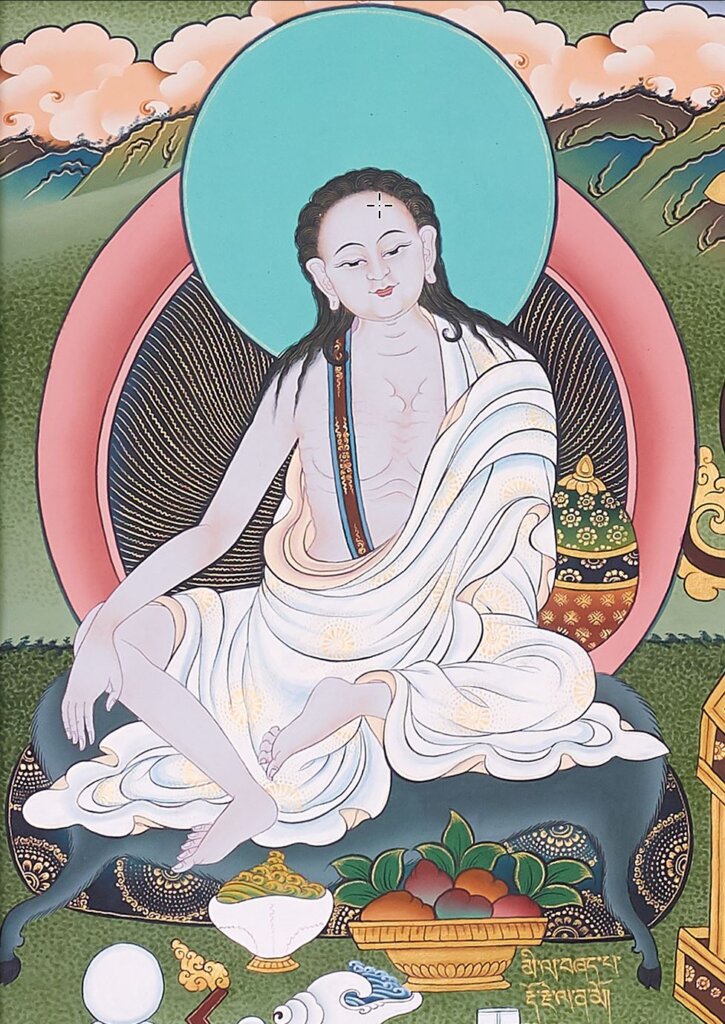
Milarepa's assertion that "The mountain teaches what no book can" invites us to contemplate the profound wisdom embedded in nature, particularly in the majestic stillness of mountains. This statement suggests that there are lessons and insights that transcend the written word, accessible only through direct experience and immersion in the natural world. In a society increasingly reliant on texts and digital information, this reminder is crucial; it beckons us to reconnect with the earth and the silent teachings it offers.
To delve deeper, we must consider the relationship between nature and the human spirit. The mountain, as a symbol, represents not only physical grandeur but also the inner journey of self-discovery and enlightenment. It stands as a timeless teacher, imparting wisdom through its presence, its challenges, and the quietude it offers. In a world filled with noise and distraction, Milarepa's words urge us to seek understanding beyond the confines of our intellectual pursuits, inviting us to embrace the lessons that arise from stillness and observation.
The image / the metaphor
At first glance, the imagery of the mountain evokes a sense of stability, permanence, and grandeur. The verbs "teaches" and "can" suggest an active engagement, where the mountain is not merely a backdrop but a dynamic presence that imparts wisdom. The felt sense of this quote is one of awe and reverence, as it implies that the mountain holds secrets that are not easily articulated but are deeply felt. It invites us to pause, to reflect, and to listen to the whispers of nature that often go unheard amidst the clamor of daily life.
Diving deeper into the metaphor, the mountain can be seen as a representation of the spiritual path itself. Just as climbing a mountain requires effort, perseverance, and a willingness to confront obstacles, so too does the journey toward enlightenment demand a commitment to inner exploration. The mountain teaches us about resilience, humility, and the importance of being present in the moment. It embodies the idea that true understanding often arises from experience rather than mere intellectual comprehension, urging us to engage with life fully and authentically.
In the speaker's tradition
Milarepa, a revered figure in Tibetan Buddhism, embodies the essence of the spiritual journey through his life and teachings. His experiences reflect key concepts such as dharma, the path of righteousness, and prajna, or wisdom. In this context, the mountain serves as a metaphor for the spiritual challenges one must face to attain enlightenment. The teachings of Milarepa emphasize the importance of direct experience and personal transformation, aligning with the notion that the natural world can be a profound teacher in our quest for understanding.
In the "Songs of Milarepa," we find numerous references to nature as a source of inspiration and guidance. For instance, Milarepa often recounts his encounters with the elements, illustrating how they shaped his spiritual insights. This connection to nature resonates with the Buddhist concept of sunyata, or emptiness, which teaches that true understanding arises from letting go of preconceived notions and embracing the present moment. The mountain, in this light, becomes a symbol of the vast potential for growth and transformation that lies within each of us.
Living the teaching
Consider a modern scenario where this teaching resonates: a person feeling overwhelmed by the demands of work and life may find solace in a hike through the mountains. As they ascend, the physical exertion and the beauty of the landscape can evoke a sense of clarity and perspective. In this moment, the mountain becomes a teacher, guiding them to reflect on their priorities and the importance of balance. The experience illustrates how nature can provide insights that are often obscured by the busyness of everyday life, reminding us to seek stillness and connection.
Another application of this teaching might occur within the context of a challenging relationship. When faced with conflict, one might choose to step outside, perhaps to a nearby park or garden, to gain a fresh perspective. In the quiet of nature, the individual may find the space to reflect on their emotions and the dynamics at play, allowing for a deeper understanding of themselves and the other person involved. This practice of seeking wisdom in nature can foster compassion and insight, illustrating how the teachings of the mountain can inform our interactions and personal growth.
A reflection
As we contemplate Milarepa's profound statement, we are invited to consider the ways in which we engage with the natural world. What lessons have you learned from nature that cannot be found in books or teachings? In moments of stillness, how might you allow the wisdom of the mountains, rivers, and forests to guide your understanding of yourself and your path? Reflecting on these questions can deepen our connection to both the earth and our inner selves, fostering a richer, more contemplative life.
