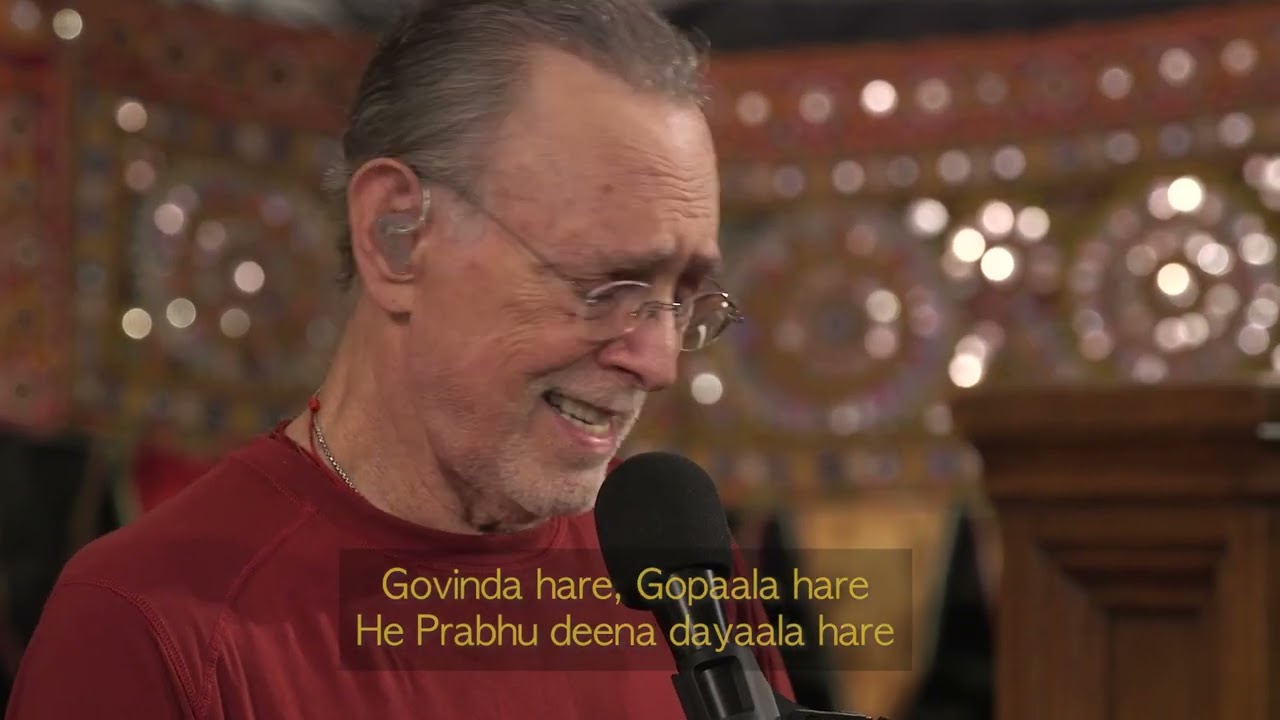
Krishna Das beautifully articulates a profound truth when he states, "In the heart, Maharaj-ji is always smiling." This quote invites us to explore the nature of presence and the enduring joy that resides within us, often obscured by the tumult of daily life. It suggests that beneath our worries and distractions, there exists a core of happiness and serenity, a divine smile that reflects the unconditional love of Maharaj-ji, a revered figure in the bhakti tradition.
To understand the significance of this statement, we must delve deeper into the essence of the heart as a spiritual center. The heart, in this context, is not merely a physical organ but a symbol of our innermost being, where connection to the divine and to one another flourishes. The idea that Maharaj-ji is always smiling implies a constant presence of grace and joy, reminding us that even in our darkest moments, there is a light within that can guide us back to peace and love.
The image / the metaphor
The imagery in Krishna Das's quote evokes a sense of warmth and comfort. The heart, often associated with love and compassion, becomes a sanctuary where Maharaj-ji's smile resides. This smile is not just a fleeting expression; it embodies a deep, abiding joy that transcends the chaos of life. The choice of the word "always" emphasizes the constancy of this presence, suggesting that no matter our circumstances, we can tap into this inner reservoir of happiness.
Diving deeper into the metaphor, we can see that Maharaj-ji's smile represents the divine assurance that we are never alone. It serves as a reminder that the essence of our being is intertwined with the divine, and that joy is not something to be sought externally but rather discovered within. This smile invites us to cultivate a relationship with our own hearts, encouraging us to recognize and nurture the love and light that resides there, waiting to be acknowledged.
In the speaker's tradition
Krishna Das's teachings are deeply rooted in the bhakti tradition, which emphasizes devotion and love for the divine. In bhakti, the heart is seen as the seat of devotion, where the practitioner cultivates a personal relationship with God. Concepts such as dharma, or righteous living, and bhakti, the path of love and devotion, are integral to this tradition. The notion of Maharaj-ji's smile aligns with the idea of kenosis, or self-emptying, where one surrenders the ego to experience the fullness of divine love.
In the Bhagavad Gita, a foundational text in the bhakti tradition, Krishna speaks of the importance of surrendering to the divine will. This surrender allows us to experience the joy and peace that come from aligning our lives with a higher purpose. The smile of Maharaj-ji can be seen as a reflection of this divine joy, encouraging us to let go of our attachments and fears, and to embrace the love that is always available to us.
Living the teaching
Consider a modern scenario where this teaching can be applied: imagine a busy parent juggling work, family responsibilities, and personal aspirations. In the midst of this chaos, the reminder that "Maharaj-ji is always smiling" can serve as a grounding mantra. It invites the parent to pause and connect with their heart, recognizing that even in the whirlwind of daily life, there exists a space of tranquility and joy that can be accessed through mindfulness and presence.
In a different context, think about a challenging relationship, perhaps with a colleague or a family member. The idea of Maharaj-ji's smile can inspire one to approach the situation with compassion and understanding. Instead of reacting with frustration or anger, one might choose to embody that smile, allowing it to soften their heart and foster a more loving interaction. This practice of embodying the divine smile can transform difficult moments into opportunities for connection and healing.
A reflection
As we contemplate the essence of Krishna Das's quote, we are invited to explore the nature of our own hearts. What does it mean for us to recognize that, in the depths of our being, there is a smile waiting to be acknowledged? In moments of stress or uncertainty, how can we cultivate the awareness of this inner joy and allow it to guide our actions and interactions with others? Reflecting on these questions can deepen our understanding of presence and the transformative power of love.