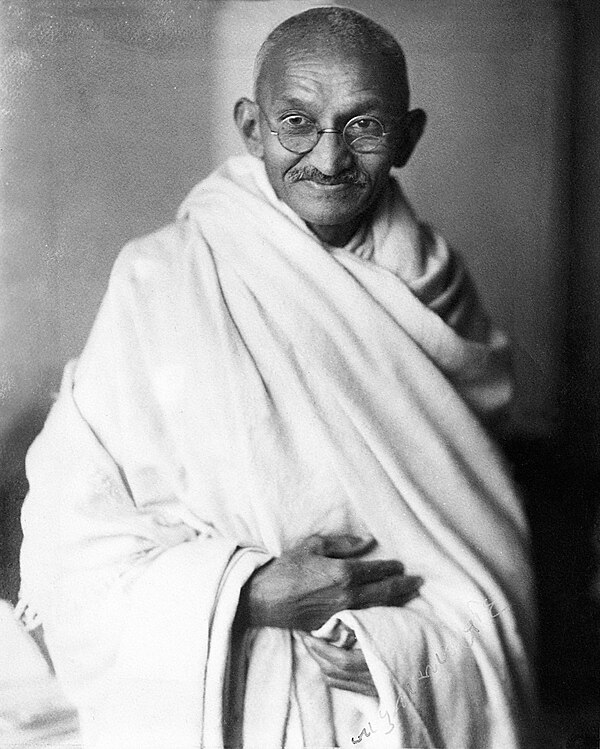
Mahatma Gandhi's assertion that "Nonviolence is a weapon of the strong" invites us to reconsider our understanding of strength and power. In a world often dominated by aggression and force, Gandhi's perspective challenges the conventional notion that might makes right. Instead, he posits that true strength lies in the ability to wield nonviolence as a transformative force. This insight is not merely theoretical; it has profound implications for how we navigate conflict and seek justice in our lives.
To grasp the depth of Gandhi's statement, we must delve into the nature of nonviolence itself. It is not a passive stance but an active commitment to justice, compassion, and resilience. Gandhi's philosophy encourages us to recognize that the capacity to respond to violence with nonviolence requires immense inner strength and courage. This understanding is crucial, especially in our contemporary landscape, where the temptation to retaliate can overshadow the more challenging path of peaceful resistance.
The image / the metaphor
The imagery in Gandhi's quote evokes a powerful juxtaposition between nonviolence and strength. The term "weapon" typically conjures images of physical force, yet here it is redefined. Nonviolence, often perceived as a weakness, is elevated to the status of a formidable tool, one that can dismantle oppression and injustice. The choice of the word "strong" further emphasizes that true power is not about domination but about the ability to endure and transform through love and understanding.
Diving deeper into the metaphor, we see that nonviolence is likened to a weapon not in the sense of inflicting harm, but rather as a means of defense and liberation. It suggests that the act of choosing nonviolence is a deliberate and strategic decision, one that requires clarity of purpose and unwavering resolve. This metaphor invites us to reimagine our approach to conflict, urging us to see nonviolence as an active engagement with the world, capable of creating profound change.
In the speaker's tradition
Moreover, Gandhi's commitment to nonviolence can be seen as an embodiment of bhakti, or devotion, where love for humanity becomes the driving force behind one's actions. In this light, his teachings echo the sentiments found in the Bhagavad Gita, where the warrior Arjuna is counseled to act without attachment to the fruits of his actions. This alignment with a higher purpose underscores the transformative potential of nonviolence as a spiritual practice, one that cultivates inner strength and resilience.
Living the teaching
In our modern world, the application of Gandhi's teaching on nonviolence can be observed in various social movements advocating for justice and equality. Consider the Black Lives Matter movement, which emphasizes peaceful protest as a means to confront systemic racism and violence. Activists draw upon Gandhi's principles to challenge oppression without resorting to the very violence they oppose. This contemporary example illustrates how nonviolence remains a potent weapon for those who seek to enact change in a world rife with conflict.
On a more personal level, we can apply the principle of nonviolence in our relationships, particularly during moments of conflict. Imagine a disagreement with a loved one where the instinct might be to retaliate with harsh words or actions. Instead, choosing nonviolence means approaching the situation with empathy and understanding, seeking to listen and communicate rather than to attack. This practice not only fosters healthier relationships but also cultivates a deeper sense of inner strength, as we learn to navigate our emotions with grace and compassion.
A reflection
As we contemplate Gandhi's assertion that "Nonviolence is a weapon of the strong," we are invited to reflect on our own lives and the ways we respond to conflict. Are there areas where we might be tempted to react with aggression rather than compassion? In what ways can we cultivate the strength to choose nonviolence, both in our interactions with others and in our internal struggles? This contemplation encourages us to explore the transformative power of nonviolence as a pathway to deeper understanding and connection.


