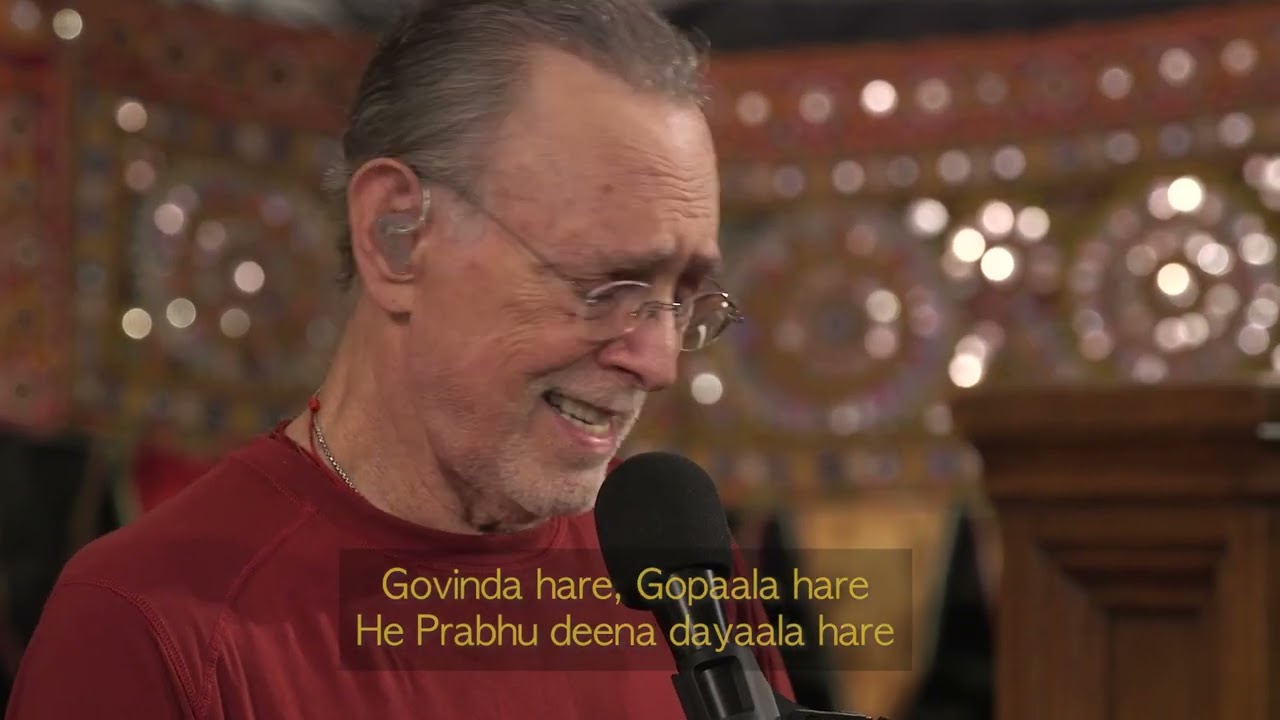
In the simple yet profound exhortation of Krishna Das, "Just keep singing. Just keep loving," we find a distilled essence of spiritual practice. This call to action invites us to engage with the world through the twin pillars of devotion and affection, suggesting that the act of singing—whether literal or metaphorical—serves as a conduit for love. In a world often fraught with distraction and disconnection, these two acts become not just practices but lifelines, grounding us in a deeper sense of purpose and connection.
To "keep singing" and "keep loving" implies a continuous engagement with the divine and with each other, transcending the ephemeral nature of our daily lives. It speaks to the importance of persistence in our spiritual journey, encouraging us to maintain our focus on what truly matters. This duality of singing and loving encapsulates the essence of bhakti, or devotional love, which is not merely a feeling but a practice that requires our active participation and commitment. In this light, Krishna Das offers us a pathway to navigate the complexities of existence with grace and intention.
The image / the metaphor
The imagery of singing evokes a sense of joy and freedom, suggesting that our voices can rise above the mundane and connect us to something greater. Singing, in this context, is not just an auditory experience but a manifestation of our inner state, a way to express our deepest feelings and longings. The act of singing can be seen as a celebration of life itself, a way to articulate our devotion and gratitude. Similarly, the act of loving is an invitation to open our hearts, to embrace vulnerability, and to forge connections that transcend the superficial.
In the speaker's tradition
Krishna Das, rooted in the tradition of bhakti, embodies the principles of devotion that emphasize love as the highest form of spiritual practice. In bhakti, the relationship between the devotee and the divine is characterized by an intimate exchange, where love becomes the medium through which we experience the sacred. Concepts such as dharma, or righteous duty, and kenosis, the self-emptying of the heart, resonate deeply within this framework, suggesting that true devotion requires us to transcend our ego and embrace a more profound connection with the divine and with others.
In the context of bhakti literature, we can draw parallels to the teachings found in the *Bhagavad Gita*, where the importance of selfless action and devotion is emphasized. The Gita teaches that engaging in one's duty with love and surrender leads to liberation, echoing Krishna Das's call to keep singing and loving. This alignment with the divine purpose allows us to navigate our lives with a sense of clarity and intention, reinforcing the idea that our spiritual practices are not separate from our daily existence but are, in fact, integral to it.
Living the teaching
Consider a modern scenario where the teaching of "just keep singing" and "just keep loving" resonates deeply: a challenging day at work where stress and tension seem to overshadow the atmosphere. In such moments, taking a moment to pause, breathe, and perhaps hum a favorite tune can serve as a reminder to reconnect with joy and lightness. This simple act of singing can shift our perspective, allowing us to approach our tasks with renewed energy and a sense of love for the work we do and the people we interact with.
In relationships, the application of this teaching can be equally transformative. Imagine a disagreement with a loved one, where emotions run high and misunderstandings abound. By choosing to respond with love—perhaps through a gentle word or a heartfelt gesture—we can create space for healing and understanding. In this way, the practice of loving becomes an active choice, one that fosters connection and compassion even in the face of conflict. The essence of Krishna Das's message reminds us that love is not merely a feeling but a continuous practice that can guide us through the complexities of our interactions.
A reflection
As we contemplate the wisdom embedded in Krishna Das's words, we are invited to reflect on our own lives: How can we incorporate the practices of singing and loving into our daily routines? In what ways might these acts serve as anchors in moments of uncertainty or challenge? By engaging with these questions, we can begin to uncover the transformative power of devotion and connection, allowing them to illuminate our paths and deepen our relationships with ourselves and others.