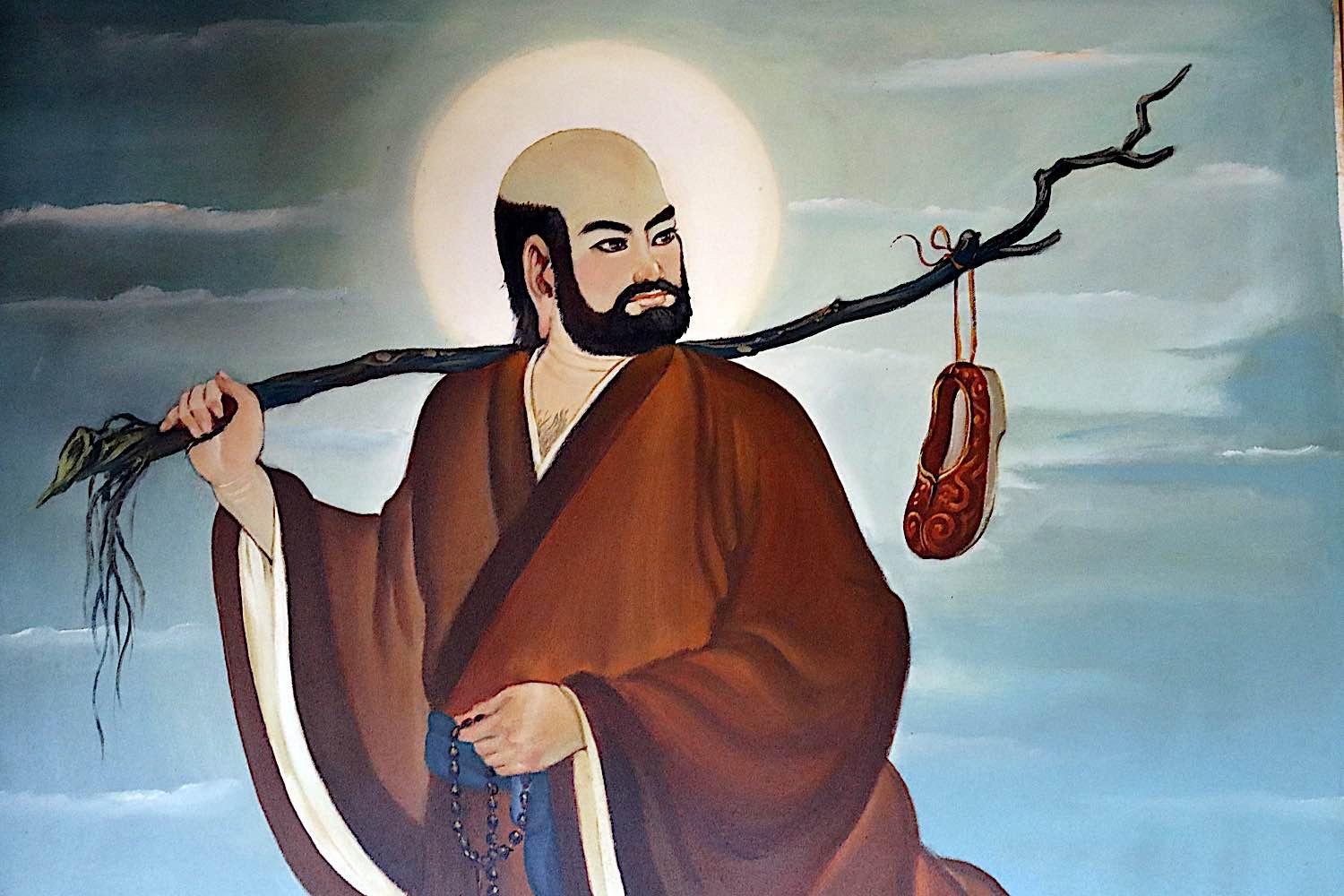
Finding Presence Within: The Wisdom of Bodhidharma
“Why look elsewhere?” This succinct yet profound question posed by Bodhidharma invites us to turn our gaze inward rather than seeking fulfillment or understanding outside ourselves. In a world filled with distractions and external pressures, this teaching serves as a gentle reminder of the importance of self-inquiry and presence. It challenges us to consider the depths of our own being, suggesting that the answers we seek are not hidden in distant lands or complex philosophies but reside within our own hearts and minds.
To delve deeper into this inquiry is to recognize the layers of meaning embedded in Bodhidharma's words. The simplicity of the phrase belies its profound implications for our spiritual journey. It beckons us to confront our habitual tendencies to seek validation, wisdom, or enlightenment externally, urging us instead to cultivate a rich inner life. This call to introspection is not merely an invitation to self-reflection; it is a profound challenge to embrace the present moment and the fullness of our own experience.
The image / the metaphor
At first glance, the quote “Why look elsewhere?” evokes a sense of immediacy and urgency. The choice of the word "look" suggests an active pursuit, a searching gaze that often leads us astray. The imagery conjured here is one of wandering, of seeking something elusive beyond our reach. Yet, Bodhidharma's question implies that the very act of looking elsewhere is a distraction from the truth that lies within us. It is a call to redirect our attention, to stop the restless searching and instead cultivate a deep awareness of our own presence.
Delving deeper into the metaphor, we can see that Bodhidharma is not merely advocating for introspection but is inviting us to engage with the essence of our being. The act of looking elsewhere suggests a disconnection from the self, a fragmentation that leads to suffering. In contrast, the invitation to look within is a call to wholeness, to embrace our true nature. This journey inward is not always comfortable; it requires us to confront our fears, doubts, and insecurities. Yet, it is through this process that we can uncover the profound wisdom and peace that reside within.
In the speaker's tradition
Bodhidharma, the legendary figure credited with bringing Zen Buddhism to China, emphasizes the importance of direct experience and personal insight. His teachings resonate with the concept of dharma, which refers to the inherent nature of reality and the path one must follow to realize it. In Zen, this journey often involves practices that cultivate awareness and presence, such as zazen (seated meditation) and koan study. The essence of Bodhidharma's message aligns with the idea of kenosis, or self-emptying, where one relinquishes the need for external validation and embraces the fullness of the present moment.
Moreover, Bodhidharma's inquiry can be seen in light of the Zen principle of sunyata, or emptiness, which teaches that our perceptions and attachments often cloud our understanding of reality. By looking elsewhere, we become entangled in illusions that distract us from the truth of our existence. In contrast, when we turn inward, we begin to experience the profound interconnectedness of all things, a realization echoed in the teachings of the Heart Sutra, which states that form is emptiness and emptiness is form. This realization is not merely intellectual; it is a lived experience that transforms our understanding of self and other.
Living the teaching
In our modern lives, the teaching of “Why look elsewhere?” can manifest in various scenarios. Consider a moment when you feel overwhelmed by the demands of work or relationships. It is easy to fall into the trap of seeking solutions outside ourselves—perhaps through advice from friends, endless research, or even escapism. However, Bodhidharma's wisdom encourages us to pause and turn inward, to explore our feelings and thoughts without judgment. This practice of self-inquiry can reveal the root of our stress and guide us toward authentic solutions that arise from a place of clarity and presence.
Another application of this teaching can be found in our interpersonal relationships. When conflicts arise, our instinct may be to seek validation or understanding from others, often leading to misunderstandings or resentment. Instead, if we embody Bodhidharma's teaching, we might first reflect on our own feelings and motivations. By cultivating a deeper awareness of our emotional landscape, we can approach conversations with empathy and openness, fostering a space for genuine connection. This practice not only enriches our relationships but also deepens our understanding of ourselves and the dynamics at play.
A reflection
As we contemplate Bodhidharma's question, “Why look elsewhere?” we are invited to explore the depths of our own being. In what ways do we seek fulfillment outside ourselves, and how might we redirect that energy inward? This inquiry challenges us to consider the richness of our inner lives and the wisdom that lies within. As we navigate the complexities of existence, let us ask ourselves: What might we discover if we paused our searching and embraced the present moment with an open heart?
