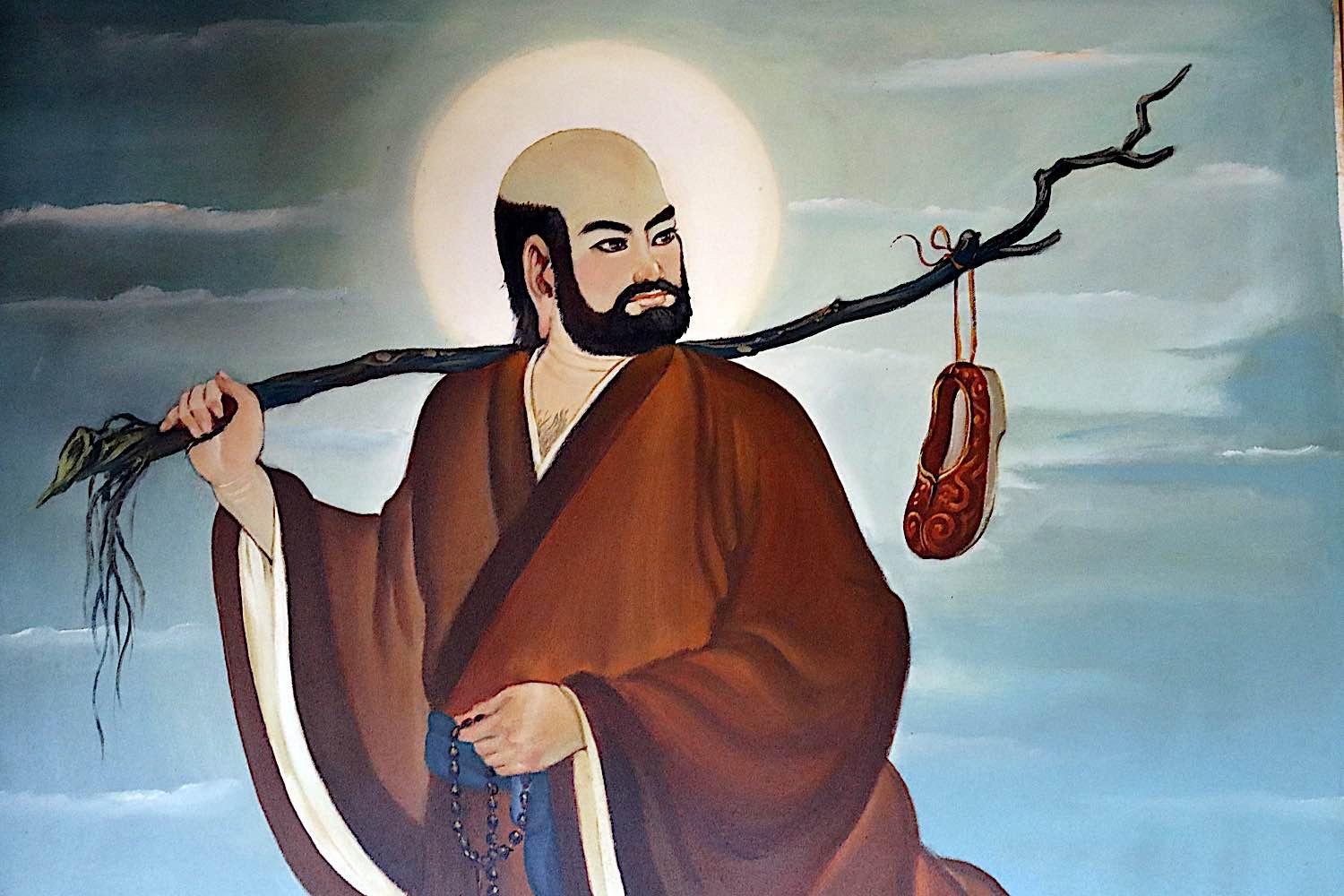
The Joy of Non-Seeking: Embracing the Essence of Being
Bodhidharma's assertion, "To seek nothing is the true joy," invites us into a profound exploration of joy that transcends the typical pursuits of desire and ambition. In a world often driven by the relentless chase for achievement, possessions, and validation, this statement serves as a gentle yet powerful reminder of the freedom found in relinquishing our attachments. It challenges us to reconsider our understanding of joy, suggesting that it is not something to be attained but rather a state of being that arises when we let go of our incessant seeking.
This teaching resonates deeply within the Zen tradition, where the essence of existence is often found in simplicity and presence. Bodhidharma, the legendary figure credited with bringing Zen to China, emphasizes a path that leads us away from the distractions of the mind and into the stillness of the heart. By seeking nothing, we open ourselves to the fullness of life as it is, allowing joy to emerge naturally from our experience rather than being a distant goal to be chased. This perspective invites us to cultivate a deeper awareness of our inner landscape, revealing the richness of the present moment.
The image / the metaphor
The imagery in Bodhidharma's quote evokes a sense of spaciousness and liberation. The phrase "to seek nothing" suggests a release from the burdens of expectation and desire, conjuring a feeling of lightness and ease. It implies a state of being where one is not weighed down by the incessant need to acquire or achieve, but rather exists in a state of acceptance and contentment. The verb "seek" carries with it a sense of striving, a reaching outwards that can often lead to frustration and disappointment. In contrast, the invitation to seek nothing opens the door to an inner joy that is already present, waiting to be discovered.
In the speaker's tradition
Within the Zen tradition, Bodhidharma's teaching on non-seeking aligns closely with the concept of "sunyata," or emptiness. This principle suggests that all phenomena are devoid of inherent existence, and thus, our attachments to them are ultimately misguided. By understanding the transient nature of our desires, we can cultivate a sense of detachment that leads to true joy. The practice of "kenosis," or self-emptying, further complements this teaching, encouraging us to let go of our ego-driven pursuits and embrace a state of openness and receptivity. In this way, Bodhidharma's wisdom resonates with the core tenets of Zen, which emphasize direct experience and the realization of one's true nature.
In the context of Zen texts, we can draw parallels to the teachings found in the "Heart Sutra," which articulates the idea that form is emptiness and emptiness is form. This profound insight invites practitioners to recognize that the very essence of our being is intertwined with the fabric of existence itself. When we cease to seek external validation or fulfillment, we begin to experience the interconnectedness of all things, allowing joy to arise from within. Bodhidharma's teachings, therefore, serve as a guiding light, illuminating the path toward a deeper understanding of ourselves and our place in the universe.
Living the teaching
Consider a modern scenario where this teaching might resonate: a person striving for career advancement, pouring their energy into achieving a promotion. In their pursuit, they may find themselves increasingly stressed and dissatisfied, feeling as though their worth is tied to their job title. By embracing Bodhidharma's teaching of non-seeking, this individual could shift their focus from external validation to an appreciation of their current contributions and the joy found in the work itself. This shift in perspective allows them to experience fulfillment in the present moment, rather than postponing joy for a future achievement.
Another application of this teaching can be found in personal relationships. Imagine a couple navigating the complexities of their partnership, each partner seeking validation and affirmation from the other. This seeking can create tension and dissatisfaction, as both individuals may feel that their happiness is contingent upon the other's actions. By practicing non-seeking, they can cultivate a deeper sense of acceptance and love for one another, allowing joy to flourish in their connection without the pressure of expectation. This approach fosters a more profound intimacy, rooted in the understanding that joy arises from being present with one another, rather than from seeking approval or validation.
A reflection
As we contemplate Bodhidharma's profound statement, we are invited to reflect on our own lives and the ways in which we seek joy. What are the pursuits or attachments that keep us from experiencing the fullness of the present moment? In what areas of our lives can we practice non-seeking, allowing joy to emerge naturally from our experiences? By engaging with these questions, we can begin to uncover the layers of our own seeking and move toward a more authentic expression of joy that is rooted in the essence of being.
