


What is Prana Flow Yoga?
Prana Flow Yoga, also known as Prana Vinyasa, is a contemporary vinyasa-based yoga practice that emphasizes the cultivation and circulation of prana—the vital life force that animates all living beings—through fluid, creative sequencing synchronized with the breath. The practice integrates classical yoga philosophy with modern movement principles, drawing from Tantra, Ayurveda, Bhakti devotion, dance, and martial arts to create what practitioners describe as “movement meditation.” Unlike fixed-form systems such as Ashtanga or Bikram Yoga, Prana Flow features variable sequencing designed to help practitioners connect with their own internal rhythms and creative expression while maintaining rigorous attention to breath-body coordination. The Sanskrit term “prana” refers to the universal source of breath, life energy, and conscious intelligence, while “vinyasa” derives from “vi” (in a special way) and “nyasa” (to place), indicating the intentional placement of the body in space coordinated with breath.
Origins & Lineage
Prana Flow Yoga was created in 2005 by Shiva Rea (born 1967), a California-based yoga teacher who studied extensively in the Krishnamacharya lineage—the teaching tradition that gave rise to most modern vinyasa practices. Krishnamacharya (1888–1989), often called the father of modern yoga, developed vinyasa krama, a method of sequential asana practice synchronized with breath; his students included Pattabhi Jois (founder of Ashtanga Yoga), B.K.S. Iyengar, and T.K.V. Desikachar. Rea completed her M.A. with a 1997 thesis titled “Hatha Yoga as a Practice of Embodiment” at UCLA and studied not only within the Krishnamacharya lineage but also with teachers of Kalaripayattu (a South Indian martial art), world dance, yogic arts, and somatic movement disciplines. She founded the Samudra Global School for Living Yoga and formalized Prana Vinyasa as a distinct style through teacher training programs beginning in the mid-2000s. The practice draws philosophical grounding from classical texts including the Yoga Sutras of Patanjali, the Hatha Yoga Pradipika, and Tantric texts, while emphasizing embodied practice over purely scriptural study.
How It’s Practiced
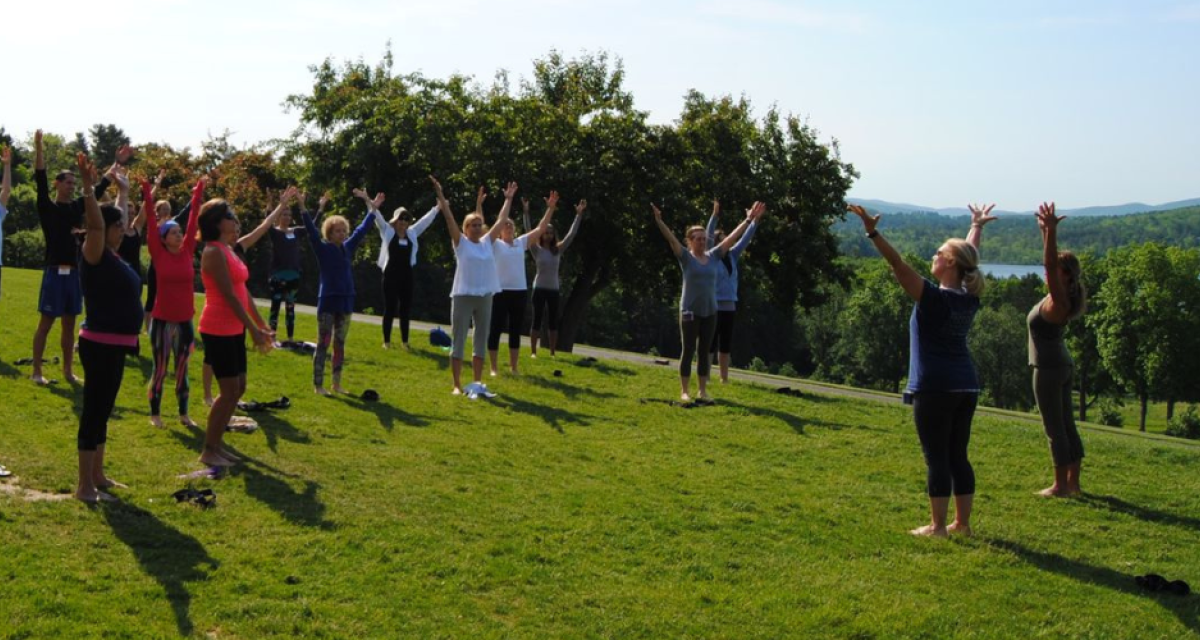
A Prana Flow class typically begins at the back of the mat with Prana Flow Pranams—prostrations or bowing movements that establish a meditative, devotional quality. Practitioners engage in mudra vinyasa, incorporating hand gestures (mudras) into flowing movement sequences guided by breath, with different mudras producing energizing, grounding, or balancing effects. The practice employs pulsations—small, rhythmic movements within poses—rather than static holds, reflecting the Tantric concept of spanda, the sacred vibration underlying all existence. Sun Salutations (Surya Namaskar) and Moon Salutations (Chandra Namaskar) serve as foundational sequences, approached not as military-style “salutes” but as acts of bowing with devotion. Ujjayi breath—a deep, rhythmic breath performed through the nose—creates internal heat and focus. Classes often feature creative, non-repetitive sequencing set to music ranging from devotional chants to world fusion, with teachers guiding students through wave-like flows that may include elements of dance and expressive movement. The practice emphasizes transitions between poses as equally important as the poses themselves, viewing the entire sequence as a continuous meditation on the flow of energy through the body.
Prana Flow Yoga Today
Prana Flow is taught globally through certified teachers trained in Shiva Rea’s 200-hour, 300-hour, and 500-hour teacher training programs offered through the Samudra Global School for Living Yoga. Students encounter the practice in yoga studios offering vinyasa or flow-style classes, at international workshops and retreats led by Rea and senior teachers, through online platforms offering streaming classes, and via Rea’s DVD series released through Gaiam and Sounds True beginning in 2000. The practice has influenced the broader vinyasa yoga landscape, with Rea described by the Los Angeles Times as one of “yoga’s rock stars” and recognized for popularizing vinyasa flow and Yoga Trance Dance (now called Rhythm & Prana Flow), a movement meditation practice combining yoga with ecstatic dance. Rea’s 2014 book “Tending the Heart Fire: Living in Flow with the Pulse of Life” serves as a foundational text. The practice remains centered on “living yoga”—integrating yogic principles into daily life as householders rather than renunciates.
Common Misconceptions
Prana Flow is not a fixed sequence like Ashtanga’s Primary Series; while it draws from vinyasa krama principles, teachers create new sequences for each class, which can confuse students expecting predictable repetition. It is not purely a physical workout, despite its dynamic nature; the practice explicitly positions itself as movement meditation with spiritual and energetic intentions rooted in Tantra and Ayurveda. Prana Flow is not synonymous with generic “vinyasa flow”—it represents a specific methodology developed by Shiva Rea with particular attention to mudras, pulsations, namaskar sequences, and integration of devotional elements that may not appear in other vinyasa classes. The practice is not exclusively for advanced practitioners; Rea designed it to be accessible to all levels, with modifications and props encouraged. Finally, Prana Flow is not focused solely on achieving peak poses; the emphasis lies on the quality of breath, the fluid transitions, and the practitioner’s subjective experience of energy flow rather than external form.
How to Begin
Beginners interested in Prana Flow should seek classes labeled “Prana Flow,” “Prana Vinyasa,” or “vinyasa flow” that emphasize breath-centered, creative sequencing. Shiva Rea’s DVD “Prenatal Yoga” (2000) and subsequent releases provide accessible entry points, as do her online classes available through platforms like YogaDownload and her website. Reading “Tending the Heart Fire” offers philosophical context. Students with no vinyasa experience should expect to learn ujjayi breathing first, then simple Sun Salutations, gradually building capacity for longer flows. Props—blocks, straps, bolsters—are encouraged for modifications. Because Prana Flow emphasizes listening to the body and moving intuitively, beginners benefit from letting go of perfectionism and focusing on the felt sense of breath and energy rather than achieving Instagram-worthy shapes. Workshops and teacher trainings offer immersive experiences, though drop-in classes at studios affiliated with Samudra-trained teachers provide ongoing practice opportunities.