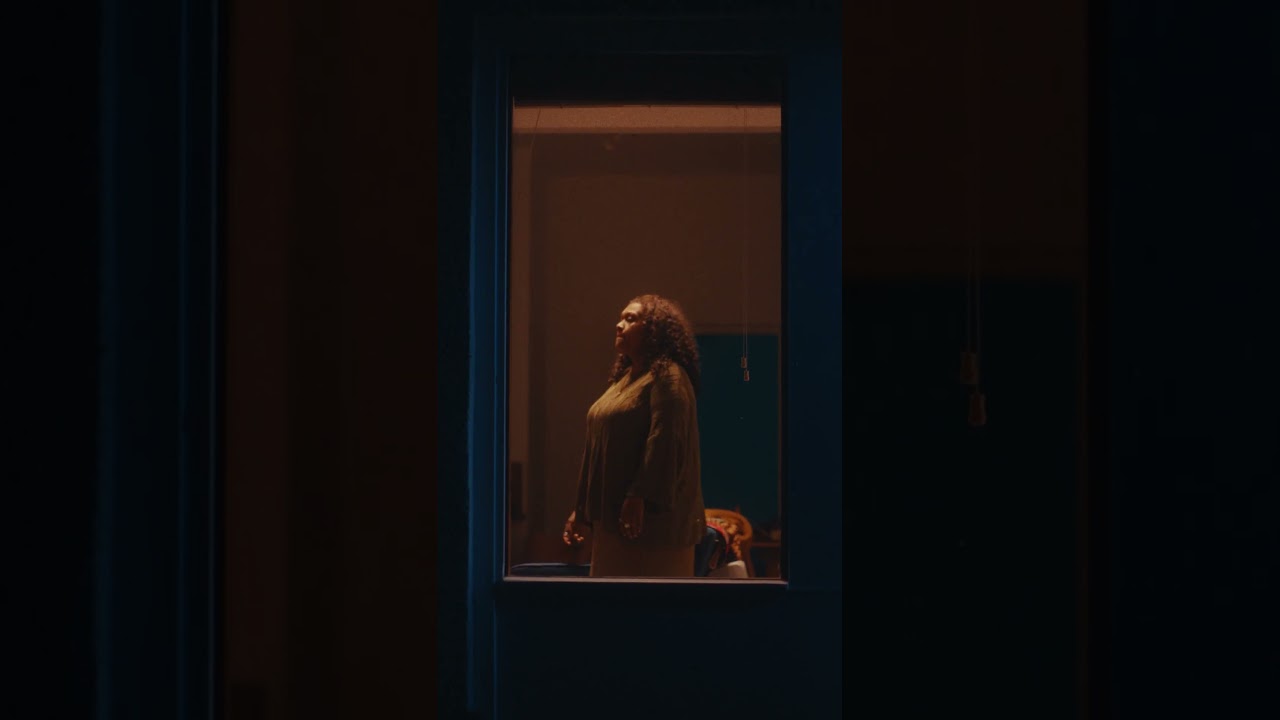
The video opens with a single, reverberant guitar note—clean, warm, fingerpicked—and within seconds a full brass section blooms: trombone, saxophone, trumpet, rendered in lush stereo. A gospel-soul orchestra materializes around a song about heartbreak and refuge. This is "Get Back to the Land," originally written by Archie Roach, and in this contemporary arrangement by The Teskey Brothers, featuring Emma Donovan on vocals alongside Josh Teskey, the song becomes something more expansive than its solo origins—a communal healing ritual dressed in the full resources of contemporary production craft and performed with the reverence typically reserved for sacred music.
The song's premise is deceptively simple: when love fails, when you're cold in spirit and body, when you don't belong in the circles you've tried to fit into, the land itself offers shelter. Not metaphorically—or not only metaphorically. The earth will never betray you. She'll wrap you in her arms and keep you safe. This is not new age sentiment whispered by people for whom nature is a weekend destination. This is lived knowledge, the kind that comes from peoples whose relationship to land is foundational, not recreational. It's the knowledge of belonging to a place for thousands of years, and of that belonging remaining true even when everything else—society, relationships, community—has been fractured by displacement and loss.
Archie Roach is a Gunditjmara man and a significant voice in contemporary Australian music. His songwriting spans decades of reckoning with displacement, identity, and the possibility of healing through connection to country. To cover Archie Roach's work is not something to approach lightly. There's no room for irony, no space for treating the song as a clever text to reinterpret for contemporary taste. His words come from a specific cultural context and a specific relationship to land that precedes European colonization by tens of thousands of years. When you sing Archie Roach, you're singing testimony.
The Teskey Brothers—Josh and Sam, from Victoria—have built a reputation over the past decade for treating both American soul and blues traditions and Australian musical heritage with equal seriousness. They've collaborated with major artists and festival organizers worldwide, but their work is consistently rooted in an understanding that soul music is not a genre to be mastered; it's a language to be spoken truthfully. Josh Teskey has a voice that carries both roughness and clarity, capable of conveying damage and resilience simultaneously. Sam Teskey's production and arrangement work shows a musician who understands that contemporary production craft can serve traditional musical values without compromising them.
Emma Donovan's presence in this recording is not incidental. She is a Yorta Yorta, Dja Dja Wurrung, and Gunditjmara artist—which means she comes to "Get Back to the Land" from within the same Indigenous Australian context that Archie Roach does. This is not outsiders interpreting Indigenous spirituality; this is artists from within that tradition, collaborating to sing their own knowledge back to themselves and to listeners who might be ready to hear it. Her voice, clear and emotionally precise, carries both dignity and vulnerability. She does not oversell the lyrics. She trusts the material completely.
The arrangement itself reveals how seriously this collaboration takes the source material. This is not a stripped-down acoustic recording or a folk-contemporary hybrid. The credits list ten instrumental and production roles beyond the lead vocalists: bass, drums, guitar, lapsteel, trombone, saxophone, trumpet, piano, plus separate credits for engineering, mixing, and mastering. This level of care suggests a recording made in a professional studio setting, with musicians selected for their ability to serve the song's emotional and spiritual aims rather than to showcase their individual prowess.
The orchestration is particularly significant. The combination of lapsteel guitar—an instrument that carries a distinctly country-gospel weight, capable of bending and sustaining notes in ways that acoustic guitar cannot—alongside a full brass section creates a sound that's simultaneously rootsy and contemporary, folk-traditional and orchestral. The lapsteel especially serves the song's emotional core: it's the sound of open strings singing under pressure, metal and wood amplifying vulnerability into something that can be heard across a room. That's exactly what heartbreak sounds like when rendered in steel and sustain.
The piano, credited to Olaf Scott, anchors the arrangement underneath. In the video, you can hear it providing harmonic foundation without drawing attention to itself—this is accompaniment that understands its role is to hold space, not to be remarked upon. The bass work by Brendon Love and drums by Liam Gough sit deep in the pocket, creating the sense of solid ground that the lyrics invoke. The guitar work, credited to Sam Teskey, carries the fingerpicked clarity that opens the song, maintaining that intimate quality even as the arrangement expands around it.
The lyrics work through several emotional registers with the precision of careful songwriting. The opening establishes the problem in specific, relatable terms: "When somebody does you wrong / What can you do / And you're not the only one / They're making love to." This isn't abstract suffering. It's the particular ache of betrayal in an intimate relationship where you've already been diminished by infidelity. The verse acknowledges both the personal wound and the common experience—you're not alone in this, which somehow makes it worse, because it means this pain is ordinary, systemic, something the world contains as a matter of course.
The next register shifts the focus outward, away from one relationship and toward social rejection more broadly: "When you're so cold / That the other friends they found / If you don't fit into that / Forever." These lines capture the experience of being excluded—not dramatically cast out, but simply not fitting, not belonging to the circles that matter to you. It's the slow cold of gradual abandonment, of discovering that you're not actually wanted in the groups you hoped to join. This is a different kind of heartbreak than romantic betrayal; it's the heartbreak of social rejection.
And then the chorus lands with absolute clarity: "Get back to the land / It will never ever hurt you." What's striking about this statement is its certainty. Not "might help you eventually" or "could be a source of comfort." Will. Never. Hurt. You. There's a guarantee embedded in this line that speaks to Indigenous Australian philosophy: that the land has an agency, a steadfastness, a generosity that human relationships do not. You cannot be betrayed by soil. You cannot fail to fit into a forest. The land receives you as you are, without judgment, without conditions.
The song then shifts again in its emotional arc, moving from individual heartbreak and social rejection to a vision of collective belonging and unconditional acceptance. "She's always in love / She'll wrap you in her arms / And she'll keep you safe." The land is gendered as female, maternal—and not in the sentimental way Western environmentalism sometimes does, treating nature as a soft place to retreat to. This is something more powerful: it's the land as an actual presence, an actual protection, an actual relationship. In Indigenous Australian cultures, the land is not scenery; it's kin. It has agency. It has feeling. It holds you.
The final refrain—"It will never ever let you go"—moves from the land's promise not to hurt you to its promise not to abandon you. These are two different claims. Not hurting and not letting go are what the land offers in exchange for what the world withholds. One is about safety; the other is about belonging. Together, they form a complete counter-narrative to the song's opening verses about betrayal and rejection.
Vocally, Emma Donovan's delivery is the instrument through which this message travels into the listener's body. The video shows her singing with a presence that commands attention without demanding it. There's clarity in her voice and an ache that runs underneath that clarity—she's not performing sadness; she's delivering testimony about heartbreak and its healing. Josh Teskey's harmony vocals, present through much of the arrangement, deepen the feeling of two people testifying together, or perhaps one voice split between private grief and the larger cultural knowledge that makes grief survivable. When both voices sing together on the chorus, there's an almost congregational quality—this is how community sings together when the song matters enough to sing truthfully.
The production itself—engineered by Naomune Anzai and mixed by Sam Teskey, with final mastering by Naomune Anzai—creates a sound field that's warm without being muddy, clear without being cold or clinical. The mix makes space for each instrument: you can hear the separate voices of the brass section, the clarity of the lapsteel, the presence of the piano. But none of these elements compete for attention; instead, they create a unified sound that mirrors the song's message. Everyone belongs here. Everyone serves the central claim: the land is solid, the land is constant, the land is listening.
What makes this arrangement significant is that it refuses to diminish Archie Roach's original by updating it for contemporary taste or making it palatable to audiences unfamiliar with Indigenous Australian music. Instead, it amplifies the original's spiritual claim by surrounding it with the full resources of contemporary production craft. This is how you honor a song when it matters: not by leaving it alone (which can become a form of condescension, suggesting it's too fragile or too foreign to be expanded), but by taking its argument so seriously that you commit full orchestral weight to it. You say: this matters. This is worth the time of ten musicians. This is worth the attention of a professional recording facility. This is worth the care of mastering.
The video has garnered more than 940,000 views, a significant number in an age of algorithmic distribution. That suggests something in this approach resonates widely—that people are seeking refuge, seeking ground beneath their feet, seeking to remember or to learn for the first time that actual connection to land, to place, to the earth itself, remains a source of steadiness when everything else proves unreliable. Archie Roach knew that when he wrote the song. The Teskey Brothers and Emma Donovan knew that when they arranged it. And every person who's clicked play and sat with these four and a half minutes of music has felt it, whether they had words for it or not.
To deepen your engagement with this song and its artists: Listen to Archie Roach's original version to experience how the song sounds in its earliest form. Explore The Teskey Brothers' broader catalog—their approach to soul and blues music, rooted in both American and Australian traditions, makes every project worth attention. Seek out more of Emma Donovan's work as an Indigenous Australian artist. Most fundamentally, consider what connection to land or place means in your own life: Are there places that hold you steadily? Are there moments when being in nature—not as escape, but as practice—has reminded you that you belong somewhere, to something?
This song's power lies not in its arrangement or its production, though both are skilled. It lies in its claim that the earth itself is a relationship, that belonging is possible, that you can return to something that will never betray you. For many people—especially those who have been displaced, rejected, or hurt by human community—that promise is not sentimental. It is testimony. It is medicine. It is the song we need to hear when the world makes us feel like we have nowhere to go.