BrightStar

Ver Todos los Events

Descubre encuentros conscientes

events

Yoga
Meditation
Breathwork
Qigong
Tai Chi
Sacred Music
World Music
Medicine Music
Sound Healing
Ecstatic Dance
Destinos Populares
BaliSedonaLos AngelesCosta RicaNew YorkSan FranciscoAustinMiamiJoshua TreeTulum
Ver Todas las CategoríasVer Todos los Destinos

Explorar Todas las Características

Herramientas poderosas para hacer crecer tus eventos

Características de la Plataforma

Precios Dinámicos Inteligentes
Categorías de Entradas
Asientos Asignados
Recuperación de Carritos
Recuperación de Visitantes
Donaciones y Escala Móvil
Motor de Afiliados
Escáner de Entradas
Códigos de Cupón
Preguntas Personalizadas
Compartir Entradas
Ventas Adicionales
Análisis e Informes
Secuencias de Email
Lista de Espera / Notificar / Recordar
Personas y Lugares
Artists & TeachersEvent OrganizersVenues & StudiosKnowledge BaseGlossaryInspiration
Ver Todas las CaracterísticasSobre Nosotros
PreciosBlog
Language
Saved events
Ver Todos los Eventos

events

YogaMeditationBreathworkQigongTai ChiSacred MusicWorld MusicMedicine Music

Destinos Populares

BaliSedonaLos AngelesCosta RicaNew YorkSan Francisco

Personas y Lugares

Artists & TeachersEvent OrganizersVenues & StudiosKnowledge BaseGlossaryInspiration

Características de la Plataforma

Precios Dinámicos InteligentesCategorías de EntradasAsientos AsignadosRecuperación de CarritosRecuperación de VisitantesDonaciones y Escala MóvilMotor de AfiliadosEscáner de EntradasCódigos de CupónPreguntas PersonalizadasCompartir EntradasVentas AdicionalesAnálisis e InformesSecuencias de EmailLista de Espera / Notificar / Recordar
Ver Todas las CaracterísticasSobre Nosotros
PreciosBlog
Iniciar sesiónBuscadoresCreadores
  • Ver Todos los Eventos
  • Para Buscadores
  • Yoga
  • Meditación
  • Respiración consciente
  • Qigong
  • Tai chi
  • Música sagrada
  • Música del mundo
  • Música medicina
  • Sanación con sonido
  • Danza extática
  • Retiros
  • Talleres
  • Todas las Categorías →
  • Bali
  • Sedona
  • Los Angeles
  • Costa Rica
  • Tulum
  • Byron Bay
  • San Francisco
  • Austin
  • New York
  • San Diego
  • Denver
  • Seattle
  • Portland
  • Miami
  • Todas las Ciudades →
  • Join the Movement
  • Why we list
  • Sell Globally
  • Para Creadores
  • Para equipos
  • Para Escritores
  • Para Maestros
  • Para Artistas de Kirtan
  • Para Estudios
  • Para Festivales
  • Para Centros de Retiros
  • Para Organizaciones Sin Fines de Lucro
  • Embajador de Marca
  • Entradas sin costo
  • Elevate
  • Amplify
  • Red de +500K Compradores
  • Recuperación de Carritos
  • Precios Dinámicos Inteligentes
  • Categorías de Entradas
  • Eventos Recurrentes
  • Asientos Asignados
  • Motor de Afiliados
  • Lista de Espera / Notificar
  • Escáner de Entradas
  • Widget Embebido
  • Sindicación de eventos
  • Centro de mensajes
  • Integraciones
  • Reportes
  • Todas las Características →
  • Acerca de
  • El ecosistema
  • Blog
  • Glosario
  • Inspiración
  • Centro de Ayuda
  • Contacto
  • Documentación API
  • Recursos de Marca
  • Carreras
  • Prensa
  • Términos de Servicio
  • Política de Privacidad

Eventos

  • Ver Todos los Eventos
  • Para Buscadores
  • Yoga
  • Meditación
  • Respiración consciente
  • Qigong
  • Tai chi
  • Música sagrada
  • Música del mundo
  • Música medicina
  • Sanación con sonido
  • Danza extática
  • Retiros
  • Talleres
  • Todas las Categorías →

Destinos

  • Bali
  • Sedona
  • Los Angeles
  • Costa Rica
  • Tulum
  • Byron Bay
  • San Francisco
  • Austin
  • New York
  • San Diego
  • Denver
  • Seattle
  • Portland
  • Miami
  • Todas las Ciudades →

Para Creadores

  • Join the Movement
  • Why we list
  • Sell Globally
  • Para Creadores
  • Para equipos
  • Para Escritores
  • Para Maestros
  • Para Artistas de Kirtan
  • Para Estudios
  • Para Festivales
  • Para Centros de Retiros
  • Para Organizaciones Sin Fines de Lucro
  • Embajador de Marca
  • Entradas sin costo
  • Elevate
  • Amplify

Características

  • Red de +500K Compradores
  • Recuperación de Carritos
  • Precios Dinámicos Inteligentes
  • Categorías de Entradas
  • Eventos Recurrentes
  • Asientos Asignados
  • Motor de Afiliados
  • Lista de Espera / Notificar
  • Escáner de Entradas
  • Widget Embebido
  • Sindicación de eventos
  • Centro de mensajes
  • Integraciones
  • Reportes
  • Todas las Características →

Empresa

  • Acerca de
  • El ecosistema
  • Blog
  • Glosario
  • Inspiración
  • Centro de Ayuda
  • Contacto
  • Documentación API
  • Recursos de Marca
  • Carreras
  • Prensa
  • Términos de Servicio
  • Política de Privacidad
BrightStar
Descarga la app
Descárgalo en elApp StoreDisponible enGoogle Play
© 2026 BrightStar. Todos los derechos reservados.
Watch

Om Namo Bhagavate Vasudevaya: Sacred Sound's Power

Radhika Das
Radhika Das
Sep 17, 2026
6 min de lectura
Ver · 7

The power of transcendental sound has moved seekers across centuries and cultures—through chants, prayers, hymns, and the recitation of sacred texts that awaken the inherent spiritual nature within each person. In a recent kirtan performance recorded in London, Radhika Das channels this ancient lineage through a contemporary arrangement of "Om Namo Bhagavate Vasudevaya," demonstrating how a single mantra, when sung with intention and in community, can become a doorway to the divine.

Leer · 6 secciones

What Is a Mantra, Really?

The word "mantra" comes from Sanskrit and carries a precise meaning: "that which liberates and cleanses the mind." A mantra is not merely a sound—it is a sacred sound formula, one that, when vibrated repeatedly, becomes a direct process of purifying the heart and mind. The idea is deceptively simple yet profoundly powerful: through consistent engagement with a mantra's phonetic vibration, the inherent brilliance already present within begins to shine outward into every aspect of daily life. This is not metaphor alone; practitioners across traditions report tangible shifts in their inner state and outer expression when working with mantra over time.

The mechanism works on multiple levels simultaneously. At the physical level, the vibrations of sound alter the nervous system, calming the mind and shifting the body into a parasympathetic state. At the psychological level, the repetition creates a container—a field of attention that crowds out the anxious, scattered patterns of thought. And at the spiritual level, the mantra acts as a vehicle, a set of words infused by centuries of practice that carries practitioners toward states of genuine recognition and awakening.

How Does "Om Namo Bhagavate Vasudevaya" Function?

The particular mantra featured in Radhika Das's London performance carries its own specific resonance. "Om Namo Bhagavate Vasudevaya" awakens the heart to its divine nature and brings about joy and true inner satisfaction. Broken down, "Om" is the primordial sound, the vibration from which all creation emerges. "Namo" means "I bow" or "I honor." "Bhagavate" refers to the divine or the Lord, and "Vasudevaya" is an epithet pointing to the infinite consciousness that pervades all of existence. Together, the mantra becomes a profound act of surrender and recognition: *I bow to the infinite consciousness that lives within all beings.*

When sung in a group setting—as in kirtan, the call-and-response devotional singing tradition—the power amplifies exponentially. The leader voices the mantra, and the community echoes it back, creating a resonant field that lifts each participant beyond their individual sense of separation. This is not passive listening; it is active participation in a centuries-old technology of the heart.

The Evolution of the Arrangement

Radhika Das's arrangement of this mantra was inspired by a track by Gaura Vani, another contemporary kirtan artist working in a similar lineage. The particular genius of the arrangement lies in its entry: meditative vocals layered over piano create a mood that inspires loving devotion even before the full mantra begins to build. There is no rush, no urgency. Instead, the listener is invited into a contemplative space—a moment of stillness from which the sacred invocation can naturally arise.

The performance in London featured a full ensemble. Radhika Das carried the lead vocals, supported by backing vocals from Daivi Kumari, Tanmaya, and Emily Cobie. Keli Woods brought guitar and additional vocals, adding a contemporary harmonic dimension. Abhay Buddhdev's mrdanga—a traditional double-headed drum central to Indian classical and devotional music—provided the rhythmic foundation, grounding the ethereal vocal layers in the earth's ancient pulse. This is not a solo act but a full-bodied offering: each musician serving the mantra's power rather than their own virtuosity.

Why Mantra Works Across Traditions

One of the most striking aspects of mantric practice is its universal applicability. While "Om Namo Bhagavate Vasudevaya" emerges from the Hindu bhakti yoga tradition, the principle underlying it—that sound vibration can purify consciousness and reconnect us with our deepest nature—appears across every major spiritual tradition. Christian monks have their liturgical chants, Islamic practitioners their dhikr, Sufi masters their sacred sound practices. Buddhist monks have used mantra for over two thousand years. Jewish mystics have worked with the names of God as vibratory formulas.

What ties these practices together is an understanding that the human being is not sealed off from the sacred—separated by some unbridgeable gulf. Rather, we are continuities of the sacred, expressions of the same consciousness that organizes the cosmos. Mantra practice is a means of remembering this truth, of activating it not as intellectual knowledge but as lived embodied reality. In this sense, mantra is fundamentally about recognition: *I am not separate from that which I seek.*

The Heart as the Primary Instrument

Kirtan differs from other forms of vocal music because it is not primarily a performance art, though it may be performed. The intention is transformation, not entertainment. The heart is the instrument, not the voice. The voice is simply the vehicle through which the heart learns to speak its truth. When Radhika Das sings "Om Namo Bhagavate Vasudevaya," she is inviting listeners not to admire her technique but to join her in bowing—to move into their own hearts and recognize the divine presence already dwelling there.

This is why the simplicity of the arrangement matters so much. The piano does not overwhelm; the guitar does not dazzle. Each element creates space. The mrdanga's rhythm does not impose but rather mirrors the heartbeat itself, the fundamental pulse of embodied existence. Within this spaciousness, something can shift. The protective walls we have built begin to dissolve, and the tenderness beneath becomes accessible once again.

Where to go from here

For those newly encountering mantra, the first step is simple: listen. Allow yourself to be moved by the sound without needing to understand it intellectually. If you feel drawn to the practice, seek out a kirtan circle in your community—these are increasingly common in yoga studios, meditation centers, and spiritual communities worldwide. Kirtan is participatory by nature; there is no prior knowledge required, no perfect pitch necessary. Your voice, imperfect and human as it is, is exactly the voice the mantra is waiting for.

If you wish to deepen your practice, consider taking up the mantra as a personal sadhana (spiritual discipline). Many practitioners chant "Om Namo Bhagavate Vasudevaya" for 40 days, or 108 days, allowing the vibration to work its alchemy over time. The key is consistency and sincerity—not perfection of form, but authenticity of intention.

Finally, investigate your own tradition, if you have one. Most spiritual paths have mantric or contemplative vocal practices embedded within them. By engaging with these practices, you are not adopting something foreign; you are coming home to your own inheritance, reactivating the technologies of consciousness that have sustained your lineage for generations.

Comments

Loading the conversation…

Transcript

[0:02] ओम नमो

[0:05] [संगीत]

[0:06] भगवते

[0:07] [गाना गाने की आवाज़]

[0:10] वासुदेवाय [संगीत]

[0:16] ओम [संगीत] नमः [गाना गाने की आवाज़]

[0:22] [संगीत]

[0:25] वासुदेवाय [गाना गाने की आवाज़]

[0:31] ओम नमो

[0:33] [संगीत][गाना गाने की आवाज़]

[0:35] भगवते

[0:39] [संगीत] वासुदेवाय

[0:45] ॐ नमो [गाना गाने की आवाज़]

[0:49] भगवते

[0:51] [संगीत]

[0:53] वासुदेवाय

[0:55] [गाना गाने की आवाज़]

[0:59] ओम नमो [गाना गाने की आवाज़]

[1:03] भगवते

[1:05] [संगीत]

[1:07] वासुदेवाय

[1:12] [संगीत]

[1:13] ओम नमः [गाना गाने की आवाज़]

[1:19] [संगीत]

[1:21] वासुदेवाय [गाना गाने की आवाज़]

[1:28] [संगीत]

[1:28] नमो

[1:31] भगवते

[1:35] [संगीत] वासुदेवाय

[1:40] [संगीत]

[1:41] ओम नमो

[1:45] पार्वते [गाना गाने की आवाज़]

[1:48] [संगीत]

[1:49] वासुदेवाय [गाना गाने की आवाज़]

[1:55] ओम [संगीत] नमो

[1:58] भगवते [गाना गाने की आवाज़]

[2:02] [संगीत] वासुदेवाय [गाना गाने की आवाज़]

[2:08] [संगीत]

[2:09] ओम नमो [गाना गाने की आवाज़]

[2:14] [संगीत]

[2:16] वासुदेवाय

[2:19] [संगीत][गाना गाने की आवाज़]

[2:20] ओम ओम

[2:24] नमो [गाना गाने की आवाज़]

[2:26] भगवते

[2:30] [गाना गाने की आवाज़] वासुदेवाय

[2:35] [संगीत]

[2:40] [गाना गाने की आवाज़]

[2:42] [संगीत]

[2:44] [गाना गाने की आवाज़]

[2:48] [संगीत]

[2:50] ओम नमो

[2:53] भगवते

[2:55] [संगीत]

[2:57] वासुदेवाय [गाना गाने की आवाज़]

[3:01] [संगीत]

[3:03] ॐ

[3:05] [गाना गाने की आवाज़]

[3:06] भगवते

[3:09] [संगीत]

[3:10] वासुदेवाय

[3:14] [संगीत]

[3:16] ॐ नमो

[3:20] भगवते [गाना गाने की आवाज़]

[3:21] [संगीत]

[3:24] वासुदेवाया

[3:30] ओम नमो [गाना गाने की आवाज़][संगीत]

[3:37] वासुदेवाय [गाना गाने की आवाज़]

[3:42] [संगीत]

[3:43] नमो

[3:46] भगवते

[3:49] [संगीत]

[3:50] वासुदेवा [गाना गाने की आवाज़]

[3:54] [संगीत]

[3:56] [गाना गाने की आवाज़]

[4:00] [संगीत]

[4:02] [गाना गाने की आवाज़]

[4:06] [संगीत]

[4:08] ओम

[4:10] [गाना गाने की आवाज़] नमो

[4:12] [संगीत]

[4:13] भगवते

[4:18] वासुदेवाय [गाना गाने की आवाज़]

[4:23] नमो

[4:25] भगवते [संगीत][गाना गाने की आवाज़]

[4:31] वासुदेवा [गाना गाने की आवाज़]

[4:35] नमो [संगीत]

[4:37] भगवते [गाना गाने की आवाज़]

[4:42] [संगीत] वासुदेवा [गाना गाने की आवाज़]

[4:47] नमो [संगीत]

[4:53] [संगीत]

[4:54] वासुदेवाय [गाना गाने की आवाज़]

[4:58] नमो

[5:01] भगव [गाना गाने की आवाज़][संगीत]

[5:06] वासुदेवाय

[5:09] [गाना गाने की आवाज़]

[5:10] नमो

[5:12] भगवते

[5:14] [संगीत]

[5:18] वासुदेवाय

[5:21] [संगीत]

[5:22] नमो

[5:24] भगवते

[5:26] [संगीत]

[5:29] वासुदेवाय

[5:33] नमो

[5:35] [संगीत]

[5:36] भगवते

[5:41] वासुदेवा

[5:45] नमो

[5:48] भगवते [संगीत][गाना गाने की आवाज़]

[5:53] वासुदेवाय

[5:57] नमो [संगीत]

[5:59] भगवते

[6:02] [गाना गाने की आवाज़][संगीत]

[6:05] वासुदेवाय

Radhika Das
ArtistRadhika Das

London-based mantra artist and kirtan leader who sees sacred sound as a doorway to connection, healing and joy, sharing it with students worldwide.

Ver perfilSitio web
Explorar temas
MantraKirtanBhakti-yogaTranscendental-soundDevotion

¿Tienes Preguntas?

Preguntas Frecuentes

Mantra is a Sanskrit term meaning "that which liberates and cleanses the mind." It refers to a sacred sound formula that, when vibrated repeatedly, purifies the heart and mind, allowing inner brilliance to shine into every aspect of life. The vibration works simultaneously on physical, psychological, and spiritual levels, calming the nervous system while serving as a vehicle for deeper states of recognition and awakening.
Kirtan is call-and-response devotional singing rooted in bhakti yoga tradition. Unlike performance-oriented singing, kirtan's primary intention is transformation rather than entertainment. The heart is the instrument; the voice is simply the vehicle. When sung in groups, the power amplifies exponentially, creating a resonant field that lifts participants beyond their individual sense of separation.
The first step is to listen to kirtan recordings and allow yourself to be moved by the sound. Seek out a kirtan circle in your community—these gatherings exist in yoga studios, meditation centers, and spiritual communities. Kirtan requires no prior knowledge or perfect pitch; your sincere participation is all that matters. You can also take up a mantra as a personal daily practice for 40 or 108 days.
Breaking it down: Om is the primordial sound of creation; Namo means "I bow" or "I honor"; Bhagavate refers to the divine; and Vasudevaya points to the infinite consciousness pervading all existence. Together, the mantra becomes a profound act of surrender and recognition: *I bow to the infinite consciousness that lives within all beings.* Singing it awakens the heart to its divine nature and brings joy and true inner satisfaction.
Yes, the principle of using sound vibration for spiritual transformation appears across traditions. Christian monks use liturgical chants, Islamic practitioners use dhikr, Buddhist monks have used mantra for over two thousand years, and Jewish mystics have worked with the names of God as vibratory formulas. Mantra practice is fundamentally about recognizing that we are not separate from the sacred—we are continuities of it.
Yes. On the physical level, sound vibrations alter the nervous system, calming the mind and shifting the body into a parasympathetic state. Psychologically, repetition creates a container of focused attention that quiets anxious, scattered thought patterns. Practitioners across traditions report tangible shifts in their inner state and outer expression when working with mantra over time.
The mrdanga is a traditional double-headed drum central to Indian classical and devotional music. In kirtan, its rhythmic foundation grounds ethereal vocal layers in the earth's ancient pulse, mirroring the heartbeat itself—the fundamental rhythm of embodied existence. Its role is not to dazzle but to create space and support the heart's expression.
No. Kirtan is participatory by nature and requires no prior knowledge or perfect pitch. Your voice, imperfect and human as it is, is exactly the voice the mantra is waiting for. The focus is on sincerity of intention and connection to the heart, not technical perfection of form.

Seguir leyendo

More from Radhika

Ver Todo
Om Namah Shivaya Live Kirtan: Call, Response and the Shiva Chant
Inspire

Om Namah Shivaya Live Kirtan: Call, Response and the Shiva Chant

A live kirtan of Om Namah Shivaya, recorded at Medicine Festival 2026 in Reading, moves from slow mantra into ecstatic chant. Here is what t…

1 min read
Bhaja Mana Radha Govinda Kirtan: Meaning and Practice
Inspire

Bhaja Mana Radha Govinda Kirtan: Meaning and Practice

A seven-minute London kirtan of the maha-mantra Bhaja Mana Radha Govinda, unpacked: its meaning, its call-and-response form, and the New Yor…

1 min read
From Broken Glass to Love: The Dhruva Mantra's Timeless Power
Inspire

From Broken Glass to Love: The Dhruva Mantra's Timeless Power

At the same London venue where Prabhupāda spoke, Gaura Vani offers an ancient mantra and the teaching that transforms seeking from broken gl…

1 min read
Bhaja Govindam: Where Ancient Wisdom Meets Contemporary Sound
Inspire

Bhaja Govindam: Where Ancient Wisdom Meets Contemporary Sound

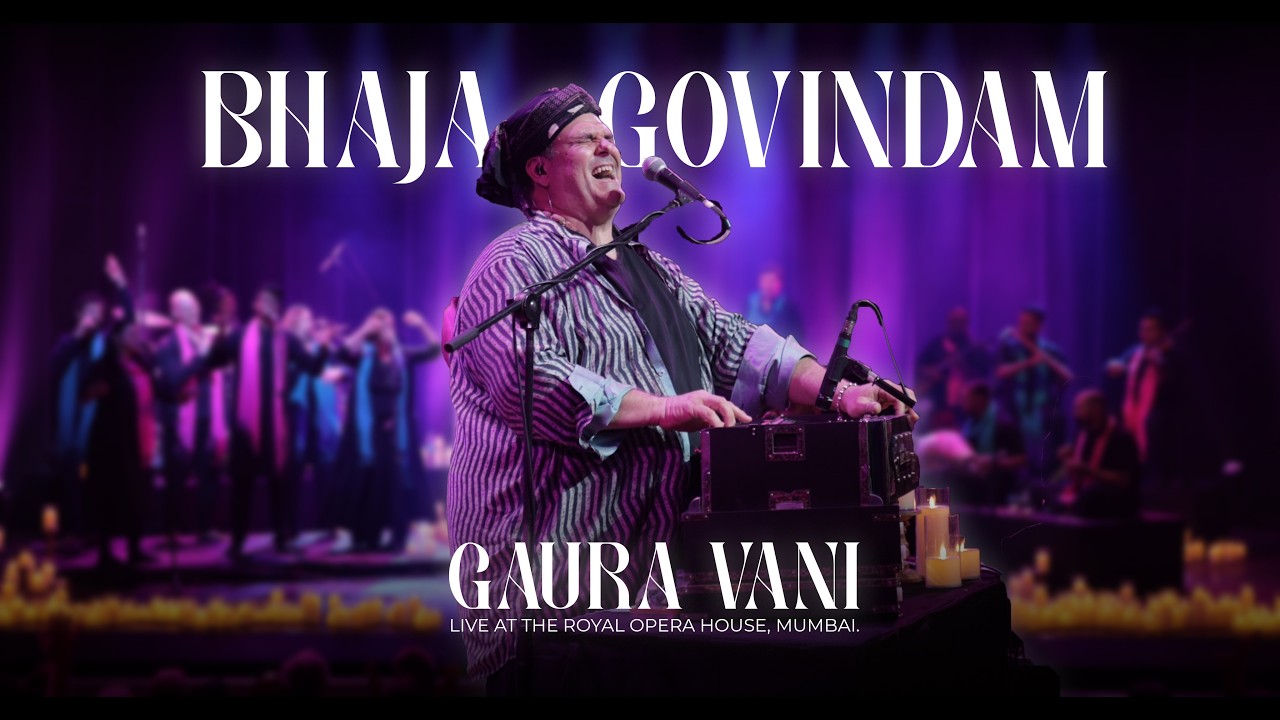
An ensemble bridges 8th-century Sanskrit philosophy and contemporary Mumbai rap. The performance proves ancient wisdom and modern consciousn…

1 min read

Sigue explorando

Continúa tu camino

Más sabiduría y encuentros de todo el directorio de BrightStar.

Más artículos

Recorre la biblioteca completa de enseñanzas, entrevistas y guías.

Ver todos los artículos →

Maestros y artistas

Explora los linajes, músicos y guías del mundo consciente.

Explorar artistas →

Encuentra un evento

Kirtan, retiros, baños de sonido, breathwork, festivales — muy pronto.

Ver eventos →