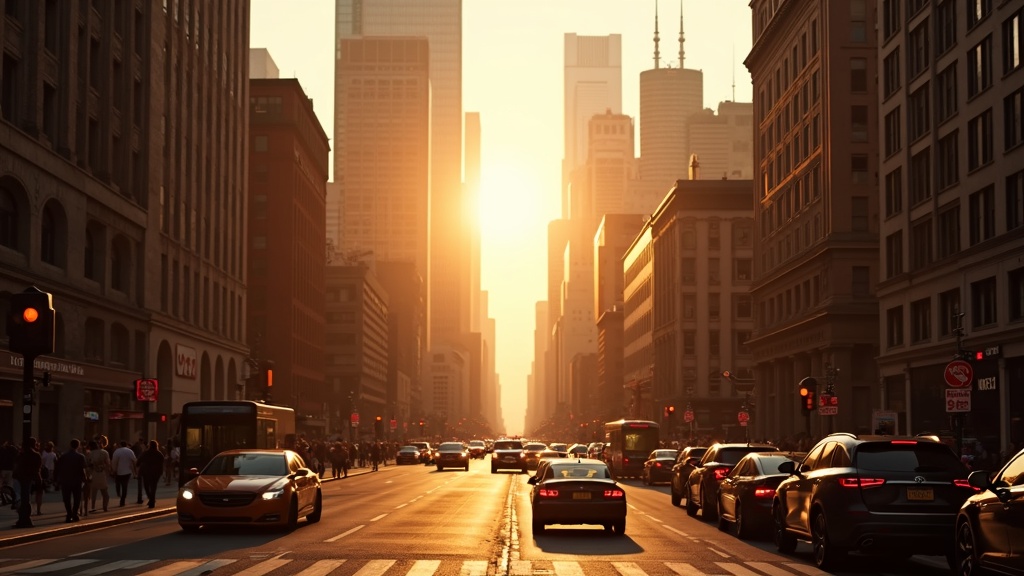
New York City doesn't just host music—it invents it. From the smoky jazz clubs of Harlem to the concrete parks of the Bronx, from the anarchic energy of the Bowery to the bedroom studios of Brooklyn, this city has consistently rewritten the rulebook of American sound. Every generation has found its voice here, echoing through tenement walls and concert halls alike, creating a living archive of sonic revolution that continues to pulse through our streets today.
In the 1920s and 30s, Harlem transformed into the creative capital of Black America, and with it came the birth of American jazz as we know it. The Cotton Club, the Savoy Ballroom, and Minton's Playhouse became laboratories of innovation where Duke Ellington, Billie Holiday, and Count Basie didn't just perform—they pioneered entirely new musical languages. This wasn't entertainment; it was cultural insurgency. Jazz became the sound of modernity itself, sophisticated and spontaneous, rooted in African American experience but speaking to universal human emotion. The bebop revolution that followed at Minton's—with Charlie Parker and Dizzy Gillespie pushing harmonic boundaries into the stratosphere—proved that Harlem wasn't just hosting a renaissance, it was incubating the future of music.
Fast forward to 1973, when a dive bar on the Bowery became ground zero for perhaps the most influential musical movement since jazz. CBGB—Country, Bluegrass, and Blues, ironically—hosted neither. Instead, it became the crucible where punk rock and new wave forged their identities. The Ramones stripped rock down to its raw essentials. Talking Heads intellectualized it. Patti Smith poeticized it. Blondie glamorized it. Television elevated it. These weren't polished acts—they were urgent, uncompromising, and unapologetically New York. The venue may be gone, but its spirit lives on in the city's countless independent venues where artists still challenge conventions and audiences still crave authenticity over production.
While Manhattan grabbed headlines, the Bronx was quietly engineering the most significant cultural export of the late 20th century. At a back-to-school party at 1520 Sedgwick Avenue in 1973, DJ Kool Herc isolated the break—that percussive moment when the song strips down to its rhythmic essence—and extended it, creating the foundation for hip-hop. Grandmaster Flash followed with technical innovations that turned turntables into instruments. Afrika Bambaataa brought the philosophy. The Cold Crush Brothers brought the poetry. What emerged wasn't just music—it was a complete culture encompassing sound, visual art, dance, and language. Hip-hop proved that genius doesn't require resources, just resourcefulness.
Simultaneously, downtown Manhattan hosted a parallel universe where composers like Philip Glass and Steve Reich reimagined classical music through minimalist repetition, where John Zorn blurred every genre boundary imaginable, and where venues like The Kitchen and The Knitting Factory became sanctuaries for sonic experimentation. This wasn't music for the masses—it was music as radical inquiry.
Today, NYC remains the epicenter. Brooklyn DIY spaces nurture bedroom pop experimentalists. Queens is the heartbeat of New York drill, with artists like Pop Smoke reshaping rap's sound. Venues like Nowadays and Elsewhere host electronic innovators. Even institutions like David Geffen Hall, where programs like "Young Peoples Concert: Music for America" introduce new generations to orchestral traditions, prove that musical education remains vital to the city's cultural ecosystem.
The legacy isn't nostalgic—it's living. Every subway musician, every open mic, every warehouse rave carries the DNA of those who came before. New York taught the world that music isn't just about notes—it's about necessity, identity, and the beautiful chaos that happens when millions of people try to be heard simultaneously. The city's greatest hit isn't a song—it's the conviction that the next revolutionary sound is always just around the corner, probably in a basement you've never heard of, waiting to change everything again.