BrightStar

Ver Todos los Events

Descubre encuentros conscientes

events

Yoga
Meditation
Breathwork
Qigong
Tai Chi
Sacred Music
World Music
Medicine Music
Sound Healing
Ecstatic Dance
Destinos Populares
BaliSedonaLos AngelesCosta RicaNew YorkSan FranciscoAustinMiamiJoshua TreeTulum
Ver Todas las CategoríasVer Todos los Destinos

Explorar Todas las Características

Herramientas poderosas para hacer crecer tus eventos

Características de la Plataforma

Precios Dinámicos Inteligentes
Categorías de Entradas
Asientos Asignados
Recuperación de Carritos
Recuperación de Visitantes
Donaciones y Escala Móvil
Motor de Afiliados
Escáner de Entradas
Códigos de Cupón
Preguntas Personalizadas
Compartir Entradas
Ventas Adicionales
Análisis e Informes
Secuencias de Email
Lista de Espera / Notificar / Recordar
Personas y Lugares
Artists & TeachersEvent OrganizersVenues & StudiosKnowledge BaseGlossaryInspiration
Ver Todas las CaracterísticasSobre Nosotros
PreciosBlog
Language
Saved events
Ver Todos los Eventos

events

YogaMeditationBreathworkQigongTai ChiSacred MusicWorld MusicMedicine Music

Destinos Populares

BaliSedonaLos AngelesCosta RicaNew YorkSan Francisco

Personas y Lugares

Artists & TeachersEvent OrganizersVenues & StudiosKnowledge BaseGlossaryInspiration

Características de la Plataforma

Precios Dinámicos InteligentesCategorías de EntradasAsientos AsignadosRecuperación de CarritosRecuperación de VisitantesDonaciones y Escala MóvilMotor de AfiliadosEscáner de EntradasCódigos de CupónPreguntas PersonalizadasCompartir EntradasVentas AdicionalesAnálisis e InformesSecuencias de EmailLista de Espera / Notificar / Recordar
Ver Todas las CaracterísticasSobre Nosotros
PreciosBlog
Iniciar sesiónBuscadoresCreadores
  • Ver Todos los Eventos
  • Para Buscadores
  • Yoga
  • Meditación
  • Respiración consciente
  • Qigong
  • Tai chi
  • Música sagrada
  • Música del mundo
  • Música medicina
  • Sanación con sonido
  • Danza extática
  • Retiros
  • Talleres
  • Todas las Categorías →
  • Bali
  • Sedona
  • Los Angeles
  • Costa Rica
  • Tulum
  • Byron Bay
  • San Francisco
  • Austin
  • New York
  • San Diego
  • Denver
  • Seattle
  • Portland
  • Miami
  • Todas las Ciudades →
  • Join the Movement
  • Why we list
  • Sell Globally
  • Para Creadores
  • Para equipos
  • Para Escritores
  • Para Maestros
  • Para Artistas de Kirtan
  • Para Estudios
  • Para Festivales
  • Para Centros de Retiros
  • Para Organizaciones Sin Fines de Lucro
  • Embajador de Marca
  • Entradas sin costo
  • Elevate
  • Amplify
  • Red de +500K Compradores
  • Recuperación de Carritos
  • Precios Dinámicos Inteligentes
  • Categorías de Entradas
  • Eventos Recurrentes
  • Asientos Asignados
  • Motor de Afiliados
  • Lista de Espera / Notificar
  • Escáner de Entradas
  • Widget Embebido
  • Sindicación de eventos
  • Centro de mensajes
  • Integraciones
  • Reportes
  • Todas las Características →
  • Acerca de
  • El ecosistema
  • Blog
  • Glosario
  • Inspiración
  • Centro de Ayuda
  • Contacto
  • Documentación API
  • Recursos de Marca
  • Carreras
  • Prensa
  • Términos de Servicio
  • Política de Privacidad

Eventos

  • Ver Todos los Eventos
  • Para Buscadores
  • Yoga
  • Meditación
  • Respiración consciente
  • Qigong
  • Tai chi
  • Música sagrada
  • Música del mundo
  • Música medicina
  • Sanación con sonido
  • Danza extática
  • Retiros
  • Talleres
  • Todas las Categorías →

Destinos

  • Bali
  • Sedona
  • Los Angeles
  • Costa Rica
  • Tulum
  • Byron Bay
  • San Francisco
  • Austin
  • New York
  • San Diego
  • Denver
  • Seattle
  • Portland
  • Miami
  • Todas las Ciudades →

Para Creadores

  • Join the Movement
  • Why we list
  • Sell Globally
  • Para Creadores
  • Para equipos
  • Para Escritores
  • Para Maestros
  • Para Artistas de Kirtan
  • Para Estudios
  • Para Festivales
  • Para Centros de Retiros
  • Para Organizaciones Sin Fines de Lucro
  • Embajador de Marca
  • Entradas sin costo
  • Elevate
  • Amplify

Características

  • Red de +500K Compradores
  • Recuperación de Carritos
  • Precios Dinámicos Inteligentes
  • Categorías de Entradas
  • Eventos Recurrentes
  • Asientos Asignados
  • Motor de Afiliados
  • Lista de Espera / Notificar
  • Escáner de Entradas
  • Widget Embebido
  • Sindicación de eventos
  • Centro de mensajes
  • Integraciones
  • Reportes
  • Todas las Características →

Empresa

  • Acerca de
  • El ecosistema
  • Blog
  • Glosario
  • Inspiración
  • Centro de Ayuda
  • Contacto
  • Documentación API
  • Recursos de Marca
  • Carreras
  • Prensa
  • Términos de Servicio
  • Política de Privacidad
BrightStar
Descarga la app
Descárgalo en elApp StoreDisponible enGoogle Play
© 2026 BrightStar. Todos los derechos reservados.
Inspiration

Why You Can't Choose Your Reactions (and the Step Back)

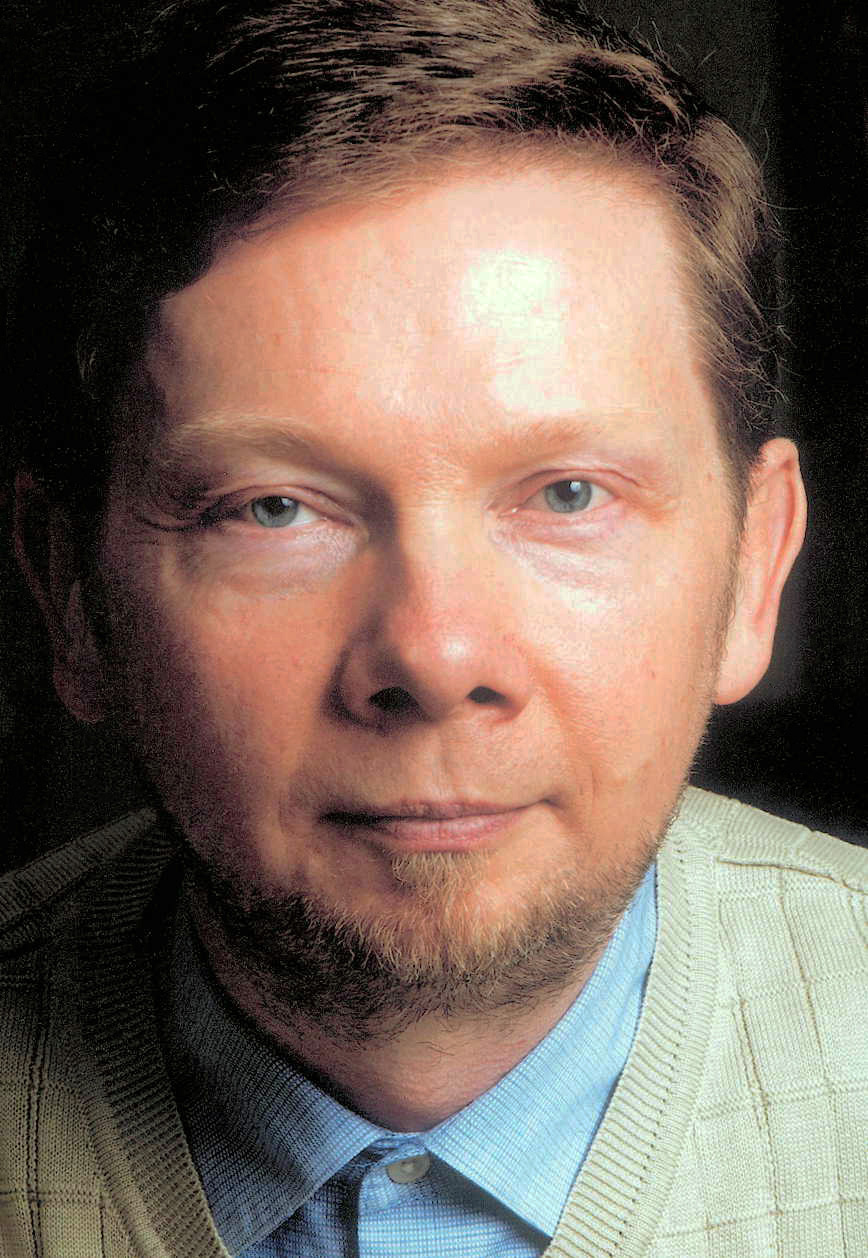
Eckhart Tolle
Eckhart Tolle
Oct 30, 2026
10 min de lectura

De Eckhart Tolle

Ver · 8

Five o'clock arrives, and the person you were supposed to meet is not there. That is the whole event. Nothing has been said, nobody has been hurt, and the clock has simply moved forward. In a talk from Ottawa published on Eckhart Tolle's channel at the end of October, Tolle argues that the real drama starts a few seconds later, when the mind begins writing a story about the empty chair: he let me down again, he always does this. The feeling that follows, he says, is an echo of that story rather than of the facts. His larger claim is that most people are not choosing how they react at all. Their thinking happens to them, the ego converts neutral events into narratives, and the reactions that follow are conditioned automatically. Drawing on what he calls the spiritual meaning of "unconscious," and on an anecdote about anger and the human stomach, he maps the moment a person first steps back from the voice in the head.

Leer · 6 secciones

What happens in the gap between the event and the story?

The most useful thing in the talk is a simple breakdown of how a reaction is built. Tolle takes the ordinary scenario of a missed appointment and separates it into layers. The first is the event itself, which is neutral. The second is the interpretation, which arrives fast and feels like fact. The third is the emotion, which matches the interpretation.

He is specific about the sequence. "It's an event that is neutral in itself, but you interpreted it in an egoic way," he says in the segment beginning around 9:05. The mind's first move is usually accurate in a narrow sense: "He didn't turn up. It was 5:00. We were supposed to meet. That's true." Then comes the leap: he let me down, again. Tolle's point is that the accurate part is small, and the rest is habit dressed up as perception. The feeling that rises afterward reflects the story, not the clock on the wall, and it is no more chosen than the story was.

That is why the reaction can feel so total. The mind does not present itself as a commentator. It presents itself as the situation. Tolle's practical lesson, at least as he frames it in the talk, is to notice where the event stops and the narrative begins. You cannot separate the two while you are fully inside the story, which is why the separation itself is where the work starts.

Why does the ego love anger when the body pays the price?

Tolle describes the ego as never content for long. "It loves drama. It loves fighting. It loves its enemies," he says around the 0:31 mark, because each conflict makes its sense of self feel more solid. The image he uses for anger is a balloon. "It blows itself up and you and the ego loves it." Every outburst inflates the sense of "me," which is why the ego keeps returning to the same grievances.

"The ego loves anger because it grows the... It's like a balloon. It blows itself up and you and the ego loves it."

— Eckhart Tolle, Ottawa talk (about 1:00 in the video)

The uncomfortable part is what happens to the body. Tolle is blunt: "To the ego anger feels good. But to you, if you looked at your body, you could see that the effect that anger has on the functioning of your body is extremely toxic. It interferes with the energy flow." He also says the ego feeds on more than anger. It draws energy from events, from other people, and from its own thoughts, and anger is only one of its favorite meals.

To make the point about the body, Tolle tells a story about doctors who, about two centuries ago, treated a man with a wound in his stomach. He is candid that he does not remember the details. "I can't remember in Europe somewhere," he says, and he even guesses the injury might have been a bullet. The observation that stuck is what the doctors saw: whenever the man became angry, the lining of his stomach turned bright red. Tolle uses it as evidence that emotional states and the physical body are connected, and that anger is not harmless. Whatever the historical particulars, the teaching is clear: the ego's pleasure in anger is paid for by the organism that hosts it.

The talk includes a more everyday illustration. A driver sounds a horn at someone who cut in. The other driver feels personally offended, and the small event escalates. Tolle's line is blunt: "The ego takes everything personally." Drivers, he notes, have no idea who you are. The reaction is about a self that feels diminished, not about the road. In his account, road rage is simply the ego's habitual reaction turned up to a dangerous volume.

What does "unconscious" actually mean in spiritual terms?

Tolle is careful to separate the everyday meaning of the word from the spiritual one. "Conventionally unconscious means you go... you're unconscious," he says, meaning fainted or out of it. In spiritual language, he explains, the term means something different.

"In spiritual terms unconscious means completely identified with your egoic self. So there's nobody able to be aware internally of your thoughts, emotions and behavior. Awareness is absent."

— Eckhart Tolle, Ottawa talk (about 3:21 in the video)

This is the heart of the argument. An unconscious person is not asleep. They are awake in the ordinary sense, going to work and making plans, but nobody is home to observe what is happening inside. The ego, which Tolle describes as "almost an entity that is not them but pretends to be them," acts and speaks and thinks through the person. It reacts out of habit and is "conditioned by the past."

Tolle identifies what the ego clings to: the body, possessions, attainments, relationships. Its sense of self is comparative. "It's always seeking superiority over others. If it cannot find superiority in one area, it'll seek it in another." That comparative streak explains why an unrelated slight, like being passed on the highway, can feel like a verdict on one's worth. The reason the ego cannot see its own suffering, he suggests, is that it has no awareness with which to see it. The ego loves the conflict that is hurting you, and it cannot recognize that conflict as suffering.

If thinking happens to you, can you choose how you react?

This is the question the talk's title raises, and Tolle's answer is direct: in the grip of the ego, you cannot. "You're at the mercy of events. And you're at the mercy of other people. In other words, you cannot choose how you respond. You react automatically." He adds a third master, which he considers the most important: "even more importantly, at the mercy of their thoughts and emotions."

The language of "I think" is where Tolle begins. People speak as if thinking is something they do, which implies a kind of volition. For an unconscious person, he argues, the opposite is true. "Thinking happens to them. They cannot choose what kind of thoughts they want to think. Thinking has a life of its own and they are possessed by their thinking mind." The thoughts arrive, pull in one direction and then another, and the person believes each one as it comes. Tolle calls the recurring internal chatter "the voice in the head," which "goes on and on," and which the unconscious person cannot stop because they do not even notice it as a separate thing.

There is an implication worth sitting with here. If you cannot choose your thoughts, you cannot choose your first reaction either, because the reaction is built out of thoughts you did not select. That does not mean you are helpless forever. It means the first place to look for choice is the place where the thinking is still unwatched.

What is the first awakening, and how does it begin?

Tolle's answer is almost humble. The beginning of a different relationship with the mind is not a dramatic revelation. It is the moment you notice that the voice in your head is not who you are. "The ability suddenly develops of standing back from the mental noise and observing, becoming aware of what your mind is doing," he says. He describes it as "a step back." Often it starts with noticing habitual thoughts, the ones you find yourself thinking again and again.

"The realization that I am not my thoughts, my thoughts are happening to me is an amazing awakening that is the beginning of, for many people, the beginning of an awakening."

— Eckhart Tolle, Ottawa talk (about 11:18 in the video)

Tolle is open about the naming. He says that the step back is "the birth of a new consciousness," and that people can call it deeper or higher consciousness, or use whatever signpost works for them. The label matters less than the shift itself. Once you can see a thought as something occurring, rather than as yourself speaking, the automatic chain of event, story and emotion has a small gap in it. In that gap, he suggests, a choice becomes possible for the first time.

Notice what the talk does not promise. It does not claim the ego disappears after one insight, and it does not give a complete method. Tolle says plainly that he goes much further into this in the full session. What the excerpt offers is a diagnosis and a starting point, which is arguably the more useful thing for someone who has never thought to question the voice in their head.

Where to go from here

If the talk has been useful, the most natural next step is the full session that the video's description points to on Eckhart Tolle Now, where Tolle develops these ideas beyond the roughly twelve-minute excerpt. Within the excerpt itself, a few threads are worth taking into your own week.

  • Next time an expected person fails to show up, separate the neutral fact (the time, the empty chair) from the sentence that follows it (he always does this).
  • Notice the emotion that rises after the story, and ask whether it is matching the event or the narrative Tolle describes.
  • Watch for a habitual thought you return to often. The talk identifies this kind of repetition as one of the first places the step back can happen.
  • When you catch yourself saying "I think," consider whether thinking is happening to you rather than being done by you, which is the distinction at the center of the talk.

The talk's quiet argument is that the ego runs on unnoticed repetition. The first act of freedom it describes is small: standing back long enough to see the voice in your head as a voice, not as the truth about who you are.

Comments

Loading the conversation…

Transcript

[0:00] They don't do their thinking

[0:03] because thinking if you say I'm doing

[0:05] the thinking means

[0:07] you have some volition, but no, in an

[0:10] unconscious person thinking happens to

[0:12] them.

[0:14] They have no They They cannot choose

[0:16] what kind of thoughts they want to

[0:17] think. They Thinking has a life of its

[0:19] own and they are possessed by their

[0:23] thinking mind.

[0:26] >> [bell]

[0:31] >> The ego

[0:33] is never

[0:35] content or happy for very long.

[0:38] It loves

[0:40] drama.

[0:42] It loves

[0:44] fighting. It loves its enemies because

[0:48] the more it fights and the more it

[0:50] creates drama and creates enemies and

[0:53] creates unhappiness,

[0:55] the more the stronger its fictitious

[0:58] sense of identity becomes.

[1:00] For example, the ego loves anger because

[1:03] it grows the There's a boat of anger the

[1:05] ego

[1:09] It's like a balloon. It blows itself up

[1:13] and you and the ego loves it.

[1:16] It's not You don't realize when you're

[1:19] possessed because it's a good term

[1:21] because ultimately the humans are

[1:24] possessed by

[1:26] almost an entity that is not them but

[1:30] pretends to be them.

[1:33] And so the the ego

[1:36] loves

[1:38] all those things that ultimately are

[1:40] forms of suffering,

[1:43] but the ego cannot recognize it as

[1:45] suffering. For example, when you're

[1:47] angry, you get And some people

[1:50] For some people anger is an important

[1:52] part of their egoic identity, not for

[1:54] everybody. The ego has many ways of

[1:57] uh

[1:59] feeding on events and and people and

[2:03] your thoughts. But anger is one and to

[2:06] the ego anger feels good.

[2:10] But to you if you looked at your body,

[2:12] you could see that the effect that anger

[2:16] has on your the functioning of your body

[2:18] is extremely toxic. It interferes with

[2:22] the energy flow.

[2:23] It uh

[2:26] There was a

[2:27] 200 years ago or whatever

[2:30] but they doctors discovered the

[2:32] relationship between certain emotional

[2:35] states and your your physical vehicle.

[2:37] There was a man who got a

[2:39] I can't remember in Europe somewhere he

[2:41] had a hole in his stomach may maybe it

[2:43] was a bullet or something and they

[2:45] couldn't fix him and the doctors

[2:47] realized that uh

[2:49] whenever he got angry the lining of his

[2:51] stomach turned bright red.

[2:54] And so they realized well this is not

[2:56] good. What it does to your body is very

[2:59] harmful. The ego cannot recognize the

[3:03] the a lot of the things it does is

[3:05] creating

[3:06] suffering. It's unconscious.

[3:09] Now unconscious is an important term in

[3:11] in spiritual discourse.

[3:13] Uh

[3:14] when we use the term unconscious in

[3:16] spiritual language

[3:19] it does not mean what it conventionally

[3:21] means. Conventionally unconscious means

[3:23] you you go uh

[3:26] So then you say he's unconscious. He

[3:29] gone unconscious. In spiritual terms it

[3:31] doesn't mean that.

[3:33] As you probably know in spiritual terms

[3:36] unconscious means

[3:37] completely identified

[3:40] with your egoic self.

[3:43] So there's nobody able to

[3:46] be aware internally

[3:49] of your thoughts

[3:52] emotions

[3:54] and behavior.

[3:56] Awareness is

[3:57] absent.

[3:59] And in the absence of awareness

[4:02] you are possessed

[4:04] by

[4:05] this

[4:06] egoic entity

[4:08] and it acts and speaks and thinks

[4:13] through you. It has its reactions,

[4:16] habitual reactions. It is conditioned by

[4:18] the past.

[4:21] It lives on identifications with things

[4:23] that it derives its sense of self from,

[4:27] starting with a physical body, your

[4:29] possessions, your attainments, your

[4:32] relationships. It's It's comparative.

[4:34] It's always seeking superiority

[4:37] over others.

[4:40] If it cannot find superiority in one

[4:42] area, it'll seek it in another. Perhaps

[4:45] in a few minutes we'll go a little bit

[4:47] more deeply

[4:49] into that because it's important to be

[4:51] recognized, to be able to recognize the

[4:54] ego in yourself.

[4:56] If you don't recognize it,

[4:58] you are in its grasp.

[5:01] And then

[5:03] you're at the mercy

[5:05] of

[5:06] egoic reactions.

[5:08] And then you're at the

[5:09] You're at the mercy of events, too,

[5:12] because something happens,

[5:17] a challenging event, a challenging

[5:19] person, whatever it may be,

[5:22] the ego reacts in its habitual way,

[5:25] usually

[5:27] by reacting against something.

[5:29] Habitually, the ego amplifies the

[5:32] problem

[5:33] >> [laughter]

[5:33] >> and makes it even worse. Sometimes a

[5:36] small problem

[5:38] by egoic reaction becomes a big problem.

[5:43] You can see that

[5:45] most

[5:46] obvious way some

[5:48] In countless situations that happens,

[5:51] people are driving and one driver

[5:56] gets angry because another driver is

[5:58] cutting in.

[6:00] So, he sounds his horn

[6:02] and then the other driver

[6:04] has a strong egoic reaction because

[6:08] the ego takes everything personally. So,

[6:10] even driving, you feel personally

[6:13] offended by other drivers. The driver is

[6:16] the ego. Drivers have no idea who you

[6:19] are.

[6:20] You don't know who they are, but

[6:22] there are some egos who feel even

[6:24] diminished when somebody passes them.

[6:27] They goes faster.

[6:29] This is very immature egos in young

[6:32] people. So,

[6:34] and so you can't stand it. And so often

[6:38] it happens the road rage means a small

[6:41] event

[6:43] on the road creates

[6:45] up to physical violence and people even

[6:48] shooting each other

[6:50] out of nothing. It's unconscious egoic

[6:52] reaction.

[6:53] Uh these are very unconscious people,

[6:56] but it it is not uncommon.

[6:58] So,

[6:59] when you're in the grip of the ego,

[7:01] you're at at the mercy of events.

[7:04] And you're at the mercy of other people.

[7:07] In other words, you cannot choose how

[7:10] you respond. You You respond or rather

[7:13] react automatically. You have no choice.

[7:17] A person who is possessed by egoic

[7:20] unconsciousness has no choice in the

[7:22] matter.

[7:23] He's at the mercy of events

[7:26] and situations. They determine his state

[7:29] or her state and at the mercy

[7:33] im-

[7:35] even more importantly,

[7:37] at the mercy of their thoughts and

[7:39] emotions

[7:40] because the thoughts that the ego thinks

[7:44] are

[7:46] conditioned automatic thoughts. People

[7:49] sometimes

[7:51] say I think. They They think thinking is

[7:54] something that they do.

[7:56] But unconscious people,

[7:59] which two millions around,

[8:01] you might have noticed,

[8:05] not here in the world.

[8:07] >> [laughter]

[8:10] >> Unconscious people

[8:12] uh

[8:13] they don't do their thinking

[8:16] because thinking if you say I'm doing

[8:18] the thinking means

[8:20] you have some volition, but no, in an

[8:22] unconscious person thinking happens to

[8:25] them.

[8:27] They have no like they cannot choose

[8:29] what kind of thoughts they want to

[8:30] think. They thinking has a life of its

[8:32] own and they are possessed by their

[8:35] thinking mind.

[8:38] Every thought is a complete like it

[8:40] becomes a reality.

[8:43] One could put it

[8:45] they believe every thought that comes

[8:47] into their head.

[8:50] They're drawn this way and that way and

[8:52] then the emotion accompanies the

[8:54] thoughts.

[8:56] Why did he do that? He shouldn't have

[8:57] done that. He

[8:59] He let me down again.

[9:01] All interpretations, habitual

[9:03] interpretations.

[9:05] He forgot to come to the appointment.

[9:07] It's an event that is neutral in itself,

[9:12] but you interpreted it in an egoic way.

[9:14] He let me down. Okay. Well, what did you

[9:18] what do you mean? Well, he didn't turn

[9:20] up. It was 5:00. We were supposed to

[9:23] meet. He didn't turn up. That's true.

[9:26] The rest then comes the narrative of the

[9:28] ego and then comes the emotion that that

[9:32] reflects the narrative of the ego, which

[9:34] is also unconscious.

[9:36] So, at the mercy of what goes on, I call

[9:38] it the the voice in your head.

[9:41] The voice in the head that's

[9:43] continuously

[9:45] goes on and on.

[9:47] And you can't it happens to you. You

[9:49] can't you're not

[9:51] the unconscious person. It happens to

[9:53] them. They can't stop it.

[9:57] And they even the possibility doesn't

[9:59] arise for quite a few you humans

[10:03] including perhaps many of you.

[10:06] The first awakening was

[10:08] you realized

[10:12] that the voice in your head is not who

[10:15] you are.

[10:16] You realized that they are their

[10:19] thoughts,

[10:20] but

[10:21] you were able to become aware

[10:24] of for example of habitual thoughts that

[10:27] would you would frequently think the

[10:29] same kind of thought.

[10:31] Mhm.

[10:32] So, there was a the ability suddenly

[10:35] develops of standing back

[10:38] from the mental noise and observing

[10:41] becoming aware

[10:43] of what your mind is doing.

[10:46] She a step back.

[10:49] And

[10:50] that

[10:52] is

[10:54] the birth

[10:55] of a

[10:57] one could call it

[10:59] new consciousness,

[11:02] deeper consciousness,

[11:04] higher consciousness, whatever term,

[11:07] whatever signpost

[11:09] works best for you.

[11:12] The realization

[11:14] that

[11:15] I am not

[11:16] my thoughts,

[11:18] my thoughts are happening to me

[11:21] is an amazing

[11:22] awakening that is the

[11:25] beginning of for many people

[11:28] that's the beginning of an awakening.

Eckhart Tolle
ArtistEckhart Tolle

German-born spiritual teacher whose 1997 book The Power of Now became one of the most widely read spiritual works of the 21st century. After a profound transformation at 29 — movin…

Ver perfilSitio web
Explorar temas
EgoVoice-in-the-headUnconscious-spiritual-meaningAnger-and-egoObserving-thoughts

¿Tienes Preguntas?

Preguntas Frecuentes

In the talk, Tolle says the spiritual meaning is not being asleep or fainted. It means being so completely identified with the egoic self that no one is aware internally of their own thoughts, emotions and behavior. In that state, the ego acts and thinks through the person.
Tolle explains that every outburst of anger inflates the ego like a balloon, strengthening its sense of identity, so the ego enjoys it. He adds that while anger feels good to the ego, its effect on the body is toxic, interfering with the body's energy flow.
Tolle uses the phrase for the continuous internal stream of thinking that goes on and on. For an unconscious person, it happens to them and they cannot stop it or choose its content. The first awakening, he says, is noticing that this voice is not who you are.
In the talk, Tolle says that a person possessed by egoic unconsciousness cannot choose how to respond because they are at the mercy of events, other people and their own thoughts. Reactions are automatic. The possibility of choice begins when a person learns to stand back and observe their thinking.
Tolle's example is a friend who fails to turn up at five o'clock: the event is neutral, and the bare fact is simply that they did not arrive. The ego then adds a narrative, such as 'he let me down again,' and the emotion that follows matches that story rather than the event.
Tolle recounts that about two centuries ago, doctors treating a man with a stomach wound observed that the lining turned bright red whenever he became angry. He admits he cannot remember the details, but he uses the story to argue that emotional states affect the physical body.
Tolle describes it as the moment a person becomes able to stand back from mental noise and observe their thoughts, often noticing habitual thoughts they keep repeating. He calls it the birth of a new consciousness and the realization that 'I am not my thoughts.'
Seguir leyendo

More from Eckhart Tolle

Ver Todo
Why Trying to Love People Fails—and What Attention Does Instead
Inspire

Why Trying to Love People Fails—and What Attention Does Instead

A café parable about two strangers exposes how conditioning colors every encounter. Eckhart Tolle explains why pure attention, not effort, i…

9 min read
Why Awakening Needs Things to Go Wrong: The Projector Teaching
Inspire

Why Awakening Needs Things to Go Wrong: The Projector Teaching

A questioner asks whether, at the deepest level, we are all one light. The answer moves through a movie projector, a Titanic that never sink…

10 min read
Arriving in Open Presence: A Guided Meditation Path Home
Inspire

Arriving in Open Presence: A Guided Meditation Path Home

Tara Brach's guided meditation walks listeners from an intention-setting question through a body scan, a widened field of sound and space, a…

8 min read
From Mind to Heart: Finding the Witness Behind Longing
Inspire

From Mind to Heart: Finding the Witness Behind Longing

Mooji's satsang guidance turns a seeker's longing for God into a method: follow the yearning, question the one who perceives, and test every…

8 min read

Sigue explorando

Continúa tu camino

Más sabiduría y encuentros de todo el directorio de BrightStar.

Más artículos

Recorre la biblioteca completa de enseñanzas, entrevistas y guías.

Ver todos los artículos →

Maestros y artistas

Explora los linajes, músicos y guías del mundo consciente.

Explorar artistas →

Encuentra un evento

Kirtan, retiros, baños de sonido, breathwork, festivales — muy pronto.

Ver eventos →