BrightStar

Ver Todos los Events

Descubre encuentros conscientes

events

Yoga
Meditation
Breathwork
Qigong
Tai Chi
Sacred Music
World Music
Medicine Music
Sound Healing
Ecstatic Dance
Destinos Populares
BaliSedonaLos AngelesCosta RicaNew YorkSan FranciscoAustinMiamiJoshua TreeTulum
Ver Todas las CategoríasVer Todos los Destinos

Explorar Todas las Características

Herramientas poderosas para hacer crecer tus eventos

Características de la Plataforma

Precios Dinámicos Inteligentes
Categorías de Entradas
Asientos Asignados
Recuperación de Carritos
Recuperación de Visitantes
Donaciones y Escala Móvil
Motor de Afiliados
Escáner de Entradas
Códigos de Cupón
Preguntas Personalizadas
Compartir Entradas
Ventas Adicionales
Análisis e Informes
Secuencias de Email
Lista de Espera / Notificar / Recordar
Personas y Lugares
Artists & TeachersEvent OrganizersVenues & StudiosKnowledge BaseGlossaryInspiration
Ver Todas las CaracterísticasSobre Nosotros
PreciosBlog
Language
Saved events
Ver Todos los Eventos

events

YogaMeditationBreathworkQigongTai ChiSacred MusicWorld MusicMedicine Music

Destinos Populares

BaliSedonaLos AngelesCosta RicaNew YorkSan Francisco

Personas y Lugares

Artists & TeachersEvent OrganizersVenues & StudiosKnowledge BaseGlossaryInspiration

Características de la Plataforma

Precios Dinámicos InteligentesCategorías de EntradasAsientos AsignadosRecuperación de CarritosRecuperación de VisitantesDonaciones y Escala MóvilMotor de AfiliadosEscáner de EntradasCódigos de CupónPreguntas PersonalizadasCompartir EntradasVentas AdicionalesAnálisis e InformesSecuencias de EmailLista de Espera / Notificar / Recordar
Ver Todas las CaracterísticasSobre Nosotros
PreciosBlog
Iniciar sesiónBuscadoresCreadores
  • Ver Todos los Eventos
  • Para Buscadores
  • Yoga
  • Meditación
  • Respiración consciente
  • Qigong
  • Tai chi
  • Música sagrada
  • Música del mundo
  • Música medicina
  • Sanación con sonido
  • Danza extática
  • Retiros
  • Talleres
  • Todas las Categorías →
  • Bali
  • Sedona
  • Los Angeles
  • Costa Rica
  • Tulum
  • Byron Bay
  • San Francisco
  • Austin
  • New York
  • San Diego
  • Denver
  • Seattle
  • Portland
  • Miami
  • Todas las Ciudades →
  • Join the Movement
  • Why we list
  • Sell Globally
  • Para Creadores
  • Para equipos
  • Para Escritores
  • Para Maestros
  • Para Artistas de Kirtan
  • Para Estudios
  • Para Festivales
  • Para Centros de Retiros
  • Para Organizaciones Sin Fines de Lucro
  • Embajador de Marca
  • Entradas sin costo
  • Elevate
  • Amplify
  • Red de +500K Compradores
  • Recuperación de Carritos
  • Precios Dinámicos Inteligentes
  • Categorías de Entradas
  • Eventos Recurrentes
  • Asientos Asignados
  • Motor de Afiliados
  • Lista de Espera / Notificar
  • Escáner de Entradas
  • Widget Embebido
  • Sindicación de eventos
  • Centro de mensajes
  • Integraciones
  • Reportes
  • Todas las Características →
  • Acerca de
  • El ecosistema
  • Blog
  • Glosario
  • Inspiración
  • Centro de Ayuda
  • Contacto
  • Documentación API
  • Recursos de Marca
  • Carreras
  • Prensa
  • Términos de Servicio
  • Política de Privacidad

Eventos

  • Ver Todos los Eventos
  • Para Buscadores
  • Yoga
  • Meditación
  • Respiración consciente
  • Qigong
  • Tai chi
  • Música sagrada
  • Música del mundo
  • Música medicina
  • Sanación con sonido
  • Danza extática
  • Retiros
  • Talleres
  • Todas las Categorías →

Destinos

  • Bali
  • Sedona
  • Los Angeles
  • Costa Rica
  • Tulum
  • Byron Bay
  • San Francisco
  • Austin
  • New York
  • San Diego
  • Denver
  • Seattle
  • Portland
  • Miami
  • Todas las Ciudades →

Para Creadores

  • Join the Movement
  • Why we list
  • Sell Globally
  • Para Creadores
  • Para equipos
  • Para Escritores
  • Para Maestros
  • Para Artistas de Kirtan
  • Para Estudios
  • Para Festivales
  • Para Centros de Retiros
  • Para Organizaciones Sin Fines de Lucro
  • Embajador de Marca
  • Entradas sin costo
  • Elevate
  • Amplify

Características

  • Red de +500K Compradores
  • Recuperación de Carritos
  • Precios Dinámicos Inteligentes
  • Categorías de Entradas
  • Eventos Recurrentes
  • Asientos Asignados
  • Motor de Afiliados
  • Lista de Espera / Notificar
  • Escáner de Entradas
  • Widget Embebido
  • Sindicación de eventos
  • Centro de mensajes
  • Integraciones
  • Reportes
  • Todas las Características →

Empresa

  • Acerca de
  • El ecosistema
  • Blog
  • Glosario
  • Inspiración
  • Centro de Ayuda
  • Contacto
  • Documentación API
  • Recursos de Marca
  • Carreras
  • Prensa
  • Términos de Servicio
  • Política de Privacidad
BrightStar
Descarga la app
Descárgalo en elApp StoreDisponible enGoogle Play
© 2026 BrightStar. Todos los derechos reservados.
Inspiration

Why Overthinking Won't Quiet Down: The Power of Awareness

Preethaji
Preethaji
Nov 8, 2026
8 min de lectura

De Sri Preethaji & Sri Krishnaji

Ver · 8

The first thing you hear is a warning. "In a state of worry, you tend to act wrong," Sri Preethaji says, before the conversation has even properly begun. "Even if you're trying to stop it, it is going to become more." The setting is Jeju Island, South Korea, at the end of a nine-day journey, where she sits down with a guest who is returning to the retreat for a second time. What follows, across roughly eighteen minutes of dialogue, is a sustained argument against the most common response people have to a restless mind: wrestling with it. Her claim is that overthinking does not respond to force, reassurance, or positive substitution. It responds to awareness, the simple and difficult act of stepping back and watching thoughts rise and fall without tampering with them.

Leer · 9 secciones

Why does the mind keep thinking when the body is exhausted?

The conversation starts with the question almost everyone who has lain awake has asked: why does the mind keep going when the body is tired and ready to rest? At 5:53 in the video, Preethaji frames the question as a matter of belief. Many people who overthink have come to believe that the churning is protecting them, that if they keep turning a problem over long enough they will eventually solve it or see the danger coming. The belief is understandable. It is also, in her account, the trap. "Overthinking in itself is such a drain," she says, "and the more you get into this groove of overthinking, you tend to think even more."

The loop is not a sign of a broken mind. It is a habit that has been reinforced, and she is precise about where the habit lives. It is not only in thought. "It has become a habit in the brain, in your emotions, in your thought, even in your body," she explains, which is why the mind can keep running at night even after the day's work is done.

Why does fighting a thought make it grow?

This is the center of the talk, and Preethaji is unambiguous. Her point is that the standard remedies are part of the problem. Modern culture, she argues, trains people to rewrite the story: turn a fearful narrative into a hopeful one, a sad story into a happy one, or go find something pleasurable when the mood drops. Each of these moves is an attempt to change the thinking, and each one, in her view, only adds more thinking.

She puts it as a direct instruction at 6:42: "The only way to kind of quieten the mind is not to fight with it, not trying to reduce the number of thoughts, not trying to change the thinking." The reason this matters is that every act of resistance is itself a thought, and so the mind has one more thing to argue about. Effort aimed at silencing the mind becomes the loudest voice in it.

Her broader framing is that calm is not a suppressed state. "In calm there is incredible strength," she says in the opening segment, and the implication is that the strength comes from not spending energy on the internal war. People often expect the goal of quieting the mind to be silence. Preethaji's goal is clarity about what is happening inside, which often produces quiet as a byproduct.

What does it mean to observe a thought as it arises and ceases?

The alternative she describes is deceptively simple. At 8:57 she lays out the practice: sit back and observe every thought that arises and ceases. Do not cling to it, do not shoo it away, do not judge it. Simply notice it. She gives a concrete example of what this sounds like inside: "This is what I'm feeling right now, or this is what I'm thinking at this point. My thinking is going towards that little hurt or humiliation that I experienced last year, and it is going in rounds."

The image she returns to is the wave. Thoughts rise, peak, and dissolve, and the observer's job is not to hold them up or push them back down. "You're not tampering with it," she says. "You're not trying to say it should not be there, but you're just allowing it to rise and cease." Her prediction is that the flood of thinking will slowly quiet of its own accord, and that what remains is clearer thinking, the kind that is actually needed.

"Not try to cling to it, not try to shoo it off, not try to judge it, but just observe."
— Sri Preethaji, in the video published November 2026

Why do the same four or five thoughts keep coming back?

One of the most useful observations in the talk is about repetition. When you actually watch your thinking, Preethaji says, you will find that it is "basically four or five thoughts revolving around a situation" — a conversation from this morning, an incident from ten days ago, a hurt from a year back. The content changes; the mechanism does not. "It is the same mechanical thinking," she says. "That is how the brain is getting wired. The neural connections are being formed for similar thinking."

This reframes overthinking as a learned pattern rather than a series of unique crises. It also explains why sincere attempts to think your way out fail. You are using the same circuit that built the loop to try to dismantle it. Observation works differently because it introduces a gap between the thought and the one who notices it, and in that gap the repetition has less momentum.

Can awareness work on ordinary sensations, not just thoughts?

Preethaji is careful to say that awareness is not only for those who are already skilled at inner work, and that it can begin with the senses. Around 10:30 she speaks about awareness of movement, "even if it is just awareness," and gives the example of noticing the slight motion of a blade of grass. The point is that attention can rest on something external and simple, and that this rest is itself a form of training. The mind learns that it can be watched without being obeyed.

She frames this as a beginning for people for whom "awareness is very difficult" and who have never really looked at their inner world. The practice is not to force an insight but to start with something that is easy to notice and gradually let the same quality of attention turn inward.

Where does Soul Sync meditation fit in?

Much of the second half of the conversation is about Soul Sync meditation, the practice that the guest has been bringing into her own community. At 11:44 Preethaji describes the design goal: it should work whether someone has meditated before or not, whether they are a beginner or experienced. She names three levels on which she believes it works, saying that it "works on the body, it works on the mind, it works in the consciousness." She also links it to the ability to manifest vision and desires by getting past whatever is hindering them.

The guest offers a before-and-after account. Earlier, she says, people in her community would bring prayers and wishes that did not come true, and she would point them toward the hidden beliefs beneath those wishes. Now, she says, the two approaches are "coming together beautifully," and people have begun having dreams and developing awareness faster. These are her observations about her own community, not claims the article can independently verify, and they are presented here as her testimony.

Why does worry make us act badly?

Preethaji's most practical warning comes near the middle of the talk. At 13:44 she describes what happens when a person is caught in worry: they tend to bring attention to the problem and then perform actions that are not apt for the situation. Worry narrows the field of vision. It pushes people toward reactive choices rather than considered ones. This is why, in her framing, calm is not passive. It is the state in which the intelligence of the situation becomes visible, and in which the right action can be recognized.

How long does it take for awareness to change things?

Near the end, at 17:02, Preethaji is asked about how change happens, and she answers with patience rather than promises. Awareness develops step by step, she says, and suffering often becomes the teacher that brings people to the practice in the first place. The guest's own story, which opens the conversation, is one she describes in her own terms, and the article does not assess those claims. What the talk does offer is a method that anyone can test in a single night: the next time the mind starts its familiar rounds, stop feeding it and simply watch.

Where to go from here

The most useful takeaway from this conversation is also the least dramatic. You do not need to win an argument with your thoughts. Begin by noticing that you are thinking, then notice the shape of the loop, then let each thought rise and cease without clinging, pushing, or judging. Watch the full conversation to hear Preethaji's tone and pacing, and especially the guest's responses, which show what the practice looks like from the inside. Then try it for five minutes before sleep. The point is not to produce silence on command. It is to discover, in your own attention, that the mind can be watched.

Comments

Loading the conversation…

Transcript

[0:01] [music]

[0:03] in a state of worry, you tend to act

[0:06] wrong. [music]

[0:06] Uh even if you're trying to stop it, it

[0:09] is going to become more. The only

[0:10] [music] way to kind of

[0:13] uh quieten the mind [music] is not to

[0:16] fight with it. You see much more in that

[0:18] state of calm rather than a state of

[0:20] worry. In calm there is incredible

[0:23] strength.

[0:25] >> Namaste.

[0:26] >> Namaste.

[0:27] I am here on Juju Island, South Korea. I

[0:30] have learned something special over the

[0:33] past nine days and I have a special

[0:35] guest with me today. Shri Krishna Gi and

[0:39] Shri Puriti were leading this 9-day

[0:42] journey and taught me so much throughout

[0:45] the experience.

[0:47] Today I am going to meet Shri Puriti and

[0:51] ask her a few questions.

[0:53] This is my second time participating in

[0:56] this 9-day journey. I first participated

[0:59] a year ago. When I first came here, my

[1:03] breast cancer had recurred. I was

[1:06] already in a critical condition at the

[1:08] hospital. My friend gave me an

[1:11] opportunity to meet Shri Krishna Gi in

[1:14] Japan. He blessed me and I experienced

[1:17] many miracles.

[1:19] My cancer which I had been told had no

[1:23] hope of recovery was completely cured.

[1:27] Shri Krishna Gi then called me and told

[1:30] me to come and learn. That was how I

[1:33] first came to participate in this

[1:35] journey. This is my second time here

[1:38] returning after a year. When I first

[1:41] came I had just recovered from breast

[1:44] cancer. The doctors had told me it's too

[1:48] late. It's incurable.

[1:51] But I had the opportunity to meet Shri

[1:53] Krishna G in person, receive his

[1:56] blessings and experience what I describe

[1:59] as a miracle.

[2:01] Shri Krishna G told me once you are

[2:04] cured, you can come back and that's how

[2:08] I was able to come here for the first

[2:10] time.

[2:11] >> Beautiful.

[2:13] Such a beautiful miracle of healing. And

[2:16] uh it's it's so nice that your body is

[2:19] healthy now and I'm seeing you after a

[2:21] year. Um I I remember seeing you in

[2:24] Lankabi when you were going through u

[2:28] another uh earlier 9-day uh journey in

[2:31] owl and um when I saw you then and when

[2:37] I'm seeing you now I see a huge

[2:40] difference in the way your presence is

[2:43] the joy that you are carrying um the

[2:46] experience that you are having has had a

[2:49] huge impact I believe on your on

[2:51] definitely on your body with science

[2:53] shows and definitely even in your

[2:55] consciousness. So happy to see you so

[2:58] joyful.

[3:00] >> I started learning in my community and I

[3:02] began by practicing soul sync meditation

[3:06] in our community. When something we wish

[3:09] for doesn't come true or things don't go

[3:12] well, we try to replace our negative

[3:15] feelings with positive ones. I feel that

[3:18] the students here are very fortunate

[3:22] through meditation. Many people have

[3:24] become more aware of their negative

[3:26] feelings. After my learning in Lancawi,

[3:30] I started sharing soul sync meditation

[3:33] with them. Now before we begin anything,

[3:37] we practice soul sync meditation

[3:39] together. Earlier in my community, many

[3:43] people would say I have this prayer. I

[3:47] have this wish but it doesn't come true.

[3:50] Since I teach about the subconscious

[3:52] mind, I would tell them look at what

[3:55] kind of belief systems you have. Perhaps

[3:59] there are hidden beliefs deep within you

[4:02] and you need to become aware of them.

[4:05] But now with soul sync meditation, I

[4:08] feel that the wisdom I have learned here

[4:11] and what we are teaching in my community

[4:13] are coming together beautifully. People

[4:16] have started experiencing many changes.

[4:20] First, they have begun having dreams and

[4:23] their awareness is developing much

[4:26] faster.

[4:27] They are also becoming aware of the

[4:30] hidden beliefs they have been holding

[4:32] within themselves.

[4:35] >> So beautiful. So beautiful. You've

[4:36] integrated soul sync. Uh soul sing is

[4:40] such an incredible practice and um the

[4:43] way I have designed it is to make sure

[4:46] that anybody um people who have

[4:49] meditated, people who have not

[4:51] meditated, uh people who know to whether

[4:55] you're a pro or a beginner, it works

[4:58] incredibly beautiful and uh it works at

[5:02] every level. Though it sounds very

[5:04] simple because we want everyone to do it

[5:08] and uh we want everyone to experience

[5:10] the beautiful benefits as a soul sync

[5:12] meditation can have. It is also very

[5:15] beautiful

[5:17] because it works at different uh levels.

[5:20] It works on the body. It works on the

[5:22] mind. It works in the consciousness. And

[5:26] uh the strength of the soulsec

[5:28] meditation that people can get is uh

[5:32] their power to manifest their uh vision,

[5:35] the manifest their dreams and desires uh

[5:38] getting past what is hindering them. So

[5:41] it's such a beautiful integration that

[5:43] you have done with your community. Um

[5:46] yeah, and I'm so happy to hear that

[5:48] awareness is possible, manifestation is

[5:51] easy.

[5:53] So my first question is even when our

[5:56] body is tired and ready to rest why does

[6:00] our mind continue thinking making it

[6:03] difficult to fall asleep.

[6:05] What is happening within us at that

[6:07] moment? This happens for most people

[6:12] uh who have given into overthinking

[6:16] >> and sometimes have believed that this

[6:18] overthinking is help them cope with a

[6:20] danger with uh with a something that is

[6:23] going to hurt them. It is by believing

[6:26] that you thinking more and more you're

[6:28] able to solve. But overthinking in

[6:30] itself is such a drain and the more you

[6:33] get into this groove of overthinking you

[6:35] tend to think even more. There is uh

[6:38] even if you're trying to stop it, it is

[6:41] going to become more. Even if you're

[6:42] going to try to make it less, you will

[6:44] see it is becoming more. The only way to

[6:48] kind of

[6:50] uh quieten the mind

[6:52] >> is not to fight with it, not trying to

[6:55] reduce the number of thoughts, not

[6:57] trying to uh change the thinking. The

[7:00] world is all the time trying to change

[7:02] the story, change the thinking. If

[7:04] there's a fearful story, make it into a

[7:05] positive story. If there is a sad story,

[7:08] make it into a happy story. If you're

[7:10] feeling sad, go and get something

[7:12] pleasurable. That's what the world, the

[7:13] society has trained. But this only will

[7:16] increase the thinking more and more and

[7:18] more. For the first time, you need to

[7:20] find courage and step back and begin to

[7:23] observe the thinking. And if you observe

[7:26] the thinking then you will see that your

[7:27] thinking is basically four or five

[7:29] thoughts revolving around a situation

[7:32] that happened this morning or 10 days

[7:34] ago or one year ago. It is the same

[7:37] mechanical thinking. That is how the

[7:39] brain is getting wired. There is the

[7:42] neural connections are being formed for

[7:44] similar thinking. And um the idea that

[7:48] you have started when you over started

[7:50] overthinking is believing that you are

[7:53] combating a frightful situation but that

[7:56] has become a habit. It has become a

[7:58] habit in the brain in your emotions in

[8:01] your thought even in your body and uh

[8:04] that is why when you go back to rest and

[8:06] sleep but there is this overflooding of

[8:08] thoughts that actually drains your

[8:10] energy. So the way anybody should go

[8:13] about it is not to fight with it, not to

[8:16] replace a negative thinking with a

[8:18] positive thinking, not to create a new

[8:20] story, not to create a new pleasure or a

[8:22] distraction. The only enemy of this

[8:25] habit of overthinking is where you're

[8:27] able to step back and you're able to see

[8:29] it. See the thoughts that is running

[8:32] behind it. a constant nagging thinking

[8:34] of sorrow, sadness, fear, anxiety, worry

[8:38] that is constantly revolving in your

[8:41] thinking process. It is to go back, sit

[8:43] back and observe every thought that is

[8:47] arising and ceasing. Not try to cling to

[8:50] it, not try to shoe it off, not try to

[8:54] judge it, but just observe. This is what

[8:57] I'm feeling right now or this is what

[8:59] I'm thinking at this point. My thinking

[9:01] is going towards that little hurt or

[9:04] humiliation that I experienced last year

[9:07] and it is going in rounds. So this in

[9:10] this awareness you see it and that is

[9:14] like how the wave arises and cease.

[9:16] You're not tampering it with it. You're

[9:18] not trying to hold it up high. You're

[9:20] not trying to say it should not be

[9:22] there, but you're just allowing it to

[9:23] rise and cease. And you will begin to

[9:26] see that your thoughts, the

[9:28] overthinking, the flood of thinking that

[9:30] happens slowly quietens down and then

[9:34] you really think what is needed.

[9:37] >> Thank you for explaining this so easy to

[9:40] understand. I think it's really

[9:42] important to take a step back and be

[9:45] kind to yourself. It's so important.

[9:48] That's what I can feel right now. And

[9:51] for those who have never seen their

[9:53] inner world, for those

[9:56] to whom awareness is very difficult,

[9:59] um you begin with practices that is

[10:02] palpable.

[10:04] Uh practices of awareness that is easier

[10:07] than observing thoughts

[10:09] >> because we live in a world that is so

[10:11] much driven towards the external life.

[10:13] And people did not teach you did not

[10:16] tell you that you need to step back to

[10:17] look your inward. And for those people

[10:21] when awareness is difficult um be it is

[10:25] it it's possible that you start a

[10:27] practice with awareness of breath

[10:30] awareness of movement even if it is just

[10:32] meaning that you're going to be aware

[10:34] for one full breath

[10:36] >> or say three full breaths every every

[10:38] hour. Um in that practice you are

[10:42] building uh the power the strength of

[10:45] awareness. It becomes an energy it

[10:47] becomes a strength and so I would say

[10:50] that is where you start something that

[10:52] you can you can actually bring awareness

[10:54] to. It could be uh as we are natur in

[10:57] nature we could it could just be the

[10:59] movement of the little grass over there

[11:01] or uh just awareness to the sound that

[11:04] is around you or awareness to the

[11:06] movement of the birds or awareness to

[11:09] your breath awareness to the movement in

[11:11] your body. If somewhere you can start

[11:14] bringing the practice of awareness uh

[11:16] then it'll become very easy for you to

[11:19] start bringing attention to the more

[11:21] subtler thoughts and emotions. In that

[11:24] sense, soul sync is also a very

[11:26] beautiful practice. So that in the

[11:29] practice, you are bringing awareness to

[11:31] your breath. Um, you are actually

[11:33] bringing awareness to the minutest

[11:35] detail of uh the breath pauses that

[11:38] happens in between. So there is a lot of

[11:41] awareness that we have integrated in the

[11:44] soul sync meditation. So even if you do

[11:46] the soul seek meditation with the

[11:48] incredible awareness, attention and

[11:51] concentration that will empower you in

[11:54] terms of the your ability to bring

[11:58] awareness to. So that's another thing

[12:00] that uh your audience can practice

[12:02] because soul sync is ingrained.

[12:04] Awareness is ingrained in the soul sing

[12:07] practice.

[12:09] Some people worry that if they stop

[12:11] thinking or worrying, they might

[12:14] overlook something important.

[12:16] How can we allow the mind to rest while

[12:20] still making necessary decisions and

[12:22] taking appropriate action?

[12:24] >> It actually comes from the knowing that

[12:27] you're worrying, a state of worry is

[12:29] actually more detrimental to you than

[12:32] actually helping you. The assumption is

[12:35] because of worry you're looking into it.

[12:38] You're kind of trying to find solutions

[12:40] in that state of worry and you're at it.

[12:43] But the truth is it is a very limited uh

[12:46] power that you are accessing because of

[12:48] that state of worry. We can go it at two

[12:51] different levels, two different uh

[12:53] depths. The first is when a state of

[12:55] worry if you begin to observe it is just

[12:57] a thinking that goes in rounds. same

[12:59] thoughts, similar thinking, you're

[13:02] worrying probably 10 times of the same

[13:04] thoughts or 20 times or sometimes even

[13:07] 100 times even in sleep you're worrying

[13:09] or worrying and worrying. One is it is

[13:11] causing stress in your body. All the

[13:14] organs in your body are floating in

[13:16] stress chemicals and when that happens

[13:19] you move into um into a place of uh

[13:23] creating disease in one's body. So it's

[13:25] not helping you your physical body which

[13:28] means you would not have the energy that

[13:30] your problem requires. So you're

[13:33] worrying over a problem. Your problem

[13:34] requires energy and the energy is needed

[13:37] to solve that particular problem, find

[13:39] solution to it. But your worry itself is

[13:42] not giving you that energy. So you can

[13:44] bring attention to the problem and find

[13:46] solution. And what we have seen again

[13:48] and again is in a state of worry you

[13:51] tend to act wrong. In a state of worry,

[13:54] there is less intelligence that is

[13:56] available to you to address the problems

[13:59] and you perform actions that are not apt

[14:02] for that situation. You will find a

[14:04] wrong solution. You will find you will

[14:07] might not find a solution. So your state

[14:10] of body is not allowing you to capture

[14:12] that intelligence that is available to

[14:14] you. And uh knowing now the

[14:17] consciousness and real life uh you be

[14:20] probably began to see that your state is

[14:22] so much impacting your real life. And

[14:25] how we see is your state of worry is

[14:27] going to create more situations in your

[14:29] life to worry about.

[14:31] >> So that is the connection between your

[14:33] state and life. So even in that case the

[14:35] more you worry not that your life is

[14:37] going to be beautiful more you worry

[14:39] more problems more challenges begin to

[14:41] set out. So whether it is in the terms

[14:43] of creating health in one's body uh

[14:46] finding the intelligence the strength

[14:48] the energy to deal with the problems and

[14:50] find solutions to the problems or even

[14:52] to get access the greater power of the

[14:55] universe the intelligence of the

[14:56] universe to support you in your life.

[14:59] Worry should not be the state from which

[15:01] you are addressing your problems. In

[15:04] fact uh it is only going to complicate

[15:06] your life more in this knowing in this

[15:09] understanding. Then what you will do is

[15:12] you'll bring attention to that worry and

[15:14] dissolve it. Do a practice. Do the

[15:16] meditation practice. Do the serene mind

[15:18] practice. Dissolve your worry. Get to

[15:20] that place of calm. In calm there is

[15:23] incredible strength. In calm there is so

[15:26] much of energy. There is so much of

[15:28] intelligence that is available to you.

[15:30] You see much more in that state of calm

[15:32] rather than a state of worry. And you

[15:34] also have the support of the divine the

[15:36] universal intelligence in your life to

[15:39] solve that problem. So worry should

[15:41] never be

[15:43] a place from which you're trying to find

[15:47] uh solutions or address a particular

[15:49] challenge because it it the very state

[15:51] of worry makes your life so much more

[15:54] complicated. So it's important that you

[15:57] change your state get into a beautiful

[15:59] state and then address the problem.

[16:02] Thank you. In my community, I've been

[16:05] trying to help people understand that

[16:08] worry can affect us deeply.

[16:11] This wisdom has given me a new

[16:13] perspective.

[16:15] Thank you so much.

[16:17] >> Awareness is such an ingrained uh part

[16:19] of our journey and u um to see how

[16:24] suffering has really not uh manifested

[16:27] anything beautiful in one's life. That's

[16:29] what we teach to the world. And um to be

[16:33] uh to know that suffering is such a a

[16:38] draining energy state um that is

[16:41] actually blocking you from experiencing

[16:43] the beautiful life that we can have that

[16:47] is ingrained in our thinking. So if we

[16:50] do by chance move into a state of I do

[16:52] move into a state of anger, I step out

[16:55] of it. Um we have cut down the practice

[16:59] of awareness in the serene mind step by

[17:02] step by step for us awareness happens

[17:05] awareness is is the backdrop of our

[17:08] experience of life so giving into

[17:11] suffering states living in that state

[17:13] for longer time it doesn't um doesn't uh

[17:18] that's not the way we live our lives

[17:20] >> I would say um our practice of awareness

[17:24] what happens very naturally to us

[17:26] because of all the teaching because of

[17:28] all the insights and the wisdom that

[17:29] we're sharing with you also it kind of

[17:32] has become a very natural way to step

[17:34] out of suffering in case suffering

[17:35] arises and I would say we have broken

[17:38] down that experience of awareness step

[17:41] by step by step so it is possible for

[17:44] anyone to do it

[17:46] >> thank you so much from closing on I want

[17:50] to share this wisdom I have received

[17:52] from to my community I'm So looking

[17:56] forward to the next journey to come so I

[17:58] can share my learning with my community.

[18:01] >> Namaste.

[18:02] >> Namaste.
Preethaji
ArtistPreethaji

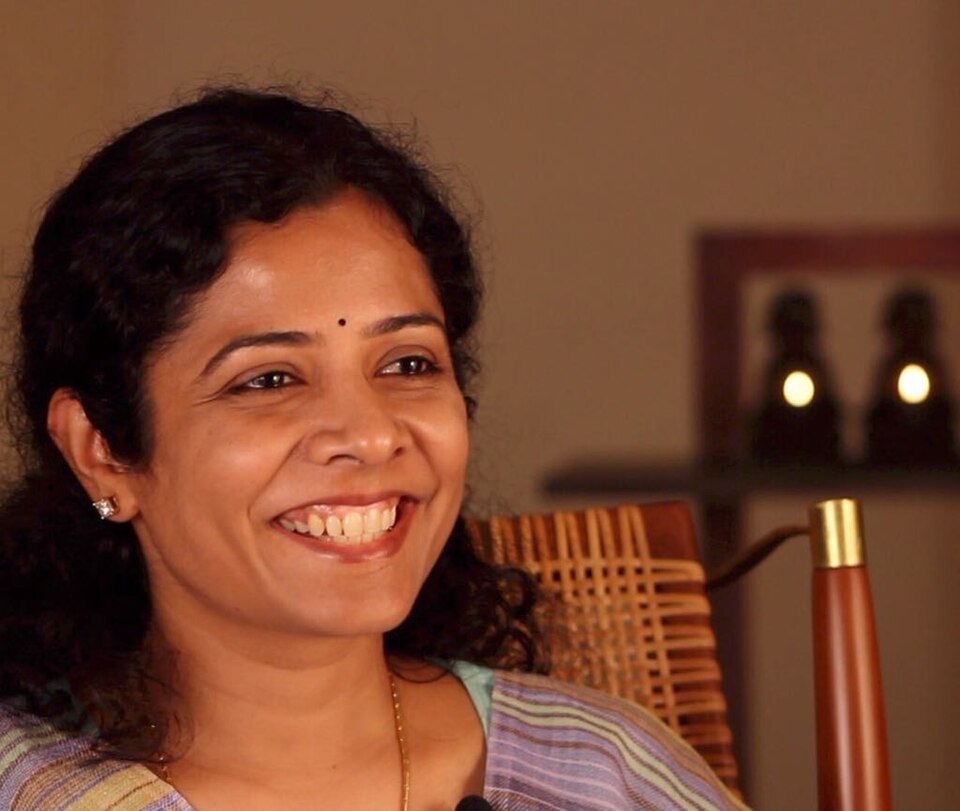
Co-founder of the O&O Academy and Ekam — the Indian school of consciousness based at the Ekam temple north of Chennai — and one of the most widely-followed contemporary teachers in…

Ver perfilSitio web
Explorar temas
OverthinkingAwarenessQuieting-the-mindWorrySoul-sync-meditation

¿Tienes Preguntas?

Preguntas Frecuentes

Sri Preethaji explains that overthinking often becomes a habit that lives in the brain, emotions, and body, not just in thought. Many people believe the churning is protecting them, so the loop keeps running even when the body is tired. Her suggestion is to stop trying to solve it and begin observing the thoughts instead.
According to Preethaji, yes. Fighting, reducing, or replacing thoughts with positive ones only adds more mental effort, which feeds the loop. She argues that the only real way to quiet the mind is to stop fighting it and begin to watch it.
Preethaji describes sitting back and noticing each thought as it arises and ceases, without clinging to it, pushing it away, or evaluating it. She compares it to a wave that rises and dissolves, and says you should simply allow it to rise and cease. The aim is to let the flood of thinking slow down on its own.
Preethaji observes that most repetitive thinking is built from four or five thoughts revolving around different past events. She explains this is mechanical thinking that wires the brain through repeated neural connections. Recognizing the pattern is the first step toward loosening it.
In the conversation, Preethaji describes Soul Sync meditation as designed to work for people who have meditated before and for complete beginners alike. She says it works on the body, the mind, and consciousness, and that it can help people move past what hinders their vision and desires. The guest in the video shares how she has integrated it into her own community.
Preethaji suggests starting with something simple and external, such as noticing the slight movement of a blade of grass, before turning attention inward. She says awareness is a practice that develops step by step. Beginners can start small and build the habit of watching rather than reacting.
In the talk, Preethaji says that when people are caught in worry they tend to focus on the problem and then take actions that are not suited to the situation. Calm, by contrast, reveals the intelligence of the situation and makes the right action easier to see. This is why she frames calm as a source of strength rather than passivity.

Seguir leyendo

More from Preethaji

Ver Todo
Why Helping Professionals Struggle to Connect With Family
Inspire

Why Helping Professionals Struggle to Connect With Family

A counselor who connects instantly with clients but freezes with family brings a question to Sri Krishnaji. His answer turns on samskaras, f…

10 min read
Why Today's Crises Begin With Inner Separation and Disconnection
Inspire

Why Today's Crises Begin With Inner Separation and Disconnection

Preethaji argues that the world's crises grow from individual feelings of separation, which spill into broken families and communities. Her …

3 min read
Change the World Live in Bali: A Song That Starts Inward
Inspire

Change the World Live in Bali: A Song That Starts Inward

Franko Heke and Equanimous perform "Change the World" live in Bali. Its call-and-response chorus argues that change begins with how we live,…

7 min read
Medicine Buddha Practice: Feeling Healing Energy Within
Inspire

Medicine Buddha Practice: Feeling Healing Energy Within

A weekly Medicine Buddha session shows how a deity practice can start with feeling rather than imagining. Here is how Lama Rod Owens teaches…

9 min read

Sigue explorando

Continúa tu camino

Más sabiduría y encuentros de todo el directorio de BrightStar.

Más artículos

Recorre la biblioteca completa de enseñanzas, entrevistas y guías.

Ver todos los artículos →

Maestros y artistas

Explora los linajes, músicos y guías del mundo consciente.

Explorar artistas →

Encuentra un evento

Kirtan, retiros, baños de sonido, breathwork, festivales — muy pronto.

Ver eventos →