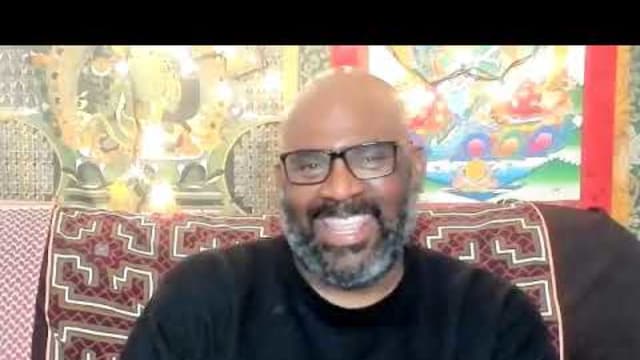
The room is dim, the lights are low, and a soft voice is already asking you to find a comfortable position. "Hello, this is davidji and welcome to today's meditation," the voice says, and beneath it a bed of music hums and recedes, the way a pedal steel line lingers under a verse. For the next twenty-six minutes, davidji's Total Healing, Deep Healing Guided Meditation asks the listener to do something most of us rarely do on purpose: stop trying to fix anything, and instead notice what already wants attention. The structure is simple and deliberate. It begins with breath, moves to a self-chosen healing intention, travels the body from crown to toes, opens into the heart, places a glowing light there, and closes with a set of short affirmations before returning the listener to the room. This piece walks through that arc, explains the reasoning behind each stage, and looks at the health claims the teacher makes at the top of the recording.
Guided meditations of this kind tend to follow a recognizable architecture, and davidji's is clear enough to hear as a composition. The opening is a set of instructions about posture and breath. The middle is a long, slow passage through the body, joint by joint. The emotional center arrives around the heart. The close is a return: wiggle the fingers, let the eyes open, come back to the room. Between those sections the teacher leaves generous pauses, and the transcript marks music running under much of the speech, which means the pacing is part of the instruction. You are meant to be carried, not told.
The language is physical and sensory throughout. Listeners are asked to "feather your nest," to let the eyelids "ever so gently float closed," and to "feel it travel down deep" with each inhale. This is not abstract guidance. It is a set of concrete invitations, and the meditation depends on the listener actually doing them, one by one, rather than understanding them from a distance.
The recording opens with a strong set of assertions. davidji says the meditation is "scientifically proven to help you heal your body, provide peace of mind, and bring comfort to your heart." He then claims that "when practiced consistently for 56 days, eight weeks, it actually changes the physical structure of the brain," and that it "has been shown to reduce pain and inflammation in the body," supports hormonal balance, strengthens emotional regulation, and increases self-compassion.
These are the speaker's claims, and they should be read as such. The portion of the transcript available for this article does not name the studies behind them, and nothing here independently verifies the numbers or outcomes described. What can be said with confidence is what the practice itself asks of you: a daily routine of roughly eight weeks, followed consistently, with attention on breath, body, and emotional tone. If you are managing a pain condition, an inflammatory illness, or a hormonal issue, the claims are a reason to ask your own clinician about a meditation practice alongside your care, not a substitute for it.
The first several minutes are almost entirely about breath, and the instructions are specific. A "long, slow, deep breath in," taken "through the nose," with the attention following it "down deep" before it is released. Then comes a shift from directing the breath to witnessing it: "simply stay here for a few moments, witnessing your breath, watching it as it flows into you, watching it as it flows back out."
That witnessing is the foundation for everything that follows. The listener is invited to notice the rise and fall of the chest, or the belly filling and emptying, and then to "allow your breath to find its own natural rhythm." It is a small move with large consequences. Attention that has been directed becomes attention that is observing, and observation is what allows the rest of the practice to land without force.
Around the four-minute mark, davidji offers the line that anchors the whole session: "You are so much wiser than you think. There's this natural intelligence resting inside of you." The meditation's premise is that the healing capacity is not something the listener must manufacture. It is already present, and the practice is about creating conditions for it to show up.
Comfort receives special emphasis in those opening minutes. "Remember, comfort is queen," davidji says, and then, "Always keep moving toward comfort to allow the healing." For anyone who has tried to meditate through a stiff neck or a hard floor, this is more than a pleasantry. It is a working principle: if the body is fighting its position, the mind will be fighting too.
The turning point comes when davidji asks the listener to name what needs attention. "Every one of us arrives carrying something in need of healing," he says. "Perhaps it's a physical pain or illness, an emotional wound, or a weight on your heart that you've been carrying for far too long. Or perhaps it's simply the overwhelm of life." The meditation does not specify the answer. It allows the listener's attention to drift toward "a place in your body, a memory from the past, or something weighing heavily on you."
Then comes a question the listener is asked to hold without answering too quickly: "What part of me right now could use some healing?" The instruction is to listen "with kindness, with compassion," and to notice what arises. That noticing becomes the healing intention, and the imagery davidji uses to describe it is agricultural and patient. The intention should "settle into your heart like a seed embedding in fertile soil. Like rain nourishing thirsty ground."
There is a useful craft lesson in that choice of metaphor. A seed does not get pulled up to check whether it is growing. It is placed, covered, and left in the dark. The meditation treats the intention the same way: once named, it is not analyzed further. The listener is asked to "feel it being received," and then to feel it "become you" with each heartbeat.
"Something wise within you already knows the way. An intimate wisdom that has always known your true self and remembers your wholeness."
davidji, in the guided practice (mid-session, after the healing intention is named)
Once the intention has settled, the practice becomes a slow journey through the body. The attention drifts from the crown of the head to the forehead, the temples, the cheeks, the jaw, the tongue, the throat, the shoulders, the arms and fingers. It returns to the center of the chest, moves through the rib cage and lower back, then down through the belly, hips, thighs, knees, calves, ankles, feet, and toes.
Two details matter here. First, each region is given a verb, and the verbs carry the instruction: soften, release, relax, unwind, receive, unburden. Second, davidji repeatedly invites the listener to set something down. At the shoulders he says, "Notice whatever you've been carrying there. And give yourself some permission right here to set some of it down." The body scan is not a search for tension to eliminate so much as a series of permissions granted.
The scan closes with a return to the top and a full-body check-in. "Notice how much has already softened. Notice how much has already released." If a place still asks for attention, the listener is told to breathe into it and, on the exhale, "offer it comfort, offer it compassion, offer it patience." That final phrase, offering patience to a sore place, is perhaps the most practical instruction in the whole recording.
The meditation then moves to what davidji calls "all the aspects of our heart": "the feeling heart, the remembering heart, the loving heart." This is where the practice turns from the physical to the emotional, and the language grows more tender. The listener is asked to notice whatever the heart has been holding: "A disappointment, a loss, a hurt, a fear, or perhaps your heart is simply tired."
The response is not to fix that feeling but to welcome it. "Whatever is present, welcome it. Acknowledge it. Allow it to be here." Then comes a line that works almost as a release valve: "You don't need to carry everything right now. You don't need to hold everything together for these next few moments."
For listeners who came in with a heavy week, that sentence may be the one that lands. It names a kind of exhaustion many people recognize, the constant holding together of obligations and feelings, and offers a short window in which it can be set aside.
In the heart section, davidji asks the listener to imagine a "warm healing light glowing gently in the center of your heart, pulsing with each beat of your heart." Later the image shifts, and the listener is invited to picture "a white light," which brightens and extends outward through the body. Visualization of this kind gives the attention a shape to rest in after the long work of the body scan. It is a place to put the breath that has been witnessed, the intention that has been planted, and the softness that has been found.
The affirmations come next, delivered slowly and with space between them: "I am healing." "I am whole." "I am love." These are short enough to remember and simple enough to repeat without strain. The transcript shows them coming after the light, so the sequence moves from image to statement, from something seen to something said.
The closing minutes return the listener gently to the room. The fingers are wiggled, the eyes are allowed to open, and the practice ends with a reminder that the healing is ongoing rather than finished. "Continuing to heal, continuing to grow," the speaker says in the final stretch. That phrasing matters. It frames the session not as a single event but as one movement in a longer practice, consistent with the eight-week routine davidji describes at the start.
If you want to work with this meditation, the simplest approach is to treat it as a sequence rather than a single listen. Choose a quiet time, a comfortable position, and the same session for several days, so the body begins to recognize the path. Pay attention to where your attention wanders during the body scan, and notice which areas soften easily and which resist. Give the healing intention a sentence you can return to, and let it stay unanswered if it does not come clear the first time.
Keep the health claims in proportion. The practice asks for consistency over weeks, not an overnight result, and any pain, inflammation, or hormonal concern deserves a conversation with a qualified clinician. Meditation can be a companion to that care. It is not a replacement for it.
Finally, return to the line that opens the recording and closes its logic: healing "is already unfolding within you." Whether or not the research claims hold up for you personally, the meditation's central invitation is clear enough to test in a single session. Breathe slowly. Name what is asking for attention. Let it be held.