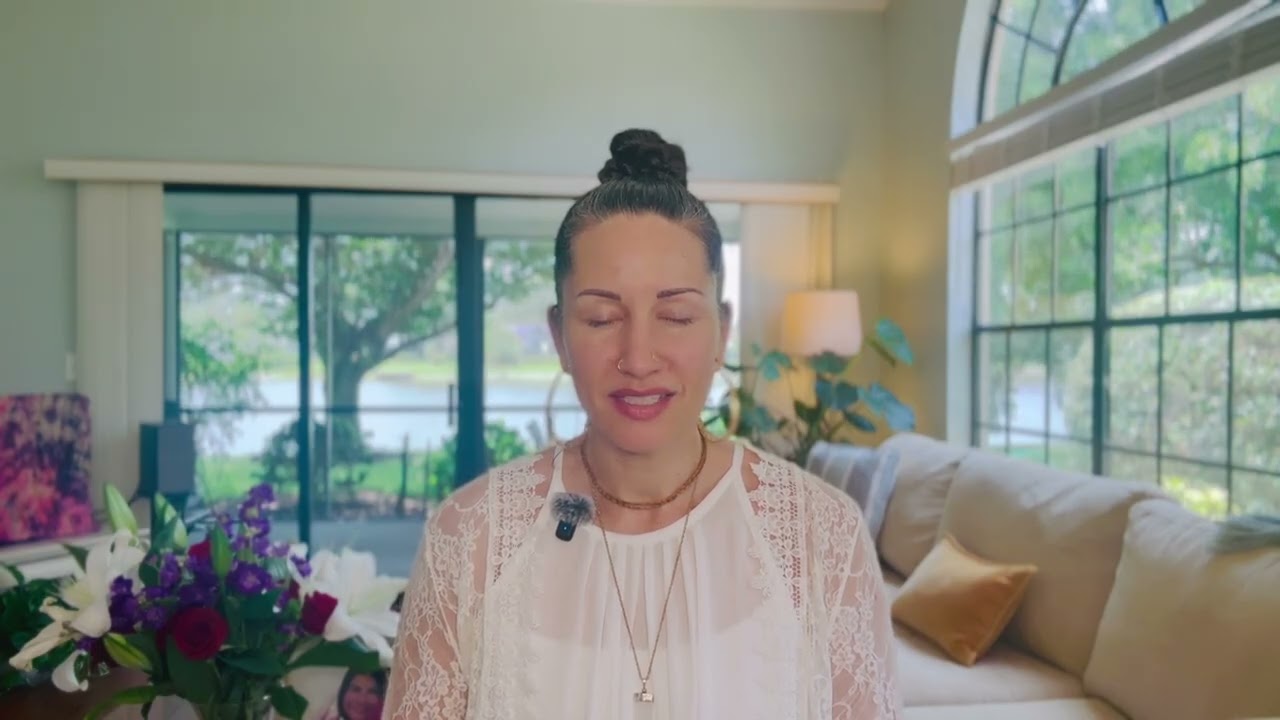
A good sleep meditation does not try to make you sleep. It sets up conditions in which sleep can arrive on its own, and Sacha Stewart's 20-minute practice, published on her channel in December 2019, is built on that logic. Stewart, a Melbourne-based meditation and mindfulness teacher who also works as a kinesiologist and mind-body practitioner, guides the listener through a sequence that moves from the breath to the muscles, from the muscles to a slow mental map of the whole body, and finally to a deliberate release of form and time. Nothing in it is exotic. What makes it worth a close listen is the order: each stage hands the nervous system a slightly quieter job than the one before it.
The opening minute is practical. Stewart asks the listener to check the bed, the blankets and the room, to make "any final adjustments," and to ask whether anything could make them "even 5% more comfortable." That small audit matters, because a body that is still fidgeting about the pillow will not settle, however good the instructions. Only then does she invite the eyes to close and attention to settle in the belly, "with relatively little movement of the chest" (around 0:47 in the recording).
The breathing instruction is the real engine of the first phase. Stewart describes breathing deeply and letting the breath slow, framing the slowing as a signal "to the body and the mind that in this moment everything is okay and that it's safe to rest now." Whether or not one accepts the physiology in that sentence, the technique is familiar to anyone who has explored slow breathing: a lengthened exhale is the part of the cycle that tends to encourage the body to downshift. Stewart's language is blunt about this. She is not asking for a dramatic inhale. She is asking for the exhale to be the place where you let go.
Around the two-minute mark, Stewart introduces a short cycle that looks almost like a workout. On the inhale, the listener holds the breath and contracts the muscles of the arms, legs, hands, feet and face, pulling everything "into fists" and tightening through the whole body. On the exhale, everything is released. She repeats this three times in total, and then describes the sensation as bringing "all the tension to the surface" before the full breath out.
The craft choice here is instructive. Tension is generated on purpose so that release becomes noticeable. Most people carry a background tightness they cannot feel until they have clenched it and then let it go. Stewart's instruction to "notice the sense of relaxation that comes over you" after the third round is the hinge of the entire meditation: the body has just been shown, by direct contrast, what its own loosening feels like. Everything that follows depends on that contrast being fresh.
Once the body has been loosened, Stewart shapes the breath. The first pattern is a simple lengthening: breathe in for a count of four, and out for a count of eight. A second pattern adds a hold at the top of the inhalation, described in the recording as inhaling for four, holding for seven, and exhaling for eight. The automatic captions of the video are imperfect at these numbers, so listeners should follow the spoken counts rather than a transcript, but the principle is clear. The exhale is deliberately made longer than the inhale, and the hold gives the listener a moment of stillness before the long letting go.
Stewart links the rhythm to specific effects: the breath is said to "bring the body into balance," to soothe the heart and calm the mind, and to calm the nervous system. She then releases the counting and asks the breath to return to "its own natural rhythm," which is a crucial step. Counted breathing can become another task to perform. Returning to a natural rhythm, while keeping the memory of the longer exhale, lets the counting fade into something the body is doing on its own.
The heart of the practice is what Stewart calls a rotation of body awareness, and it is the part most listeners will remember. She moves attention through the body in a fixed circuit rather than at random, and the route is worth noticing because it is systematic. Attention begins on the right side, traveling from the thumb through each finger to the back and palm of the hand, up the wrist, forearm, elbow, shoulder, along the ribcage and waist, down the hip, thigh, knee, lower leg, ankle, and out through each toe. The left side follows the same order.
From there, awareness moves to the back of the body: the heels, the calves and hamstrings, the buttocks, the length of the spine, the back of the arms and the back of the head. Then it crosses to the front: the crown, forehead, eyebrows, eyes, nostrils and lips, the throat, the chest, the heart center, the arms, the navel, the abdomen, the legs and the tops of the feet. The circuit ends with a short instruction to hold the whole body at once.
The logic of this circuit is that it gives a sleepy mind a job that is simple, sequential and repeatable. A wandering mind is hard to bring back to a specific location, but a mind following a known map can keep returning to the next point. The practice does not ask for analysis; it asks only for noticing, one location at a time. For many people, that is exactly the level of mental demand the bedtime hour can sustain.
The last phase is quieter and more poetic. Stewart moves the awareness back to the breath and invites the listener to "drop down a layer" with each exhale, to let go of time and space, to feel the body dissolving "into a weightlessness and a lightness," and to let thoughts dissolve along with the sense of form. Here the instructions shift from doing to allowing. The meditation's work is essentially finished, and what remains is a gentle permission to fall asleep. The recording closes with a soft, repeated word and the sound of the voice trailing off.
Between the two halves of the practice, there is a useful lesson in pacing. Stewart does not rush the drift. Each stage is allowed its own length: the breath, then the contraction, then the counted breathing, then the open breath, then the body circuit, then the dissolve. A listener who uses the practice regularly will find the stages become familiar, and familiarity itself makes the sequence easier to surrender to.
The simplest approach is to lie down in the position Stewart suggests, with the lights low and a blanket that is already comfortable, and to follow the recording from start to finish without adjusting it mid-way. If you wake partway through, let the breath return to its natural rhythm and begin again at the body circuit, which is the most forgiving part. Over time, many people find that the long-exhale pattern alone is enough to cue the rest of the sequence, and the full recording becomes a reminder rather than a set of instructions.
The practice is also a useful reference for anyone curious about how sleep meditations are constructed. Stewart's sequence moves from the environment to the breath, from effort to release, from counting to natural rhythm, from a detailed map to a whole-body awareness, and finally to surrender. It is a simple arc, and it holds together.
If this approach appeals, try the recording for three or four nights in a row before judging it, and keep a note of which stage feels most useful: the tension cycle for some, the long exhale for others, the body circuit for those whose minds race. Stewart's own website and Instagram, listed on the video, are the places to look for her other work, including her regular classes, online sessions and kinesiology practice. The recording itself, at roughly 20 minutes, is best played in a dark room with no screens nearby, so that the last words can do their job.