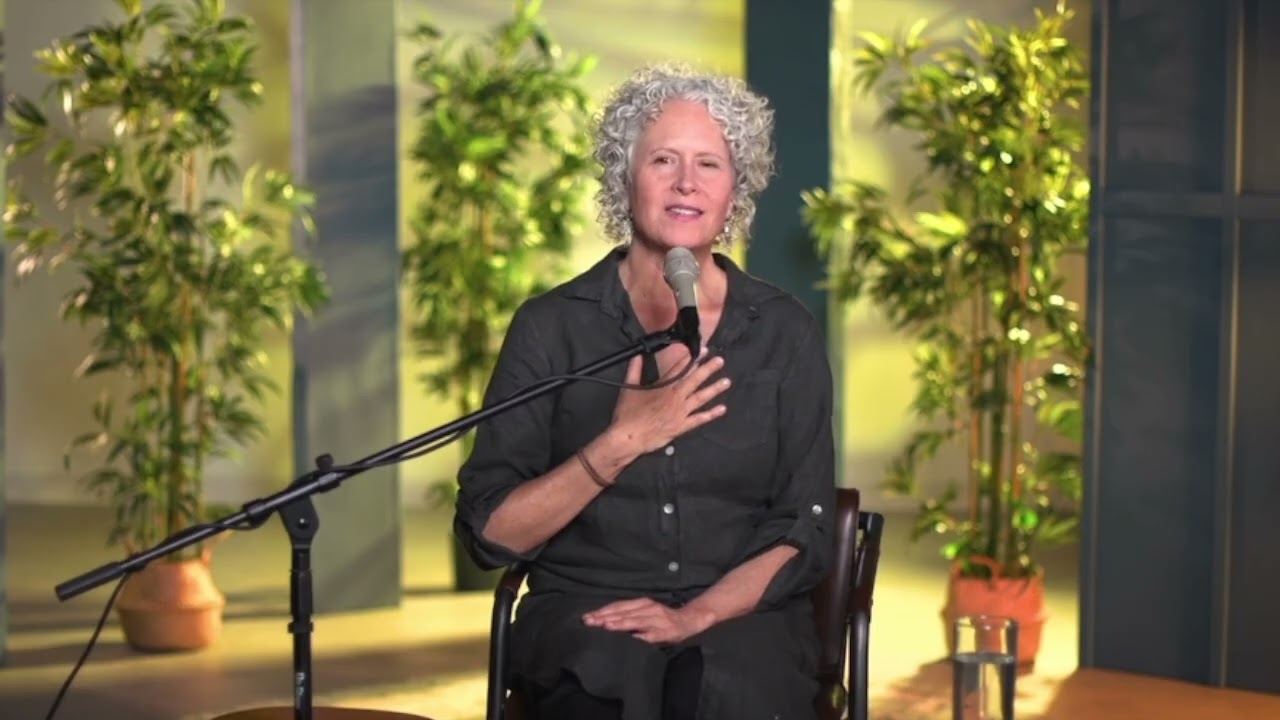
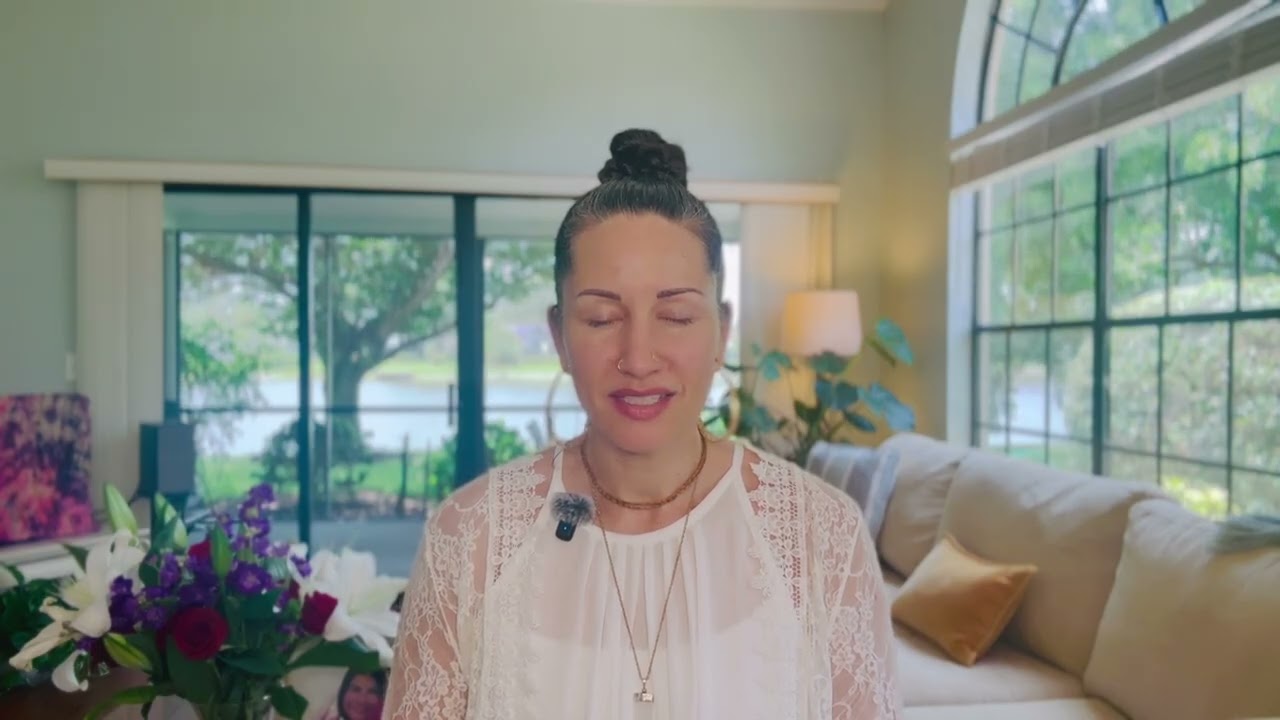
Close your eyes, let the sounds of the room stay where they are, and take a breath in with a big smile. Within seconds the instruction is to become aware of your whole body, and then, almost before you have settled, to notice that thirty trillion cells are living inside it, many dying and many being born every day. That is the opening move of a guided meditation released by Meditations By Gurudev, the official channel for Gurudev Sri Sri Ravi Shankar's meditations, timed to Pitru Paksha, the fortnight the Hindu calendar sets aside for remembering one's ancestors. Across roughly sixteen minutes, the voice on the recording walks the listener from the cellular body to the lineage that produced it, then out to a sky full of stars, and finally back to a smile that is meant to reach every particle of the body. It is a short, unhurried practice, and it is built on a single idea: gratitude becomes physical when you let the body relax enough to feel where it came from.
Most ancestor-focused practices begin with the people being honored. This one begins with the person doing the honoring. The reason is practical. Gratitude toward parents, grandparents, and great-grandparents is easy to think about and hard to feel while the body is braced, the breath is shallow, and the mind is running its usual errands. So the first stretch of the recording is almost entirely sensory: close the eyes, relax the whole body, take the attention inward, and notice what is already happening without effort.
The cell count matters for that reason. Thirty trillion is a number that most people cannot picture, and the instruction to hold it in mind does something specific. It shifts the sense of self from a single solid object into a living process. Cells are dying and being born all the time, which means the body you are sitting in today is a continuous renewal rather than a fixed thing. Once that is felt, the next step, the ancestry, lands differently. You are not a finished product standing alone. You are the current expression of a process that has been running for generations.
The turn toward lineage comes after the body has begun to soften. The guidance is plain: the body has come to you from your parents, your grandparents, and your great-grandparents, and you are invited to think of the whole ancestry and feel grateful for them. The instruction is not to reconstruct a family tree or to recall specific people. It is to let the idea of ancestry be felt as a presence in the body, which is why the practice keeps returning to physical sensation even when it talks about the past.
This is the emotional center of Pitru Paksha as the video frames it. Honoring ancestors in this tradition is less a matter of remembering names than of acknowledging inheritance: the body, the breath, the capacity to sit quietly at all. The meditation makes that acknowledgment a bodily experience. Gratitude is not announced; it is allowed to arise once the nervous system has stopped bracing against the moment.
"Let go and relax. Repose in yourself. Let the mind calm down and the body cool down."
(Gurudev, guided Pitru Paksha meditation, Meditations By Gurudev on YouTube)
Notice the sequence in that line. The mind is asked to calm first and the body to cool second, then the instruction returns to the self. Repose is not a state the practitioner produces. It is something the practitioner stops interrupting. This is the same logic that runs through the rest of the recording: effort is named, then released, and what is left is the quieter attention underneath.
Around the middle of the recording, the voice offers what may be the most important instruction in the whole sixteen minutes: for the next couple of minutes there is nothing to know and nothing to do. For someone new to meditation, this can feel like an invitation to drift. In practice it is a deliberate removal of the usual tasks. The mind is accustomed to working on problems, rehearsing conversations, and scanning for what comes next. Telling it that there is nothing to solve gives it permission to stop the scan.
The recording then widens the frame. The attention is moved to the back of the head and asked to let go, a small physical release that many guided practices use to pull awareness out of the forehead and the thinking mind. From there the meditation invites you to become aware of the vast sky above your head and millions of stars. Pairing a small, contained area (the back of the head) with an enormous one (the sky) is a common method for loosening the sense of a boundary around the self. The recording makes the point explicitly with its next instruction: let every cell of the body and every corner of the mind begin to expand.
Pitru Paksha is often associated with remembrance of those who have died, and a reader might expect a solemn tone throughout. The recording chooses something else. From the first breath, the listener is told to take that breath in with a big smile and breathe out with a smile. Later the instruction is to keep a big smile on the face, then to let the smile spread to the back of the head, then to imagine the back of the head itself smiling. The final movement is to let the smile percolate through the whole body.
The choice is a deliberate one. Gratitude toward ancestors, the recording suggests, is not meant to be heavy. It is meant to feel as natural as the response a child has to warmth. The line the voice uses for this is among the clearest in the video:
"You have done it as a baby. Every particle of our body start to relax and smile."
(Gurudev, guided Pitru Paksha meditation, Meditations By Gurudev on YouTube)
The reference to babyhood is quietly significant. Before the body learned tension, it knew how to relax and respond to comfort. The meditation asks the adult practitioner to recover that capacity, and it frames gratitude to ancestors as the same kind of response: open, warm, unforced. It is a reminder that the lineage it honors is not only a set of losses. It is also the source of the body's ability to soften and feel at ease.
The recording is a guided practice, so the easiest approach is to sit comfortably, close the eyes, and follow the voice. A few observations from its structure are useful for doing it well. Start with the body and do not rush past it; the cell reflection and the sense of ancestry are both built on physical attention. When the voice says there is nothing to do, actually let the hands, the jaw, and the belly stop working. When the attention moves to the back of the head, let it go there without forcing anything. When the sky and the stars appear, allow the image to be large. Finish with the smile, letting it travel slowly rather than trying to produce it all at once.
Because the transcript available for this article is partly fragmentary, and some of the chanted and Sanskrit passages are not clearly captured in captions, the most reliable way to understand the full texture of the recording is to listen to it. The spoken instructions above are the ones that come through clearly, and they are enough to build a complete practice around.
The meditation is not a historical lecture, and it does not ask the listener to adopt a particular belief system to benefit from it. Its core moves are general: attend to the body, notice that it is constantly renewing, recognize that it carries a lineage, release effort, expand attention, and let the body respond with warmth. Those moves can be brought to any season of remembrance, or to an ordinary Tuesday. Pitru Paksha gives the practice a specific occasion, and the recording uses that occasion to make gratitude a felt experience rather than an idea to be agreed with.
Listen to the full recording once without trying to do anything with it, then listen again and follow the sequence: body, breath, cells, ancestry, repose, sky, smile. If you want to build the habit, try the same arc on your own for a few minutes. Start with a smile on the in-breath and the out-breath, reflect that the body is made of trillions of cells that are constantly being replaced, and think of the people who came before you, however many generations back. Then let go of the need to think about them, and let the warmth spread. The practice is short, and what it asks for is simple: notice what you have inherited, and let the body answer with a smile.