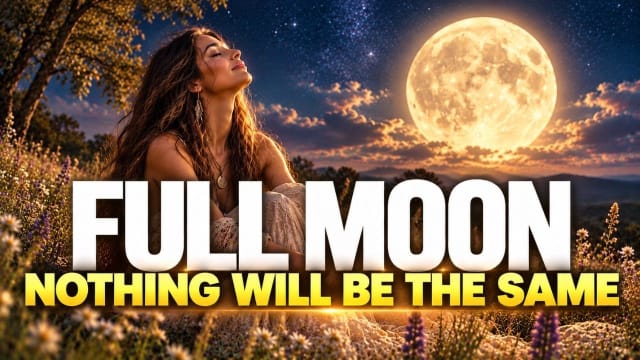
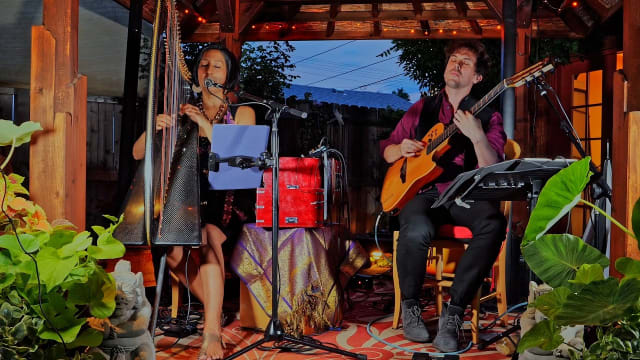
It is a windy Sunday, and the sky is doing a lot at once. In a two-and-a-half-minute video posted to the Meditation Jam with Maria Rinné channel, the teacher opens with the kind of greeting that feels like it was recorded on a porch: "Hi lovely, so I thought I just come in this Sunday, this windy Sunday with a little idea or a tip." The tip is simple. Mercury has just turned retrograde, a grounding Taurus full moon is arriving, and the sun is moving through Scorpio. Together, she argues, those three conditions make this a good moment to stop, look back over the year, and ask a question most of us skip: not what we accomplished, but how we have actually been feeling. What follows is an explanation of that question, the astrological framing she uses to justify asking it, and a way to put it into practice before the calendar turns to 2027.
The video is short and it does not waste its opening. Rinné begins with weather, then moves straight to the practice. The windiness is not decoration. It is her way of naming the feeling many people carry into late autumn: the sense that the year has been moving faster than they could follow. She describes that feeling directly when she asks whether the year "has just flown by over your head and it just felt like you've been pushed through life." That image, of being pushed rather than steering, is the emotional core of the piece. A review is an act of taking the wheel back, even for ten minutes.
Her framing is practical rather than mystical. Before she gets to any planetary language, she establishes the question she wants viewers to hold. "How has your vibe been throughout this year?" she asks at about the 0:50 mark. Then she separates it from the scorecard most of us keep: "Not what you have done, not what you have achieved, but what have your vibe been? How have you been feeling?" That separation is the spine of the whole video. Most year-end reflection is a list of outputs. Rinné asks for a read on the inner weather instead.
In the video's opening lines, Rinné says that "yesterday Mercury went retrograde," and she treats the event as an invitation rather than a warning. In astrological tradition, Mercury is associated with communication, thinking and travel, and its retrograde periods, when the planet appears to move backward from Earth's vantage point, are traditionally read as times for reconsidering rather than launching. Rinné sticks to that reading. She calls it "a beautiful time to revisit, review, redo" and then adds, with a laugh in the rhythm of her speech, "anything with re in front of it, really."
That little joke is worth taking seriously, because it turns a astrological event into a usable grammar. Re-visit. Re-view. Re-do. Re-member. Re-consider. Each prefix asks you to return to something that already happened and look again. For a review of your vibe, this matters. You are not judging the year from scratch; you are going back through it with a new set of questions. Mercury retrograde, in her telling, gives you permission to be a little slower and a little more careful about the past than you would be in a busy week.
Whether or not you hold a view on astrology, the practical logic stands on its own. Many people already use the end of a season, a birthday or a fiscal year as a natural checkpoint. Rinné simply borrows the sky's calendar to make the checkpoint feel timely and shared.
Rinné describes the full moon as "grounding" and specifically as a Taurus moon. Here again she is working within astrological tradition, where Taurus is an earth sign associated with steadiness, the body, the senses and what is durable. A full moon, in that same tradition, is a moment of culmination, when something that has been building becomes visible. Put together, the Taurus full moon becomes a prompt to bring the year's energy down to earth and see what has actually taken root.
There is a useful tension in her wording. She notes that the moon arrives "tonight or today or tomorrow morning depending on where you live," which is a reminder that the timing of any full moon is local, not universal. The practice she suggests does not depend on the exact hour. It depends on attention. If you pause at any point in the days around the full moon, you are working with her intention.
She also pairs the moon with the sun in Scorpio, which she describes as an energy of going deep. The combination of a grounded Taurus moon and a deep Scorpio sun gives her video its two working verbs: settle, and descend. Settle what has been happening. Descend into why.
The most valuable distinction in the video is the one between doing and feeling. Achievements are visible. They have dates, outcomes and sometimes applause. A vibe is harder to name. It is the background tone of your days, the quality of attention you brought to ordinary moments, the stance you took toward the people and tasks in front of you. Rinné's point is that a year can look productive on paper and still feel, from the inside, like something you endured.
Her questions are built to make that difference concrete. She asks whether you were aware of your vibe at all, and she gives both possibilities equal weight. If you were aware, she asks whether there is something you would like to change for the coming year. If you were not aware, she asks how you would have wanted the year to feel, and whether you can feel that it has been that way. Then she asks the question that turns reflection into action: "And if not, how can you shift it?"
Notice what that sequence does. It does not assume the year was bad. It allows for a year that was fine, and a year that was not, and asks in both cases for an honest read of the gap between what you wanted and what you got. A vibe check, in this sense, is less a verdict than a measurement. You cannot shift a tone you have not noticed.
The most striking line in the video comes near the midpoint, when Rinné pivots from the Scorpio language of going deep to a more unexpected claim about avoidance. "It's not always the shadows we step away from," she says. "Sometimes we also step away from our light." She then explains the reason in plain terms: "Because we don't want to bring it into our attention, because then maybe you have to do something with it."
"It's not always the shadows we step away from. Sometimes we also step away from our light." (Maria Rinné, Meditation Jam with Maria Rinné, 2026)
This is the idea that gives the video depth. We are often taught to look at our difficulties, our fears and our old patterns, the shadows the Scorpio energy invites us to investigate. Rinné extends the inquiry to the other side. Strengths, joys and moments of real aliveness can also be avoided, because acknowledging them creates a responsibility. If you admit that something in you is working, you may have to make room for it, protect it, or act on it. Looking at the light can be as demanding as looking at the dark.
Her Scorpio image of the detective is useful here. A good detective does not only search for the crime. They also notice what was there that looked ordinary, and they notice the moments that went right. The practice she describes asks you to investigate in both directions, with equal curiosity.
Rinné closes with a small, specific assignment: "take a moment today or this week," she says, to look at the thoughts and vibes that shaped your year and ask whether they were the ones you wanted. Her final prompt is the one she also posed in the video description, which asks viewers to name the energy they are choosing that day. Distilled, her method looks like this:
- Set aside a quiet window, even a few minutes on a windy day, away from your calendar and your scorecard.
- Ask what your vibe has been across the year, not what you accomplished, and notice which months come up first.
- Note whether you were aware of your state as it happened, or whether the year moved past you.
- Name one thing you would like to change for the coming year, or describe how you would have wanted the year to feel.
- Ask honestly whether that feeling is present now, and if it is not, what small shift could begin it.
- Look at the light as well as the shadows. Which moments of ease, clarity or pleasure did you step away from because they asked something of you?
The video's own description puts the final frame simply: "Your energy matters. Your awareness matters. And so does the way you choose to show up." That line is not a metaphysical claim. It is an ethic of attention. Whatever you believe about Mercury or the moon, the question of how you have been living, and whether you want to keep living that way, is available on any Sunday.
If this video has you thinking about your year, the most useful next step is the simplest one: take Rinné's questions into a notebook and answer them before the new year's noise starts. Write down the vibe you wanted and the vibe you had, and be specific about where they diverged. Then look for the light you may have been avoiding, the thing you already do well that you have been treating as too much trouble to claim. Revisit the year the way Mercury retrograde invites, slowly and with respect for what already happened. The sky will keep moving whether or not you pay attention. Your vibe is the part you can actually steer.