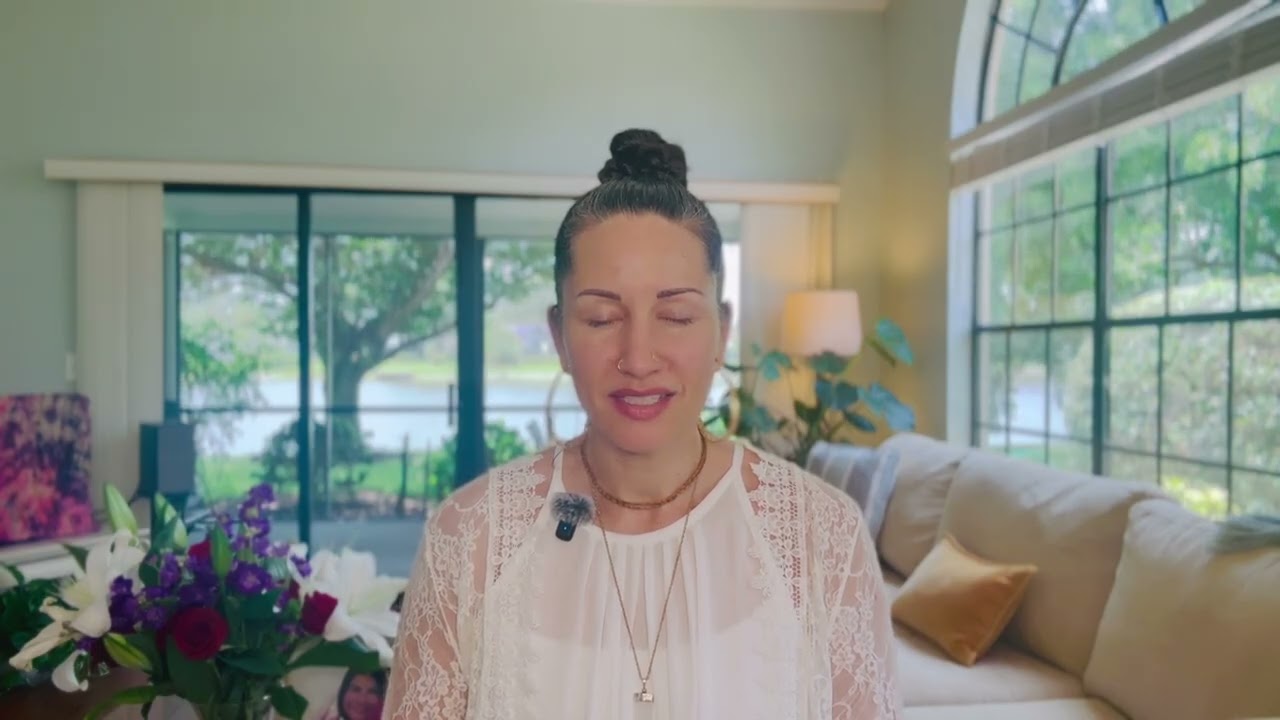
Lights are low, the blanket is pulled up, and a calm voice asks a child to become a scientist. That is the opening move of a 12-minute guided bedtime meditation for children aged 6 to 13, recorded by Fleur Chambers and published on her channel, Harvesting Happiness, in August 2018. Over the course of the recording, the breath is studied under an imaginary magnifying glass, a soft white light is poured through the arms, legs and torso, a child's day is honored body part by body part, and the day's worries are carried off into the night sky. It is a short, plain, carefully paced piece of work, and its choices are worth examining, because nearly every one of them solves a specific problem a restless child brings to bed.
Ask most children to "breathe deeply" and you get exaggerated, performed breaths, or a sudden self-consciousness that makes the whole exercise feel like a test. Chambers sidesteps that trap entirely. Early on, at about 1:02 in the recording, she asks the listener to "imagine that you are a scientist investigating how humans breathe," holding a magnifying glass up to "the small details."
The shift from instruction to investigation is the key idea of the opening. A child who is told to slow down can fail at slowing down. A child who is told to observe can't really fail at observing. The questions that follow are concrete and sensory: what the air feels like entering the nostrils, whether it is warm or cool, where it travels afterward, "perhaps you can feel it in your throat in your chest or even way down in your tummy." At about 2:07 she extends the inquiry to the body itself: "can you notice if your body moves when you breathe if it does which parts of your body move."
Chambers also builds in a quiet permission structure. Near the end of the body work, at roughly 10:03, she says "remember there is no right or wrong here we are just experimenting." For a child who has spent a day being graded, that sentence does a lot of work. Relaxation becomes a piece of curiosity rather than another assignment to get right.
After the breath has been studied, the meditation gives the mind something gentle to hold. At about 3:57 the listener is asked to "imagine a special soft white light flowing into your whole body as you breathe in." The light travels "all the way down your arms to your fingertips and all the way down your legs to your toes," then fills the chest and the tummy. Each inhale is framed as a refill: "each time you breathe in you are being filled with relaxation and calm."
Visualization is a useful tool with children because it converts an abstract instruction, "relax," into an image that can be followed. A child who cannot describe what relaxation feels like can still picture a light moving down an arm. The white light also acts as a thread that connects the breathing section to the body scan that follows, so the session feels like one continuous motion rather than a list of separate exercises.
"Each time you breathe in you are being filled with relaxation and calm."
Fleur Chambers, in the recording (around 4:42)
The middle of the meditation pauses for something most adult meditations skip: an explanation. Chambers reminds the listener how full a child's life is, "school homework sport drama music friendships and hobbies," and acknowledges that it can make it "hard to relax and fall asleep at night." Then she gives reasons sleep matters, framed in terms a child can recognize. At about 5:21 she explains that "when you sleep you grow and your body and heart become stronger," that the body "learns to fight off colds and other nasty bugs," and that a good night's sleep makes it "easier to learn at school," with better memory and concentration.
This passage is quietly important. Children are more willing to let go of a busy day when they understand that letting go is doing something for them. Chambers does not frame sleep as a rule to obey. She frames it as a benefit the child receives, which turns the bedtime routine from a surrender into a kind of self-care. The passage ends by pointing back to the energy a rested child has "to play with your friends and do all the things you love," so the reward is tied to the child's own interests.
The body scan that follows is the longest section of the recording, and it is structured with real care. It moves in an order that suits an active body: feet first, then legs, the tummy, the chest, the shoulders and arms, the hands and fingers, the face, and finally the brain. Each stop asks a small, specific question. At about 7:18 the prompt is "just noticing how your feet feel do they feel warm or cool are they tired from running around all day." Legs are asked whether they feel "light or heavy," with an invitation to wriggle if they want.
Two choices stand out. The first is the gesture of gratitude. At about 8:49, the arms and shoulders are thanked for their work: "they have been busy today helping you write draw build throw catch swim and even play an instrument." Chambers then asks the child to "give your arms a little smile to say thank you for helping you out today." That line converts the body from a machine that must be calmed into a collaborator that has earned appreciation, a reframing that many adults would find useful too.
The second is the permission to make the body tense before letting it go. For the hands, the instruction is to "scrunch your hands up into a tight little ball and then let them relax," repeated if desired. Contrast is one of the most reliable ways to notice relaxation, and a child who has just clenched a fist can feel the difference in the release far more clearly than one asked to relax something they haven't tensed.
The face gets a moment of humor. Chambers acknowledges that relaxing the face "may feel a bit strange," then names the eyebrows, teeth and tongue, a list that tends to make children giggle and loosen their jaws before they have consciously tried.
The final stretch of the meditation takes on the mind. Chambers asks whether there are "any thoughts or worries that you might like to let go of before you drift off to sleep." The answer she offers is a physical image rather than an argument. With each slow exhale, the child is invited to imagine worries "drifting off into the night far far away," and then to "let the moon and the stars take care of your worries for you." The line that follows is a small, sturdy piece of reassurance: "you do not need them now."
The image is sensible for children. A worry that has been named and sent somewhere else is easier to stop carrying than one that is argued with. The night sky is a big container, and handing a worry to something vast and patient gives a child a way to set it down without having to solve it first. Chambers repeats the breath-and-release motion more than once, which matters: the release is practiced, not just described.
The ending pulls the listener back to the physical world with a simple scene. "The Sun has set the stars are slowly coming out," she says, and somewhere in the world "the moon is shining bright." The child is told that in bed they are "safe and warm" and "relaxed and ready for sleep." The closing "sweet dreams to you" is a clean handoff from voice to silence.
The structure of the recording is what makes it repeatable. It moves from comfort and breath, to imagery, to a reason for rest, to a body scan, to the release of thought, to a closing scene. Each stage is short and gives a child a different kind of task: observe, picture, understand, locate, release, drift. A child who gets restless in one part has another part coming soon. The music underneath, "A Pure Embrace" by Christopher Lloyd Clarke, licensed through Enlightened Audio, is credited in the description and sits quietly beneath the voice.
The recording also works as a model for parents or teachers who want to write their own. Its core moves translate: ask children to investigate rather than perform, give them a light or image to follow, explain why rest matters in their own terms, thank the body for its effort, and offer worries somewhere to go. Nothing in it requires special equipment, a quiet room of a particular kind, or prior experience with meditation. It asks only for a few minutes and a willingness to be curious about the next breath.
If you are looking for a bedtime routine for a child between six and thirteen, the most useful thing to take from this recording is its method rather than its exact wording. Try the scientist framing for a week and notice whether a child who resists "relaxing" will happily observe their breath. Use the thank-you gesture for the arms or legs after a sports day. When a worry comes up at bedtime, borrow the moon-and-stars image and see whether a child is willing to hand it over. The full recording runs about twelve and a half minutes, so it fits neatly into a bedtime that is already rushed, and it is designed to be repeated until the sequence itself becomes the signal that the day is over.