
BrightStar

Ver Todos los Events

Descubre encuentros conscientes

events

Yoga
Meditation
Breathwork
Qigong
Tai Chi
Sacred Music
World Music
Medicine Music
Sound Healing
Ecstatic Dance
Destinos Populares
BaliSedonaLos AngelesCosta RicaNew YorkSan FranciscoAustinMiamiJoshua TreeTulum
Ver Todas las CategoríasVer Todos los Destinos

Explorar Todas las Características

Herramientas poderosas para hacer crecer tus eventos

Características de la Plataforma

Precios Dinámicos Inteligentes
Categorías de Entradas
Asientos Asignados
Recuperación de Carritos
Recuperación de Visitantes
Donaciones y Escala Móvil
Motor de Afiliados
Escáner de Entradas
Códigos de Cupón
Preguntas Personalizadas
Compartir Entradas
Ventas Adicionales
Análisis e Informes
Secuencias de Email
Lista de Espera / Notificar / Recordar
Personas y Lugares
Artists & TeachersEvent OrganizersVenues & StudiosKnowledge BaseGlossaryInspiration
Ver Todas las CaracterísticasSobre Nosotros
PreciosBlog
Language
Saved events
Ver Todos los Eventos

events

YogaMeditationBreathworkQigongTai ChiSacred MusicWorld MusicMedicine Music

Destinos Populares

BaliSedonaLos AngelesCosta RicaNew YorkSan Francisco

Personas y Lugares

Artists & TeachersEvent OrganizersVenues & StudiosKnowledge BaseGlossaryInspiration

Características de la Plataforma

Precios Dinámicos InteligentesCategorías de EntradasAsientos AsignadosRecuperación de CarritosRecuperación de VisitantesDonaciones y Escala MóvilMotor de AfiliadosEscáner de EntradasCódigos de CupónPreguntas PersonalizadasCompartir EntradasVentas AdicionalesAnálisis e InformesSecuencias de EmailLista de Espera / Notificar / Recordar
Ver Todas las CaracterísticasSobre Nosotros
PreciosBlog
Iniciar sesiónBuscadoresCreadores
  • Ver Todos los Eventos
  • Para Buscadores
  • Yoga
  • Meditación
  • Respiración consciente
  • Qigong
  • Tai chi
  • Música sagrada
  • Música del mundo
  • Música medicina
  • Sanación con sonido
  • Danza extática
  • Retiros
  • Talleres
  • Todas las Categorías →
  • Bali
  • Sedona
  • Los Angeles
  • Costa Rica
  • Tulum
  • Byron Bay
  • San Francisco
  • Austin
  • New York
  • San Diego
  • Denver
  • Seattle
  • Portland
  • Miami
  • Todas las Ciudades →
  • Be Found
  • Sell Globally
  • Para Creadores
  • Para equipos
  • Para Escritores
  • Para Maestros
  • Para Artistas de Kirtan
  • Para Estudios
  • Para Festivales
  • Para Centros de Retiros
  • Para Organizaciones Sin Fines de Lucro
  • Embajador de Marca
  • Casos de Estudio
  • Entradas sin costo
  • Elevate
  • Amplify
  • Red de +500K Compradores
  • Recuperación de Carritos
  • Precios Dinámicos Inteligentes
  • Categorías de Entradas
  • Eventos Recurrentes
  • Asientos Asignados
  • Motor de Afiliados
  • Lista de Espera / Notificar
  • Escáner de Entradas
  • Widget Embebido
  • Sindicación de eventos
  • Centro de mensajes
  • Integraciones
  • Reportes
  • Todas las Características →
  • Acerca de
  • El ecosistema
  • Blog
  • Glosario
  • Inspiración
  • Centro de Ayuda
  • Contacto
  • Documentación API
  • Recursos de Marca
  • Carreras
  • Prensa
  • Términos de Servicio
  • Política de Privacidad

Eventos

  • Ver Todos los Eventos
  • Para Buscadores
  • Yoga
  • Meditación
  • Respiración consciente
  • Qigong
  • Tai chi
  • Música sagrada
  • Música del mundo
  • Música medicina
  • Sanación con sonido
  • Danza extática
  • Retiros
  • Talleres
  • Todas las Categorías →

Destinos

  • Bali
  • Sedona
  • Los Angeles
  • Costa Rica
  • Tulum
  • Byron Bay
  • San Francisco
  • Austin
  • New York
  • San Diego
  • Denver
  • Seattle
  • Portland
  • Miami
  • Todas las Ciudades →

Para Creadores

  • Be Found
  • Sell Globally
  • Para Creadores
  • Para equipos
  • Para Escritores
  • Para Maestros
  • Para Artistas de Kirtan
  • Para Estudios
  • Para Festivales
  • Para Centros de Retiros
  • Para Organizaciones Sin Fines de Lucro
  • Embajador de Marca
  • Casos de Estudio
  • Entradas sin costo
  • Elevate
  • Amplify

Características

  • Red de +500K Compradores
  • Recuperación de Carritos
  • Precios Dinámicos Inteligentes
  • Categorías de Entradas
  • Eventos Recurrentes
  • Asientos Asignados
  • Motor de Afiliados
  • Lista de Espera / Notificar
  • Escáner de Entradas
  • Widget Embebido
  • Sindicación de eventos
  • Centro de mensajes
  • Integraciones
  • Reportes
  • Todas las Características →

Empresa

  • Acerca de
  • El ecosistema
  • Blog
  • Glosario
  • Inspiración
  • Centro de Ayuda
  • Contacto
  • Documentación API
  • Recursos de Marca
  • Carreras
  • Prensa
  • Términos de Servicio
  • Política de Privacidad
BrightStar
© 2026 BrightStar. Todos los derechos reservados.
Inspiration

Identify Subconscious Patterns: FindYour Primal Fears

Peter Crone
Peter Crone
Mar 19, 2024
5 min de lectura
Ver · 6

TL;DR: The most direct path to identifying your subconscious patterns is to locate where you consistently get upset or triggered in life—whether it's around a specific person, situation, or even your body. These triggers reveal something deeper: an underlying primal fear that your mind is perceiving as a threat. People who feel complete within themselves and secure in their own skin are less reactive to external circumstances, not because problems disappear, but because they've neutralized the threat perception at the root level.

Leer · 6 secciones

Where Do Your Consistent Triggers Live?

The starting point for investigating your subconscious patterns is deceptively simple: pay attention to where you get upset, triggered, or where you experience recurring frustration in your life. Peter Crone suggests asking yourself this direct question: Is it the mother-in-law? Your boss? A particular body part or health concern? The specific domain of your upset matters less than the fact that you notice the pattern exists.

These are not random irritations. When the same circumstances or people consistently provoke a reaction from you, you've found a window into your subconscious. The trigger itself—the surface-level problem—is not the real issue. Instead, it's a messenger pointing you toward something deeper that your mind has been protecting you from seeing.

What Is Your Trigger Actually Revealing?

Once you've identified where you get triggered, the next question becomes critical: What is that trigger actually revealing at a deeper level? This requires looking beneath the complaint or the blame directed at the external circumstance. If your boss's controlling behavior bothers you, that's your cue. If a particular relationship dynamic makes you angry or anxious, that's data. If you're consistently upset about something involving your body, that too is pointing toward something.

The underlying architecture of every trigger is fear. Specifically, what Crone calls the "primal fear"—the fundamental, bedrock fear that your trigger is expressing. Your mind doesn't generate emotional reactions to threats it doesn't perceive. You get upset because on some level, your nervous system or your unconscious mind is registering a potential danger.

Why Do We Get Triggered? The Threat-Perception Framework

A crucial insight emerges from understanding how triggers work: We only get triggered when the mind is perceiving a potential threat. This is not a character flaw or a sign of weakness. It's a protective mechanism that has become overly sensitive, like a smoke detector so finely calibrated that it goes off when you toast bread.

The threat being perceived may not be physical danger. It might be a threat to your sense of control, your identity, your worth, your autonomy, or your safety in a relationship. The fear can be about abandonment, inadequacy, loss of power, exposure, or rejection. But until you identify what the primal fear actually is—until you can name it—you'll remain caught in reaction mode, blaming the trigger (the mother-in-law, the boss, the body symptom) rather than addressing the fear behind it.

The Comfort of Completeness: How Inner Security Changes Everything

Crone points to an observable difference between people who are triggered frequently and those who rarely react: emotional completeness. Someone who is "complete within themselves" and "comfortable in their own skin" is significantly less likely to get triggered by external circumstances. This doesn't mean they exist in a state of denial or bypass difficult situations. It means they've neutralized the threat perception at the root.

This is important: it's not that external problems disappear or become acceptable. It's not ideal that someone leaves you in a relationship, and it's not great that your boss has a controlling ego. These are real circumstances that involve real dynamics. But when you're not threatened by them—when you can observe them rather than react to them—your response changes entirely. You move from a threat-based, defensive mode to a mode of observation and choice.

A person who feels threatened will defend, blame, resist, or become absorbed in the problem. A person who observes can respond with clarity, make decisions based on values rather than fear, and maintain their equilibrium regardless of what's happening externally.

What Does It Mean to Move From Reaction to Observation?

The shift from being triggered to simply observing is not passive resignation. When Crone says someone who is complete doesn't feel threatened by a boss's controlling behavior, but instead sees it "more as a point of observation," he's describing a fundamental change in consciousness. You still see the reality of the situation. You still understand what's happening. But you're not fused with a fear response to it.

This distinction matters because it's the difference between unconscious reactivity and conscious choice. A person who is triggered by their boss's behavior may be compelled to argue, comply out of fear, or spiral into resentment. A person observing the same behavior can choose how to respond: whether to set a boundary, leave the situation, or navigate it with a different strategy—all without the emotional charge that clouds judgment.

Where to go from here

Begin by identifying one area where you consistently get upset or triggered. Don't try to fix it yet—just notice it clearly. Then ask yourself: What is the primal fear underneath this trigger? What am I actually afraid of? This question is your gateway to the subconscious pattern itself. Once you can name the underlying fear with specificity, you've moved the pattern from the unconscious realm into conscious awareness. That shift—from hidden reaction to seen pattern—is where real change becomes possible.
Comments

Loading the conversation…

Transcript

[0:00] the first place to start to investigate

[0:03] what are your subconscious patterns is

[0:05] where do I get upset where do I get

[0:07] triggered where do I have these

[0:09] consistent woes in my life right is it

[0:11] the mother-in-law is it my boss is it

[0:14] something to do with one particular body

[0:16] part and whatever that trigger is what

[0:18] is that actually revealing at a deeper

[0:20] level so the question I would ask people

[0:23] is like what's the Primal Fear what's

[0:25] the fundamental fear because we only get

[0:28] triggered when the mind is perceiving a

[0:30] potential threat and so happy people so

[0:33] to speak or someone who's complete

[0:34] within themselves comfortable in their

[0:36] own skin is less likely to I'm not

[0:38] saying they don't but less likely to get

[0:40] triggered by pretty much anything so

[0:42] okay well that's not ideal that somebody

[0:44] left me in a relationship it's not great

[0:46] that my boss has clearly got some sort

[0:47] of big ego and wants to control people

[0:50] but I don't feel threatened by that it's

[0:52] more a point of observation

Peter Crone
ArtistPeter Crone

The Mind Architect who helps individuals unlock their potential by addressing subconscious beliefs through innovative coaching, workshops, and transformative teaching.

Ver perfilSitio web
Explorar temas
Subconscious-patternsTriggersPrimal-fearEmotional-reactivitySelf-awareness

¿Tienes Preguntas?

Preguntas Frecuentes

Start by identifying where you consistently get upset, triggered, or frustrated in life—specific people, situations, or body-related concerns. These recurring triggers are windows into your subconscious patterns because they reveal an underlying primal fear that your mind perceives as a threat.
You get triggered only when your mind is perceiving a potential threat, whether that threat is physical, emotional, or related to your identity or autonomy. Until you identify the specific primal fear underneath the trigger, you'll remain in reaction mode blaming external circumstances.
A primal fear is the fundamental, bedrock fear driving your triggers—such as abandonment, inadequacy, loss of control, or rejection. It's deeper than everyday worry because it's unconscious and generates automatic defensive reactions in response to perceived threats.
Rather than changing external people or situations, work on neutralizing the threat perception at the root by identifying your primal fear. When you feel complete within yourself and secure, you can observe difficult behaviors objectively rather than react defensively, allowing you to respond with clarity instead of fear.
Yes. The shift from unconscious reactivity to conscious observation happens when you identify and name the underlying fear. Once a pattern moves from hidden to consciously aware, you gain the ability to choose your response rather than being compelled by automatic reactions.
Being complete within yourself means feeling secure in your own skin and not requiring external validation or circumstances to feel safe. This inner completeness reduces trigger sensitivity because you're not perceiving threats to your identity, worth, or safety in everyday interactions.

Seguir leyendo

More from Peter

Ver Todo
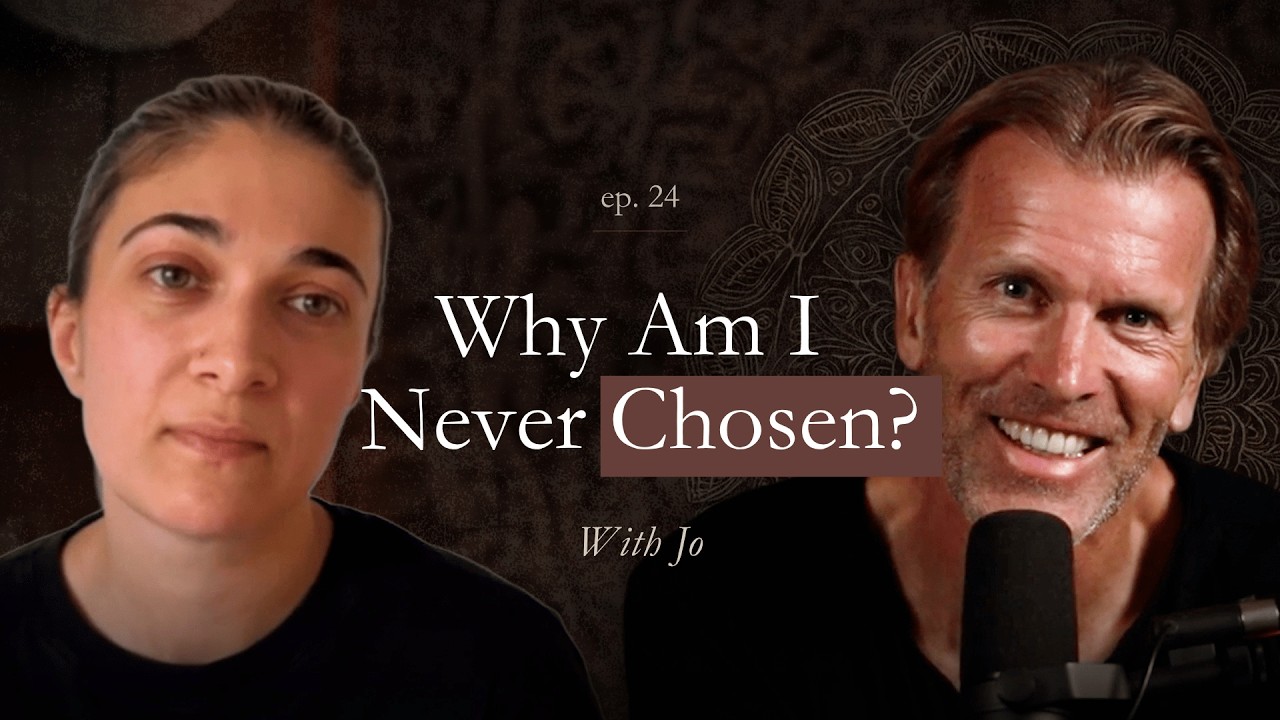
The Fear of Not Being Chosen: Why Self-Love Begins With Acceptance
Inspire

The Fear of Not Being Chosen: Why Self-Love Begins With Acceptance

A conversation with Peter Crone and Jo explores how rejection and shame shape our relationships, and why freedom comes from within.…

1 min read
Identity Wounds & Self-Imposed Healing: Why Fixing Yourself Deepens Suffering
Inspire

Identity Wounds & Self-Imposed Healing: Why Fixing Yourself Deepens Suffering

Explore why every addiction masks an identity wound, and how the pursuit of healing perpetuates the belief that something is broken in you.…

1 min read
Govinda Jaya: How Sacred Sound Awakens the Heart
Inspire

Govinda Jaya: How Sacred Sound Awakens the Heart

Radhika Das channels the liberating power of mantra through a luminous kirtan performance at Medicine Festival, invoking divine names to pur…

1 min read
Om Namah Shivaya Chant: Ecstatic Trance Meditation
Inspire

Om Namah Shivaya Chant: Ecstatic Trance Meditation

Jai Uttal guides listeners into an ecstatic chant trance with Om Namah Shivaya, the Sanskrit invocation of Shiva consciousness. A 91-second …

1 min read

Sigue explorando

Continúa tu camino

Más sabiduría y encuentros de todo el directorio de BrightStar.

Más artículos

Recorre la biblioteca completa de enseñanzas, entrevistas y guías.

Ver todos los artículos →

Maestros y artistas

Explora los linajes, músicos y guías del mundo consciente.

Explorar artistas →

Encuentra un evento

Kirtan, retiros, baños de sonido, breathwork, festivales — muy pronto.

Ver eventos →