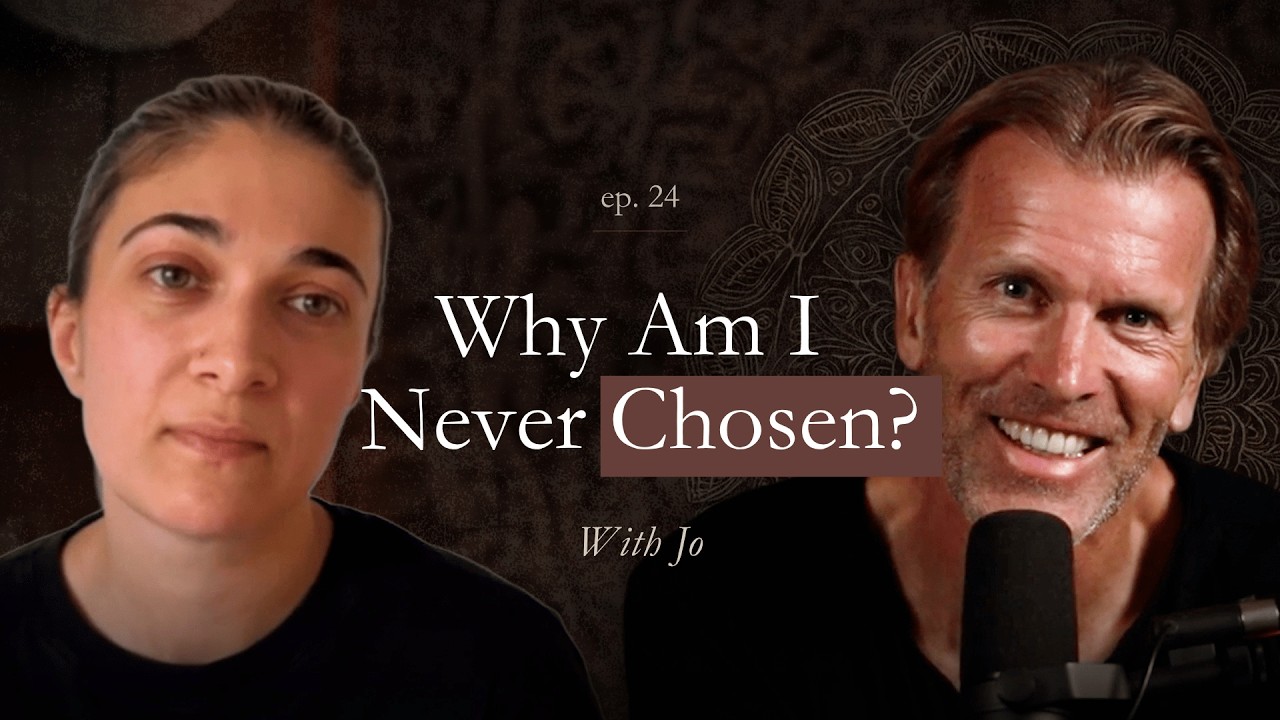
Peter Crone explores how the stories we tell ourselves—our internal dialogue—become self-fulfilling prophecies that determine how we show up in relationships and life. When a woman believing she wasn't special wondered why she was single, Crone reframed her narrative: what if she were the most important person on the planet? This shift in self-concept doesn't change objective truth, but it fundamentally alters frequency, energy, body language, and consequently, results. The mechanism is direct: thought patterns produce feeling patterns, which produce action patterns, which produce outcome patterns. This is not visualization or affirmation—it's the mechanics of how consciousness shapes experience.
What is the prison of dialogue we live in?
Crone describes most people as living "within prisons of dialogue"—recurring thought patterns so habitual they become invisible. These internal narratives are not facts; they are stories we've internalized, often from early conditioning, trauma, or repeated experience. The woman in Crone's example carried a story: "I'm not very special." This narrative became a lens through which she interpreted her circumstances. When she remained single, rather than questioning the story, she used it to explain her loneliness. The story and the circumstance reinforced each other, creating a closed loop.
The critical insight is that the story is "no more true" than its opposite. Crone emphasizes that whether you believe "I'm the most important person on the planet" or "I'm not very special," neither statement is objectively verifiable. Both are interpretations, frameworks, ways of organizing experience. Yet they produce entirely different internal environments and external outcomes.
How does narrative shape frequency and energy?
Crone uses the language of frequency and energy—concepts rooted in embodied psychology and neuroscience, though often dismissed as merely metaphorical. When you genuinely believe you're not special, that belief doesn't stay abstract. It cascades through your nervous system. Your body language changes; you physically contract or "cower" as Crone notes. Your eyes have a different quality. The way you hold yourself in space shifts. This is not conscious posturing; it's a direct transmission from belief to physiology.
Someone who carries the narrative "I am the most important person on the planet" holds themselves differently. Their frequency—the energetic signature they emit—becomes a precursor to attraction. Men (in this example) don't fall in love with a belief statement; they respond to the energetic reality that a different self-concept produces. Confidence, ease, presence—these are not personality traits; they are the bodily expressions of a coherent, affirming internal narrative.
What is the mechanism linking thought to results?
Crone distills the mechanism with precision: "You think differently, you feel differently, you act differently, and consequently you get different results." This is not magical thinking. It's a causal chain grounded in how the nervous system works.
- Thought: A narrative, belief, or interpretation—"I'm not special" vs. "I'm important."
- Feel: That thought triggers an emotional state—resignation, shame, or alternatively, dignity, calm assurance.
- Act: Your emotional state produces behavior. If you feel unworthy, you might avoid eye contact, speak softly, deflect compliments. If you feel worthy, you lean in, speak clearly, receive appreciation.
- Results: Your behavior shapes how others respond to you and what opportunities you notice and pursue.
The woman who didn't feel special acted from that state. She may have unconsciously broadcast unavailability or low self-regard, signaling to potential partners that she didn't believe in her own value. Why would they? Her nervous system was the first to reject her. Shifting the narrative to "I am the most important person on the planet" reverses the chain. She acts from a place of self-regard, which becomes visible in posture, speech, choice of who to engage with—and consequently, in who wants to engage with her.
Why doesn't narrative change require external validation?
Crone's insight cuts against a common objection: "But I'm not actually the most important person on the planet. That's narcissistic. That's false." His response is implicit but clear: the narrative's truthfulness is not the source of its power. Both "I'm special" and "I'm not special" are equally untrue in an objective sense. No one is objectively more important than anyone else; importance is relational and contextual. But subjectively, from the inside of your own life, the belief that you matter—that your experience, your presence, your existence has weight—is the belief that produces a different frequency.
This is why Crone doesn't offer platitudes or self-help affirmations. He's not saying repeat "I am worthy" in the mirror. He's identifying that the stories we're already living in are arbitrary. We've accepted them as true without examination. The work is to recognize the story as a choice, not a fact, and to choose differently. For the woman, the shift wasn't from "I'm unworthy" to "I'm worthy"—it was recognizing that the entire frame was optional. Stepping into the arena with a different narrative doesn't require permission from the universe or a sudden influx of self-esteem. It requires a shift in what you're willing to believe about yourself, even if (and especially if) that belief feels unfamiliar.
How does this apply beyond romantic relationships?
Crone frames the woman's situation around relationships, but the mechanism applies everywhere. In professional settings, the person who believes "I'm not good enough for that role" approaches interviews and projects from a place of proving their worth—a losing posture. The person who believes "I belong here" approaches the same situation from self-assurance, which changes the quality of their preparation, presence, and communication. The narrative isn't more true in one case; it's just more functional.
The same applies to health, creativity, financial decision-making, how you parent, how you handle conflict. Every domain of life is first filtered through the stories you believe about yourself. Change the story, and you change not just your mood but the entire topology of what you're capable of accessing.
Where to go from here
The invitation Crone extends—"What's the prison of words you're stuck within that you're ready to let go?"—is the actual work. It requires identifying the recurring narratives you inhabit. Not the positive affirmations you wish were true, but the ones you actually live from. The story about your specialness or lack thereof. The story about whether you're lovable, competent, safe, deserving. These stories are usually so normalized they feel like facts. Recognizing them as stories—as chosen (or inherited and unchosen) interpretations—opens the possibility of choosing differently. The proof is not in the theory but in the feedback loop: think differently, and within days or weeks, the results will tell you whether the new narrative is working.