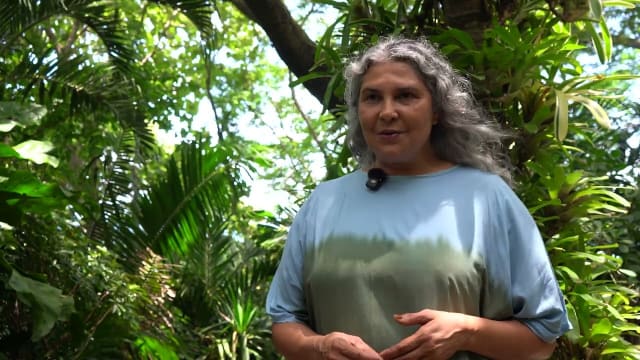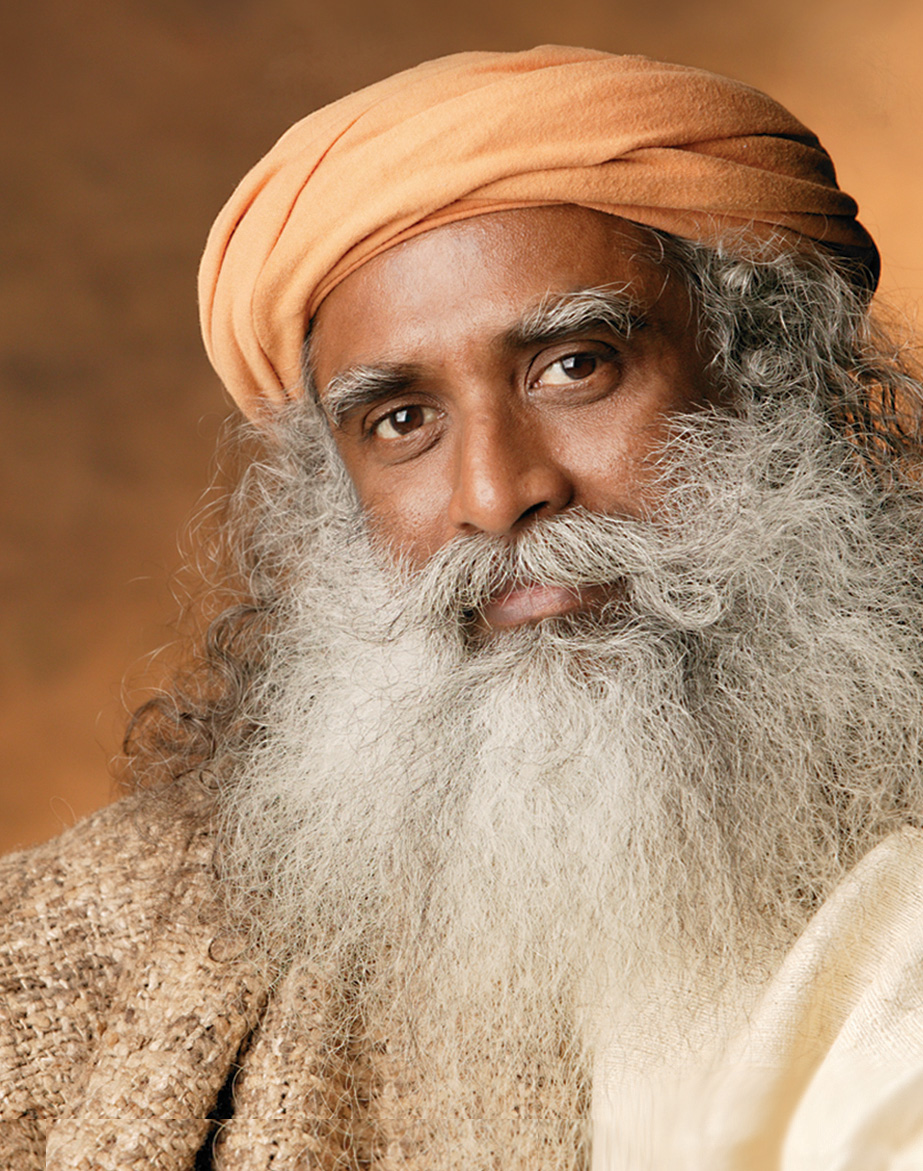
On the day of Deepavali, the tradition Sadhguru describes in this short clip holds that people are meant to worship Dhanvantari, the deity associated with one's health and well-being. Today, he says, the name has almost become a synonym for a doctor. The argument he builds in roughly ninety seconds is that the festival itself drifted the same way: a sacred word was worn down by the ordinary habits of speech until its meaning flipped from health to money. Nobody decided the change. The language did it, one clipped syllable at a time, and the result is that most people now hear the holiday as being about wealth.
Sadhguru's first claim is simple. Dhanvantari is "supposed to be the source of Ayurveda, the science of long and healthy lives." That single phrase carries the whole original meaning of the observance. The deity is not a patron of commerce or treasure. He is the figure tied to healing and to the long, well-lived body, and the day set aside for him is a day for attending to that. (0:09 and 0:20)
It is worth pausing on how strange this is for a modern listener. Most contemporary festivals of light are read through prosperity: lamps to welcome Lakshmi, new accounts opened, gold bought. Sadhguru is pointing at a layer underneath that reading, one in which the festival's first address was the body and its longevity. He is not saying the prosperity reading is invented from nothing. He is saying it sits on top of an older center that has been covered over.
The mechanism Sadhguru offers is linguistic, and it is the most concrete idea in the clip. He observes that in northern India, where most people speak Hindi, the last syllable of a word is often dropped in casual use. He gives his own examples: "If you say Dhyanalingam, they'll say Dhyanaling. If you say Shiva, they'll say Shiv. If you say Rama, they'll say Ram." (0:34 to 0:49) He generalizes it: "The language has the habit of cutting off the last syllable always. Almost everything." He adds Krishna becoming Krishn and Deepavali becoming Diwali as further instances. (0:51 to 1:06)
"The language has the habit of cutting off the last syllable always. Almost everything." (Sadhguru, in the clip, 0:51)
Once you hear the pattern, the logic is easy to follow. Clipping is what speakers do when a word is familiar and used constantly. It is efficiency, not carelessness. But when the clipped form is then taken as the word, the original structure can get lost, and with it the meaning that structure carried. Sadhguru's point is that the habit that makes everyday speech smooth is also the habit that can quietly change what a sacred term refers to.
The specific damage, in his account, is a compound. The festival's name joined Dhanvantari with Trayodashi, the thirteenth lunar day, and that combined name was shortened. "So, someone cut this Dhanvantari and Trayodashi and made it Dhan Teria." (1:10) He then names the consequence directly: "What was about health became about wealth." (1:16)
The turn happens inside a single word. The first half of the sacred name, Dhan, is an ordinary word with a plain meaning. Sadhguru spells it out: "Dhan means money." (1:21) Once the name is heard as "Dhan" plus a familiar ending, the nearest available meaning is money, and the health-giving deity who gave the day its purpose recedes. The clip does not say when this clipping happened, and Sadhguru is candid about that: "I don't know when they did this." (0:27) What he is confident about is the mechanism and the result.
The result is what he sees everywhere now. "Now, everybody thinks Deepavali is about money." (1:24) That sentence is the hinge of the piece. It describes a common understanding, not a historical event, and the gap between what the festival was meant to honor and what people believe it honors is the problem he is naming.
The clip is short, so it is tempting to file it as a fun fact about etymology. But the underlying idea reaches further. Festivals, like scriptures and devotional names, are carried across generations almost entirely by speech. Nobody reads a manual for how Dhanteras should be understood. People absorb it from the names they hear. If the name shifts in the mouth, the meaning shifts with it, and after enough repetition the older meaning is hard to recover without someone pointing to it.
This also explains why the correction Sadhguru offers is so direct. He is not arguing that wealth is forbidden or that the festival must be stripped of its present associations. He is restoring the older center: a day tied to Dhanvantari, to Ayurveda, to the science of long and healthy lives. The lamps and the commerce can remain. What he wants listeners to notice is that the observance once had a different first purpose, and that the word they use for it has been bending away from that purpose without anyone choosing to bend it.
For a reader, the practical takeaway is a habit of attention. When a familiar term sounds like a shortened version of something longer, it is worth asking what the full form was. Dhan is not just "money" in this story. It is the first half of a name that pointed toward health, and the clipped version erased the rest.
Because this is a ninety-second clip, the best next step is to listen to it again with the examples in mind: Dhyanalingam to Dhyanaling, Shiva to Shiv, Krishna to Krishn, Deepavali to Diwali. Notice how many words you use in their clipped form and whether you know the longer version. From there, look into Ayurveda itself, which Sadhguru names as the science tied to Dhanvantari, and into the older meaning of Trayodashi, the thirteenth lunar day that sits inside the festival's original name. The clip gives you the outline of the story. The rest is worth reading in the original sources you trust, and then deciding for yourself what the day is for.