BrightStar

Ver Todos los Events

Descubre encuentros conscientes

events

Yoga
Meditation
Breathwork
Qigong
Tai Chi
Sacred Music
World Music
Medicine Music
Sound Healing
Ecstatic Dance
Destinos Populares
BaliSedonaLos AngelesCosta RicaNew YorkSan FranciscoAustinMiamiJoshua TreeTulum
Ver Todas las CategoríasVer Todos los Destinos

Explorar Todas las Características

Herramientas poderosas para hacer crecer tus eventos

Características de la Plataforma

Precios Dinámicos Inteligentes
Categorías de Entradas
Asientos Asignados
Recuperación de Carritos
Recuperación de Visitantes
Donaciones y Escala Móvil
Motor de Afiliados
Escáner de Entradas
Códigos de Cupón
Preguntas Personalizadas
Compartir Entradas
Ventas Adicionales
Análisis e Informes
Secuencias de Email
Lista de Espera / Notificar / Recordar
Personas y Lugares
Artists & TeachersEvent OrganizersVenues & StudiosKnowledge BaseGlossaryInspiration
Ver Todas las CaracterísticasSobre Nosotros
PreciosBlog
Language
Saved events
Ver Todos los Eventos

events

YogaMeditationBreathworkQigongTai ChiSacred MusicWorld MusicMedicine Music

Destinos Populares

BaliSedonaLos AngelesCosta RicaNew YorkSan Francisco

Personas y Lugares

Artists & TeachersEvent OrganizersVenues & StudiosKnowledge BaseGlossaryInspiration

Características de la Plataforma

Precios Dinámicos InteligentesCategorías de EntradasAsientos AsignadosRecuperación de CarritosRecuperación de VisitantesDonaciones y Escala MóvilMotor de AfiliadosEscáner de EntradasCódigos de CupónPreguntas PersonalizadasCompartir EntradasVentas AdicionalesAnálisis e InformesSecuencias de EmailLista de Espera / Notificar / Recordar
Ver Todas las CaracterísticasSobre Nosotros
PreciosBlog
Iniciar sesiónBuscadoresCreadores
  • Ver Todos los Eventos
  • Para Buscadores
  • Yoga
  • Meditación
  • Respiración consciente
  • Qigong
  • Tai chi
  • Música sagrada
  • Música del mundo
  • Música medicina
  • Sanación con sonido
  • Danza extática
  • Retiros
  • Talleres
  • Todas las Categorías →
  • Bali
  • Sedona
  • Los Angeles
  • Costa Rica
  • Tulum
  • Byron Bay
  • San Francisco
  • Austin
  • New York
  • San Diego
  • Denver
  • Seattle
  • Portland
  • Miami
  • Todas las Ciudades →
  • Join the Movement
  • Why we list
  • Sell Globally
  • Para Creadores
  • Para equipos
  • Para Escritores
  • Para Maestros
  • Para Artistas de Kirtan
  • Para Estudios
  • Para Festivales
  • Para Centros de Retiros
  • Para Organizaciones Sin Fines de Lucro
  • Embajador de Marca
  • Entradas sin costo
  • Elevate
  • Amplify
  • Red de +500K Compradores
  • Recuperación de Carritos
  • Precios Dinámicos Inteligentes
  • Categorías de Entradas
  • Eventos Recurrentes
  • Asientos Asignados
  • Motor de Afiliados
  • Lista de Espera / Notificar
  • Escáner de Entradas
  • Widget Embebido
  • Sindicación de eventos
  • Centro de mensajes
  • Integraciones
  • Reportes
  • Todas las Características →
  • Acerca de
  • El ecosistema
  • Blog
  • Glosario
  • Inspiración
  • Centro de Ayuda
  • Contacto
  • Documentación API
  • Recursos de Marca
  • Carreras
  • Prensa
  • Términos de Servicio
  • Política de Privacidad

Eventos

  • Ver Todos los Eventos
  • Para Buscadores
  • Yoga
  • Meditación
  • Respiración consciente
  • Qigong
  • Tai chi
  • Música sagrada
  • Música del mundo
  • Música medicina
  • Sanación con sonido
  • Danza extática
  • Retiros
  • Talleres
  • Todas las Categorías →

Destinos

  • Bali
  • Sedona
  • Los Angeles
  • Costa Rica
  • Tulum
  • Byron Bay
  • San Francisco
  • Austin
  • New York
  • San Diego
  • Denver
  • Seattle
  • Portland
  • Miami
  • Todas las Ciudades →

Para Creadores

  • Join the Movement
  • Why we list
  • Sell Globally
  • Para Creadores
  • Para equipos
  • Para Escritores
  • Para Maestros
  • Para Artistas de Kirtan
  • Para Estudios
  • Para Festivales
  • Para Centros de Retiros
  • Para Organizaciones Sin Fines de Lucro
  • Embajador de Marca
  • Entradas sin costo
  • Elevate
  • Amplify

Características

  • Red de +500K Compradores
  • Recuperación de Carritos
  • Precios Dinámicos Inteligentes
  • Categorías de Entradas
  • Eventos Recurrentes
  • Asientos Asignados
  • Motor de Afiliados
  • Lista de Espera / Notificar
  • Escáner de Entradas
  • Widget Embebido
  • Sindicación de eventos
  • Centro de mensajes
  • Integraciones
  • Reportes
  • Todas las Características →

Empresa

  • Acerca de
  • El ecosistema
  • Blog
  • Glosario
  • Inspiración
  • Centro de Ayuda
  • Contacto
  • Documentación API
  • Recursos de Marca
  • Carreras
  • Prensa
  • Términos de Servicio
  • Política de Privacidad
BrightStar
Descarga la app
Descárgalo en elApp StoreDisponible enGoogle Play
© 2026 BrightStar. Todos los derechos reservados.
Inspiration

Great Compassion Dharani: Why Its Words Resist Translation

BB
BDG: Buddhistdoor Global
Nov 2, 2026
9 min de lectura

De BDG: Buddhistdoor Global

Ver · 6

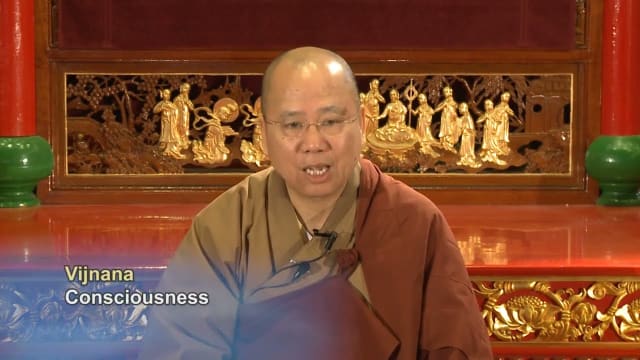
In the sixth installment of a lecture series on the Great Compassion Dharani, Venerable Guan Cheng, abbot of the International Buddhist Temple in Richmond, British Columbia, stops to ask a question most chanters never pause over: what is a dharani, and why can't its words simply be translated into English? His answer runs through a rosary, a metaphor about garbage, a comparison between Buddhism and psychology, a parable about a knot tied in a bell, and a string of Sanskrit imperatives that he treats as instructions for a lifetime. The talk, published by Buddhistdoor Global with permission, is less a lecture on sound than on how a short formula is meant to work on the mind that recites it. What follows draws on the opening stretch of that transcript and tries to explain the ideas in full, for readers who have not watched it.

Leer · 8 secciones

What is a dharani, and how is it different from a mantra?

Guan Cheng begins with terms. A mantra is shorter, a dharani longer. The word dharani is Sanskrit, and he offers an image to hold it: a rosary, a string that ties all the beads together. A dharani, in his account, gathers a philosophy and its meaning into a brief form so that it can be remembered. The beads are the individual teachings; the string is the memory that keeps them in one place.

That image matters because it changes what chanting is for. If a dharani is a compressed summary, then reciting it is less like making a pleasing sound and more like running a thread through a set of ideas every time you pass them. Guan Cheng makes this explicit later in the passage, saying that chanting is a way of remembering the Buddha's teaching, and that the practitioner should hold the dharani in mind and act on it.

Why does a talk on compassion begin with garbage?

The lesson had been moving word by word through the text, and at the point where the talk picks up, Guan Cheng has spent weeks on a single term, malamala. His explanation is blunt: the word itself means garbage, and here garbage is a metaphor for mental garbage, the afflictions the mind accumulates. He lists them in the familiar way: greed, hatred, violence, jealousy, fraudulence, arrogance, and injury. "You name them," he says. "We already learned them."

He also gives a number. By his summary there are 51 mental afflictions, and they arise together with the eight consciousnesses that form when the senses meet the outside world. He calls the eight consciousnesses the "consciousness kings," since they are the major ones, with the 51 accompanying them. For a reader new to this framework, the point is structural: the mind is not a neutral container, and the afflictions are not occasional visitors. In Guan Cheng's telling, they "arise all the time," and you may not notice them doing so.

This is why the word that opens the mantra's second section is treated as urgent rather than archaic. You cannot liberate a mind you have not looked at, and the garbage is the first thing that has to be seen.

Is Buddhism really a kind of psychology?

Guan Cheng recalls a newcomer to his class who described Buddhism as a course in psychology. He agrees, with a qualification that gives the comparison its teeth. "Buddhism is a course of psychology except that this course of psychology takes 20 years to explain because it's so deep, so profound," he says. Then he draws the line that separates it from the modern discipline:

"It's not just to analyze other people. It also analyze about yourself, your own mind. And it's not just about analysis of it. The Buddha wants us to understand our own mind first and then attempt to liberate yourself from the prison of your own mind."

Psychology, in this framing, can stop at analysis. The Buddhist path asks the analyst to become the one who acts, and the action is practice rather than discussion. Guan Cheng puts it in one line: "In the liberation it's not just empty talk. It's not just language. It's your practice."

He reduces that practice to three words, which he gives in Sanskrit and English: discipline, samadhi (concentration), and prajna (wisdom). The three are the scaffolding on which the dharani's instructions hang.

Why does no one else get to untie the knot?

The most memorable image in this stretch is a parable about a bell. Someone ties a bell around a ship's neck with a knot. Whoever tied the knot is the only one who can untie it. Guan Cheng pushes the logic to its end:

"The person who untied it must be the person who tied it. Don't get anybody else to do it. Nobody else can. You understand your own mind. You liberate your own mind. Nobody can, not even God. If God can liberate you, can liberate your mind, he has already done so. You don't have to wait."

It is a sharp refusal of waiting. Liberation in this teaching is not handed down, delegated, or deferred to a higher power. It is also not an intellectual achievement; it is the untying itself, done by the same hands that tied the knot. The afflictions are self-made, and so the release has to be self-made too.

What do "maha" and "hridaya" mean in this passage?

Guan Cheng takes the phrase mahima hridaya apart. Maha means great, and he notes that Indian speakers hear it immediately in the Taj Mahal. Mahima also carries the sense of greatness. Hridaya means heart, but he complicates the English reading. In ancient usage, he says, the heart meant the brain, and the everyday phrase "from the bottom of my heart" still means the bottom of the mind. The heart is, as he puts it, "a center of the palpitation" that pumps blood, and yet we speak of it as the seat of thought. The translation is not a neutral conversion; the word carries the mind inside it.

He also admits the limit of his own method. Every Sanskrit word in the dharani, he says, "contains so much meaning" that a one-line gloss cannot hold it, and a full unpacking of each term would take far longer than the series allows. That is why he refuses to translate the dharani into a tidy slogan. The words are held as they are, and their meaning is allowed to accumulate over repeated study.

What do "kuru kuru" and "duru duru" ask of the practitioner?

This is the part of the passage where the talk turns from analysis to instruction. Kuru kuru kamam means to attempt the task and finish it. Guan Cheng reads it as a call to do the work until it is done, and then to recognize that a fully realized state must be completed rather than endlessly rehearsed: "Don't just do it and do it and never get it done."

Duru duru vijayate asks for steadiness. "Hold fast, hold on and never let go of it," he says. He is candid about human failings here. We practice one day, drop it the next, pick it up on the third. The dharani asks for endurance and consistency, and he applies that directly to compassion: "Your compassion must be consistently applied." Compassion that appears on Tuesday and disappears on Wednesday does not yet count, in his reading, as practice. The victory the words describe, he notes, belongs to the one who keeps going until liberation is reached.

How does chanting become self-liberation?

The dharani's central phrase is mahakarunacittadharani, which Guan Cheng breaks into parts: maha, great; karuna, kindness, compassion, mercifulness; citta, heart; dharani, summary. Together, he says, it is "a dharani of great compassion and great mercifulness from the heart." The phrase tells you what the chant is a summary of.

He then lays out the sequence that turns recitation into liberation. You chant the dharani constantly, you remember it, you commit it to what he calls the alaya consciousness, and you practice it accordingly. Over time, he says, you will liberate yourself from mental afflictions. The word for the one who achieves this, svaraya, he glosses as the one who is liberated. The chanter becomes the liberator, and the knot is untied by the one who tied it.

Read this way, the talk is less a commentary on sounds than a training manual. The rosary holds the beads; the beads are the teachings; the mind must be turned over, bead by bead, until the garbage it has been accumulating is seen, sorted, and set down. Guan Cheng is clear that this is slow, and he says the series has already spent months on a single mantra. For him, that pace is the point.

Where to go from here

This article draws on the opening portion of the sixth talk in Guan Cheng's series on the Great Compassion Dharani, published by Buddhistdoor Global. Watching the full video will show how he moves through the rest of the mantra's phrases, and the transcript makes clear that the sections around "malamala," "mahima hridaya," and "kuru kuru" are each built to be heard in sequence. Readers who want the broader context can look at the series itself, along with the International Buddhist Temple's own materials at buddhisttemple.ca and the Buddhistdoor Global archive at buddhistdoor.net. The most practical starting point, based on this talk, is small: pick one term, learn what it means, and keep returning to it, because Guan Cheng's argument is that consistency, not intensity, is what turns a summary into a change of mind.

Comments

Loading the conversation…

Transcript

[0:07] [music]

[0:12] [music]

[0:15] >> Uh as we understand, mantra and dharani

[0:19] a mantra

[0:20] is in a shorter form and dharani is in a

[0:23] longer form.

[0:25] Uh the word dharani

[0:27] is a Sanskrit word. It means

[0:30] combining it combining it all together

[0:34] like

[0:35] a rosary where you have all the beads.

[0:39] The rosary is the rosary is a string

[0:42] that tie all the beads together. In

[0:44] other words, a dharani is summarize

[0:48] certain philosophy

[0:50] certain meaning together in a in a in uh

[0:54] a brief form so that you can remember

[0:56] it.

[0:57] And that's what a dharani is. And last

[1:00] time we stop at

[1:02] malamala which is

[1:04] turn to the um dharani.

[1:08] The second paragraph is tadyatha and

[1:10] then tadyatha om avaloki lokate karante

[1:14] e hili maha bodhisattva sava sava

[1:18] malamala.

[1:20] I stopped at malamala and I've been

[1:22] talking on malamala for a few weeks.

[1:25] The reason why I've been talking on

[1:27] malamala for a few weeks is malamala

[1:32] mala the word itself means garbage.

[1:36] And

[1:38] here this word garbage is a metaphor

[1:42] for mental garbage or mental afflictions

[1:45] that we have.

[1:46] How many mental afflictions we have?

[1:49] If we broadly summarize our mental

[1:51] afflictions, remember we have

[1:54] um

[1:56] greediness, hatred,

[1:59] violence, jealousy, fraudulence,

[2:02] arrogance, injuries,

[2:05] you name them. We already learned them.

[2:08] Briefly, 51 all these uh

[2:12] the mental disturbances, mental

[2:14] afflictions that arise at the same time

[2:17] that when our senses interact with the

[2:19] outside world creating this

[2:21] consciousnesses. We have eight

[2:23] consciousnesses. This eight

[2:25] consciousnesses

[2:27] are the major

[2:29] we call them the consciousnesses king

[2:31] because they are the major items,

[2:35] predispositions arise from the mind, and

[2:37] then they assisted at the same time

[2:39] simultaneously by all these other 51

[2:42] uh mental afflictions.

[2:44] And we already have mentioned malamala.

[2:46] Now, let's go to the next

[2:49] mahima hridyam.

[2:51] What is this Sanskrit means? Mahima

[2:54] hridyam.

[2:56] As we know as we all know, maha means

[2:59] great.

[3:02] Um

[3:03] maha in in the Indian like like at the

[3:05] Sanskrit language still even now the

[3:07] Indian language if you mention maha,

[3:10] they know it's the Taj Mahal, the great,

[3:12] you know. Mahima means means great.

[3:16] Mahima also means great.

[3:19] And also

[3:21] um every word Sanskrit word in the

[3:24] Dharani, it contains so much meaning

[3:27] into it that

[3:29] uh

[3:29] what's the meaning of great? You really

[3:31] have to go deep into it, but we don't

[3:33] plan to

[3:34] because if we go every word go deeply

[3:37] into its meaning, it would uh we would

[3:39] have to spend a lot of time into it. So,

[3:41] for now, for malamala is important to

[3:44] explain because that's our mental

[3:46] afflictions.

[3:47] And they arise all the time. You may not

[3:50] know about it. You may not realize it,

[3:51] but they arise all the time. So, in

[3:54] order to

[3:55] understand your mind,

[3:57] um

[3:59] then you have to learn all those

[4:01] consciousness

[4:03] and mental afflictions.

[4:05] And the other day there was a a

[4:07] gentleman who who

[4:09] was in the class, maybe a newcomer, and

[4:11] he mentioned that is Buddhism is like a

[4:13] psychology. It's like a course of

[4:15] psychology. Yes, Buddhism is a course of

[4:18] psychology except that is

[4:21] this course of psychology takes 20 years

[4:24] to explain because it's so deep, so

[4:27] profound.

[4:28] Um

[4:30] and also

[4:31] this psychology is not just to analyze

[4:34] other people.

[4:36] Uh it also analyze about yourself, your

[4:38] own mind.

[4:39] And it's not just about analysis of it.

[4:43] Um

[4:45] the the Buddha wants us to understand

[4:47] our own mind first and then attempt to

[4:50] liberate yourself

[4:52] from the prison of your own mind.

[4:57] It has to be done by you, nobody else.

[5:00] It's just like

[5:01] the person who tied the the bell

[5:06] into the ship's neck

[5:09] and he put a knot to it.

[5:11] The person who tied it

[5:15] the person who untied it has to be the

[5:18] person who tied it.

[5:21] I don't know you understand what I mean.

[5:24] The person who untied it must be the

[5:25] person who tied it.

[5:27] Don't get anybody else to do it.

[5:30] Nobody else can. You understand your own

[5:33] mind. You liberate your own mind. Nobody

[5:36] can, not even God.

[5:38] If God can liberate you, can liberate

[5:40] your mind, he has already done so. You

[5:42] don't have to wait.

[5:46] Because you have to do it yourself.

[5:48] So that's the difference between modern

[5:50] psychology and

[5:52] and the Buddha's teaching.

[5:54] You analyze it, you liberate it

[5:56] yourself.

[5:58] And in the liberation it's not just

[6:00] empty talk. It's not just language. It's

[6:03] your practice.

[6:06] And this practice,

[6:08] if you want to summarize it,

[6:11] is in three words. The first one is

[6:14] discipline.

[6:15] The second one is samadhi. The third is

[6:19] prajna.

[6:20] In common English is disciplined

[6:23] disciplined um

[6:26] concentration

[6:27] and wisdom.

[6:33] So, mahi mahi means great. Hridaya means

[6:38] the heart. Hridaya means heart or the

[6:41] soul or the mind.

[6:44] Why do we have to study the heart? In

[6:46] the ancient times, the heart means the

[6:48] brain.

[6:49] I I I I I I said it with my heart. How

[6:52] can the heart feel anything? The heart

[6:54] is just a a center of the palpitation, a

[6:57] center of over the blood comes into and

[6:59] then dissemination. The heart itself

[7:03] is not the brain, but usually we use the

[7:05] heart as the brain. From the bottom of

[7:08] my heart, you know, in in other words,

[7:10] from the bottom of my mind. So, hridaya

[7:12] means heart. Kuru kuru kamam. Kuru kuru,

[7:17] that means you have to attempt to do it.

[7:20] Do it. Do it. Kamam, that means done.

[7:24] You must attempt to do it and you must

[7:26] carry on to practice. You must do it

[7:28] yourself. You must untie the knot

[7:31] yourself. Don't depend on others.

[7:34] Do it yourself. Do it. Do it until it is

[7:37] done.

[7:38] Don't just do it and do it

[7:41] and never get it done.

[7:43] In other words, enlightened being

[7:46] enlightened being enlightened and having

[7:48] and being having been enlightened. You

[7:51] have to finish to complete it.

[7:54] That is kuru kuru kamam.

[7:58] Attempt it. Attempt it until it is all

[8:00] done.

[8:03] Duru duru vijayate.

[8:06] Duru duru. Duru duru means hold fast

[8:11] onto it.

[8:12] Be consistent. Hold on and never let go

[8:15] of it.

[8:17] Hold fast, hold on and never let go.

[8:21] Duro duro, hold on, hold fast. This is

[8:23] very important.

[8:26] Um sometimes we don't have the patience

[8:29] to do it.

[8:31] We'll do it one day and we'll drop it

[8:32] off another day and pick it up again the

[8:34] third day and drop it off another fourth

[8:35] day.

[8:37] You have to have the endurance is to do

[8:40] it. You have to have the confidence to

[8:42] do it and you must do it consistently.

[8:47] When you practice meditation

[8:49] or when you interact with the outside

[8:51] world, if you interact with the outside

[8:54] world with compassion, you do it

[8:56] consistently all the time. Not just one

[8:58] day I have compassion. So you have to

[9:00] hold fast, hold onto it, be consistent

[9:03] with it.

[9:04] Your compassion must be consistently

[9:06] applied.

[9:08] Vijaya te, what is Vijaya te?

[9:11] Victory.

[9:13] If you do that, you are the victor.

[9:17] In other words, hold fast, hold on, hold

[9:20] fast, hold on until you become

[9:22] liberated from it. The victory until you

[9:25] achieve victory.

[9:27] Maha vijaya te, maha as I said means

[9:31] great. Vijaya te, that means victory,

[9:33] the victor.

[9:35] All right. Okay, so I want to go a

[9:36] little faster now because I've been

[9:38] talking on this mantra for months.

[9:41] How many months? Five months. So I need

[9:43] to go faster. But remember each word

[9:46] contains a lot of profound meaning.

[9:49] Don't just look at the word itself. Why

[9:52] didn't we translate it into say hold

[9:54] fast, hold on, victory, confidence and

[9:57] all that? Because you simply cannot

[10:00] translate like that because one word

[10:02] contains so much meaning onto it. So we

[10:05] don't translate dharani because it's

[10:09] has profound

[10:11] and multifaceted meaning on in every

[10:14] word.

[10:15] All right.

[10:16] Let's carry on.

[10:18] Dhara dhara

[10:20] It means

[10:21] holding on holding on again.

[10:24] Dharanisvaraya

[10:27] Dharani, that means

[10:29] a summary.

[10:30] That dharani is dharani. It means a

[10:33] summary of it, holding on to it,

[10:35] remember it.

[10:37] Holding on to it, remember it. So, when

[10:39] we are chanting our dharani, that means

[10:40] we're remembering the Buddha's teaching.

[10:44] Mahakarunacittadharani.

[10:46] Maha is great. Karuna means kindness,

[10:49] compassion, mercifulness. Citta means

[10:52] the heart. It's from the heart. Dharani,

[10:55] that means a summary of it. It's a

[10:57] dharani of great compassion and great

[11:01] mercifulness from the heart.

[11:03] So, dharani, that means

[11:06] a summary of it, to remember it.

[11:09] Dharanisvaraya.

[11:11] Svaraya, that means the one who is

[11:13] liberated.

[11:15] If you do it like that, if you chant the

[11:17] dharani all the time, remember it,

[11:19] commit it to your alaya consciousness,

[11:21] and practice it accordingly, then one

[11:23] day you'll liberate yourself from mental

[11:26] afflictions. You'll be the liberator.

[11:28] You liberate yourself. You untie the

[11:30] knot.

[11:33] Next.

[11:35] Cala cala, that means move move.

[11:39] Carry on carry on.

[11:41] So, the whole dharani is

[11:43] it consists of

[11:45] doing something.

[11:47] You can't just sit there doing nothing.

[11:49] You have to enlighten yourself. Work at

[11:52] work hard at it.

[11:55] So, anyone who is chanting the dharani

[11:57] is very

[11:58] confident in himself, very positive in

[12:01] in himself. He's interacting with the

[12:03] society, but at the same time he's

[12:05] practicing compassion. He's moving on

[12:08] with the society, not just be negative

[12:10] about it, not just

[12:12] uh

[12:13] retreat from it. He's participating in

[12:15] it, but he participate with

[12:18] no attachment.

[12:20] No attachment to greed, no attachment to

[12:23] jealousy, no attachment to hatred, no

[12:25] attachment to violence, arrogance. None

[12:29] of that exists, but it still move on and

[12:31] on.

[12:33] So, chala chala means go go.

[12:36] Mama vimala muktale. Mama means me, my.

[12:43] Vimala. Vimala is pure, purity. Muktale,

[12:48] liberation.

[12:51] My purity liberation. That means

[12:55] how do we What What are we trying to

[12:57] purify?

[12:58] Purity. Yeah, talking about purity. What

[13:01] are we trying to purify?

[13:04] We're trying to purify the society,

[13:06] right? Or the people say, "We cannot

[13:08] purify the society and and unless until

[13:12] we purify ourselves."

[13:17] Unless we purify our mind.

[13:20] The society cannot be pure if the minds

[13:23] of all individuals in that society is

[13:26] not pure.

[13:28] So, we are trying to purify, but what

[13:30] are we purifying?

[13:33] We're purifying our clothes? We got to

[13:36] look nice?

[13:38] We're purifying three items, three

[13:41] things.

[13:43] We're purifying

[13:46] our behavior. So, we are purifying our

[13:48] body.

[13:50] What does the body do? The body perform

[13:53] behavior. So, we're purifying our body,

[13:56] which means that we're purifying our

[13:58] behavior.

[14:00] What did our body do, though?

[14:03] Why are you purifying your body? Your

[14:04] body is good enough.

[14:06] Your behavior is good enough. Why Why do

[14:09] we need to purify it?

[14:12] There's so many impure actions, behavior

[14:15] that a body perform.

[14:19] What are these?

[14:21] Just to name roughly,

[14:24] killing.

[14:28] I'm not killing anything. I'm not

[14:30] killing any individuals. We're killing

[14:31] animals for food.

[14:33] Killing.

[14:35] And of course, this is just broad

[14:37] generalizations.

[14:38] What is your What behavioral problems

[14:40] that you have? The other day, remember I

[14:42] mentioned

[14:44] um

[14:45] Crime against children research

[14:48] published some figures saying that 66%

[14:51] of all teenagers

[14:53] nowadays

[14:55] exposed to

[14:56] online pornography.

[14:58] And that affects their behavioral

[15:00] problems. That affects their grades.

[15:03] That affects their personality. That

[15:05] affects their habits.

[15:07] We have all kinds of problems in our

[15:09] behavior.

[15:11] Being affected by the society, by by the

[15:13] family, affected by your own education.

[15:17] So many problems. I'm just naming

[15:20] something crude and easily

[15:21] understandable.

[15:22] Killing.

[15:24] Injuries.

[15:30] Stealing.

[15:32] Sexual misconduct.

[15:35] All these are very crude, very easily

[15:38] understandable behavior. But all these

[15:41] other behaviors, the list is

[15:43] inexhaustible.

[15:47] Flip through the newspapers and list out

[15:48] all these behavioral problems that

[15:50] individuals have, that's people in the

[15:53] society have, you'll come up with a list

[15:55] that

[15:56] it would never end.

[15:58] So, what are we trying to purify? The

[16:00] body,

[16:03] our behavior, our speech.

[16:07] We curse, we flatter, we lie.

[16:12] Purify

[16:13] the mouth.

[16:16] The mouth is very harmful.

[16:19] The mouth can kill.

[16:23] The mouth can double tongue.

[16:25] Tattletaling can double tongue.

[16:28] The mouth is like a knife stabbing in

[16:30] the people's back.

[16:32] Purify your mouth.

[16:34] And who drives behavior and speech? Who

[16:37] is

[16:38] the manager that manages behavior and

[16:40] speech?

[16:44] Here.

[16:46] The thinking consciousness. Purify your

[16:48] thinking consciousness.

[16:51] So, mala mala, purify purify. What do we

[16:54] purify? One word, purity,

[16:57] it contains a lot of meaning that you

[16:59] should research and investigate on.

[17:02] Once you understand it, you practice it

[17:04] accordingly. Not just understanding the

[17:06] language

[17:07] and you are sufficient. Understanding

[17:09] the language is sufficient, but you

[17:10] really have to practice it out.

[17:13] Empty words, they don't mean too much.

[17:16] It's the practice.

[17:18] Moksha delay.

[17:20] If you purify to such a point that

[17:23] you're all pure, you're liberated.

[17:27] Your karma is all pure. No more karma.

[17:30] No more life and death. No more

[17:32] suffering. No more killing.

[17:34] No more drunken driving. No more broken

[17:36] homes. No more abuse. Children. No more

[17:39] poverty.

[17:41] No more famine. No more wars.

[17:45] No more genocide.

[17:48] We don't need the newspapers to tell us

[17:50] what happened today or yesterday and

[17:52] about all these wrongdoings that people

[17:53] have done because we know we're all

[17:55] pure.

[17:56] Liberation.

[17:58] All liberated.

BB
Artist
BDG: Buddhistdoor Global

Watch more from BDG: Buddhistdoor Global on YouTube.

Sitio web
Explorar temas
Great-compassion-dharaniDharaniMantra-vs-dharaniMental-afflictionsBuddhist-psychology

¿Tienes Preguntas?

Preguntas Frecuentes

In this talk, Venerable Guan Cheng explains that a mantra is shorter and a dharani is longer. He describes a dharani as a compressed summary of a philosophy and its meaning, comparing it to a rosary whose string ties the beads together so the teaching can be remembered.
Guan Cheng says malamala means garbage, used as a metaphor for mental garbage or mental afflictions such as greed, hatred, jealousy, and arrogance. He notes these afflictions arise constantly, often without our realizing it.
He agrees that Buddhism resembles a course in psychology, but he distinguishes it from modern psychology. The Buddhist path asks you to understand your own mind and liberate it through practice, not merely analyze it, and he says the course takes 20 years to explain.
Guan Cheng argues that each Sanskrit word carries so much layered meaning that a short English translation cannot capture it. He says a full exploration of every term would take a very long time, so he works through the meanings gradually instead.
Guan Cheng breaks it down as maha (great), karuna (kindness, compassion, mercifulness), citta (heart), and dharani (summary). He describes it as a summary of great compassion and great mercifulness from the heart.
He says that by chanting constantly, remembering the teaching, committing it to the alaya consciousness, and practicing it accordingly, a person will eventually liberate themselves from mental afflictions. He stresses that liberation must be done by the practitioner, not by anyone else.

Seguir leyendo

More from BDG: Buddhistdoor Global

Ver Todo
Why Children Copy Parents: A Buddhist View of Teen Rebellion
Inspire

Why Children Copy Parents: A Buddhist View of Teen Rebellion

In a live Dharma Q&A, a Korean Seon master reframes hypocrisy, imitation and teen rebellion as a power struggle. Here is his case for why pa…

8 min read
Great Compassion Dharani and the Mind's 51 Mental Functions
Inspire

Great Compassion Dharani and the Mind's 51 Mental Functions

A Dharma talk on the Great Compassion Dharani maps the 51 mental functions, from regret to the seeds of past experience, and why one act can…

8 min read
Beautiful Light and the Song for the Day You Can't Get Up
Inspire

Beautiful Light and the Song for the Day You Can't Get Up

Rick Jude's "Beautiful Light," performed acoustically with Janet Robin, is a song about staying with someone in the dark. Its lyrics move fr…

5 min read
Medicine Buddha Practice: Refuge When the Teacher Is Away
Inspire

Medicine Buddha Practice: Refuge When the Teacher Is Away

A community-led Medicine Buddha session opens with honest anxiety and closes with prayers for the world. Here is how its refuge-based struct…

9 min read

Sigue explorando

Continúa tu camino

Más sabiduría y encuentros de todo el directorio de BrightStar.

Más artículos

Recorre la biblioteca completa de enseñanzas, entrevistas y guías.

Ver todos los artículos →

Maestros y artistas

Explora los linajes, músicos y guías del mundo consciente.

Explorar artistas →

Encuentra un evento

Kirtan, retiros, baños de sonido, breathwork, festivales — muy pronto.

Ver eventos →