BrightStar

Ver Todos los Events

Descubre encuentros conscientes

events

Yoga
Meditation
Breathwork
Qigong
Tai Chi
Sacred Music
World Music
Medicine Music
Sound Healing
Ecstatic Dance
Destinos Populares
BaliSedonaLos AngelesCosta RicaNew YorkSan FranciscoAustinMiamiJoshua TreeTulum
Ver Todas las CategoríasVer Todos los Destinos

Explorar Todas las Características

Herramientas poderosas para hacer crecer tus eventos

Características de la Plataforma

Precios Dinámicos Inteligentes
Categorías de Entradas
Asientos Asignados
Recuperación de Carritos
Recuperación de Visitantes
Donaciones y Escala Móvil
Motor de Afiliados
Escáner de Entradas
Códigos de Cupón
Preguntas Personalizadas
Compartir Entradas
Ventas Adicionales
Análisis e Informes
Secuencias de Email
Lista de Espera / Notificar / Recordar
Personas y Lugares
Artists & TeachersEvent OrganizersVenues & StudiosKnowledge BaseGlossaryInspiration
Ver Todas las CaracterísticasSobre Nosotros
PreciosBlog
Language
Saved events
Ver Todos los Eventos

events

YogaMeditationBreathworkQigongTai ChiSacred MusicWorld MusicMedicine Music

Destinos Populares

BaliSedonaLos AngelesCosta RicaNew YorkSan Francisco

Personas y Lugares

Artists & TeachersEvent OrganizersVenues & StudiosKnowledge BaseGlossaryInspiration

Características de la Plataforma

Precios Dinámicos InteligentesCategorías de EntradasAsientos AsignadosRecuperación de CarritosRecuperación de VisitantesDonaciones y Escala MóvilMotor de AfiliadosEscáner de EntradasCódigos de CupónPreguntas PersonalizadasCompartir EntradasVentas AdicionalesAnálisis e InformesSecuencias de EmailLista de Espera / Notificar / Recordar
Ver Todas las CaracterísticasSobre Nosotros
PreciosBlog
Iniciar sesiónBuscadoresCreadores
  • Ver Todos los Eventos
  • Para Buscadores
  • Yoga
  • Meditación
  • Respiración consciente
  • Qigong
  • Tai chi
  • Música sagrada
  • Música del mundo
  • Música medicina
  • Sanación con sonido
  • Danza extática
  • Retiros
  • Talleres
  • Todas las Categorías →
  • Bali
  • Sedona
  • Los Angeles
  • Costa Rica
  • Tulum
  • Byron Bay
  • San Francisco
  • Austin
  • New York
  • San Diego
  • Denver
  • Seattle
  • Portland
  • Miami
  • Todas las Ciudades →
  • Join the Movement
  • Why we list
  • Sell Globally
  • Para Creadores
  • Para equipos
  • Para Escritores
  • Para Maestros
  • Para Artistas de Kirtan
  • Para Estudios
  • Para Festivales
  • Para Centros de Retiros
  • Para Organizaciones Sin Fines de Lucro
  • Embajador de Marca
  • Casos de Estudio
  • Entradas sin costo
  • Elevate
  • Amplify
  • Red de +500K Compradores
  • Recuperación de Carritos
  • Precios Dinámicos Inteligentes
  • Categorías de Entradas
  • Eventos Recurrentes
  • Asientos Asignados
  • Motor de Afiliados
  • Lista de Espera / Notificar
  • Escáner de Entradas
  • Widget Embebido
  • Sindicación de eventos
  • Centro de mensajes
  • Integraciones
  • Reportes
  • Todas las Características →
  • Acerca de
  • El ecosistema
  • Blog
  • Glosario
  • Inspiración
  • Centro de Ayuda
  • Contacto
  • Documentación API
  • Recursos de Marca
  • Carreras
  • Prensa
  • Términos de Servicio
  • Política de Privacidad

Eventos

  • Ver Todos los Eventos
  • Para Buscadores
  • Yoga
  • Meditación
  • Respiración consciente
  • Qigong
  • Tai chi
  • Música sagrada
  • Música del mundo
  • Música medicina
  • Sanación con sonido
  • Danza extática
  • Retiros
  • Talleres
  • Todas las Categorías →

Destinos

  • Bali
  • Sedona
  • Los Angeles
  • Costa Rica
  • Tulum
  • Byron Bay
  • San Francisco
  • Austin
  • New York
  • San Diego
  • Denver
  • Seattle
  • Portland
  • Miami
  • Todas las Ciudades →

Para Creadores

  • Join the Movement
  • Why we list
  • Sell Globally
  • Para Creadores
  • Para equipos
  • Para Escritores
  • Para Maestros
  • Para Artistas de Kirtan
  • Para Estudios
  • Para Festivales
  • Para Centros de Retiros
  • Para Organizaciones Sin Fines de Lucro
  • Embajador de Marca
  • Casos de Estudio
  • Entradas sin costo
  • Elevate
  • Amplify

Características

  • Red de +500K Compradores
  • Recuperación de Carritos
  • Precios Dinámicos Inteligentes
  • Categorías de Entradas
  • Eventos Recurrentes
  • Asientos Asignados
  • Motor de Afiliados
  • Lista de Espera / Notificar
  • Escáner de Entradas
  • Widget Embebido
  • Sindicación de eventos
  • Centro de mensajes
  • Integraciones
  • Reportes
  • Todas las Características →

Empresa

  • Acerca de
  • El ecosistema
  • Blog
  • Glosario
  • Inspiración
  • Centro de Ayuda
  • Contacto
  • Documentación API
  • Recursos de Marca
  • Carreras
  • Prensa
  • Términos de Servicio
  • Política de Privacidad
BrightStar
© 2026 BrightStar. Todos los derechos reservados.
Inspiration

Glengarry Glen Ross Scene: High-Pressure Sales and Workplace Tension

Rainn Wilson
Rainn Wilson
Apr 15, 2020
6 min de lectura
Ver · 5

This Geffen Playhouse performance captures a pivotal scene from David Mamet's 1984 Pulitzer Prize-winning play Glengarry Glen Ross, in which real estate salesman Roma interrogates and manipulates his coworker Aaronow in the wake of a contract theft. The scene distills Mamet's central argument about competitive capitalism: that ruthless salesmanship erodes empathy and dignity, turning colleagues into suspects and workplace relationships into transactional power games. Through rapid-fire dialogue, strategic gaslighting, and humiliating tactics, Roma demonstrates how predatory business culture normalizes abuse and forces workers to choose between complicity and self-preservation.

Leer · 6 secciones

What Makes This Scene a Portrait of Workplace Power Dynamics?

The scene opens with Roma storming into the office, demanding answers about stolen contracts. His first move is not to comfort his anxious coworker Aaronow or collaborate in solving the crisis—it is to bully and interrogate. Roma begins by shouting at Williamson, the office manager, using profanity and threats as his primary tools of persuasion. "Don't f*** with me fella," Roma announces, "I'm talking about a f***** Cadillac car that you owe me." The reference to the car is deliberate: Roma frames the theft not as a crime affecting the whole office but as a personal slight against him—as if losing contracts is equivalent to losing a luxury reward he believes he deserves.

What becomes clear is that Roma's anger mask is a sales tactic. Mamet wrote this character to embody a specific kind of workplace predator: the high performer who uses rank, confidence, and verbal aggression to dominate those he perceives as weaker. Roma doesn't ask questions to gather information; he interrogates to destabilize. When Aaronow expresses anxiety about speaking to police, Roma pounces on the vulnerability. Rather than reassure him, Roma suggests that nervousness itself is evidence of guilt: "Yeah, you know who doesn't? Thieves." The logic is twisted, but Roma delivers it with such certainty that it plants doubt in Aaronow's mind—and in the audience's.

How Does Mamet Use Dialogue to Reveal Manipulation?

Mamet's signature technique in Glengarry Glen Ross is the use of stichomythia—rapid back-and-forth dialogue in which characters interrupt, overlap, and talk past one another. In this scene, Roma's interrogation of Aaronow about his whereabouts the previous night uses the form of legal questioning but serves the function of psychological erosion. Roma asks: "Where were you last night?" When Aaronow answers "at home," Roma mirrors the answer back: "I was at home. Where were you?" Then Roma escalates: "Were you the guy who broke in?"

The absurdity of the question is the point. Roma is not genuinely suspecting Aaronow—he is testing how easily Aaronow can be made to doubt himself. Aaronow stammers "Was I? Roma: Yes. Aaronow: No..." In that hesitation lies the entire power structure of the office. Aaronow cannot confidently assert his own innocence because Roma has established dominance through volume, certainty, and verbal velocity. Roma then offers a hollow reassurance: "Then don't sweat it, George. You know why? You have nothing to hide!" This false comfort is itself manipulative—it positions Roma as the arbiter of who is trustworthy and who is suspect.

What Does the Contract Theft Reveal About Cutthroat Sales Culture?

The contracts have been stolen—presumably by a rival firm or a disgruntled employee. But rather than unite the office around solving this shared crisis, the theft becomes an opportunity for Roma to reinforce his dominance. The contracts are his contracts, his leads, his prospects. The crime is not a threat to the firm; it is a threat to his personal income and status. This reflects Mamet's broader critique: in a pure meritocratic, commission-based sales culture, there is no collective interest, no shared mission. There is only individual survival.

Williamson, the office manager, operates in constant damage-control mode. He tells Aaronow to go to lunch, not out of kindness but to remove him from the office and restore order. "I'm trying to run an office here," Williamson says, his exasperation mounting. But he is not running an office in the traditional sense—he is managing a pressure cooker where the fear of failure, poverty, and public humiliation drives behavior. The sales floor becomes a microcosm of capitalism itself: the strong exploit the weak, information is weaponized, and human connection is reduced to utility.

How Does Aaronow Represent the Vulnerable Worker?

Aaronow is the moral conscience of the scene, though he lacks the power to enforce his own dignity. He arrives at the office wanting to work, hoping for leads, trying to participate in the system that has been set up. But he is systematically humiliated by Roma and then dismissed by Williamson. When Aaronow finally breaks, declaring "I'm through with this f****** meshugaas. No one should talk to a man that way," he is voicing what the play suggests is the unsustainable human cost of this world.

Williamson's response is to push him out the door: "Will you get out of here?! Will you get out of here! Will you?!" There is no apology, no acknowledgment of reasonable complaint, no attempt to preserve Aaronow's dignity or wellbeing. Aaronow wanted to work; instead, he is expelled. The office cannot afford emotional or moral complexity—it can only function if workers suppress their humanity and accept abuse as the price of employment.

Why Does This Play Still Matter?

Written in 1984, Glengarry Glen Ross was Mamet's indictment of Reagan-era capitalism and the sales industry. But the dynamics it portrays—the conflation of personal worth with sales performance, the use of shame and competition as motivational tools, the erosion of workplace relationships into transactional power plays—persist across modern labor. The play does not offer solutions; it offers diagnosis. Mamet shows that in a system built on scarcity and individual commission, exploitation is not a bug; it is a feature.

The performance at Geffen Playhouse, with a family ensemble performing the roles, adds an extra layer of irony. Children and spouses enact the predatory dynamics of the sales floor, bringing innocent voices to morally compromised characters. This casting choice underscores how normalized this kind of behavior has become—how readily we accept that this is simply how business works, how people survive.

Where to Go From Here

Readers interested in the play's full argument should watch the complete film version (directed by James Foley, 1992) or attend a live production. For deeper analysis of Mamet's critique, examine his later essays on capitalism and American theater. Consider also how the themes in this scene apply to modern workplaces—call centers, tech startups, real estate offices, sales teams—where commission-based compensation and high-pressure quotas create identical moral climates. The play asks: what kind of person does this system make us become? That question remains urgent.
Comments

Loading the conversation…

Transcript

[0:20] An excerpt, from Glengarry Glen Ross by David Mamet. The real estate office. Roma enters

[0:27] from the street. Roma: Williamson! Williamson! They stole the contracts? Baylen: Excuse

[0:33] me sir? Roma: Did they get my contracts?! Williamson: They got... Baylen: Excuse me

[0:36] fella Roma: Did they?! Baylen: Would you excuse me please? Roma: Don't f*** with me fella,

[0:42] I'm talking about a f***** Cadillac car that you owe me. Williamson: They didn't get your

[0:44] contract. I filed it before I left. Roma: They didn't get my contract? Williamson: They...

[0:49] excuse me... Roma: F*** F*** Williamson! Williamson!

[1:13] Aaronow: Ah! He said we're all gonna have to go talk to the guy. He said we– Roma: To the cops? Yeah, that's swell. Another waste

[1:20] of time. Aaronow: A waste of time? Why? Roma: Why?! 'Cuz the guys aren't gonna find the

[1:25] guy. Aaronow: Why don't you think so? Roma: Why?! Because they're stupid! Where were you

[1:29] last night? Aaronow: Well where were you? Roma: Where was I? Aaronow: Yeah. Roma: I

[1:35] was at home. Where were you? Aaronow: ...At home. Roma: See? Were you the guy who broke

[1:39] in? Aaronow: Was I? Roma: Yes. Aaronow: No... Roma: Then don't sweat it, George. You know

[1:45] why? Aaronow: No. Roma: You have nothing to hide! Aaronow: When I talk to police I get

[1:52] nervous. Roma: Yeah, you know who doesn't? Aaronow: No, who? Roma: Thieves.

[2:03] Aaronow: I'm through, with this f****** meshugaas. No one should talk to a man that way. How

[2:06] are you talking to me that way? I didn't rob... Williamson: Go to lunch will you? Aaronow:

[2:13] I wanna work today! That's why I came. Williamson: If the leads come in, I'll let–

[2:21] Aaronow: That's why I came in! I don't wanna go to lunch! Williamson: Go to lunch George.

[2:23] Aaronow: Where does he get off to talk that way to a working man? It's not... Williamson: Will

[2:26] you take it outside? We have people trying to do business in here... Aaronow: That's

[2:30] what I was trying to do! That's why I came in! Williamson: Will you get out of here?!

[2:36] Will you get out of here! Will you?! I'm trying to run an office here. Will you go to lunch?

[2:46] Go to lunch. Will you go to lunch?

[2:57] Emily as Officer Baylen (applause)

[3:00] Leah as Roma (applause)

[3:06] Grace as Williamson (applause)

[3:12] Julie as Aaranow (applause)

[3:20] Brownie as Brownie

[3:23] (applause) The end!

Rainn Wilson
ArtistRainn Wilson

Actor and spiritual advocate best known for playing Dwight Schrute on 'The Office,' Wilson blends humor with deep exploration of meaning, purpose, and human connection through Soul…

Ver perfilSitio web
Explorar temas
Sales-cultureWorkplace-powerManipulationCutthroat-capitalismDavid-mamet

¿Tienes Preguntas?

Preguntas Frecuentes

Glengarry Glen Ross is a 1984 Pulitzer Prize-winning play by David Mamet that critiques cutthroat sales culture and competitive capitalism through the lens of real estate salesmen. The play shows how high-pressure commission-based work erodes human dignity and transforms workplace relationships into predatory power dynamics.
Roma uses interrogation as a psychological manipulation tactic to assert dominance and plant doubt in Aaronow's mind. By asking absurd questions and speaking with certainty, Roma destabilizes Aaronow emotionally and demonstrates the power hierarchy of the office—establishing that Roma controls the narrative regardless of facts.
The stolen contracts represent the underlying scarcity that drives the sales culture's brutality. Rather than unite around a shared crisis, the theft becomes an opportunity for Roma to reinforce his dominance and reveal that there is no collective interest in the office—only individual survival and fear of failure.
Mamet uses rapid-fire, overlapping dialogue (stichomythia) in which characters interrupt and talk past each other. Roma's interrogation of Aaronow uses the form of legal questioning to serve psychological erosion, demonstrating how verbal velocity, certainty, and aggression can undermine someone's confidence in their own innocence.
Yes. The dynamics Mamet portrays—conflating personal worth with performance, using shame as motivation, eroding workplace relationships into transactional power plays—persist across modern commission-based work including call centers, tech startups, and sales teams with high-pressure quotas.
After being humiliated by Roma and dismissed by Williamson despite wanting to work, Aaronow finally breaks and expresses his frustration. Williamson responds by pushing him out of the office rather than addressing his legitimate complaint, showing how the system cannot afford moral complexity or employee dignity.

Seguir leyendo

More from Rainn

Ver Todo
Journalism as Spiritual Practice: Finding Purpose on the Road
Inspire

Journalism as Spiritual Practice: Finding Purpose on the Road

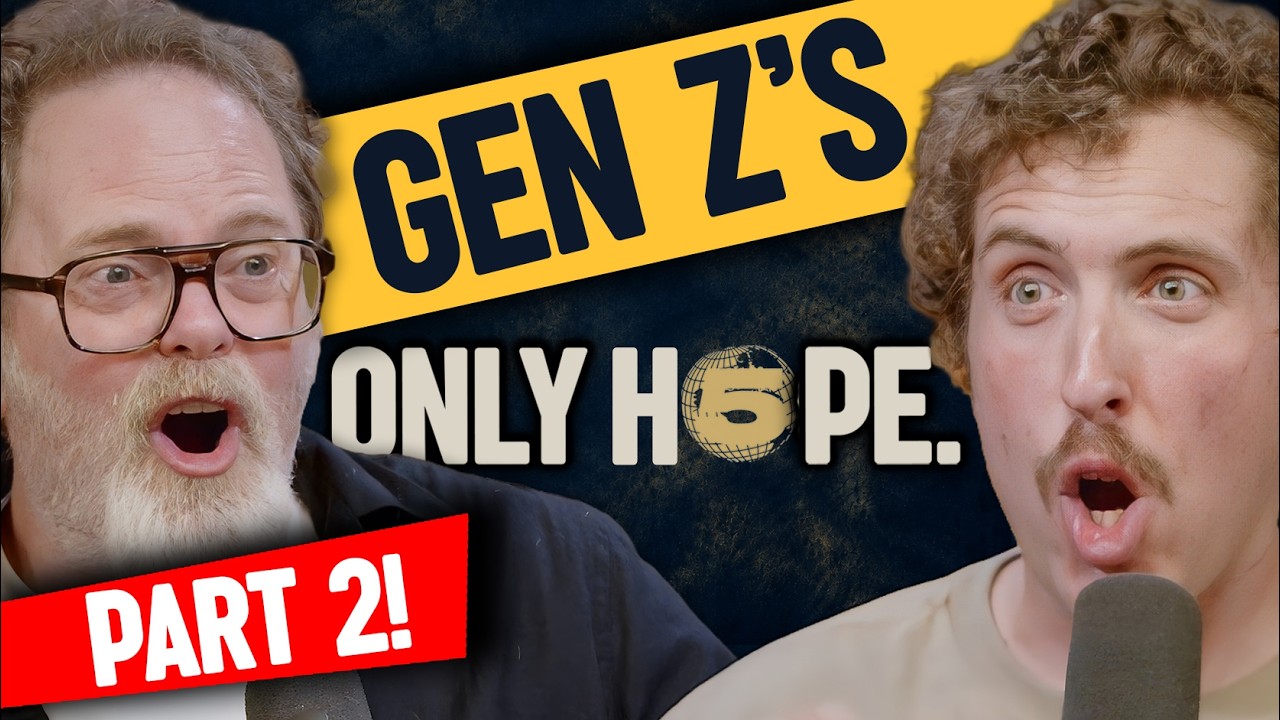
Channel 5's Andrew Callaghan discusses how hitchhiking, documentary storytelling, and rural escape offer Gen Z a path beyond urban isolation…

1 min read
Home AI Security Systems: Should You Install a Brain?
Inspire

Home AI Security Systems: Should You Install a Brain?

A cast of theater actors weighs the trade-offs of AI home security and automation, revealing deep anxieties about privacy, surveillance, and…

1 min read
Afepakian Remix: Ocarina, Field Recordings and Maleku Voice
Inspire

Afepakian Remix: Ocarina, Field Recordings and Maleku Voice

A mantra-based song becomes an organic electronic piece in the Liquid Bloom Mix of "Afepakian." Here is how ocarina, field sound and an indi…

1 min read
Ik Onkar Beyond “One God”: Who Gets to Define the Words?
Inspire

Ik Onkar Beyond “One God”: Who Gets to Define the Words?

A two-minute Nanak Naam clip argues that Ik Onkar has been stuck with a "one god" gloss for 250 years. The speaker says the opening phrase d…

1 min read

Sigue explorando

Continúa tu camino

Más sabiduría y encuentros de todo el directorio de BrightStar.

Más artículos

Recorre la biblioteca completa de enseñanzas, entrevistas y guías.

Ver todos los artículos →

Maestros y artistas

Explora los linajes, músicos y guías del mundo consciente.

Explorar artistas →

Encuentra un evento

Kirtan, retiros, baños de sonido, breathwork, festivales — muy pronto.

Ver eventos →