BrightStar

Ver Todos los Events

Descubre encuentros conscientes

events

Yoga
Meditation
Breathwork
Qigong
Tai Chi
Sacred Music
World Music
Medicine Music
Sound Healing
Ecstatic Dance
Destinos Populares
BaliSedonaLos AngelesCosta RicaNew YorkSan FranciscoAustinMiamiJoshua TreeTulum
Ver Todas las CategoríasVer Todos los Destinos

Explorar Todas las Características

Herramientas poderosas para hacer crecer tus eventos

Características de la Plataforma

Precios Dinámicos Inteligentes
Categorías de Entradas
Asientos Asignados
Recuperación de Carritos
Recuperación de Visitantes
Donaciones y Escala Móvil
Motor de Afiliados
Escáner de Entradas
Códigos de Cupón
Preguntas Personalizadas
Compartir Entradas
Ventas Adicionales
Análisis e Informes
Secuencias de Email
Lista de Espera / Notificar / Recordar
Personas y Lugares
Artists & TeachersEvent OrganizersVenues & StudiosKnowledge BaseGlossaryInspiration
Ver Todas las CaracterísticasSobre Nosotros
PreciosBlog
Language
Saved events
Ver Todos los Eventos

events

YogaMeditationBreathworkQigongTai ChiSacred MusicWorld MusicMedicine Music

Destinos Populares

BaliSedonaLos AngelesCosta RicaNew YorkSan Francisco

Personas y Lugares

Artists & TeachersEvent OrganizersVenues & StudiosKnowledge BaseGlossaryInspiration

Características de la Plataforma

Precios Dinámicos InteligentesCategorías de EntradasAsientos AsignadosRecuperación de CarritosRecuperación de VisitantesDonaciones y Escala MóvilMotor de AfiliadosEscáner de EntradasCódigos de CupónPreguntas PersonalizadasCompartir EntradasVentas AdicionalesAnálisis e InformesSecuencias de EmailLista de Espera / Notificar / Recordar
Ver Todas las CaracterísticasSobre Nosotros
PreciosBlog
Iniciar sesiónBuscadoresCreadores
  • Ver Todos los Eventos
  • Para Buscadores
  • Yoga
  • Meditación
  • Respiración consciente
  • Qigong
  • Tai chi
  • Música sagrada
  • Música del mundo
  • Música medicina
  • Sanación con sonido
  • Danza extática
  • Retiros
  • Talleres
  • Todas las Categorías →
  • Bali
  • Sedona
  • Los Angeles
  • Costa Rica
  • Tulum
  • Byron Bay
  • San Francisco
  • Austin
  • New York
  • San Diego
  • Denver
  • Seattle
  • Portland
  • Miami
  • Todas las Ciudades →
  • Join the Movement
  • Why we list
  • Sell Globally
  • Para Creadores
  • Para equipos
  • Para Escritores
  • Para Maestros
  • Para Artistas de Kirtan
  • Para Estudios
  • Para Festivales
  • Para Centros de Retiros
  • Para Organizaciones Sin Fines de Lucro
  • Embajador de Marca
  • Entradas sin costo
  • Elevate
  • Amplify
  • Red de +500K Compradores
  • Recuperación de Carritos
  • Precios Dinámicos Inteligentes
  • Categorías de Entradas
  • Eventos Recurrentes
  • Asientos Asignados
  • Motor de Afiliados
  • Lista de Espera / Notificar
  • Escáner de Entradas
  • Widget Embebido
  • Sindicación de eventos
  • Centro de mensajes
  • Integraciones
  • Reportes
  • Todas las Características →
  • Acerca de
  • El ecosistema
  • Blog
  • Glosario
  • Inspiración
  • Centro de Ayuda
  • Contacto
  • Documentación API
  • Recursos de Marca
  • Carreras
  • Prensa
  • Términos de Servicio
  • Política de Privacidad

Eventos

  • Ver Todos los Eventos
  • Para Buscadores
  • Yoga
  • Meditación
  • Respiración consciente
  • Qigong
  • Tai chi
  • Música sagrada
  • Música del mundo
  • Música medicina
  • Sanación con sonido
  • Danza extática
  • Retiros
  • Talleres
  • Todas las Categorías →

Destinos

  • Bali
  • Sedona
  • Los Angeles
  • Costa Rica
  • Tulum
  • Byron Bay
  • San Francisco
  • Austin
  • New York
  • San Diego
  • Denver
  • Seattle
  • Portland
  • Miami
  • Todas las Ciudades →

Para Creadores

  • Join the Movement
  • Why we list
  • Sell Globally
  • Para Creadores
  • Para equipos
  • Para Escritores
  • Para Maestros
  • Para Artistas de Kirtan
  • Para Estudios
  • Para Festivales
  • Para Centros de Retiros
  • Para Organizaciones Sin Fines de Lucro
  • Embajador de Marca
  • Entradas sin costo
  • Elevate
  • Amplify

Características

  • Red de +500K Compradores
  • Recuperación de Carritos
  • Precios Dinámicos Inteligentes
  • Categorías de Entradas
  • Eventos Recurrentes
  • Asientos Asignados
  • Motor de Afiliados
  • Lista de Espera / Notificar
  • Escáner de Entradas
  • Widget Embebido
  • Sindicación de eventos
  • Centro de mensajes
  • Integraciones
  • Reportes
  • Todas las Características →

Empresa

  • Acerca de
  • El ecosistema
  • Blog
  • Glosario
  • Inspiración
  • Centro de Ayuda
  • Contacto
  • Documentación API
  • Recursos de Marca
  • Carreras
  • Prensa
  • Términos de Servicio
  • Política de Privacidad
BrightStar
Descarga la app
Descárgalo en elApp StoreDisponible enGoogle Play
© 2026 BrightStar. Todos los derechos reservados.
Inspiration

Gayatri Mantra Rehearsal: Building a Chant Before the Tour

Tina Malia
Tina Malia
Mar 21, 2011
7 min de lectura
Ver · 6

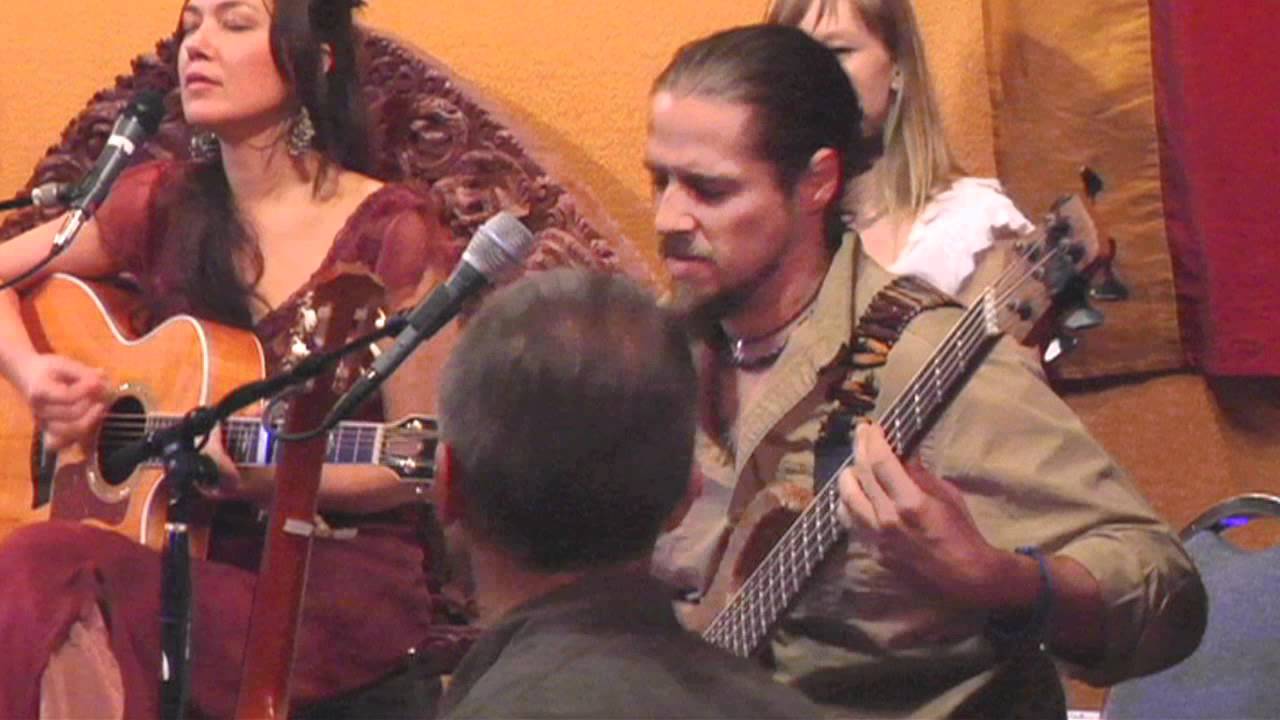
Before a mantra becomes a song, a room has to decide how it begins. In the rehearsal footage Tina Malia and GuruGanesha Singh posted in March 2011, the opening minutes are less performance than negotiation: who starts, who comes in next, and where the bass and cello will slide under the voice. The clip runs just over eight minutes and was filmed at the very first rehearsal for their Song of the Soul Tour that year, with Jared May on bass. The track is the Gayatri Mantra from Malia's album Jaya Bhagavan on Amida Records. What it captures is a Sanskrit chant being built in real time, not delivered finished, and that makes it a rare look at how devotional music gets its architecture.

Leer · 7 secciones

What is actually happening in this rehearsal?

The picture is sparse: a room, a few instruments, two voices trying to find the same pulse. The captions are fragmentary, with many lines dissolving into music tags, so this reading leans on the lines that come through clearly and on the musical logic the rehearsal itself exposes. Nothing here should be treated as a verified account of the tour or of the recording sessions. What we can hear is a teacher and a musical partner working out a chant from the ground up.

Why does entry order matter in a mantra arrangement?

In a chant built on repetition, the order of entrances is the arrangement. Early on, around 0:25, Malia lays out the sequence in plain language:

"Okay, well it is really nice with you doing that with me, maybe we could start and then maybe the rest of the guys could come in, let's do it like that and we'll bring the bass and the cello in." (Malia, in the rehearsal footage, around 0:25)

That single line is a small blueprint. One voice goes first and carries the text and the pulse alone. Other players then join in deliberate stages, and the bass and cello come last. The logic is familiar to anyone who has arranged a vocal part: a single line establishes what the listener is supposed to hold onto before anything else competes for attention. In a mantra, where the words repeat for minutes, that first establishment is the entire emotional frame. If the text isn't clear in the opening cycles, layering only muddies it.

The sequence also tells you something about how the group is thinking. Malia is not hoping the instruments will sort themselves out. She is deciding who is responsible for what, and when. Rehearsals like this one often reveal more about an arrangement's logic than a finished take ever could, because every choice is still visible.

What does the drone on D do for a chant?

The most instructive moment comes at about 1:22, when Malia explains her own role:

"I'll start it for real by myself, okay, and then I'll show you where to come in. I just do one round and I pedal on the D, and then you can come in with guitar." (Malia, in the rehearsal footage, around 1:22)

A held tonal center is the ear's home base. Once a D is sustained underneath, every melodic phrase is heard in relation to it, and the listener stops waiting for the music to "arrive" somewhere, because it is already there. The footage doesn't specify which instrument produces that pedal tone, and it would be a guess to say more about the mechanism. What is clear is the function: a sustained pitch that gives the other players a fixed reference, which is why Malia asks guitar to enter only after the drone is established.

Her phrase "one round" matters too. A round is one complete cycle through the material, the unit of teaching in a call-and-response or repeated chant. Starting with a single round lets the group hear the whole form before anyone adds a part. It is a practical habit as much as a musical one: you can't fix a cycle you haven't heard closed.

What do the stops and restarts reveal about the working process?

Much of the eight minutes is stop-and-start. Phrases begin, dissolve, and begin again, and the captions register a few ambient sounds, including applause near 5:31 that the footage doesn't explain. Rehearsal rooms are rarely silent, and the presence of an outside sound in an otherwise private session is a reminder that this is a working space, not a finished product.

The most telling line comes near 7:04, when Malia pulls the group out of the flow and asks them to focus on one passage:

"I just got to work on that, you guys." (Malia, in the rehearsal footage, around 7:04)

Isolating a section is one of the most useful things a bandleader can do with a repetitive chant. Mantras can hide mistakes: a drifting entrance or a slightly wrong note disappears inside a long repeat. The turn points, where a phrase bends toward its next line or the group changes dynamic, are where a chant either holds together or loses its thread. Working those seams separately is how an ensemble makes a repeated text feel inevitable rather than merely long.

Where does this rehearsal sit in the longer story?

The Gayatri Mantra is a verse from the Rig Veda, one of the oldest texts in the Hindu tradition, usually understood as a prayer for the illumination of the intellect. Its presence in modern kirtan and devotional music is part of a long movement in which Sanskrit chants have been sung in new settings, often in Western rooms, with guitar, bass, cello, and harmonium alongside the traditional voice. This rehearsal is a single frame of that movement: a 2011 recording session turned into a document of how the arrangement was assembled.

The published record is modest. The video's description names the Song of the Soul Tour of 2011, the album Jaya Bhagavan on Amida Records, and the players in the room. By the time this piece was written, the clip had drawn more than 107,000 views on YouTube. Anything beyond that, including how the tour unfolded or how the arrangement changed in performance, sits outside the material available here and is not claimed in this piece.

What can a listener or a singer take from a rehearsal like this?

Three lessons travel well beyond this particular chant. The first is to establish the text before layering: let one voice carry the line until the words are unmistakable. The second is to decide the drone before the melody, so that everything else is heard against a fixed center. The third is to rehearse the seams: the transitions and turns where a repeated chant either lands or drifts. If you sing or play devotional music, recording a rough rehearsal and listening back for entrances and tonal anchors will teach you more than a dozen run-throughs.

What the video offers, finally, is permission to hear a sacred text as material under construction. Malia's repeated attention to who enters, when, and over what sound gives the Gayatri Mantra a human scale. It is not a finished monument; it is a room of people deciding, in real time, how to make a verse last for minutes without losing its meaning.

Where to go from here

Watch the rehearsal with headphones and listen specifically for the moment the drone settles in, then for the point where each new instrument enters. Next, listen to the full Gayatri Mantra on Jaya Bhagavan (Amida Records) to hear how the rehearsal ideas were carried into a finished recording. For the tour itself, the description points to songofthesoultour.com. If you want to go deeper into the chant's origins, look for the Rig Veda verse it is drawn from, and read a translation alongside the sung version.

Comments

Loading the conversation…

Transcript

[0:03] not that first

[0:05] one in

[0:08] there

[0:09] [Music]

[0:25] okay well it is really nice with you

[0:27] doing that with me maybe we could start

[0:29] and then maybe

[0:31] the rest of the guys could come

[0:33] in let's do it like that and we'll bring

[0:35] the Bas and the cello in

[0:39] [Music]

[1:15] okay I remember now okay so I'll start

[1:19] it for real by myself okay and then I'll

[1:22] show you where to come in I just do one

[1:23] round and I pedal on the D and then you

[1:25] can come in with guitar okay

[1:27] [Music]

[1:58] your brought your

[2:07] [Music]

[2:29] your

[2:35] [Music]

[2:59] for

[3:02] [Music]

[3:29] for for

[3:34] [Music]

[3:45] show might

[3:55] [Music]

[5:02] oh

[5:03] [Music]

[5:18] [Music]

[5:31] [Applause]

[5:34] [Music]

[5:50] that

[5:51] [Music]

[6:12] [Music]

[6:29] now for

[6:31] [Music]

[7:04] I just got to work on that you guys W

[7:06] out okay

[7:09] [Music]

[7:24] [Music]

[7:30] oh

[7:31] now brought

[7:38] [Music]

[7:58] your for

Tina Malia
ArtistTina Malia

Tina Malia is a singer, songwriter and sound engineer whose sacred chant, world, dream pop and folk music expresses her inner landscape through song.

Ver perfilSitio web
Explorar temas
Gayatri-mantraKirtan-rehearsalDrone-and-pedalMantra-arrangementTina-malia

¿Tienes Preguntas?

Preguntas Frecuentes

It is footage from the very first rehearsal for Tina Malia and GuruGanesha Singh's 2011 Song of the Soul Tour, showing them building the Gayatri Mantra from track from the album Jaya Bhagavan. The clip focuses on how the chant is assembled: who starts, how other players enter, and how a drone on D anchors the sound.
The video's description names GuruGanesha Singh as her collaborator in the session and Jared May on bass. Cello is also mentioned in the rehearsal itself, when Malia says the bass and cello will come in later.
Jaya Bhagavan is the album by Tina Malia on Amida Records, from which the Gayatri Mantra in this rehearsal is taken. The rehearsal video is a behind-the-scenes look at how one of its chants was worked out before the 2011 tour.
A sustained tone gives the ear a fixed tonal center, so every melodic phrase is heard in relation to it. In this rehearsal Malia establishes a pedal on D before other instruments enter, which is the practical function of a drone. The video does not specify the instrument producing that tone.
The Gayatri Mantra is a verse from the Rig Veda, one of the oldest texts in the Hindu tradition. It is usually understood as a prayer for the illumination of the intellect. Its meaning is traditionally explained in many ways, so readers seeking depth should consult a translation and commentary.
Start with a single pass through the full form, establish the text with one voice, then add instruments in deliberate stages. Isolate the turning points, where a phrase bends or dynamics change, because repetition can hide errors in those seams. This rehearsal shows that approach in practice, with Malia pausing the group to work on one passage at about 7:04.
The video was filmed for the Song of the Soul Tour in 2011 and was published on YouTube on March 21, 2011. Details about the tour's dates and itinerary are not in the source material for this article, so check the tour's official website for current information.

Seguir leyendo

More from Tina

Ver Todo
Sita Ram Chant: Lyrics, Meaning and Tina Malia's Bridge to Vallabha
Inspire

Sita Ram Chant: Lyrics, Meaning and Tina Malia's Bridge to Vallabha

A five-minute devotional track built on the Sita Ram chant, with its printed lyrics, what the captions reveal about the performance, and wha…

1 min read
The Silent Awakening: Lyrics and Meaning Behind the Song
Inspire

The Silent Awakening: Lyrics and Meaning Behind the Song

A close reading of "The Silent Awakening," a live devotional song performed in Berkeley, California, and published in 2011. The dream imager…

1 min read
Opening a Lighthouse: Gratitude, Seva and Song in Mumbai
Inspire

Opening a Lighthouse: Gratitude, Seva and Song in Mumbai

A three-hour live ceremony in Borivali West reopens a Brahma Kumaris service center. Here is how gratitude, seva and devotional song shape t…

1 min read
Namo Namo: The Devotional Song Sung Back to a Teacher
Inspire

Namo Namo: The Devotional Song Sung Back to a Teacher

A three-minute devotional song, written by Sutara and Omkara and shared with a sangha room in June 2026, turns a teacher's teaching into a c…

1 min read

Sigue explorando

Continúa tu camino

Más sabiduría y encuentros de todo el directorio de BrightStar.

Más artículos

Recorre la biblioteca completa de enseñanzas, entrevistas y guías.

Ver todos los artículos →

Maestros y artistas

Explora los linajes, músicos y guías del mundo consciente.

Explorar artistas →

Encuentra un evento

Kirtan, retiros, baños de sonido, breathwork, festivales — muy pronto.

Ver eventos →
