BrightStar

Ver Todos los Events

Descubre encuentros conscientes

events

Yoga
Meditation
Breathwork
Qigong
Tai Chi
Sacred Music
World Music
Medicine Music
Sound Healing
Ecstatic Dance
Destinos Populares
BaliSedonaLos AngelesCosta RicaNew YorkSan FranciscoAustinMiamiJoshua TreeTulum
Ver Todas las CategoríasVer Todos los Destinos

Explorar Todas las Características

Herramientas poderosas para hacer crecer tus eventos

Características de la Plataforma

Precios Dinámicos Inteligentes
Categorías de Entradas
Asientos Asignados
Recuperación de Carritos
Recuperación de Visitantes
Donaciones y Escala Móvil
Motor de Afiliados
Escáner de Entradas
Códigos de Cupón
Preguntas Personalizadas
Compartir Entradas
Ventas Adicionales
Análisis e Informes
Secuencias de Email
Lista de Espera / Notificar / Recordar
Personas y Lugares
Artists & TeachersEvent OrganizersVenues & StudiosKnowledge BaseGlossaryInspiration
Ver Todas las CaracterísticasSobre Nosotros
PreciosBlog
Language
Saved events
Ver Todos los Eventos

events

YogaMeditationBreathworkQigongTai ChiSacred MusicWorld MusicMedicine Music

Destinos Populares

BaliSedonaLos AngelesCosta RicaNew YorkSan Francisco

Personas y Lugares

Artists & TeachersEvent OrganizersVenues & StudiosKnowledge BaseGlossaryInspiration

Características de la Plataforma

Precios Dinámicos InteligentesCategorías de EntradasAsientos AsignadosRecuperación de CarritosRecuperación de VisitantesDonaciones y Escala MóvilMotor de AfiliadosEscáner de EntradasCódigos de CupónPreguntas PersonalizadasCompartir EntradasVentas AdicionalesAnálisis e InformesSecuencias de EmailLista de Espera / Notificar / Recordar
Ver Todas las CaracterísticasSobre Nosotros
PreciosBlog
Iniciar sesiónBuscadoresCreadores
  • Ver Todos los Eventos
  • Para Buscadores
  • Yoga
  • Meditación
  • Respiración consciente
  • Qigong
  • Tai chi
  • Música sagrada
  • Música del mundo
  • Música medicina
  • Sanación con sonido
  • Danza extática
  • Retiros
  • Talleres
  • Todas las Categorías →
  • Bali
  • Sedona
  • Los Angeles
  • Costa Rica
  • Tulum
  • Byron Bay
  • San Francisco
  • Austin
  • New York
  • San Diego
  • Denver
  • Seattle
  • Portland
  • Miami
  • Todas las Ciudades →
  • Join the Movement
  • Why we list
  • Sell Globally
  • Para Creadores
  • Para equipos
  • Para Escritores
  • Para Maestros
  • Para Artistas de Kirtan
  • Para Estudios
  • Para Festivales
  • Para Centros de Retiros
  • Para Organizaciones Sin Fines de Lucro
  • Embajador de Marca
  • Entradas sin costo
  • Elevate
  • Amplify
  • Red de +500K Compradores
  • Recuperación de Carritos
  • Precios Dinámicos Inteligentes
  • Categorías de Entradas
  • Eventos Recurrentes
  • Asientos Asignados
  • Motor de Afiliados
  • Lista de Espera / Notificar
  • Escáner de Entradas
  • Widget Embebido
  • Sindicación de eventos
  • Centro de mensajes
  • Integraciones
  • Reportes
  • Todas las Características →
  • Acerca de
  • El ecosistema
  • Blog
  • Glosario
  • Inspiración
  • Centro de Ayuda
  • Contacto
  • Documentación API
  • Recursos de Marca
  • Carreras
  • Prensa
  • Términos de Servicio
  • Política de Privacidad

Eventos

  • Ver Todos los Eventos
  • Para Buscadores
  • Yoga
  • Meditación
  • Respiración consciente
  • Qigong
  • Tai chi
  • Música sagrada
  • Música del mundo
  • Música medicina
  • Sanación con sonido
  • Danza extática
  • Retiros
  • Talleres
  • Todas las Categorías →

Destinos

  • Bali
  • Sedona
  • Los Angeles
  • Costa Rica
  • Tulum
  • Byron Bay
  • San Francisco
  • Austin
  • New York
  • San Diego
  • Denver
  • Seattle
  • Portland
  • Miami
  • Todas las Ciudades →

Para Creadores

  • Join the Movement
  • Why we list
  • Sell Globally
  • Para Creadores
  • Para equipos
  • Para Escritores
  • Para Maestros
  • Para Artistas de Kirtan
  • Para Estudios
  • Para Festivales
  • Para Centros de Retiros
  • Para Organizaciones Sin Fines de Lucro
  • Embajador de Marca
  • Entradas sin costo
  • Elevate
  • Amplify

Características

  • Red de +500K Compradores
  • Recuperación de Carritos
  • Precios Dinámicos Inteligentes
  • Categorías de Entradas
  • Eventos Recurrentes
  • Asientos Asignados
  • Motor de Afiliados
  • Lista de Espera / Notificar
  • Escáner de Entradas
  • Widget Embebido
  • Sindicación de eventos
  • Centro de mensajes
  • Integraciones
  • Reportes
  • Todas las Características →

Empresa

  • Acerca de
  • El ecosistema
  • Blog
  • Glosario
  • Inspiración
  • Centro de Ayuda
  • Contacto
  • Documentación API
  • Recursos de Marca
  • Carreras
  • Prensa
  • Términos de Servicio
  • Política de Privacidad
BrightStar
Descarga la app
Descárgalo en elApp StoreDisponible enGoogle Play
© 2026 BrightStar. Todos los derechos reservados.
Inspiration

Fist Experiment: Why Cradling Anger Beats Prying It Open

Cynthia Garner
Cynthia Garner
Apr 24, 2025
9 min de lectura

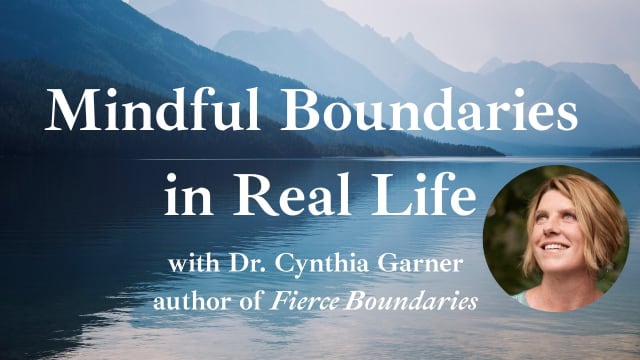
De Mindful Boundaries with Dr. Cynthia Garner

Ver · 8

About a minute into a short recording, a teacher asks her listeners to do something most of us would rather not do with our hands in public: make a fist and fill it with anger. Dr. Cynthia Garner calls it "relatively angry," and she gives the fist one job, which is to stay closed. Then she asks people to gather the charge of the day, the emotions that came with everything that happened, and push all of it into that clenched hand. With the other hand, the instruction is to pry the fist open and notice what that does. It is a simple exercise, filmed in a single take, and it runs under eight minutes. It also carries one of the most useful ideas in her teaching: what we do with a feeling in the body shapes what the feeling becomes.

Leer · 7 secciones

What happens when you try to pry a fist open?

The first round is the one most people will recognize from their own lives. You have a closed hand, and another hand that wants it to be different. Garner's guidance is careful. She says the practice "may not be real comfortable," and she asks listeners to pay attention to what they notice rather than to succeed at opening anything. She also tells them to keep it short: "you don't have to do that for too long you can shake that out."

That small detail matters. The prying round is not framed as a failure to be fixed. It is framed as a demonstration. You are applying force to something that is holding on for a reason, and the force itself creates a second layer of effort: the jaw tightens, the shoulders lift, the breath changes. Participants in the recording later described exactly this. One said it was "hard the first time to Pride it open" and that "there was um definitely more t[ension] in my jaw and kind of in my whole body." Anyone who has tried to force a feeling to leave on schedule will recognize the sensation. The harder you push, the more the whole system braces.

Why does cradling work better than forcing?

In the second round, the instruction changes in one key way. The fist is still closed, still angry, still doing its job. But this time the other hand comes underneath and cradles it. Garner invites listeners to imagine the cradling hand "is helping the fist stay closed," which is a striking reframe. The hand is no longer an opponent. It is an ally to the thing it was trying to undo.

She draws the contrast explicitly, and this is the core of the teaching. When we try to press the fist open, she says, "we're we're seeing that the anger is a problem and we're trying to make it go away." The thought underneath is something like: this anger doesn't belong here, it's bad, I don't want this fist. Cradling flips the stance. You hold the experience "with some care without trying to make it different without trying to make it change," and something softens on its own. She calls this an "automatic softening and welcoming," and she says it is a relatively universal response among the people she has worked with, while adding that there is no one-size-fits-all result.

What is being described here is not a trick for relaxing your hand. It is a claim about emotional suppression. Garner puts it bluntly: "when we Exile parts of our experience when we take our emotions and we say this is not okay this needs to go away um it really adds a lot of tension in our system." The energy does not disappear when we try to exile it. It has to be managed. We spend effort tucking it "into those corners," keeping it "out of sight out of mind," and that maintenance is itself tiring and tense. A feeling that is pushed away keeps asking for attention in a different register, usually in the body.

The alternative she offers is not indulgence. Cradling does not mean agreeing with the anger or letting it run the room. It means saying, in effect, this is here, this belongs, this is a part of me. That is the posture she calls giving yourself "permission to be as we are without saying that part of us is bad or part of us needs to be silenced or put away in order to show up."

What did people actually notice when they tried it?

The most revealing parts of the recording are the reflections from participants, who were invited to unmute and describe what they felt. One person described the contrast with clarity: "it was hard to Prime my hand open but it felt comforting to uh hold my fist and just let it be." That person went on to name something subtle that the exercise seems to make possible: "it's okay to um have some anger about what's happening in my world but to not let it devour me not willing to give it that much power."

A second participant's account is even more precise about the change in texture. They reported "more breath," and a state that was "not relaxing but just able to be there," with "a little bit more like compassion um presence and not so focused on the opening of like wanting something." The phrase "more just yeah this sense of just like here it is" captures what cradling seems to offer. The goal shifts from getting rid of the feeling to being present with it. And one participant said that, with the anger still present, the cradling "felt really calming," which made it "a really good um yeah support."

Garner's own response to these reports is measured. She thanks the speakers and notes that her experience is that the softening is widespread, but she explicitly leaves room for difference: "if you had a very different experience that's totally fine." That openness is part of the method. The exercise is an invitation to pay attention, not a test with a correct answer.

Why does Garner say this is the heart of mindfulness?

Garner describes the fist practice as something that "represents what's at the heart of mindfulness as an intervention" in well-being and mental health, and she extends it to systemic work with others. That is a larger claim than a quick hand exercise might suggest, and it helps to see why she makes it. Mindfulness, in this framing, is not a method for producing calm on demand. It is a practice of relating to whatever is present without trying to edit it first.

This is why the cradling round matters more than it looks. Prying is a form of correction. Cradling is a form of contact. The first assumes the feeling is wrong and must be removed. The second assumes the feeling is information, and that it can be met with enough care to reveal what it is doing. Garner says feelings carry "a lot of energy," and that "if we allow them then we have the opportunity to get information from them and work skillfully with them." The fist exercise is a small rehearsal of that stance.

Is it true that an emotion lasts about 90 seconds?

Near the end of the recording, Garner offers a specific claim that deserves careful handling. She says that "the felt experience of an emotion lasts for about 90 seconds in your body." She is clear about her source, or lack of one: "they say." She also adds a conditional: if an emotion continues past 90 seconds, "they say that you are re-triggering that emotion with your thoughts."

The useful part of this idea does not depend on the exact number. It draws a line between feeling a feeling and thinking about it. Garner frames the invitation as "feeling your feelings rather than thinking your feelings," which is a distinction many people find clarifying. When a feeling is still going after a minute and a half, the question to ask is whether the body is still producing it or whether the mind has begun replaying the story that produced it. Treat the 90-second figure as a working frame for observation rather than a scientific rule, and it becomes a practical tool: ride the wave, notice whether you are feeding it, and come back to the body.

How can you use this off the mat?

The practical takeaway is small enough to try today. Pick a moment when a strong feeling is present, and notice whether you are prying or cradling. Prying looks like arguing with the feeling, telling yourself to calm down, or pushing it out of the room. Cradling looks like naming it, placing a hand on the body, and allowing it to be what it is for a short stretch. Garner's invitation is specifically to do this "as best you can when you notice that you are trying to ignore avoid numb silence and experience" what you are feeling, and to actually perform the physical gesture of care while you do.

The gesture matters because the body is where the exercise lives. Garner's whole teaching rests on the idea that suppression is physical, which means care can be physical too. You do not have to believe anything in particular about your anger to hold it gently. You only have to notice that the holding changes what happens next.

Where to go from here

Watch the recording itself, since the rhythm of the instructions and the participants' pauses carry as much information as the words. Then try the two rounds on your own, in the order Garner uses: first a short, honest attempt to pry the fist open, then a cradled version with the other hand underneath. Shake it out between rounds. Notice the difference in your jaw, your breath, and the stance your mind takes toward the feeling. If you want to keep exploring the framework, return to her line about exiling parts of experience and ask where in your own life you have been spending energy keeping something out of sight. The fist will show you the answer faster than any argument.
Comments

Loading the conversation…

Transcript

[0:04] and so I'll invite you uh to make a fist

[0:07] with one hand so this is a this can be a

[0:10] fist that is relatively angry its job is

[0:13] to stay closed uh and so giving yourself

[0:16] permission to really you know let

[0:19] yourself have this Fist and you might

[0:21] even put all the the charge and emotions

[0:24] that kind of go with all the events of

[0:26] today into that

[0:27] Fist and then with the other hand and

[0:30] the invitation is to try to pry that

[0:33] fist

[0:35] open and just notice what happens as you

[0:39] do

[0:40] that may not be real comfortable just

[0:44] paying attention to what you notice as

[0:45] you try to pry that fist open

[0:47] remembering that the job of this fist is

[0:49] to stay

[0:50] closed you don't have to do that for too

[0:52] long you can shake that

[0:55] out and we're going to try that again

[0:59] but in a slightly different way so I

[1:01] invite you again to make a fist and

[1:03] again this fist is uh you know job is to

[1:07] stay closed it may be a very angry

[1:10] Fist and at this uh for this

[1:14] side instead of trying to pry the fist

[1:17] open the invitation is to bring the

[1:20] other hand underneath and to cradle the

[1:25] fist you might even imagine that the

[1:28] cradling hand is helping the fist stay

[1:35] closed and just notice what that's

[1:42] like so you can shake that off release

[1:45] that

[1:48] practice and um I would be very

[1:51] interested if anybody is willing to

[1:54] share what they noticed in that

[1:56] experience um you're welcome to take

[1:58] yourself off mute and to

[2:01] to let us know what you noticed as you

[2:03] did that little

[2:10] practice yes I noticed that it was hard

[2:13] to Prime my hand open but it felt

[2:17] comforting to uh hold my

[2:21] fist and just let it

[2:23] be it's like okay like I actually feel

[2:27] like it's okay to um

[2:32] have some anger about what's happening

[2:34] in my world but to not let it devour

[2:40] me not willing to give it that much

[2:44] power yeah thank you thank

[2:47] you yeah any other Reflections

[2:52] different yeah I noticed um yeah it was

[2:55] hard the first time to Pride it open and

[2:57] there was um definitely more t

[3:01] and in my jaw and kind of in my whole

[3:03] body and then with with my hand being

[3:06] held um my fist in some ways I felt like

[3:10] a um just more breath and um not

[3:15] relaxing but just able to be there have

[3:18] more a little bit more like

[3:20] compassion um presence and not so

[3:22] focused on the opening of like wanting

[3:25] something but more just yeah this sense

[3:27] of just like here it is and and it felt

[3:30] really calming with the anger so it felt

[3:33] like a really

[3:34] good um yeah support yeah great great

[3:39] thank you thank you this practice to me

[3:42] kind of represents what's at the heart

[3:44] of of mindfulness as an

[3:47] intervention um in our own kind of

[3:49] well-being and mental health and in a

[3:51] systemic way if we're working with

[3:53] others as well so if we think about you

[3:55] know the anger that we put into this

[3:57] Fist and what we're trying to do when we

[3:59] want to press the fist open is we're

[4:01] we're seeing that the anger is a problem

[4:04] and we're trying to make it go away like

[4:06] this anger doesn't belong here I don't

[4:07] want it it's bad don't want this fist

[4:10] but if we cradle the fist instead and we

[4:15] hold that

[4:17] experience of being a fist with some

[4:20] care without trying to make it different

[4:22] without trying to make it change and we

[4:24] support it and maybe even help it be

[4:26] what it is there's this kind of

[4:29] automatic softening

[4:30] and welcoming that happens as we do that

[4:33] this is a relatively Universal

[4:35] experience among just about everybody

[4:37] I've worked with if you had a very

[4:39] different experience that's totally fine

[4:42] um there's no one size fits all but um

[4:45] when we

[4:47] Exile parts of our experience when we

[4:49] when we take our emotions and we say

[4:51] this is not okay this needs to go away

[4:54] um it really adds a lot of tension in

[4:57] our system and we have to do a lot of

[4:58] work to hold that experience kind of out

[5:01] of sight out of mind and tuck it into

[5:03] those corners but it doesn't just go

[5:07] away when we instead are willing to be

[5:11] with and care for and cradle this

[5:14] experience even if it's a very

[5:16] challenging or unpleasant

[5:19] emotion what gets to happen is we get to

[5:22] care for ourselves and we're giving

[5:24] ourselves permission to be as we are

[5:28] without saying that part of us is bad or

[5:30] part of us needs to be silenced or put

[5:32] away in order to show up and um

[5:37] so you know this practice has a lot of

[5:41] uh implications um but the the

[5:43] invitation that I want to offer you just

[5:45] as we go about uh this formal

[5:47] mindfulness practice that we'll we'll

[5:48] dive into here in a moment is um to just

[5:51] as as best you can when you notice that

[5:55] you are trying to ignore avoid numb

[6:00] silence and experience that you are

[6:03] having actually do the physical exercise

[6:06] of cradling this fist in your hand and

[6:10] giving yourself that gesture of care

[6:12] this is here this belongs this is a part

[6:15] of

[6:16] me giving yourself that permission to

[6:19] feel your

[6:22] feelings they say the felt experience of

[6:27] an emotion lasts for about 90 seconds in

[6:30] your

[6:31] body so if you can ride that wave and be

[6:35] with that experience of emotion for

[6:38] those 90

[6:40] seconds it will kind of peak and subside

[6:44] and pass um in general and if it

[6:46] continues for longer than 90 seconds

[6:48] they say that you are re-triggering that

[6:50] emotion with your

[6:53] thoughts so feeling your

[6:55] feelings rather than thinking your

[6:57] feelings as an invitation to give

[7:00] yourself permission to just be the human

[7:03] being that you are with all of these big

[7:05] emotions because they have a lot for us

[7:09] there's a lot of energy in those

[7:10] emotions and and if we allow them then

[7:13] we have the opportunity to get

[7:14] information from them and work

[7:16] skillfully with them

[7:21] [Music]

Cynthia Garner
ArtistCynthia Garner

Dr. Cynthia Garner is a mindfulness teacher, mental health educator and author of Fierce Boundaries who helps caregivers and helping professionals build presence, healthy boundarie…

Ver perfilSitio web
Explorar temas
Somatic-exerciseFist-experimentCradling-angerEmotional-regulationFeeling-emotions

¿Tienes Preguntas?

Preguntas Frecuentes

It is a short body-based practice in which you make a fist with one hand, imagine it holding anger and the charge of the day, and then try to open it with the other hand. Garner then repeats the exercise with the other hand cradling the fist instead, and asks you to notice the difference. The point is to observe how forcing a feeling away changes the body compared with holding it with care.
Prying treats the anger as a problem to be removed, which tends to create tension in the jaw, shoulders, and breath. Cradling holds the same feeling with care, without trying to change it, and Garner says this usually produces an automatic softening. The second approach is less about relaxing and more about being present with what is there.
Garner says that the felt experience of an emotion lasts about 90 seconds in the body, and she explicitly attributes this to what "they say" rather than to a specific study. She adds that if an emotion continues longer, it may be re-triggered by thoughts. Treat it as a practical frame for observing feelings, not a precise scientific rule.
Garner explains that when we exile parts of our experience by deciding a feeling is not okay, it adds significant tension to the system. We then spend effort keeping that feeling out of sight and tucked away, and that effort is itself draining. The feeling does not simply disappear.
Garner distinguishes between staying in the bodily experience of an emotion and getting caught in thoughts about it. Feeling is direct contact with sensation; thinking often replays the story and can extend the emotion. The practice is to return to the body and let the feeling move through it.
Yes. Garner's instructions are simple enough to try alone: make a fist with one hand, try to open it briefly with the other, then cradle it and notice the difference. Keep the attempts short, shake out your hands between rounds, and pay attention to your jaw, breath, and mental stance.
Garner describes the practice as representing the heart of mindfulness as a well-being intervention. In her framing, mindfulness means relating to whatever is present without first trying to edit or remove it. The fist exercise shows that stance in a physical, immediate way.

Seguir leyendo

More from Cynthia Garner

Ver Todo
Mindful Boundaries: Helping Someone Who Is Suffering
Inspire

Mindful Boundaries: Helping Someone Who Is Suffering

Cynthia Garner recounts a dangerous relapse in a friend's home and how grounded attention kept her present without absorbing the crisis. A p…

10 min read
Self-Honesty and Self-Compassion: The Two Wings of Awakening
Inspire

Self-Honesty and Self-Compassion: The Two Wings of Awakening

Tara Brach's talk on the second arrow shows how self-judgment turns ordinary pain into a trance. Here is how seeing honestly and holding ten…

8 min read
Cacao Prayer: The Chant That Travels From Circle to Circle
Inspire

Cacao Prayer: The Chant That Travels From Circle to Circle

A close listen to Cacao Prayer, the chant that has moved from circle to circle with Bruna Bortolato and Mose. Here is how its few lines repe…

5 min read
Beautiful Light and the Song for the Day You Can't Get Up
Inspire

Beautiful Light and the Song for the Day You Can't Get Up

Rick Jude's "Beautiful Light," performed acoustically with Janet Robin, is a song about staying with someone in the dark. Its lyrics move fr…

5 min read

Sigue explorando

Continúa tu camino

Más sabiduría y encuentros de todo el directorio de BrightStar.

Más artículos

Recorre la biblioteca completa de enseñanzas, entrevistas y guías.

Ver todos los artículos →

Maestros y artistas

Explora los linajes, músicos y guías del mundo consciente.

Explorar artistas →

Encuentra un evento

Kirtan, retiros, baños de sonido, breathwork, festivales — muy pronto.

Ver eventos →