BrightStar

Ver Todos los Events

Descubre encuentros conscientes

events

Yoga
Meditation
Breathwork
Qigong
Tai Chi
Sacred Music
World Music
Medicine Music
Sound Healing
Ecstatic Dance
Destinos Populares
BaliSedonaLos AngelesCosta RicaNew YorkSan FranciscoAustinMiamiJoshua TreeTulum
Ver Todas las CategoríasVer Todos los Destinos

Explorar Todas las Características

Herramientas poderosas para hacer crecer tus eventos

Características de la Plataforma

Precios Dinámicos Inteligentes
Categorías de Entradas
Asientos Asignados
Recuperación de Carritos
Recuperación de Visitantes
Donaciones y Escala Móvil
Motor de Afiliados
Escáner de Entradas
Códigos de Cupón
Preguntas Personalizadas
Compartir Entradas
Ventas Adicionales
Análisis e Informes
Secuencias de Email
Lista de Espera / Notificar / Recordar
Personas y Lugares
Artists & TeachersEvent OrganizersVenues & StudiosKnowledge BaseGlossaryInspiration
Ver Todas las CaracterísticasSobre Nosotros
PreciosBlog
Language
Saved events
Ver Todos los Eventos

events

YogaMeditationBreathworkQigongTai ChiSacred MusicWorld MusicMedicine Music

Destinos Populares

BaliSedonaLos AngelesCosta RicaNew YorkSan Francisco

Personas y Lugares

Artists & TeachersEvent OrganizersVenues & StudiosKnowledge BaseGlossaryInspiration

Características de la Plataforma

Precios Dinámicos InteligentesCategorías de EntradasAsientos AsignadosRecuperación de CarritosRecuperación de VisitantesDonaciones y Escala MóvilMotor de AfiliadosEscáner de EntradasCódigos de CupónPreguntas PersonalizadasCompartir EntradasVentas AdicionalesAnálisis e InformesSecuencias de EmailLista de Espera / Notificar / Recordar
Ver Todas las CaracterísticasSobre Nosotros
PreciosBlog
Iniciar sesiónBuscadoresCreadores
  • Ver Todos los Eventos
  • Para Buscadores
  • Yoga
  • Meditación
  • Respiración consciente
  • Qigong
  • Tai chi
  • Música sagrada
  • Música del mundo
  • Música medicina
  • Sanación con sonido
  • Danza extática
  • Retiros
  • Talleres
  • Todas las Categorías →
  • Bali
  • Sedona
  • Los Angeles
  • Costa Rica
  • Tulum
  • Byron Bay
  • San Francisco
  • Austin
  • New York
  • San Diego
  • Denver
  • Seattle
  • Portland
  • Miami
  • Todas las Ciudades →
  • Join the Movement
  • Why we list
  • Sell Globally
  • Para Creadores
  • Para equipos
  • Para Escritores
  • Para Maestros
  • Para Artistas de Kirtan
  • Para Estudios
  • Para Festivales
  • Para Centros de Retiros
  • Para Organizaciones Sin Fines de Lucro
  • Embajador de Marca
  • Casos de Estudio
  • Entradas sin costo
  • Elevate
  • Amplify
  • Red de +500K Compradores
  • Recuperación de Carritos
  • Precios Dinámicos Inteligentes
  • Categorías de Entradas
  • Eventos Recurrentes
  • Asientos Asignados
  • Motor de Afiliados
  • Lista de Espera / Notificar
  • Escáner de Entradas
  • Widget Embebido
  • Sindicación de eventos
  • Centro de mensajes
  • Integraciones
  • Reportes
  • Todas las Características →
  • Acerca de
  • El ecosistema
  • Blog
  • Glosario
  • Inspiración
  • Centro de Ayuda
  • Contacto
  • Documentación API
  • Recursos de Marca
  • Carreras
  • Prensa
  • Términos de Servicio
  • Política de Privacidad

Eventos

  • Ver Todos los Eventos
  • Para Buscadores
  • Yoga
  • Meditación
  • Respiración consciente
  • Qigong
  • Tai chi
  • Música sagrada
  • Música del mundo
  • Música medicina
  • Sanación con sonido
  • Danza extática
  • Retiros
  • Talleres
  • Todas las Categorías →

Destinos

  • Bali
  • Sedona
  • Los Angeles
  • Costa Rica
  • Tulum
  • Byron Bay
  • San Francisco
  • Austin
  • New York
  • San Diego
  • Denver
  • Seattle
  • Portland
  • Miami
  • Todas las Ciudades →

Para Creadores

  • Join the Movement
  • Why we list
  • Sell Globally
  • Para Creadores
  • Para equipos
  • Para Escritores
  • Para Maestros
  • Para Artistas de Kirtan
  • Para Estudios
  • Para Festivales
  • Para Centros de Retiros
  • Para Organizaciones Sin Fines de Lucro
  • Embajador de Marca
  • Casos de Estudio
  • Entradas sin costo
  • Elevate
  • Amplify

Características

  • Red de +500K Compradores
  • Recuperación de Carritos
  • Precios Dinámicos Inteligentes
  • Categorías de Entradas
  • Eventos Recurrentes
  • Asientos Asignados
  • Motor de Afiliados
  • Lista de Espera / Notificar
  • Escáner de Entradas
  • Widget Embebido
  • Sindicación de eventos
  • Centro de mensajes
  • Integraciones
  • Reportes
  • Todas las Características →

Empresa

  • Acerca de
  • El ecosistema
  • Blog
  • Glosario
  • Inspiración
  • Centro de Ayuda
  • Contacto
  • Documentación API
  • Recursos de Marca
  • Carreras
  • Prensa
  • Términos de Servicio
  • Política de Privacidad
BrightStar
© 2026 BrightStar. Todos los derechos reservados.
Inspiration

Calm Your Mind in Minutes: The Buddhist Technique for Acute Stress

Yongey Mingyur Rinpoche
Jan 15, 2025
6 min de lectura
Ver · 5

Your phone buzzes with an impossible email. Your chest tightens. The meeting just got worse. In the space of seconds, everything escalates—your jaw clamps, your breath shortens, your mind spirals into the next problem before you've even finished processing this one. When acute stress hits, the advice to "just meditate for twenty minutes" lands like a joke. You don't have twenty minutes. You need to think clearly now.

This is the practical problem Yongey Mingyur Rinpoche addresses in his teaching on rapid mind-settling. A towering figure in contemporary Buddhism—trained in the Tibetan tradition, founder of the Tergar movement, and author of multiple books on meditation and mental health—Mingyur Rinpoche has spent decades translating Buddhist psychology into tools that work in the modern world. His approach to immediate stress relief doesn't require you to become a different person or abandon your situation. It works within the intensity.

Leer · 5 secciones

The Two-Stage Technique: Breathing First

When stress arrives suddenly, Mingyur Rinpoche teaches, the first move is physiological: deep breathing with a deliberate pause. This is not the common advice to "take a deep breath." There's a specific architecture to it.

Breathe in through the nose. Then—this is the key detail—don't breathe in again right away. Instead, rest in the space between breaths. When you exhale, let your throat open, let your lungs expand with space, and let the muscles throughout your body relax. Hold this state of openness for five to ten seconds. This isn't holding your breath in tension; it's resting in the natural emptiness after the out-breath.

Then return to natural breathing. Repeat this cycle three to seven times. The physiological logic is sound: the parasympathetic nervous system activates during the exhale and the pause that follows. By extending this phase, you give your autonomic nervous system time to downshift from fight-or-flight. But Mingyur Rinpoche's instruction adds something precise: the deliberate rest in between, not a forced count or rigid timing, but a genuine settling in the space of the breath.

This phase works quickly because it addresses the nervous system directly. Within minutes—sometimes within one cycle—the acute edge of the stress begins to soften. The breathing oxygenates your brain, the pause grounds your attention, and the relaxation signal travels through your body.

The Second Stage: Appreciation as Perception Shift

But Mingyur Rinpoche doesn't stop at the breath. Once you've cycled through the deep breathing three or seven times and your immediate alarm has lowered, he introduces the second stage: appreciation.

This is where the technique becomes distinctively Buddhist—and distinctively intelligent. After the breathing has begun to settle your nervous system, turn your attention to what is actually here. Whatever you've lost or are afraid of losing, notice: your life is still there. You have not lost your life. You are still alive. From this basic fact, Mingyur Rinpoche suggests, you can begin to appreciate the things that are present with you—the people, the circumstances, the capacities that remain available.

This is not toxic positivity. You're not denying the problem or pretending the stress didn't happen. You're doing something more precise: you're reorienting your perception. In acute stress, the mind narrows to the threat. Appreciation widens the field. You recognize that normally, you move through life surrounded by things you don't even register—a functioning body, breath, people who care about you, shelter, the fact that this moment is survivable even if it's uncomfortable.

The depth of this practice lies in how it functions. Stress operates partly as a perceptual problem: your threat-detection system has hijacked your attention. By consciously appreciating what's present, you're not fighting the stress; you're literally changing what your mind has access to. The same situation remains, but your relationship to it—your ability to perceive resources, possibility, and continuity—shifts.

Why Mingyur Rinpoche's Approach Stands Out

The technique is simple enough that you could learn it in under five minutes. It's practical enough that you can do it in a parking lot, a bathroom stall, or a break room. But it carries weight because Mingyur Rinpoche has rooted it in both Buddhist contemplative psychology and contemporary neuroscience. He doesn't present it as magic or as a substitute for professional mental health care. He presents it as a skill—something trainable, repeatable, and reliably useful.

In his broader body of teaching, Mingyur Rinpoche emphasizes that the mind has natural capacities for clarity, resilience, and insight. These aren't things you have to build from scratch or import from elsewhere. They're already present; they're often just obscured by habitual stress responses. This two-stage technique removes some of that obscuration quickly enough that you can access your own resources in the moment you need them most.

The Mechanism: Why Appreciation Works

The pairing of breathing and appreciation is not accidental. The breathing settles the nervous system—this is measurable, physiological. The appreciation shifts what the mind recognizes as real and available. Together, they interrupt the stress loop at two points: the body and the perception.

Most people, Mingyur Rinpoche notes, move through life surrounded by things they don't actively recognize or value. A functioning nervous system, a breath that continues, the presence of people or circumstances that support you—these fade into the background until they're threatened or lost. Appreciation, in this context, isn't about forced gratitude. It's about recognition. You're noticing what's already there, what you're already alive within.

This recognition has a settling effect on consciousness. When your mind is contracted around a threat, it has limited energy for other perceptions. By consciously redirecting attention to what remains present and available, you're redistributing that energy. The threat doesn't disappear, but it no longer monopolizes your mental space.

Where to go from here

The technique is simple enough to try immediately, today, the next time acute stress arrives. You don't need a retreat, a teacher, or special conditions. You need five minutes and a willingness to let your breath and your perception work together.

For those interested in deepening this practice, Mingyur Rinpoche's book A World of Difference explores the philosophical foundations of these techniques and how Buddhist psychology understands the relationship between mind, emotion, and circumstance. His broader teaching also addresses why we stress, how the brain encodes threat, and how contemplative practice gradually reshapes our baseline resilience.

But the gift of this particular teaching is that you don't need to understand the entire system to benefit. The technique stands alone. Try it when you're genuinely stressed. Notice what happens in your nervous system when you rest in the space between breaths. Notice what becomes visible when you shift from threat-detection to appreciation. The learning will be in the practice itself.
Comments

Loading the conversation…

Transcript

[0:00] some people ask me question how can

[0:04] I

[0:05] immediately calm down my mind like

[0:08] suddenly if you are really

[0:11] stressful um situation

[0:15] or you're really angry or you are uh sad

[0:21] so suddenly intensive situation comes

[0:24] how to come my mind down more

[0:29] quickly I

[0:31] think for me one important thing is we

[0:34] should do deep breathing like this when

[0:37] you are stress or angry whatever

[0:39] situation comes breathe first from the

[0:47] nose and then don't breathe in right

[0:51] away

[0:57] like so

[1:00] rest in between the breath when you're

[1:02] breathing out and let throat open lungs

[1:07] are

[1:08] open and the body relax muscles in the

[1:11] body

[1:16] relax for maybe five 10 seconds like

[1:20] that relax your mind relax your body and

[1:23] then natur breathing again and again

[1:26] deep breathing again

[1:43] and continue do the natural

[1:46] breathing so that immediately have some

[1:49] benefit benefit then after that try to

[1:52] do

[1:53] appreciation uh after certain level

[1:55] little come down like this like this

[1:57] breathing maybe three times or seven

[2:00] times like this deep breathing then just

[2:03] appreciate that whatever lost my life is

[2:07] still there my life not I'm not lost my

[2:10] life I'm still alive how

[2:14] nice and whatever things

[2:16] that with us appreciate about that

[2:19] normally there are so many things that

[2:22] we

[2:23] are not appreciating we are not

[2:25] recognizing things around there but we

[2:28] don't see it so appreciate is the really

[2:31] benefit after that

Yongey Mingyur Rinpoche
ArtistYongey Mingyur Rinpoche

Tibetan Buddhist meditation teacher and author of The Joy of Living, known for fresh, humorous teachings and for caring for monasteries in India and Nepal while teaching worldwide.

Ver perfilSitio web
Explorar temas
BreathworkStress-reliefBuddhist-psychologyMindfulnessEmotional-regulation

¿Tienes Preguntas?

Preguntas Frecuentes

Mingyur Rinpoche's method emphasizes resting in the space between breaths—particularly in the pause after exhaling—rather than counting breaths or maintaining equal ratios. The pause allows the parasympathetic nervous system to activate naturally, and the open, relaxed quality of the rest (rather than a held count) is key to why it settles the body quickly.
Appreciation shifts which parts of your brain and nervous system are active. While stress narrows perception to threats, appreciation widens awareness to what's present and available. This isn't distraction; it's a genuine reorientation that redistributes mental energy and creates space between you and the acute stress response.
The breathing phase can begin settling your nervous system in minutes—sometimes within the first cycle. Adding appreciation deepens the effect. The total time from start to noticeable shift is typically five to ten minutes, making it practical for urgent situations.
This technique addresses the acute edge of stress responses and can be helpful, but severe anxiety or panic may require professional support. Mingyur Rinpoche presents this as a skill for everyday stress, not as a substitute for therapy or medical care. Using it alongside professional treatment can reinforce the nervous system's capacity to settle.
If your panic is too intense for breath focus, simply doing the breathing mechanically—without trying to force attention—can still signal your nervous system to downshift. The parasympathetic activation happens partly through the physiological action, not only through conscious focus. Start with the breath, let appreciation come later if needed.
The technique is rooted in Buddhist contemplative psychology, but it works through principles that are neurological and universal: how the nervous system responds to breath patterns, and how perception shapes stress. You don't need to adopt any beliefs to practice it—just follow the instructions and observe what happens in your own experience.

Seguir leyendo

More from Yongey

Ver Todo
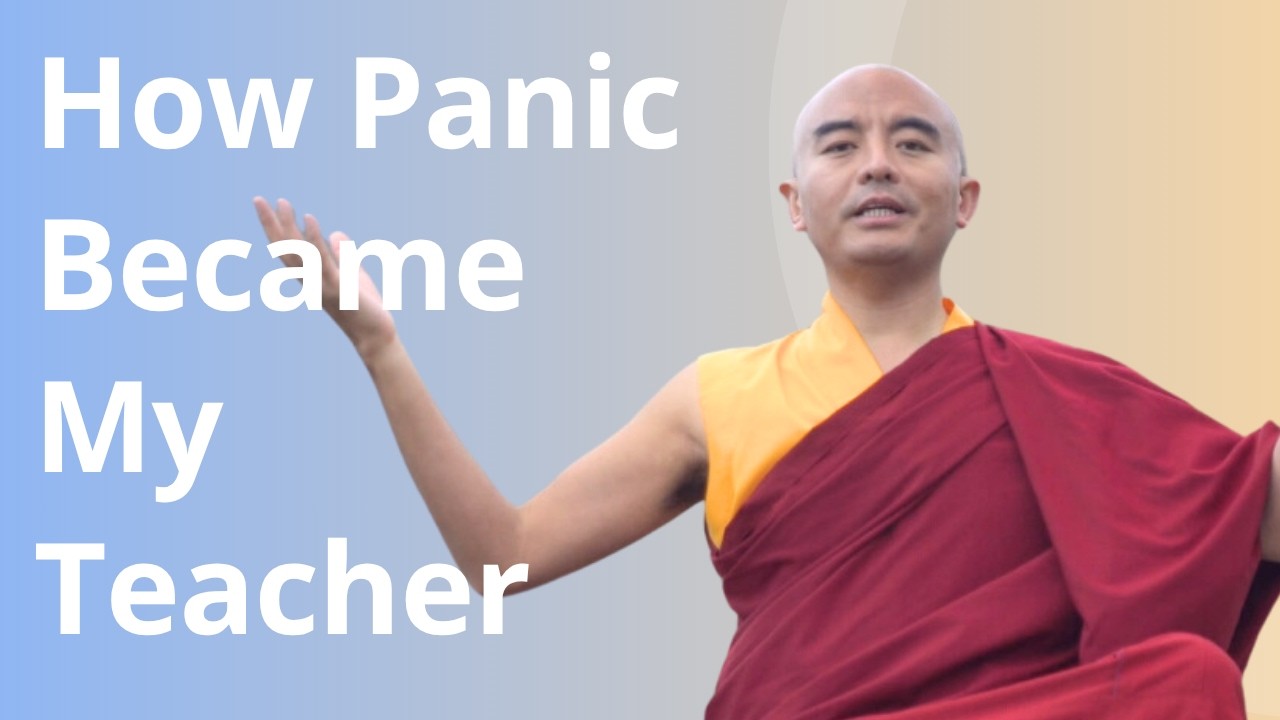
Why Panic Can Become a Meditation Teacher, Not an Enemy
Inspire

Why Panic Can Become a Meditation Teacher, Not an Enemy

Mingyur Rinpoche recalls how fighting panic only made it grow, and how welcoming it turned panic into a support for meditation and awareness…

1 min read
Brain on Meditation: Neuroscience of Inner Transformation
Inspire

Brain on Meditation: Neuroscience of Inner Transformation

A Tibetan Buddhist teacher's groundbreaking brain scans reveal meditation physically rewires neural pathways, offering scientific proof we c…

1 min read
Alert Inner Stillness: A Guided Path to Awake Presence
Inspire

Alert Inner Stillness: A Guided Path to Awake Presence

Learn how to access a deeper awareness beneath thought through "smile yoga" and mindful presence, anchoring yourself in alert stillness.…

1 min read
Spiritual Imagination as a Force for Healing and Change
Inspire

Spiritual Imagination as a Force for Healing and Change

Imagination rooted in presence can heal judgment and reshape relationships; fear narrows it. Tara's teaching, its stories and its practices,…

1 min read

Sigue explorando

Continúa tu camino

Más sabiduría y encuentros de todo el directorio de BrightStar.

Más artículos

Recorre la biblioteca completa de enseñanzas, entrevistas y guías.

Ver todos los artículos →

Maestros y artistas

Explora los linajes, músicos y guías del mundo consciente.

Explorar artistas →

Encuentra un evento

Kirtan, retiros, baños de sonido, breathwork, festivales — muy pronto.

Ver eventos →