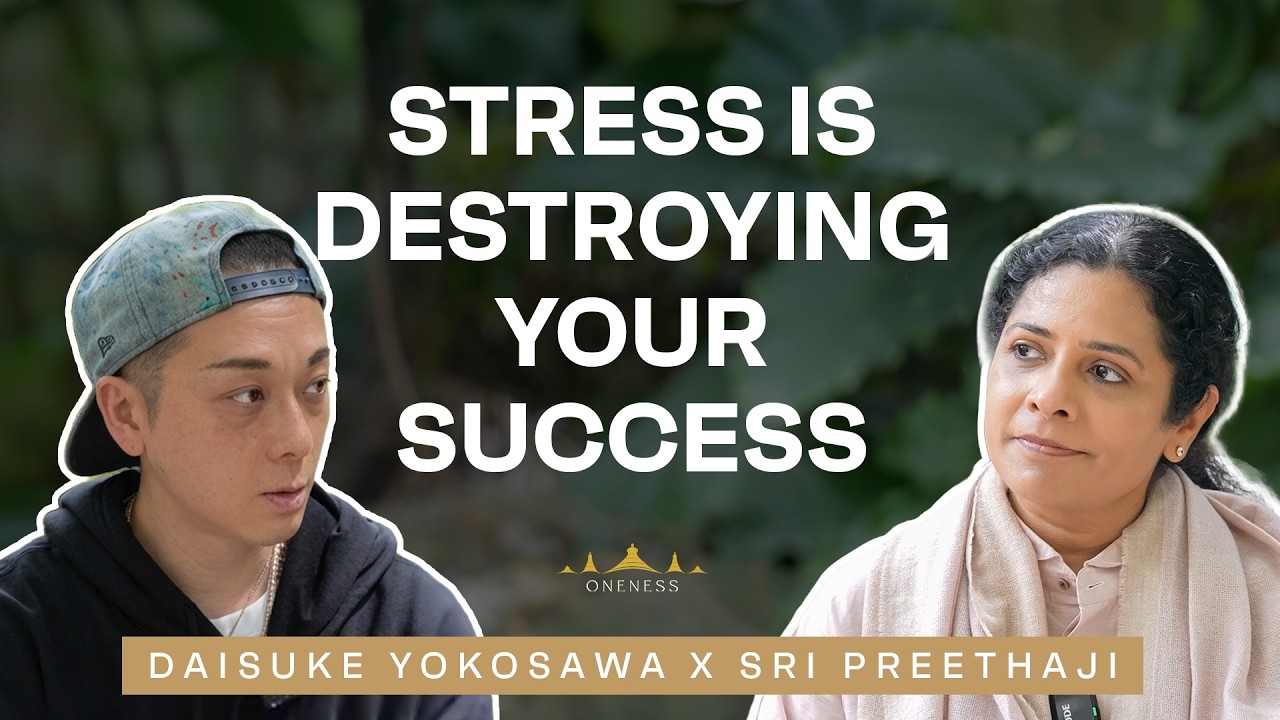
Inferiority is not an inherent condition but a psychological state born from constant social comparison. By identifying and nurturing your unique passion, mastering it with genuine love rather than ego-driven ambition, and cultivating compassion toward yourself and others, you can dismantle the belief that you are less-than. This teaching suggests that specialness is not a rare quality reserved for the few, but rather an intrinsic aspect of every human being that remains hidden only when obscured by comparison consciousness.
Why Does Comparison Create Inferiority?
The root of inferiority lies not in objective lack, but in the habit of measuring yourself against others. In contemporary life, comparison is nearly inescapable—social media amplifies curated versions of others' accomplishments, educational systems rank students, and workplaces pit colleagues against one another. When you internalize these frameworks as truth, you begin to believe that your worth is relative, determined by how you stack up against your peers.
However, the teaching presented here suggests a fundamental reorientation: inferiority is a mental construct, not a fact about reality. Each person possesses inherent specialness—not in the sense of being superior, but in the sense of being uniquely constituted, with particular gifts, sensibilities, and potential. The problem is not that you lack specialness; the problem is that you have been taught to measure your specialness using another person's ruler. When you compare your capacity for mathematics against someone else's musical gift, or your athletic ability against someone's intellectual prowess, the comparison itself becomes the disease. You are not measuring like with like; you are measuring your worth using someone else's metrics.
How Does Finding Your Passion Dissolve Inferiority?
Rather than fighting inferiority head-on, this teaching points toward a more elegant solution: find your passion. Passion, in this context, is not fleeting emotion or whimsical interest. It is the thing that calls to you, that aligns with your nature, that feels like home when you engage with it. Your passion may be entirely different from your neighbor's, and that difference is not a flaw—it is the signature of your particular being.
When you are engaged with your true passion, comparison becomes irrelevant because you are no longer asking "Am I as good as them?" but rather "Am I becoming more skilled at what I love?" The shift is from external benchmarking to internal development. A dedicated musician does not feel inferior to a brilliant accountant, because they are not competing in the same arena. Each is following their own thread.
This requires self-inquiry: What draws you? What activity makes you lose track of time? What are you doing when you feel most alive? These questions bypass the rational mind's tendency to evaluate yourself through others' eyes and instead reconnect you with your own inner compass. Your passion is not determined by prestige, salary, or how impressed others might be. It emerges from your own constitution.
What Does It Mean to Master Your Passion with Love?
Finding your passion is only the beginning. The teaching emphasizes mastery "with love"—a phrase that distinguishes this path from perfectionism or ambition driven by ego. Mastery driven by the need to be superior, to prove yourself, or to escape inferiority will inevitably reproduce the problem you are trying to solve. You will simply replace one comparison-based framework with another.
Mastery with love is different. It is the commitment to continuously deepen your skill and understanding because you respect the craft itself, because you honor the work, and because you wish to express your fullest capacity within that domain. A potter who masters their craft with love is not trying to prove they are the best potter; they are in conversation with clay, with form, with the generations of potters who came before. They are allowing the work to refine them.
This distinction matters psychologically. When you are motivated by love for what you do, failure and setback become part of the learning process rather than evidence of your inferiority. You can take feedback without defending your self-image. You can see another's mastery as inspiration rather than as a threat. The quality of your inner experience fundamentally changes.
How Does Compassion Complete the Break from Inferiority?
The final piece of this teaching is awakening to compassion. This is not merely being nice to others, though kindness may follow. Compassion, in the deepest sense, is recognizing the shared human condition. Everyone struggles. Everyone has doubts. Everyone feels inadequate in some domain. Everyone is doing their best with the conditioning and capacity they have.
When you awaken to compassion, you see that the person you have been comparing yourself to unfavorably is also, in their own way, caught in comparison, struggling with their own sense of inadequacy. The executive you envied is anxious about their performance. The athlete you felt inferior to carries their own doubts. The artist whose work you admired is wondering if they have any real talent. Comparison creates suffering across all levels of accomplishment.
Compassion dissolves the isolation of inferiority. Instead of seeing others as measuring sticks against which you fall short, you see them as fellow travelers in the human condition. This reframing is not sentimental; it is liberating. When you extend compassion toward yourself—recognizing that your sense of inferiority is not unique to you, is not a character flaw, but a universal human struggle that arises from the structure of comparison consciousness—something shifts. Self-judgment softens. You can hold your limitations with kindness rather than with contempt.
What Is the Relationship Between Specialness and Ordinariness?
A subtle but important dimension of this teaching is that your inherent specialness coexists with a kind of ordinariness. You are not special because you are exceptional at something. You are special because you are a unique expression of consciousness, with your own gifts and limitations, your own particular way of being in the world. Millions of others are equally special in exactly the same way—which may sound paradoxical, but points to a reality beyond the logic of comparison.
This dissolves the zero-sum thinking that underlies inferiority: the belief that if others are special, there is less specialness for you, and vice versa. It is the inverse of ego's logic. Your specialness does not diminish another's, and another's does not diminish yours. There is room for infinite specialness because specialness is not a limited resource.
Where to Go From Here
To break free from inferiority, begin with honest self-inquiry: What is my true passion? What do I love, independent of whether it impresses anyone? Once you identify it, commit to mastery—not perfection, not superiority, but the patient, loving deepening of your skill and understanding. Then, practice compassion: toward your own struggles, toward your own doubts, and toward the unacknowledged struggles of those you have been comparing yourself against. Notice when comparison arises, and gently redirect your attention back to your own work, your own growth, your own becoming. In this way, inferiority—which is fundamentally a comparison-based state—naturally dissolves.