
Where to Start with Shiva Rea: A Beginner's Guide
Begin with Her Audio Programs
Your entry point should be Shiva Rea's guided audio series distributed through Sounds True. These programs are specifically designed for home practice and don't require you to mirror complex poses from a screen. Instead, you follow verbal cues that teach you to feel movement from the inside out. Her audio work makes the rhythm-driven, breath-synchronized approach accessible without overwhelming you with visual information. You can close your eyes, move at your own pace, and begin understanding what "embodying the flow" actually means in your own body.
The Next Steps Forward
After establishing a foundation with the audio programs, move to her instructional video series. These show you what the fluid transitions look like while building on the internal awareness you've developed. You'll see how breath, bandha (energy locks), and continuous movement integrate into sequences that feel less like exercise and more like meditation in motion.
Then explore her workshops or teaching featured in Yoga Journal. These articles and features contextualize her method within the broader Krishnamacharya lineage while explaining the philosophical framework—particularly the Tantric concept of Shakti as embodied creative energy. Understanding the "why" behind her approach deepens what you've already experienced physically.
If you're serious about the methodology, investigate Samudra Global School for Living Yoga's introductory offerings. Even if you're not pursuing teacher training, these programs explain vinyasa krama (sequential flow methodology) in depth and connect practice to natural rhythms—circadian cycles, lunar phases, seasonal shifts.
What Your First Session Will Feel Like
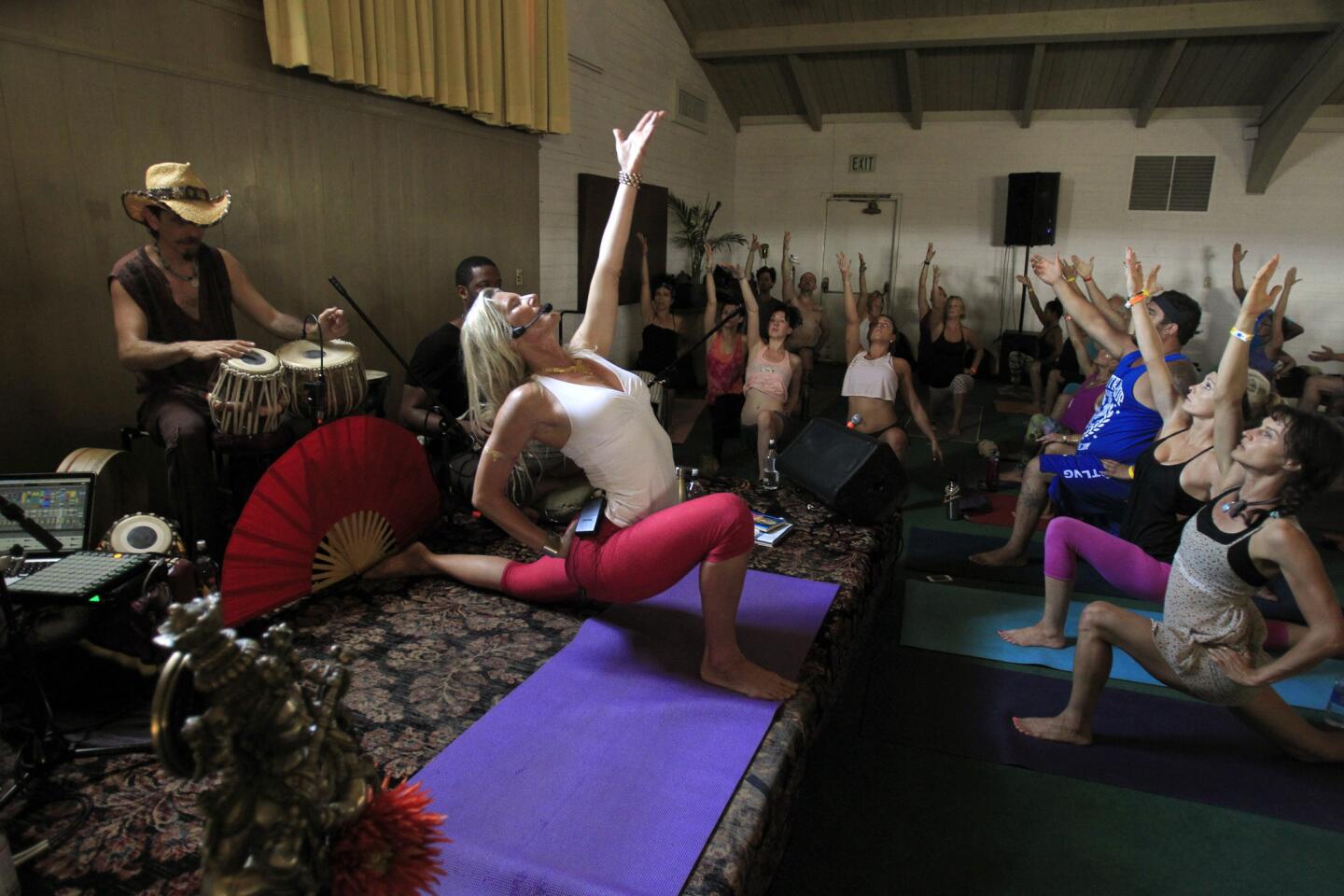
Expect something stranger and slower than typical Western yoga classes. Rea's approach won't feel athletic or alignment-obsessed. You won't hold poses for long counts or push toward Instagram-worthy shapes. Instead, you'll move in wave-like patterns that emphasize transitions over destinations. The cueing focuses on pranayama (breath work), internal sensation, and finding your own expression within suggested forms.
The rhythm might feel unfamiliar—almost dance-like—with an emphasis on circular, spiraling movements rather than linear progressions. Don't be surprised if you feel more has happened energetically than physically, especially compared to fitness-oriented vinyasa.
How Beginners Get It Wrong
The biggest mistake is approaching Shiva Rea looking for a workout. Her teaching isn't about calorie burn or flexibility benchmarks. If you're comparing yourself to others or fixating on "correct" alignment, you're missing the point entirely.
Another misunderstanding: assuming this is beginner yoga because it's gentle and accessible. The somatic principles and subtle energy work (mudra, bandha) are sophisticated. What looks simple on the surface contains layers of refinement that reveal themselves over time.
Finally, beginners sometimes expect set sequences they can memorize. Rea teaches principles and frameworks for improvisation within structure—what vinyasa krama actually means. Each practice session might look different, which is intentional.
When This Work Hits Hardest
Shiva Rea's approach tends to resonate most during life transitions when you're seeking to reconnect with your body as a source of wisdom rather than a project to fix. It lands particularly hard for people recovering from injuries who need to rebuild trust in movement, or those burning out on achievement-oriented fitness culture who crave something more sustainable and nourishing.
Women navigating hormonal transitions—postpartum, perimenopausal—often find the lunar and circadian rhythm integration profound. Anyone questioning the purely physical aspects of yoga and hungry for the philosophical depth without religious prescription finds solid ground here.
It also speaks to experienced practitioners tired of rigid systems who want permission to move intuitively while staying rooted in traditional methodology.
Your One-Week Starter Plan
Days 1-3: Practice 20 minutes daily with her audio program. Focus only on breathing and following verbal cues. Don't worry about doing it "right."
Day 4: Rest, but read about Shakti and vinyasa krama to understand the philosophy animating the practice.
Days 5-6: Return to audio practice, now noticing rhythm and transitions between movements.
Day 7: Try her video instruction to see the forms, then immediately practice with eyes closed using what you've learned.
Commit to sensation over appearance, breath over shape, and rhythm over perfection. That's where Shiva Rea's teaching actually lives.