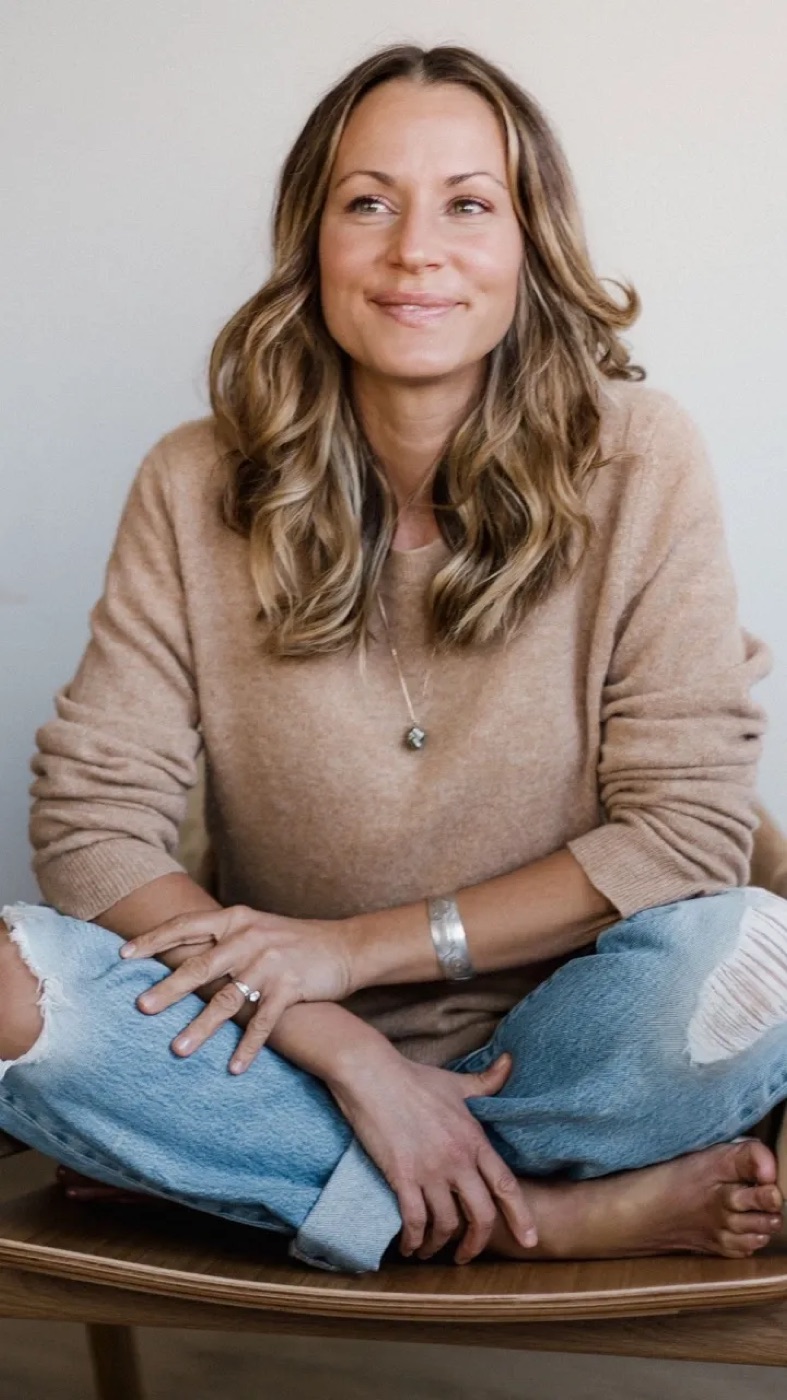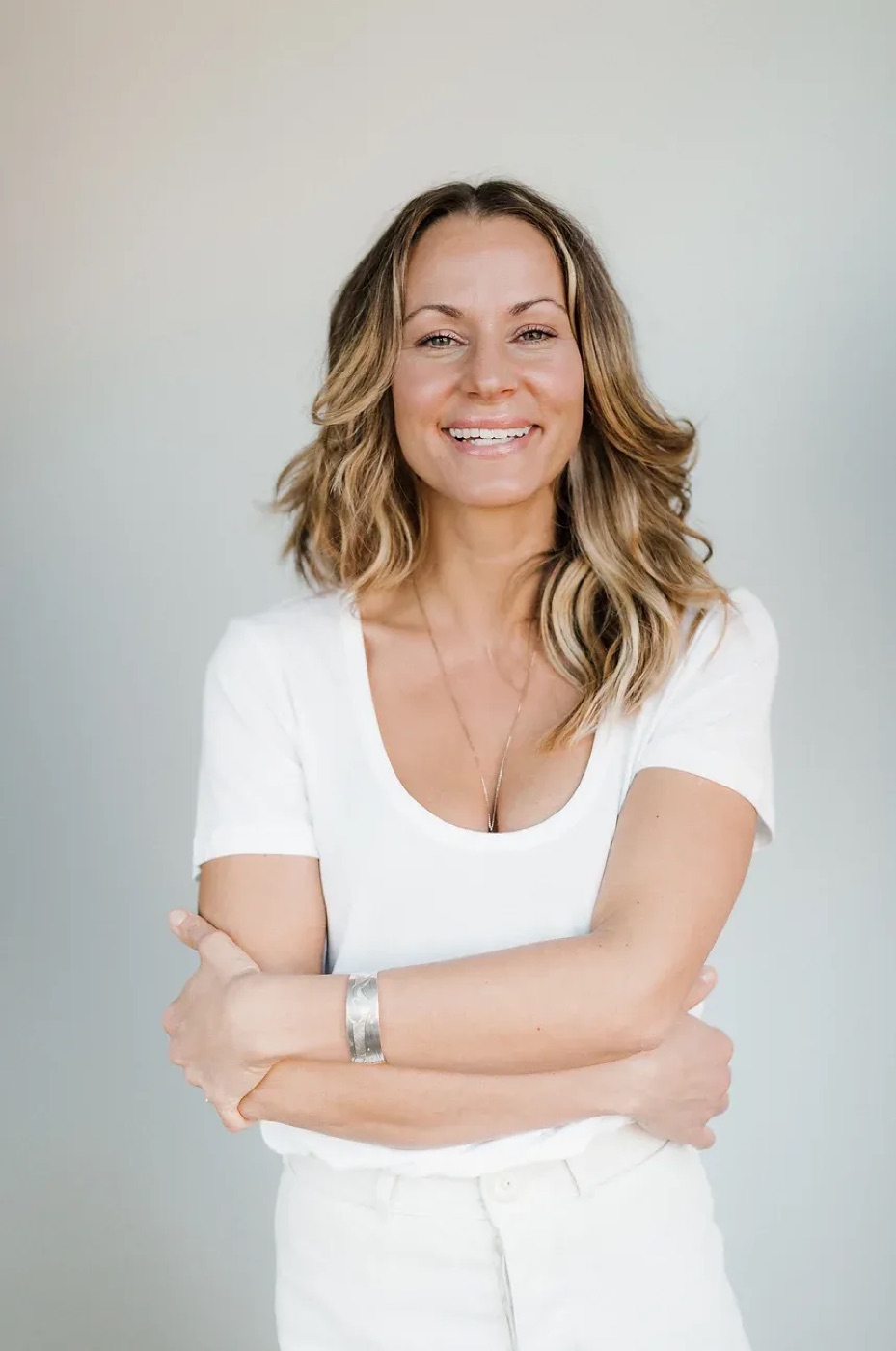

Sarah Blondin describes herself as a storyteller, author, and meditation guide. Her work ruminates on the complexities and nuances of life and the human heart. Her teaching has reached more than 200,000 students through two courses, and about 66,000 people read her newsletter. She has done this largely outside mainstream wellness media, through a voice that is steady, conversational, and unhurried.
Her work sits across three roles: meditation teacher, author, and musician in the broad sense of a recorded meditation album. It also touches guided meditation, mindfulness, spiritual teaching, and workshops. What ties these together is a single preoccupation with how a person stays open-hearted when life is difficult.
Public information about Sarah Blondin's early life is thin. Her hometown, family background, and formative years are not documented, and it would be a disservice to guess. What she has shared is an orientation rather than a biography. She writes that since childhood she has been able to see stories folded inside people, and that she uses her pen to draw them out.
That sentence works as the closest thing to an origin story in the record. It also explains her method. Her premise is that what is hidden in her is hidden in others too, and that sharing her own tangled knots can help loosen someone else's. She offers no polished authority from a mountaintop. She offers a person working through the same material and willing to say so aloud.
There is no public record of a named teacher, lineage, or formal training behind her work, and she does not claim one. Her authority rests on lived experience, on the resonance of what she teaches, and on the number of people who return to it. For some students that is a point in her favor, since it keeps the teaching free of institutional or religious framing. Others who want a rooted tradition may look elsewhere. Both responses are reasonable.
Her teaching centers on the heart. She says she loves to teach people how to regulate the body and the heart and to remain joyful whatever happens. She guides them through what she calls the turbulent waters of life toward the heart that sustains them.
Two things make this distinctive. First, she does not frame the heart as a mere metaphor. Her emphasis on regulation points to the body and emotional life as the places where steadiness is built. Second, she treats storytelling as part of the practice. Instead of handing students a technique and leaving them to it, she invites them to examine the narratives they carry, the ones that shape how they react, judge themselves, and move through hard stretches. In this view, difficulty is not an interruption of spiritual life. It is the material of it.
This is not a teaching of escape. Her work asks for honesty and emotional presence, which makes it a poor fit for anyone hoping to feel nothing or to transcend the body. It is also not a highly technical system. Those who want strict progressions or devotional structure will find her approach informal and personal.
Courses. This Deepest Self and Coming Home to Yourself are her best-known courses, and together they have been studied by more than 200,000 students worldwide. They are the deepest entry into her teaching, built to be returned to rather than consumed once.
Heart-Minded. Her book, and her only published one to date, is the most formal written statement of her philosophy. For readers who would rather see her ideas on the page than hear them spoken, it is the natural starting point.
Meditations for Living an Awakened Life. This meditation album, released in 2021, runs seven tracks and is available on streaming platforms. It offers guided meditations as a stand-alone practice. The title's emphasis on living, rather than retreating, fits the rest of her work.
Live Awake. Her podcast takes a particular shape. Each episode reflects on a hard stretch of life's landscape and ends with a short guided meditation. It is for people devoted to their hearts and to living awake to what blooms in front of them. Because the episodes are brief, it is also the easiest way to sample her voice and sensibility before committing to anything larger.
The newsletter. She shares stories and meditations through a newsletter with some 66,000 subscribers. That readership suggests people come back to her words regularly, not just once.
Her work today is carried by the podcast, the newsletter, the courses, and the book. The public record shows no album after the 2021 release and no documented retreats or live events, so the work appears to live mostly in recorded and written form: something to fold into a commute, a lunch break, or an evening, rather than something that requires leaving ordinary life. Anyone interested in in-person offerings would need to check her website, sarahblondin.com, which is the hub for her courses, writing, and announcements.
The consistency of that format is itself a statement. The podcast pairs reflection with a brief practice, and the newsletter pairs story with meditation. Both reflect a belief that change comes less from one dramatic breakthrough than from the repeated, small act of turning back toward the heart.
Sarah Blondin reaches people who are often wary of the wellness world: those who want depth without spectacle, and emotional honesty without a promise of transformation. Her audience tends to be psychologically minded and comfortable with the language of self-inquiry and regulation, and it includes people newer to meditation as well as those tired of spiritual culture. No prior practice is required to follow her, though a willingness to look at one's own stories helps.
Her numbers tell a quiet story. Her Spotify following is modest, at roughly 4,800 followers, yet her courses have reached hundreds of thousands of students and her newsletter has tens of thousands of subscribers. That gap suggests an audience built by recommendation and repeated return rather than by algorithmic reach.
Her significance lies in a particular act of permission. She teaches that it is acceptable to be human, to struggle, and to carry knots that do not untie quickly, and that sharing them honestly can help someone else. In a field that often sells resolution, that restraint is her signature. It makes her work less a program to complete than a voice to keep company with.