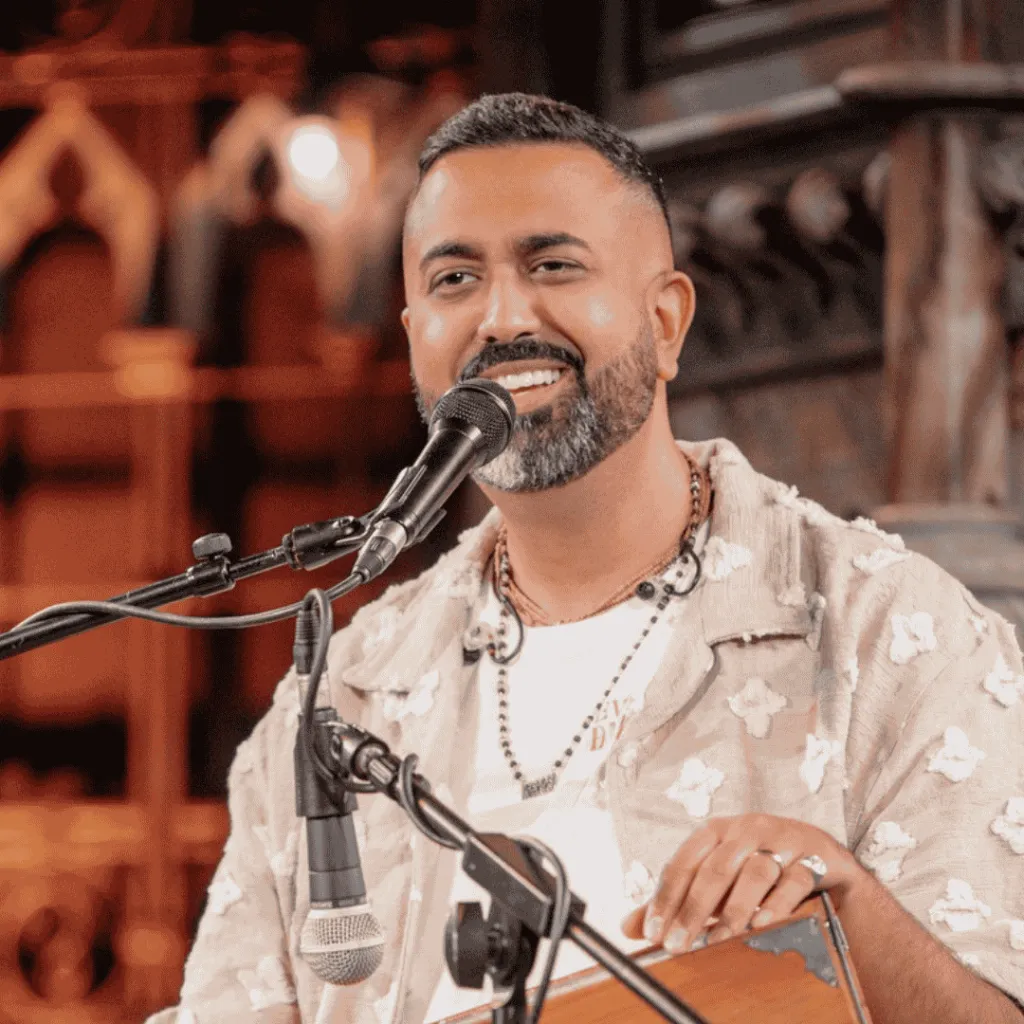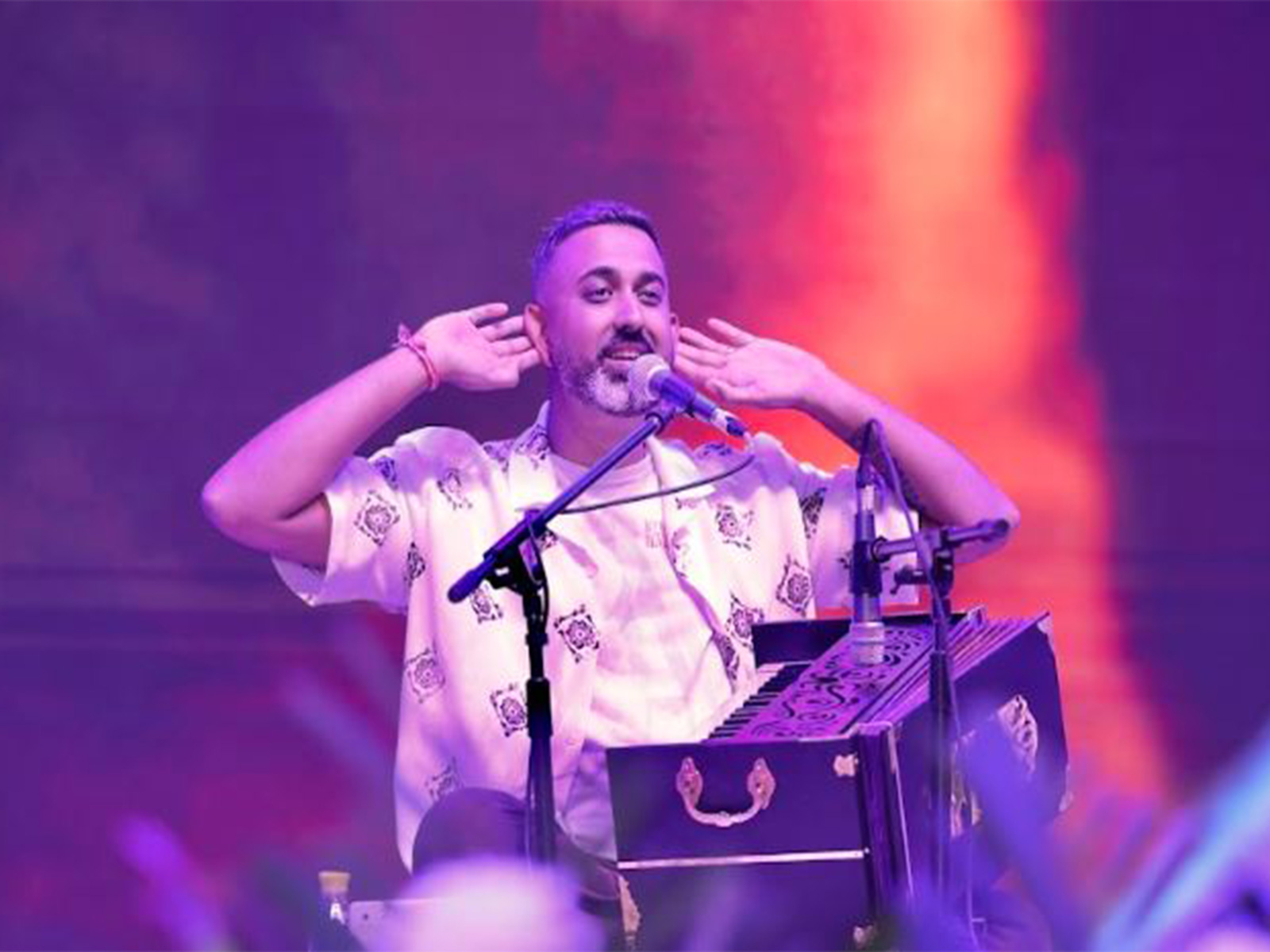

"Sita Rama Jaya" arrived on 5 February 2026 as a one-track single, and it belongs to the newest phase of Radhika Das's catalogue. By then he had built a body of work that leans heavily on live recording: five Heartland volumes running from 2022 to 2025, Midnight 23/24 (Live), and the studio album Mantra from June 2025. The 2026 singles, "Sita Rama Jaya," "Hara Mahadeva" and "Lightfall," extend that line in a smaller format.
Because it is a single, this is not a full album statement. It is one devotional offering, and it is best heard as such. It also reflects what his bio describes: sixteen years of bhakti practice, carried into recordings, live nights and teaching alike.
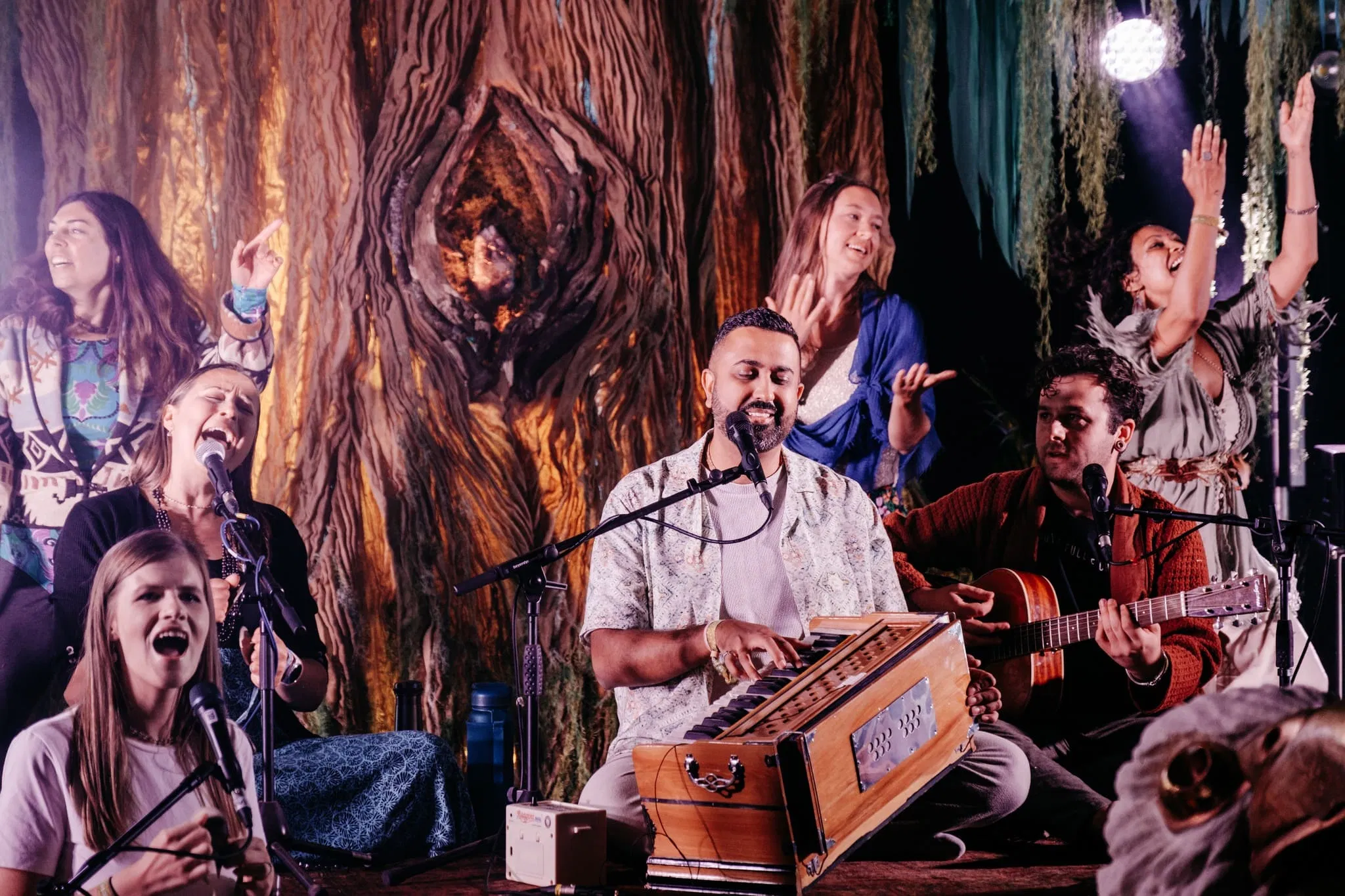
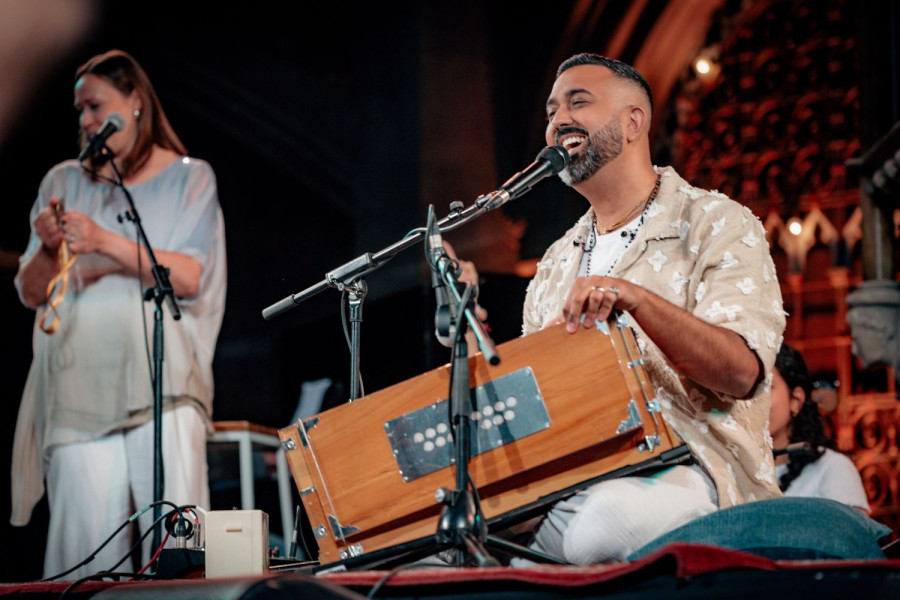
The public materials do not name the instruments on this recording, so I will not pretend to list them. What can be said is what the work generally sounds like: sacred names sung in repetition over a steady pulse, with a lead voice carrying the melody and, in the live setting, a band answering. Kirtan ensembles in this tradition commonly centre on harmonium, hand drums and cymbals, and those are the sounds to expect, though this release should be checked against your own ears.
The voice comes first. Harmonic complexity is not the aim. The pacing is deliberate, and a mantra may run for minutes because the repetition is the point. The mood is one of restraint rather than spectacle: warm, devotional and steady. Expect a melody that reveals itself gradually as the repetition settles, rather than a verse-chorus arc.
There is one track here, and it carries the whole release: "Sita Rama Jaya." The title joins the names of Sita and Rama with jaya, a word of victory or praise, so the piece reads as an invocation and a salutation at once. Rama and Sita sit at the heart of a great deal of bhakti singing, and the name-as-melody approach suits that.
What makes it land is the same thing that makes the best of his work land: the song is sacred names set to melody, not spiritual atmosphere layered over a pop template. The lead voice carries the mantra rather than decorating it. If you stay with the repetition past the first minute or two, the track stops being something you listen to and becomes something you can sing along with.
For context on the range of his naming practice, other titles in the catalogue draw on Govinda, Shiva and Narasimha, so this single is one thread in a wider devotional tapestry.
This is bhakti: the devotional path within Hinduism that centres love of a personal deity expressed through singing, chanting and remembrance. The form is kirtan, call-and-response chanting, and the method is mantra meditation. His teaching draws on the Bhagavad Gita, and his retreats include pilgrimage to Vrindavan.
It is worth being plain about what is not documented. The public materials name no specific sampradaya or guru lineage, so none should be assigned. What is documented is the practice itself: sixteen years of it, a band-led live format, and a stated belief that mantras are gifts of love that carry peace and presence. This is devotional song, not ambient music, and it asks to be taken on those terms.
This single suits someone already drawn to bhakti, kirtan or slow sacred song, especially a listener who wants to join in rather than observe. It will land well for someone who has been to a mantra night, or is curious about one, and wants a short piece to carry the feeling between events. It also suits a quiet, restless stretch of life, when a single repeated name gives the mind something to return to.
It is not for everyone. Anyone wanting high-BPM electronics, cinematic production or workout background will find it slow. Listeners seeking a purely secular or aesthetic experience may find the Sanskrit names too devotional, because this is an offering rather than neutral sound.
Give it your full attention at least once, ideally in the evening, with headphones or a quiet room and no screen competing for you. Let the first minute feel slow. Then sing the response, even under your breath. If you practise mantra meditation, treat it as a seated sit: play it once through, then sit with the name afterwards.
For a wider view, pair it with Mantra, the nine-track studio album, and with Heartland 5 (Live), where the room's answer to the lead voice is audible. That live context shows what this single is built to do.