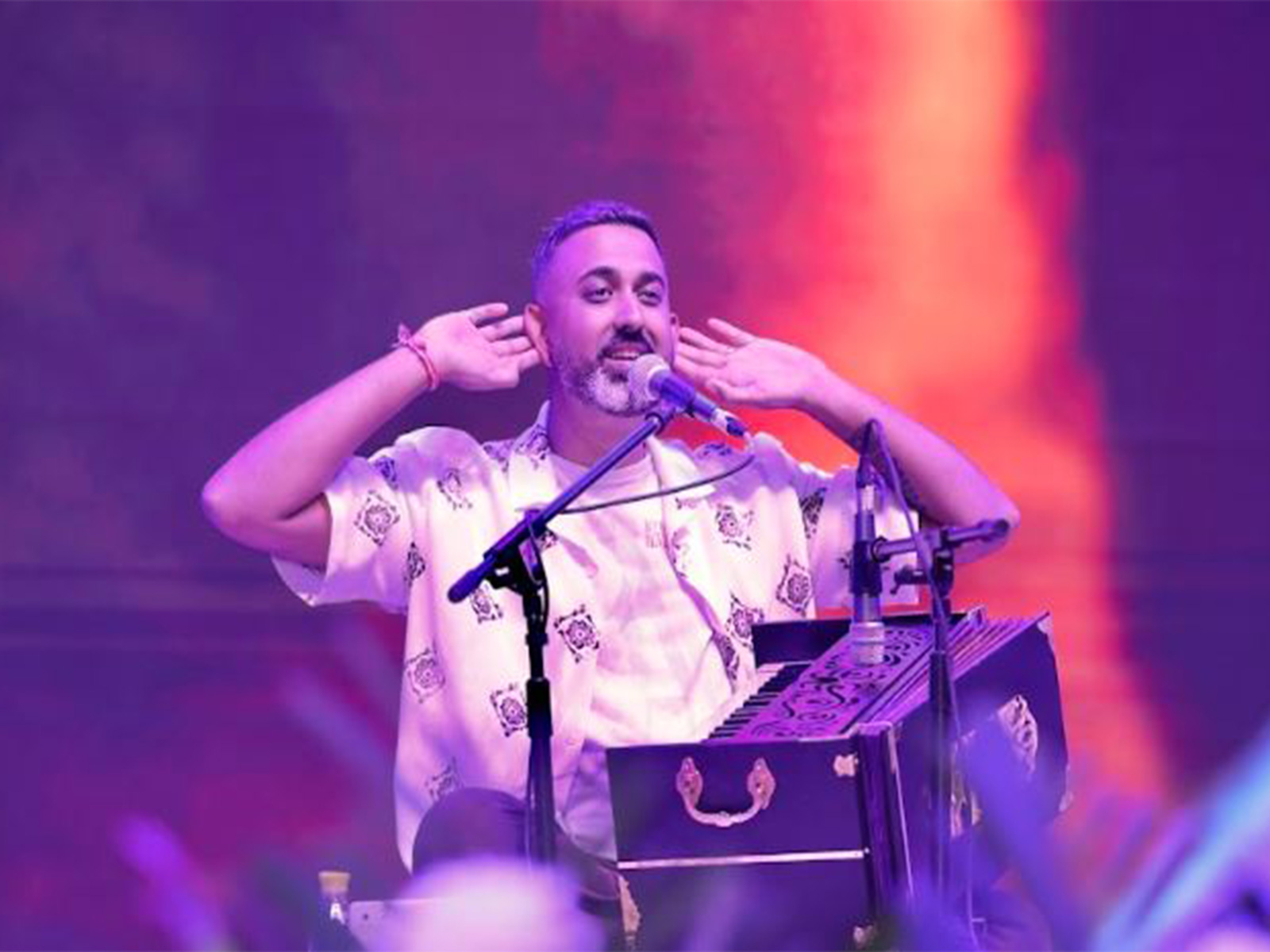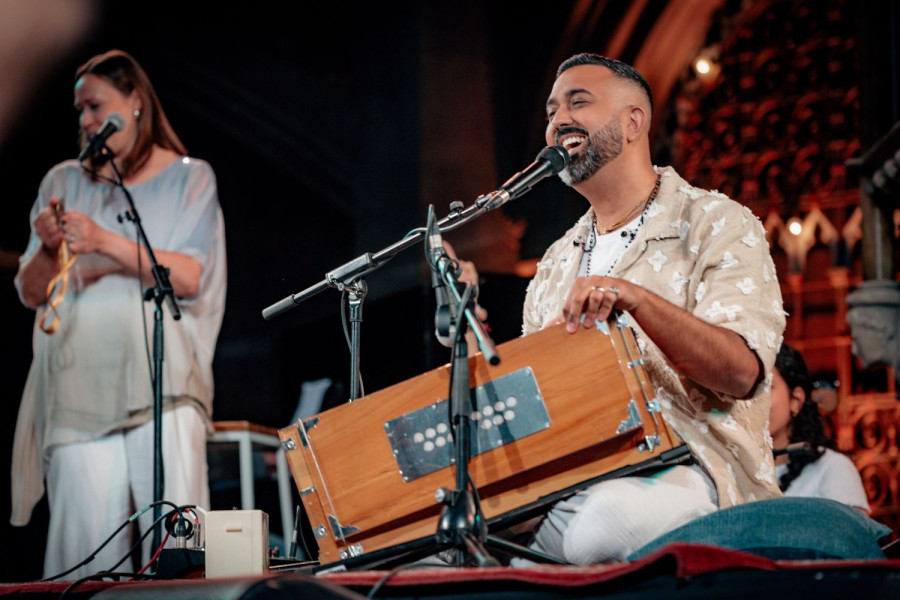
Shri Rama arrives in 2025 as a crystalline moment in Radhika Das's unfolding arc. Over more than a decade, he has grown from a London teenager stirred by monastic chanting into one of kirtan's most vital contemporary voices—a practitioner whose gatherings now draw thousands across London, New York, and Mumbai, cutting across faith and background. His million-strong following and best-selling book on remembering the heart through sacred sound have established him as a guide, not merely a performer. This single doesn't represent a dramatic reinvention; instead, it feels like a distillation. After years of building community in real rooms, leading chant circles, and teaching the philosophy of Bhakti Yoga in accessible language, Radhika Das offers here a focused invocation—three tracks centered on the figure of Rama, the divine beloved at the heart of so much Hindu devotional practice. It is a work of consolidation and deepening: what happens when a teacher pauses to release something for solitary listening, for the headphone hour, for the evening when you are alone with sacred sound.
The production aesthetic of Shri Rama inhabits a subtle middle ground. This is not a stripped minimalist recording—there is warmth, texture, and instrumental accompaniment. Yet it is equally distant from the lush, orchestrated devotional pop that sometimes dominates contemporary spiritual music. Instead, Radhika Das and his collaborators have chosen clarity. His voice sits luminous and unadorned in the mix, supported by what appears to be traditional instrumentation—harmonium, perhaps strings, gentle percussion—deployed with restraint. The pacing is unhurried; these are songs that breathe, that allow silence between phrases, that trust the listener's attention.
The mood is simultaneously intimate and vast. There is an inwardness to the delivery—a voice singing not from a stage but across the threshold of your own consciousness. Yet the mantra itself, the name Rama, expands into something boundless with each repetition. The sonic world feels both devotional and meditative; you are invited not to be moved emotionally (though you may be) but to be held—to dwell, to remember, to turn your attention inward.
With three tracks total, each carries weight. While I cannot speak to specific arrangements without hearing them myself, the album's architecture is clear: Shri Rama presents itself as a unified meditation on the name and form of Rama, the seventh avatar of Vishnu, the ideal of duty, righteousness, and divine compassion in Hindu and broader devotional tradition.
What matters across these tracks is consistency of intention. Radhika Das's strength as a kirtan leader has always been his ability to make ancient Sanskrit mantras feel urgent and alive—not museum pieces but invitations to presence. On this recording, you can expect that same alchemy: the chanting of a sacred name rendered not as ethnic music or world music tourism, but as a direct call to the heart. Each track likely deepens or refracts the same central prayer—a repetition that builds like layers of light rather than becoming monotonous.
Shri Rama sits squarely within the Bhakti Yoga lineage, one of Hinduism's most ancient and democratic devotional paths. Bhakti emphasizes the loving relationship between the devotee and the divine, expressed through chanting, singing, and devotional practice. Kirtan—the call-and-response chanting of sacred names—is one of Bhakti's primary technologies. What distinguishes contemporary kirtan from, say, a temple recording or a classical Indian classical performance is its embrace of secular spaces and mixed communities. Radhika Das has always been a bridge figure: deeply rooted in traditional practice, yet speaking the language of London and New York, of contemporary spiritual seeking.
This album, in that light, is both a return and an innovation. It returns to the essentials—to the repetition of a holy name, to the simplicity of devotion. But in being released as a recorded single for global streaming in 2025, it acknowledges that sacred sound now travels through wires, through solitude, through the private chambers of listeners who will never sit in one of his live circles. The album trusts that power. It suggests that Rama's name, repeated and held, carries its own medicine even in the isolation of the headphone hour.
Shri Rama will land most naturally with listeners who are already somewhat familiar with mantra or kirtan—who don't experience repetition as boring but as portal, who understand that chanting a name is not superstition but practice, a training of attention. It will speak to those in the midst of spiritual seeking or transition, to people who have tasted silence in meditation and are hungry for its continuation, to anyone drawn to the intersection of ancient practice and contemporary life.
But it will also reach anyone who has ever felt held by a beautiful voice, by the warmth of Sanskrit, by the simple insistence of a prayer repeated until it becomes the breath itself.
Listen alone. Use headphones if possible—this is recorded music designed for intimacy, not congregational singing. Evening is ideal: the hour when the day's noise has settled, when the mind is more inclined toward inwardness. You might light a candle. You might sit in stillness. Or you might listen while walking, while your hands are busy, allowing the chant to work beneath the threshold of thought. This is music for ritual, yes, but also for ordinary Tuesday evenings when you need to remember your own heart. Let it repeat. Let it work.