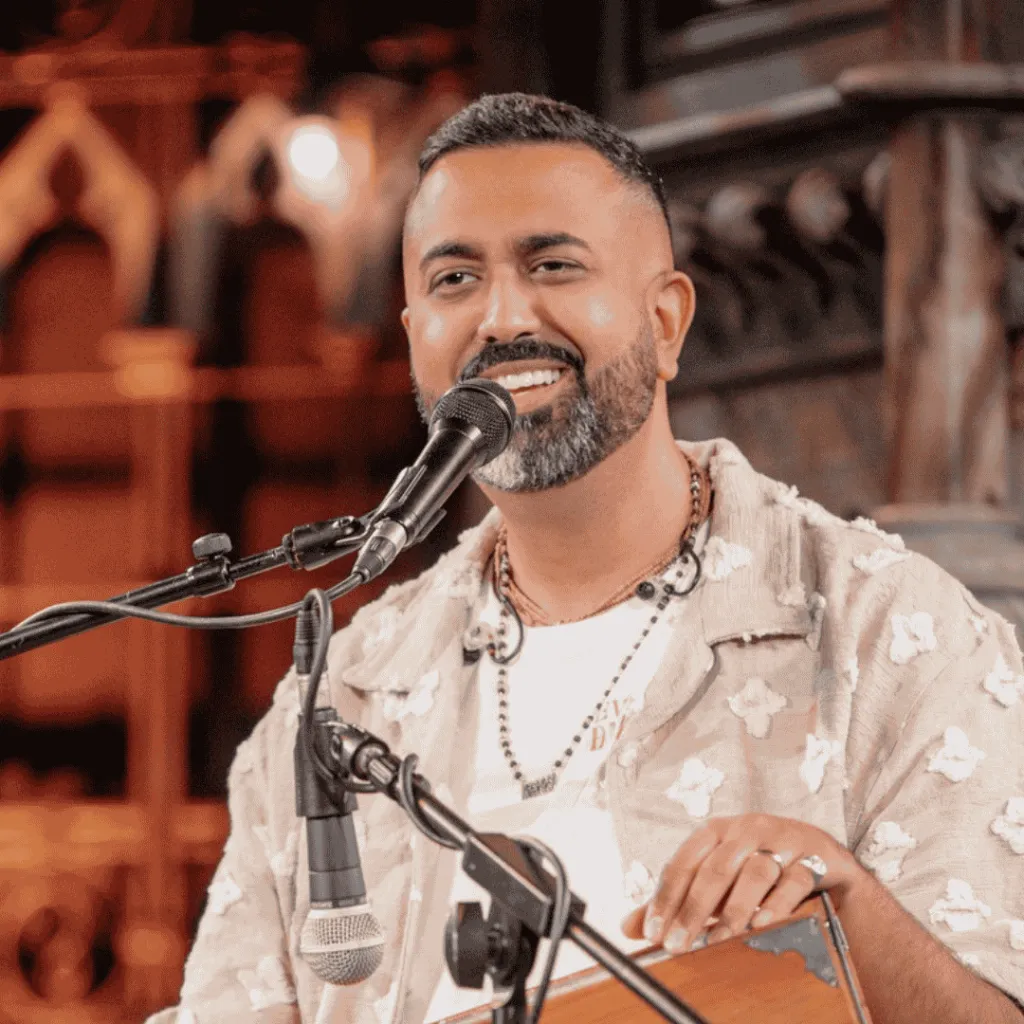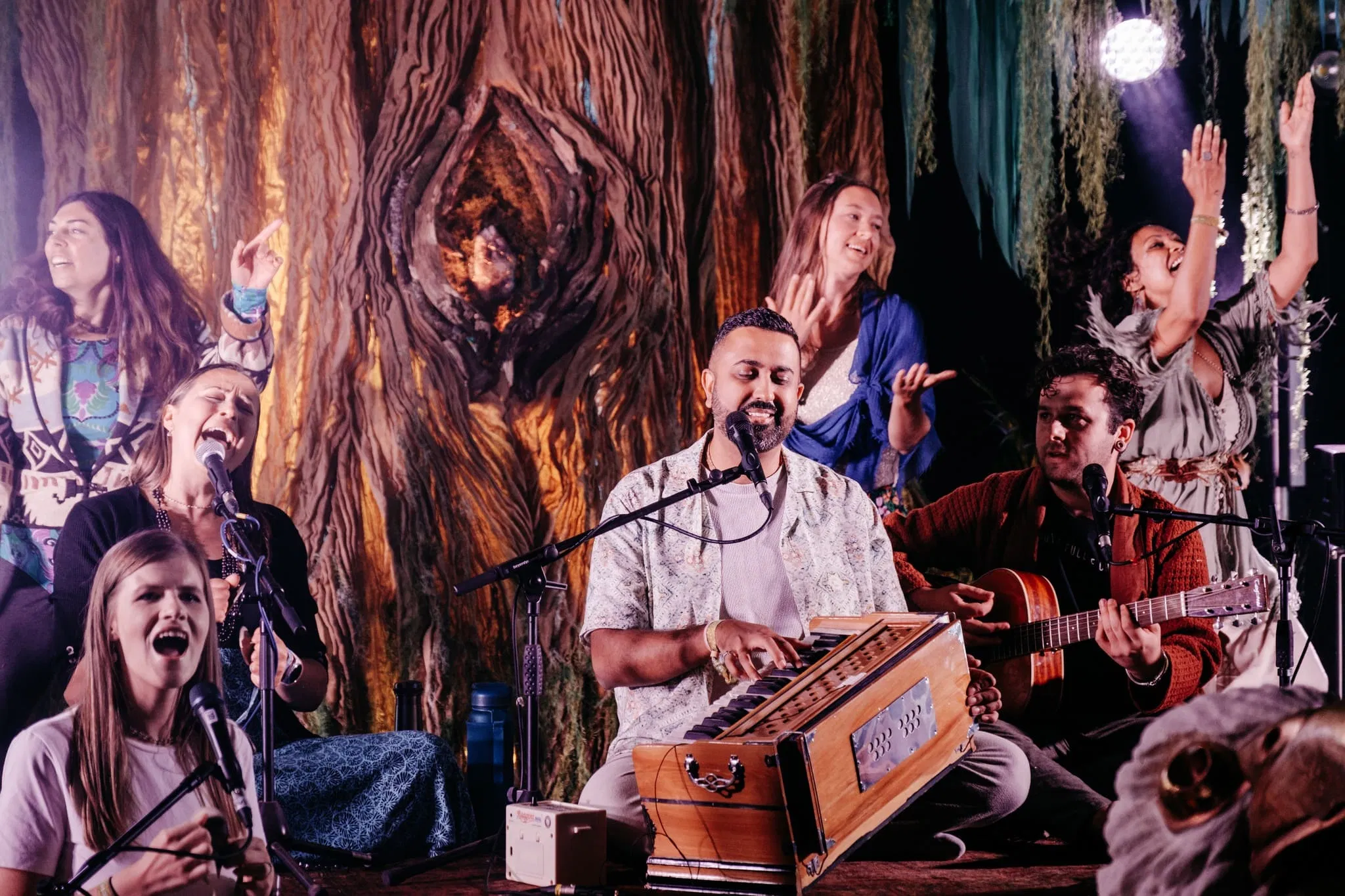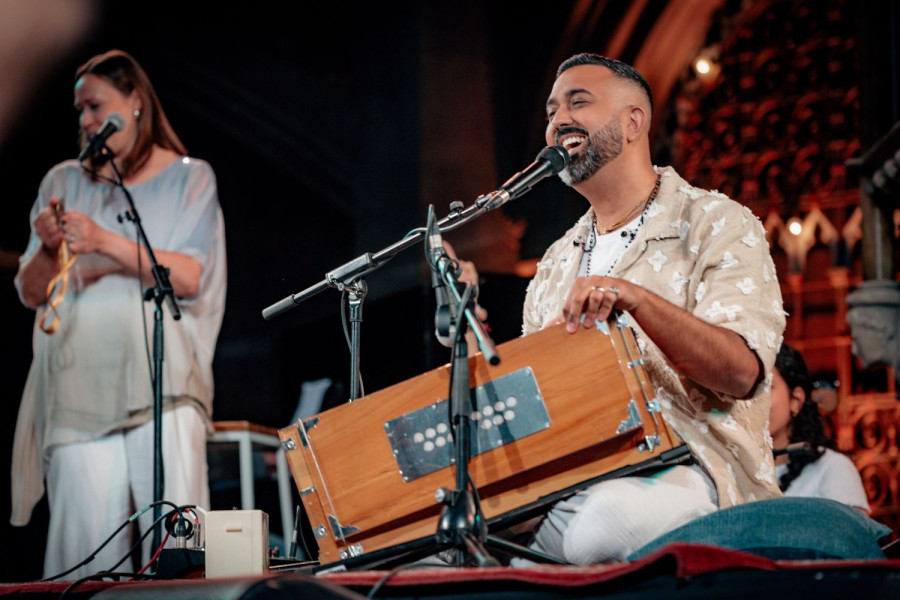
Mantra over Mind arrives in 2023 as a singular statement—literally and spiritually. For Radhika Das, whose practice has grown from quiet London gatherings into movements that span continents, this single-track release marks something different from the expansive, communal kirtan nights he's become known for. Where those experiences thrive in collective breath and synchronized chanting across faith lines, this recording distills something more intimate: the power of a single voice, a single mantra, a single intention held steady against the noise of the world. It's a natural evolution from a decade of deepening practice—the moment when the guru's gift of a name, Radhika Das, fully inhabits the musician who bears it. This is not a debut album; it's a landmark, a pause to listen inward before the next expansion outward.
The production of Mantra over Mind feels deliberately spare, almost monastic. Rather than the layered instrumentation that often accompanies contemporary kirtan—the tabla's rhythmic anchor, the harmonium's warm swell, backing vocals in call-and-response—this work centers Radhika Das's voice as the primary instrument. The sonic landscape is clean, resonant, and unhurried. There's space between syllables. There's breath. The mood is meditative without being drowsy; devotional without sentimentality.
The pacing moves with the logic of mantra itself: repetition that deepens rather than deadens, each iteration a small turn of a key in a lock. There's an evenness to the delivery that suggests neither strain nor effortlessness, but rather a kind of sacred discipline—the voice as a vessel through which something larger moves. The production honors silence as much as sound, suggesting the listener lean in rather than be swept away.
As a single track, Mantra over Mind carries the weight of total focus. The track is exactly what its title promises: mantra—sacred utterance, devotional sound—positioned not as ornament or entertainment, but as a direct technology for transforming consciousness. The mantra is repeated with a precision and purity that recalls the classical kirtan lineage while remaining thoroughly contemporary. There is no narrative arc, no dramatic crescendo, no concession to the ear that seeks novelty. Instead, the listening experience unfolds as deepening—the same phrases becoming increasingly luminous through repetition, the way a prayer whispered a hundred times opens doors that a single utterance could not.
What makes this land is its refusal to dilute. In an era of shortened attention spans and algorithm-driven music consumption, a single mantra, held and offered without embellishment, becomes an act of faith. Faith in the listener. Faith in the mantra itself.
Mantra over Mind situates itself squarely within the bhakti yoga tradition—the path of devotion through sacred sound and the heart. Yet it also speaks to something very modern: the hunger for practices that still the mind in a world designed to fracture it. Where ancient kirtan emerged in temples and forest sanctuaries, this recording arrives through headphones and speakers, in bedrooms and cars and meditation spaces, meeting practitioners where they actually are.
The album's relationship to ambient music is real but secondary. Unlike ambient works that aim for atmospheric texture, Mantra over Mind prioritizes intention over immersion. It's devotional first, meditative second—a distinction that matters. The mantra is not background; it demands and receives your attention.
Mantra over Mind lands hardest for the listener in transition—the person aware that something in them needs changing but unsure how to begin. It reaches those already familiar with mantra practice who crave a resource for their own sadhana (spiritual discipline). It speaks to anyone who has felt the peculiar peace of a single repeated phrase, whether that phrase came through prayer, music, or ritual.
This is not an album for passive listening. It's for the person ready to actively receive. For those in grief, in doubt, in the threshold between one life chapter and another.
Come to Mantra over Mind alone, in the evening or at dawn. Use headphones; let it be intimate. Play it once through without distraction, then again. Consider adding it to a personal practice: mantra repetition, meditation, or simply sitting with tea and an open heart. Let its brevity be its gift—not a song to skip through, but a prayer to return to, again and again, until you discover what each return reveals.