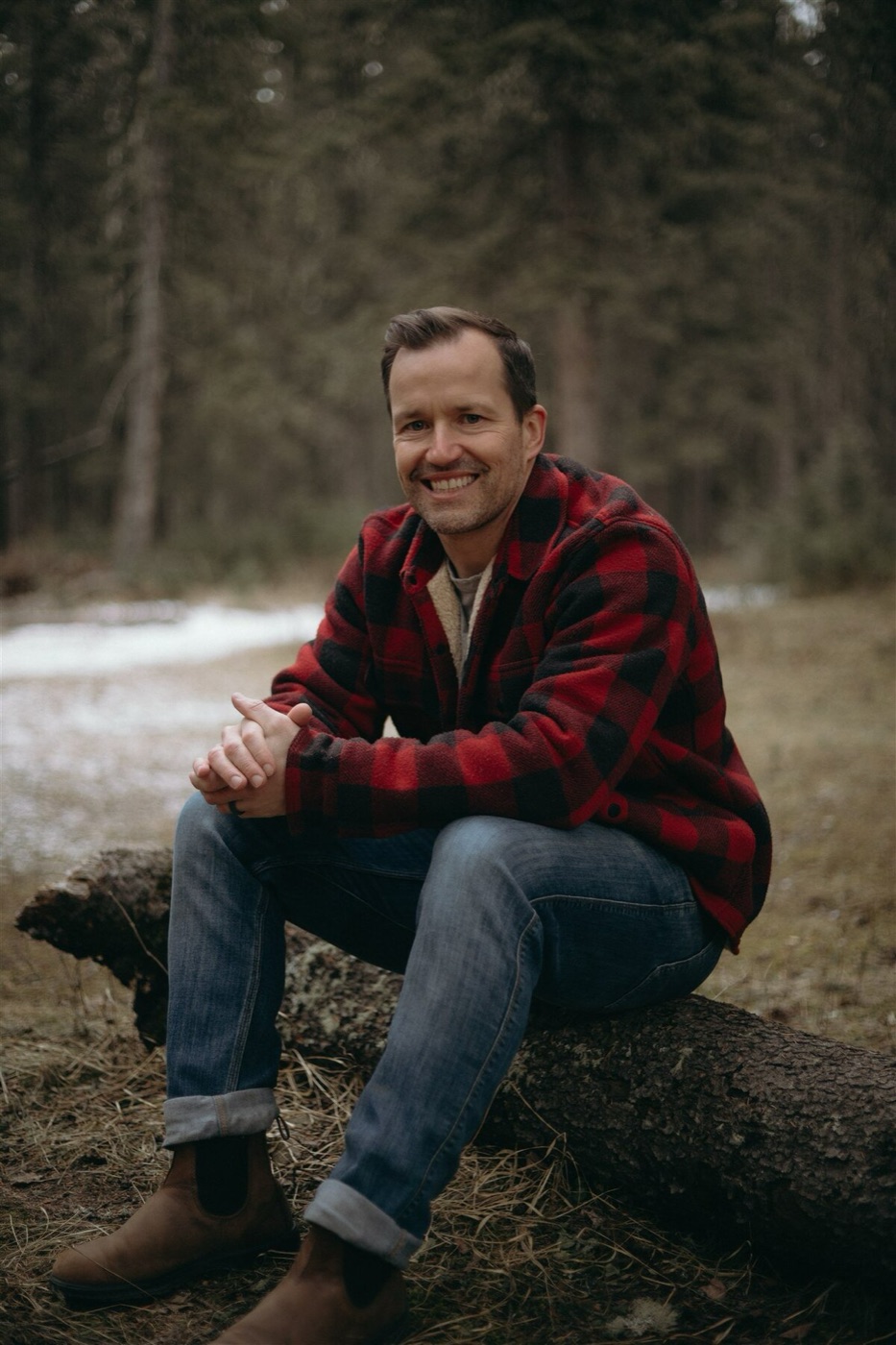

Mark Groves is listed as a meditation teacher, but the label fits loosely. He describes himself as a human connection specialist, keynote speaker, and writer. His work concerns relationships, attention, and what it means to show up fully in one's life, leadership, and everything one is in relationship to. Anyone approaching him expecting a contemplative teacher should adjust expectations. His own sources place him closer to relationship psychology, life coaching, and corporate keynoting than to any meditation tradition.
The format changes with the room. On a keynote stage, which he has occupied for hospitality groups, universities, sales organizations, and wellness brands, the delivery draws on psychology and neuroscience but is carried by humor and directness rather than soaring rhetoric. A typical move is to cite research on attention or bonding and then tie it at once to a specific example from his own life or a client's. The effect is less inspiration than inspection: the audience is invited to look at the logic of its own choices.
In smaller settings, including one-on-one coaching and phone-free gatherings, the work becomes conversational. He is less a broadcaster there and more a questioner. The podcast, with more than 500 episodes, shows the same voice in an unscripted register: conversational, grounded in examples, light on jargon. His long-form writing at Humaning on Substack is quieter and more reflective, and some readers find it more intimate than the audio.
The central claim is that relationships, to oneself, to other people, to work, and to technology, form the architecture of a life, and that learning to handle them well is leverage over nearly everything else. Around that claim cluster several recurring ideas:
- Self-abandonment. People leave themselves in order to stay in relationships, jobs, or identities that are not right. His thesis is that choosing someone or something should never mean abandoning yourself, and that choosing yourself need not mean choosing less.
- Attention as the real currency. Presence is treated as something increasingly rare and consequential, and distraction as a force that erodes intimacy.
- Cost. He talks about what he paid for his own choices: ending an engagement at 27 because the life he was living wasn't his, and the price of speaking with integrity during COVID. He asks listeners to name what they are trading away, and whether the trade is conscious.
- Agency. He insists that people are not passive in their own lives.
- Technology and the self. He tells of becoming "automated" as his following passed a million, reaching for his phone and posting from performance rather than feeling. His diagnosis is that the problem was never the platform but his relationship to it.
His method favors questions over answers. Two he is known for: "What would you do if you chose yourself?" and "Who are you becoming to stay in this thing?" Both place the burden on the listener. They do not offer a technique; they ask for an accounting. Behind them sits his stated interest, across roughly 25 years, in what keeps people from living fully and what moves them from knowing to doing. His fourteen years in pharmaceutical sales, spent studying how people actually change, give that interest a practical edge. He is more concerned with what sticks than with what stirs.
Humor and directness are the main tools. Story is mostly autobiographical and used as evidence, not decoration. Silence and scripture are not part of the picture his sources paint; there is no indication of extended sitting, chanting, or textual commentary. The one text he credits as formative is Viktor Frankl's Man's Search for Meaning, and its emphasis on meaning and choice echoes through his work. The tone throughout is clarity and accountability. He is not trying to make people feel better about current choices, and his own sources describe the work as bracing rather than soothing.
It lands for adults with some experience of relationships, work, or leadership who are willing to examine their own part in their patterns. Corporate leaders, sales teams, students, and wellness professionals make up much of his audience. No formal background is needed, though comfort with a behavioral-psychology lens helps.
People will likely bounce off it if they want:
- meditation instruction, spiritual transmission, or practices aimed at transcendence;
- affirmation instead of challenge;
- a framework in which circumstances, not choices, explain their lives;
- inspirational theater.
His emphasis on phone-free connection may also grate on those whose identity or livelihood is built on platform and digital presence, and his premise that relational depth is central to a good life will not persuade those who prize solitude or withdrawal. He also states that the work is not therapy or crisis intervention.
One caution about the form: his teaching happens largely live, in conversation. The podcast, essays, and book (Liberated Love, co-authored) work as an archive, not a full curriculum.
By his own account, Groves belongs to no contemplative lineage. His tradition is secular and contemporary, grounded in psychology, neuroscience, and the study of behavior, with Frankl's logotherapy as an intellectual anchor. He sits among writers and speakers on human connection and authentic leadership. His work touches terrain that meditation traditions also cover, presence above all, but it arrives there from a different direction and with different tools. He founded Create the Love, which serves as the umbrella for his work.
The fair summary: a pragmatic, question-driven teacher whose authority comes from lived cost and observed behavior, not from a lineage. Its value depends on whether a listener wants to be asked hard questions and is prepared to answer them.