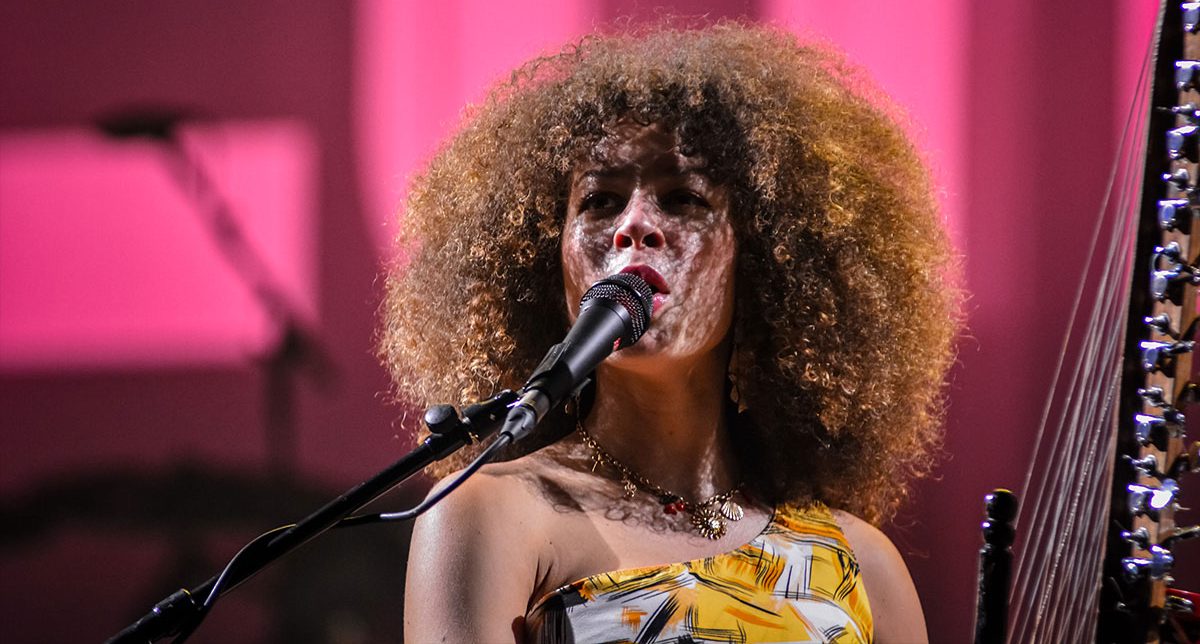

Lubiana arrives into the contemporary independent music landscape as an artist whose identity is deliberately diffuse, rooted not in a single city but in the francophone network connecting Paris and Belgium. Little is publicly documented about the artist's early life or formative years, a reticence that mirrors the approach to the work itself—defined less by biography than by artistic output. What emerges instead is a practice already fully formed, bridging disciplines and geographies with quiet conviction.
The turning point for Lubiana appears less as a dramatic pivot than as a deliberate synthesis. Rather than choosing between music and film, between analog warmth and digital reach, the artist chose all of it. This integrative approach defines the current body of work: album production exists alongside documentary filmmaking, vinyl releases share shelf space with streaming availability, and touring grounds the recorded material in physical presence and community.
At the heart of this practice is an understanding that sound and image are not separate disciplines but complementary languages. This philosophy materialized most clearly in the relationship between the album Mother Earth and the documentary Terre Rouge, a 20-minute film that doesn't simply accompany the music but enters into conversation with it. The shared concerns—land, origin, ecology—suggest an artist wrestling with questions too large for a single medium to contain.
Mother Earth sits at the center of Lubiana's catalog, an album whose title signals its thematic ambitions while its distribution model reveals a thoughtful approach to independent release in an era of fractured consumption. The album exists in vinyl and CD formats, physical objects that carry weight and intention, while simultaneously inhabiting streaming platforms where it can reach listeners far beyond the European venues where Lubiana performs.
This dual presence is characteristic of an artist working within the particular constraints of the 2020s independent music economy. The vinyl edition speaks to listeners who value tangible artifacts and the ritual of listening; the streaming release acknowledges the reality of how music now travels. Neither compromises the other. Instead, they serve different communities with different needs, a pragmatic embrace of possibility rather than a purist's retreat.
Terre Rouge, the documentary film, expands the practice into visual storytelling. At twenty minutes, it occupies that productive space between short film and longer-form documentary—enough time to develop ideas without the burden of feature-length pacing. The title, French for "Red Earth," echoes the ecological concerns of Mother Earth while suggesting a geographic specificity, a particular place with particular soil. The film represents Lubiana's commitment to treating the work as something larger than discrete releases, building instead toward a cohesive artistic statement.
Lubiana maintains an active performance schedule in Paris and Belgium, the twin poles of a practice grounded in francophone Europe. These aren't fly-in, fly-out appearances but sustained engagement with the venues and communities that support independent and experimental music in these regions. This geographic focus allows for depth rather than breadth, the cultivation of relationships rather than the scattershot accumulation of new markets.
The choice to concentrate touring in this corridor—Paris to Belgium and back again—reveals an artist interested in something other than conventional scale. Rather than chase the festival circuit or pursue expansion into distant markets, Lubiana works within a defined territory, returning to rooms and audiences with the patience required to build genuine connection. The touring practice brings the recorded work into direct contact with listeners, grounding the albums and films in shared physical space.
With a modest streaming following, Lubiana's reach grows through the slower, more durable networks of word-of-mouth and community support. This is music and film that spreads person to person, venue to venue, built on the recommendations of those who've encountered the work and found something worth passing along. In an attention economy dominated by algorithmic distribution, Lubiana's reception model feels almost anachronistic—and perhaps more sustainable for it.
The audience that has gathered around this work tends toward those interested in independent music and film in francophone Europe, listeners and viewers who value artistic coherence over viral moments, who seek out work that refuses easy categorization. The combination of documentary, album, and physical media appeals to those hungry for artists who build bodies of work rather than chasing singles.
Lubiana matters precisely because the practice resists easy summation. In an era of hyperspecialization, here is an artist moving fluidly between music and film, analog and digital, performance and production. This boundary-crossing feels less like ambition than necessity, as if the questions being explored—about land, ecology, origin—demand multiple forms of address.
For independent artists navigating the contemporary landscape, Lubiana's model offers a template: work within your means, honor your materials, build slowly, refuse false choices. The work won't reach millions, but it will reach those it needs to reach. That may be the most meaningful definition of success available to serious artists today.