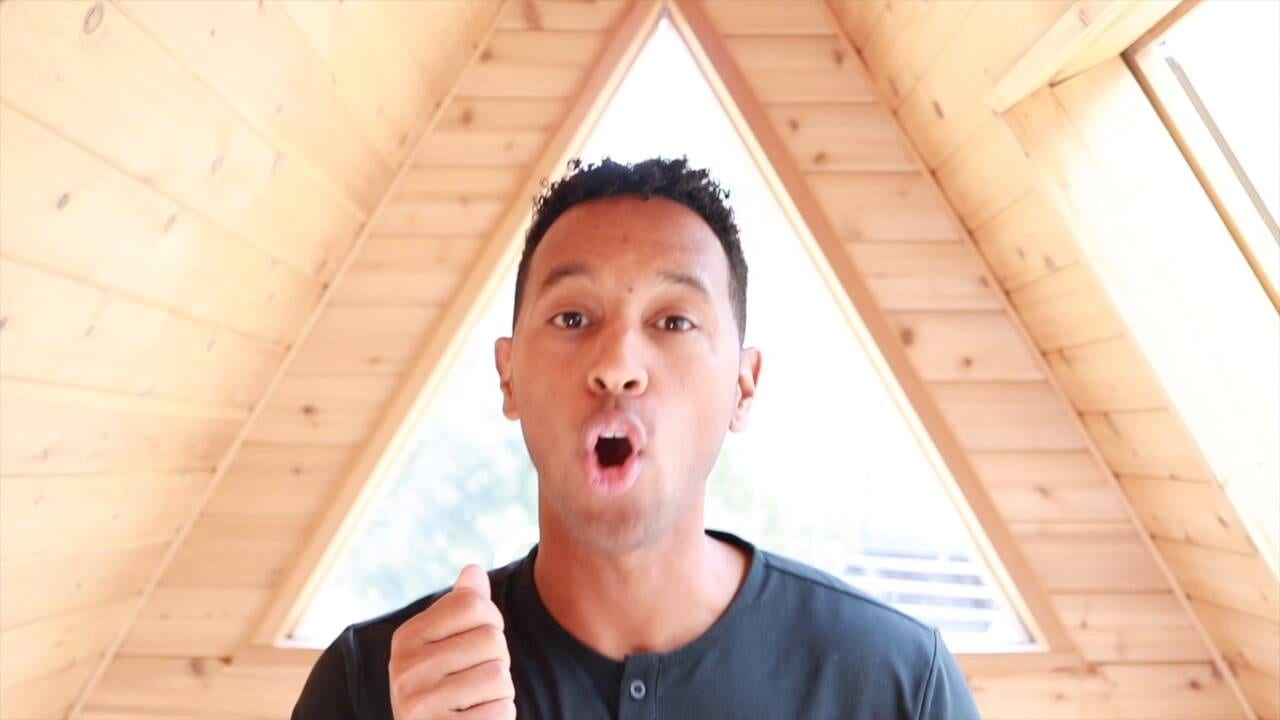

MANIFEST is a single, one track released on December 15, 2023. It is a small object, and it is best approached as one. What follows is a guide to listening to it in that spirit, with honesty about what the record of this release does and does not tell us.
Justin Michael Williams is a best-selling author, Grammy-nominated recording artist and keynote speaker who works at the intersection of music, meditation and equality. He has spoken at Google, Bloomberg and SXSW, and his teaching has reached more than 40 countries. Yet he calls music his original and true love, and a single like MANIFEST is a reminder of that ordering.
His recorded catalog runs from Metamorphosis (2016) through the Meditations for the People album (2022) to the full-length SOUL CHILD (2024). Released in late 2023, MANIFEST arrives in the stretch between those last two records, in the same year as "Moon" (with Msaki) and "Hello" (with Frank Fitzpatrick). It is not billed as an album statement. It is a single, a focused offering, and it shows how he has learned to meld his speaking and his songs.
Here I have to be careful. The available record does not list instrumentation, production credits or collaborators for MANIFEST, so I won't claim any. What can be said comes from the shape of his recent work: music that prioritizes space and intention over density and velocity, a voice that carries the song rather than dominating it, and an absence of the usual New Age signifiers. Expect no pan flutes and no synthesizer pads drowning in reverb. His uptempo material is contemplative rather than euphoric, and his pacing mirrors his teaching: slow, intentional, asking you to bring attention rather than promising automatic transformation.
Treat those as the lens, not as a track-by-track description. Your own ears are the best source on what the arrangement actually does.
With a one-track release, there is only one name to give: "MANIFEST." The title carries the weight. It sits beside the recurring themes in his work, including transformation as a shift in orientation rather than an escape, belief (he released several versions of "Believe" in 2021), and sufficiency ("I Am Enough," 2020). What makes it land is likely the same thing that makes his other work land: directness. His language avoids mystification and coded spiritual jargon. A word like "manifest" can drift into wishful thinking in wellness culture, and the interesting question for a listener is how a teacher who insists meditation must acknowledge real struggle frames it. Listen for whether the song treats manifestation as practice and presence rather than fantasy.
Williams does not describe himself within a single spiritual lineage, and I won't assign him one. This is not bhakti or kirtan in any formal sense. It belongs more naturally to a growing intersection of contemplative practice and music-as-medicine, where mindfulness and meditation are recast for people with lived experience of systemic struggle. His work also carries shadow work, which suggests a debt to depth psychology and trauma-informed practice, and it moves past the "light and light" framing of much contemporary spirituality. In that context, MANIFEST is devotional in the sense of intention, not ritual form.
This single is for people who don't typically see themselves in the motivational, healing or wellness movement, which is exactly the audience Williams says he speaks to. It will resonate with someone in a season of reorientation: starting over, naming what they want, or building a practice that doesn't pretend difficulty away. It suits listeners who find typical meditation music thin or patronizing.
It is less suited to anyone wanting dancefloor energy, escapist spirituality, or purely feel-good affirmation. His audience tends to self-select for deep change over surface uplift.
Give it the whole track, uninterrupted, and then give it again. Because a single is brief, repetition is the natural way to hear it fully.
- Alone, with headphones. A restrained, voice-forward piece rewards close attention to phrasing and silence.
- Evening or early morning. Pick a moment when intention-setting feels natural rather than rushed.
- First pass for the sound, second for the words. On the first listen, follow the mood and pacing. On the second, follow the lyrics and ask what, specifically, the song is inviting you to bring forward.
- A few minutes of stillness afterward. In keeping with his teaching, let the song be a doorway into practice, not a substitute for it.
If it moves you, the natural next steps are Meditations for the People for guided practice, or SOUL CHILD for his fuller artistic picture.