
The Music of Juan Lucangioli: Sound, Sacred Texture, and Lineage
Juan Lucangioli's music doesn't announce itself. It arrives quietly, like a letter slipped under a door—intimate, patient, and meant for solitary encounter. His 2024 album Caleidoscopio opens not with dramatic flourish but with fingerpicked acoustic guitar, voice close to the microphone, and the unhurried cadence of someone speaking to a single listener rather than performing for a crowd. This is music as contemplative technology, built from the materials of the singer-songwriter tradition but deployed with the precision of a meditation guide.
The Instrumental Palette
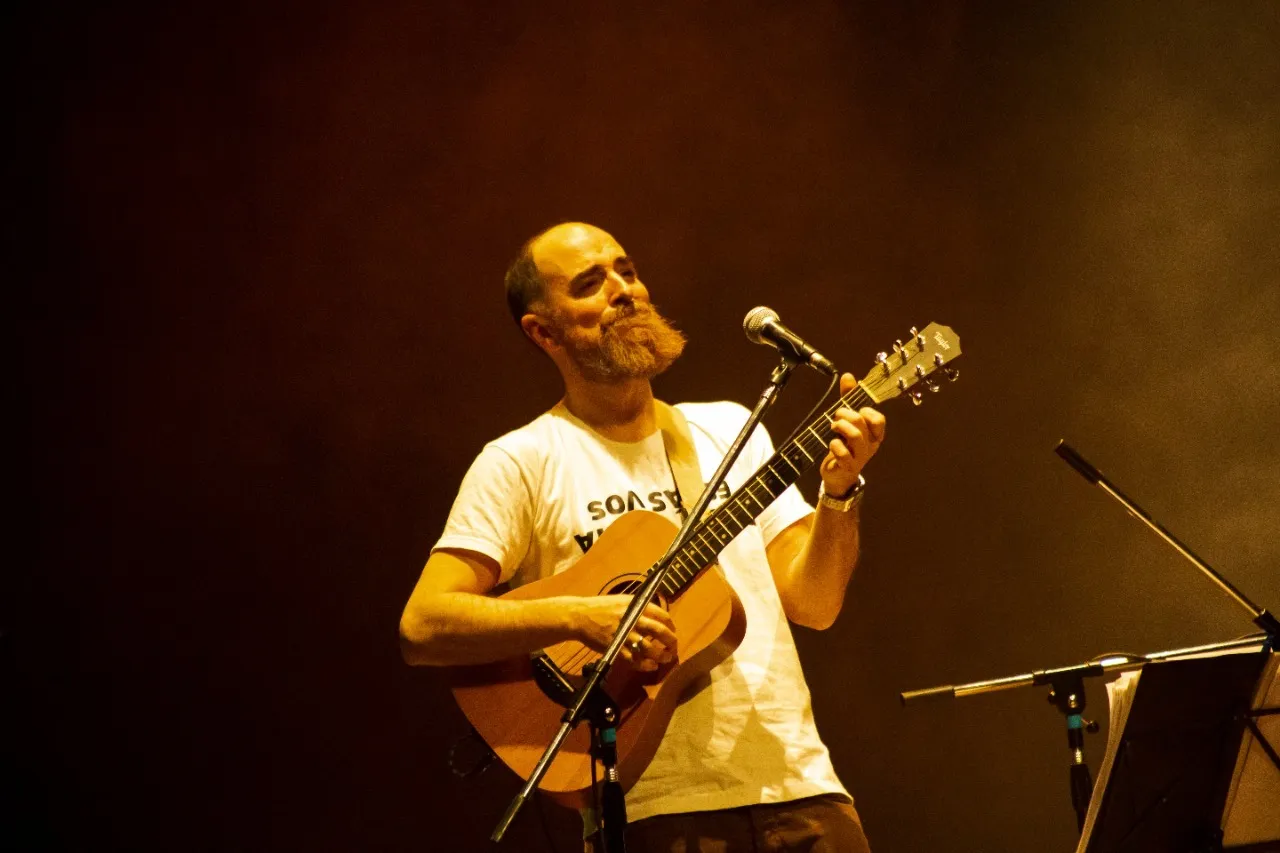
Lucangioli works primarily with acoustic guitar, voice, and strategic silence. His guitar playing favors open tunings and repetitive, almost mantra-like fingerpicking patterns that establish cyclical harmonic beds rather than verse-chorus architecture. The tempos hover in that deliberate middle ground—not slow enough to feel ceremonial, not bright enough to feel optimistic. There's a neutrality to the pulse, a quality of suspended time that recalls both the patience of contemplative practice and the unhurried space of late-night conversation.
His voice carries the grain and warmth characteristic of Spanish-language singer-songwriters, but without the theatrical vibrato or romantic projection common to that tradition. Instead, there's an almost spoken quality to his phrasing, as though each line is being considered in real time. Occasionally, sparse accompaniment appears—subtle keyboard pads, minimal percussion—but these elements function as atmospheric detail rather than arrangement. The production aesthetic favors proximity and clarity over spaciousness or reverb-soaked mystery.
Lineage and Tradition
Lucangioli occupies an interesting position outside the conventional categories of devotional music. He's not working within bhakti kirtan, Sufi qawwali, gospel, or any established sacred music lineage. Instead, his practice emerges from the intersection of Latin American nueva canción consciousness, contemporary mindfulness culture, and what might be called epistolary spirituality—the treatment of letters, songs, and written reflection as vehicles for awakening.
His song "Nos escribimos cartas" (We Write Letters to Each Other) encapsulates this approach: correspondence itself becomes the spiritual practice, the exchange of attention and language functioning as meditation. This positions him closer to contemplative poets like Antonio Machado or the reflective intimacy of Leonard Cohen than to traditional devotional music. He belongs to a quieter lineage—one that treats artistic creation not as worship of the divine but as direct investigation of consciousness itself.
Signature Contribution
What distinguishes Lucangioli in the broader landscape of conscious music is his refusal of transcendence as aesthetic goal. There's no reach toward ecstasy, no invitation to collective uplift or cathartic release. Instead, his work proposes music as a space for sustained attention—a sonic environment conducive to the kind of interior investigation usually associated with meditation practice rather than listening.
His integration of formats is equally distinctive. Where many artists maintain separate channels for music, writing, and teaching, Lucangioli treats these as facets of a single practice. His YouTube channel "Songs and Consciousness" functions as a unified field where songs, guided meditations, book excerpts, and contemplative reflections exist on equal footing. This multi-format approach suggests that the medium—whether melody, prose, or guided silence—matters less than the quality of attention it catalyzes.
Collaborations and Context
With only 135 Spotify followers, Lucangioli operates well outside commercial music infrastructure. This isn't music shaped by producers, session musicians, or collaborative refinement. The intimacy is partly circumstantial—these sound like home recordings, voice and guitar captured in private space—but it's also philosophical. The solitary quality isn't limitation but intention, aligned with his focus on individual contemplative practice rather than communal ceremony.
First-Encounter Guide
New listeners should approach Lucangioli's work not as background music but as foreground practice. Put on Caleidoscopio when you would sit for meditation, not when you're seeking inspiration or emotional transport. Expect repetition, both musical and thematic. Expect lyrics that circle back on themselves, investigating the same question from slightly different angles rather than building toward resolution.
What may surprise: the absence of mystical vocabulary. Lucangioli's Spanish is conversational and direct, more concerned with careful observation than poetic imagery. Another surprise—the songs don't promise anything. There's no implied transformation, no journey from darkness to light. They simply create conditions for attention.
The Wider Landscape
In the English-speaking conscious music world, Lucangioli would neighbor artists like East Forest or Jon Hopkins' ambient work—music designed for intentional listening states. But his Spanish-language context and epistolary focus give him a distinct position. He's working at the overlooked intersection of mindfulness culture and Latin American literary tradition, treating the song form not as vehicle for devotion but as contemplative instrument—a tuning fork for consciousness exploring itself.