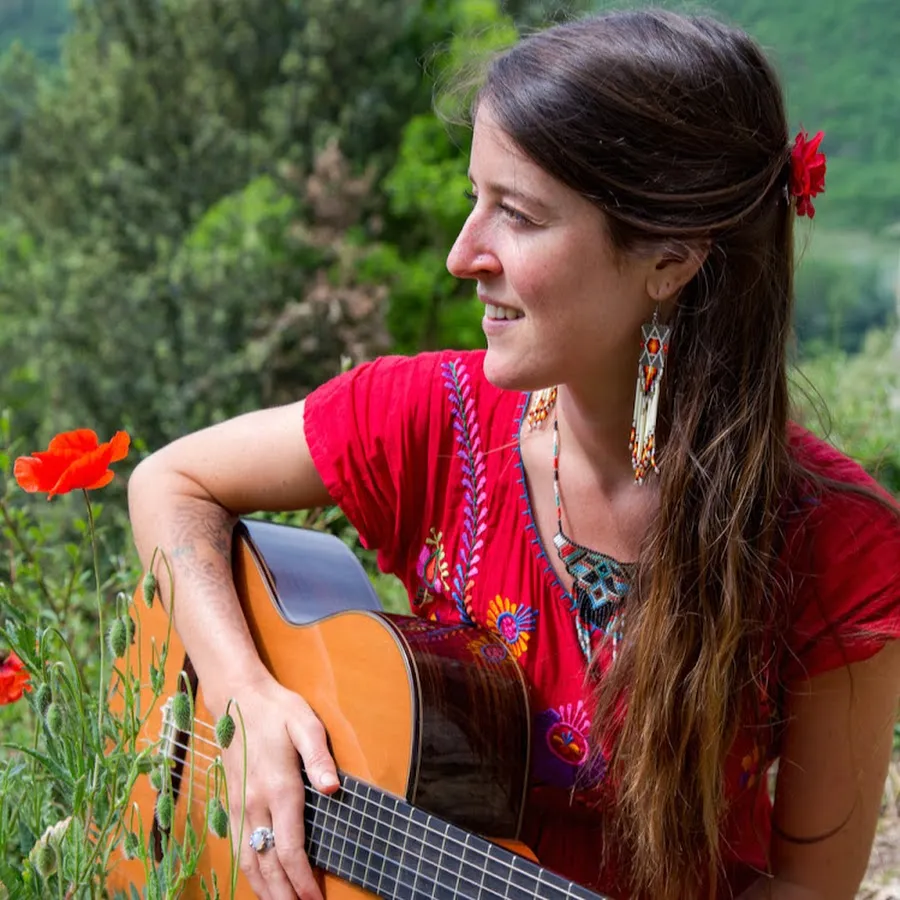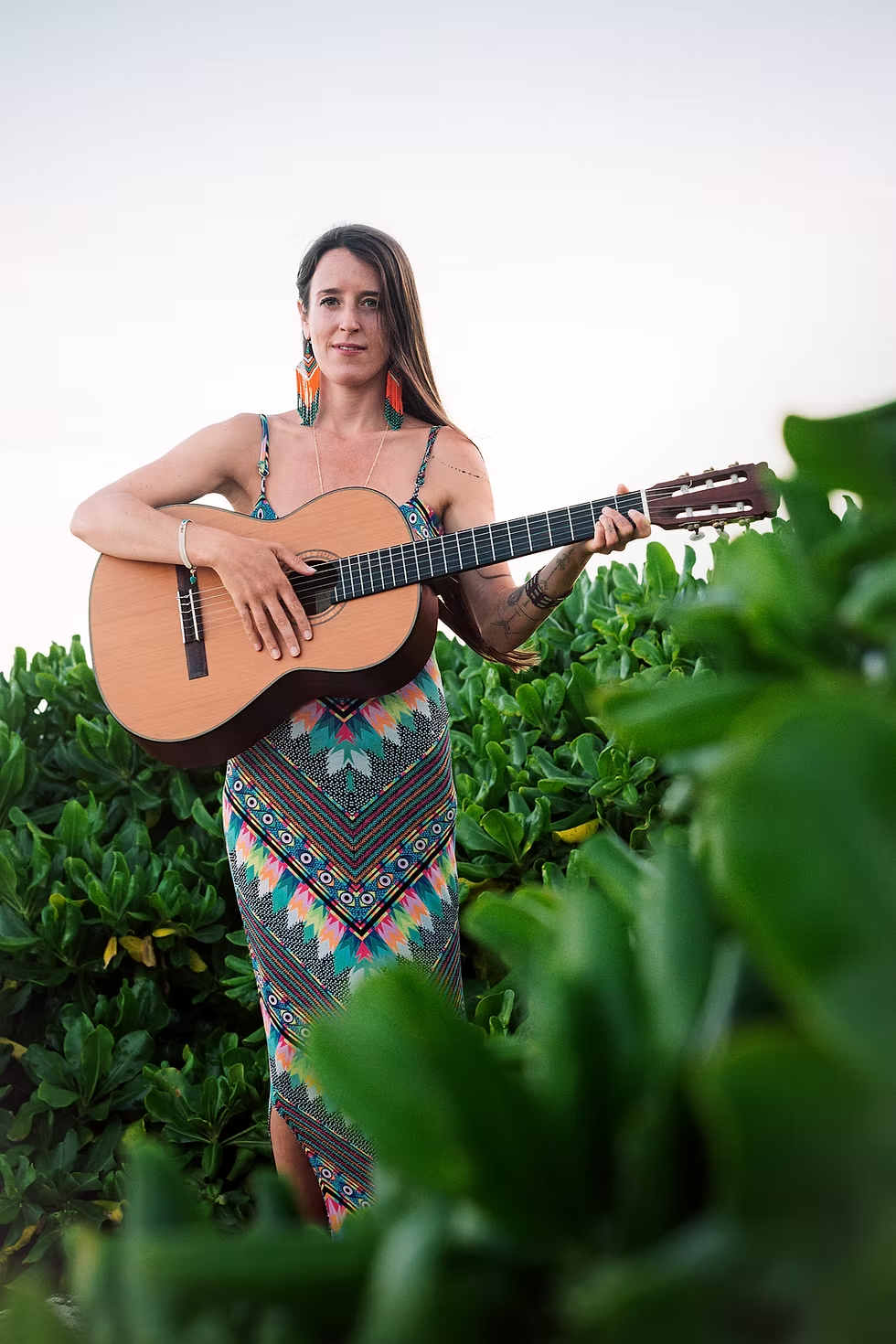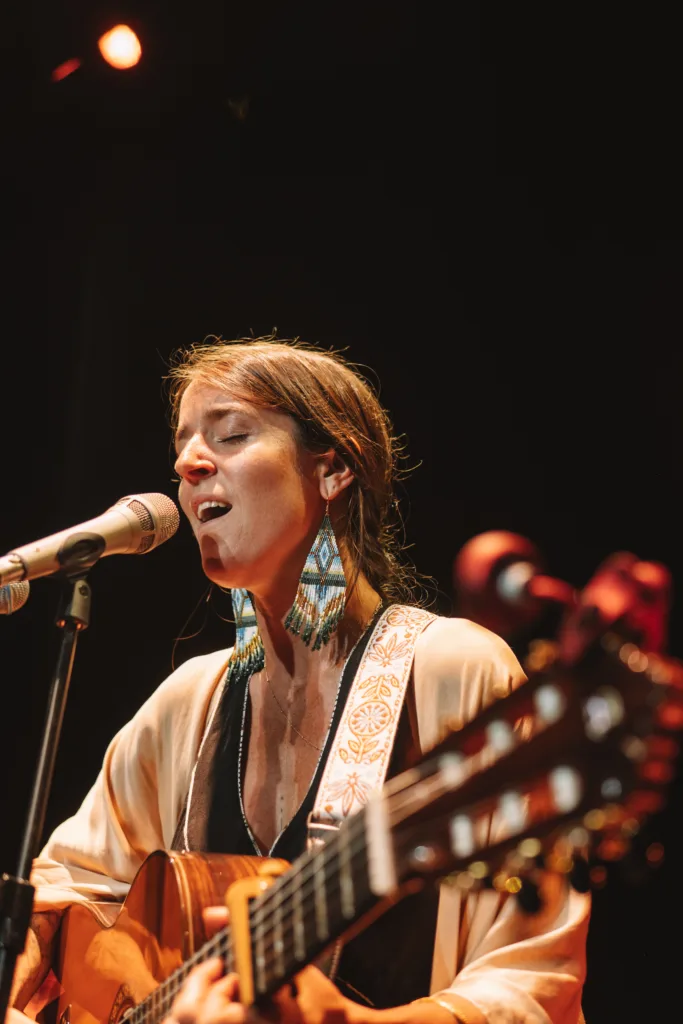

Ayla Schafer's music is built around the voice and the song. She is a singer-songwriter first, and her repertoire is poetic, sung in Spanish, English and Proto-Celtic, the reconstructed ancestral language of the Bronze Age. Much of the sound comes from moving between these languages. Spanish brings open vowels and a warm, rolling cadence. English carries the plainspoken line of the folk songwriter. Proto-Celtic, a language no one alive grew up speaking, gives the material an ancient, excavated quality.
The bio does not list her instruments or tempos, so this piece does not guess at them. What the sources do establish is the character of the writing. Folk Radio highlighted the strength and clarity of her songs, which points to a vocal approach where the line is the center of gravity and the words arrive intact. Her own description of the songs is that they "carry memory, remembrance and power," and that they hold "the beauty, shadow and rawness of human experience." That range suggests a catalogue that does not smooth its edges. Tenderness and darkness share the same space.
Her bio places her in "world folk" and "medicinal song," and she is a ceremonial musician as well as a recording artist. The bio names no guru, teacher or formal lineage, and none is assigned here. What it does describe is a path. In 2010 she travelled through South America and spent years away from home. She explored her inner landscape and learned from various indigenous traditions about the healing power of song. Those years shaped her writing, and her work still reflects a commitment to earth consciousness and ancestral wisdom.
That makes her tradition one of encounter and listening rather than of a single inherited school. She also works as a voice workshop facilitator, so the songs sit alongside a practice of teaching people to use their own voices. She lives among the wild lands of Dartmoor and is a mother of two, and the bio ties both to the earth-rooted outlook of her work. She is described as a "Voice of the Earth."
Her most distinctive choice is the pairing of living and reconstructed languages in one body of work. Singing in Proto-Celtic treats language as an ancestral instrument, a way of reaching toward a time before recorded history. Placing it beside Spanish, which she presumably encountered through her South American years, and English, her home tongue, makes a multilingual map of memory. Few songwriters in the folk world do this.
The second contribution is tonal. She frames song as medicine without leaving out shadow. Her songs invite listeners "to reconnect with themselves, the earth and the quiet power of presence," but the bio is clear that rawness is part of that invitation.
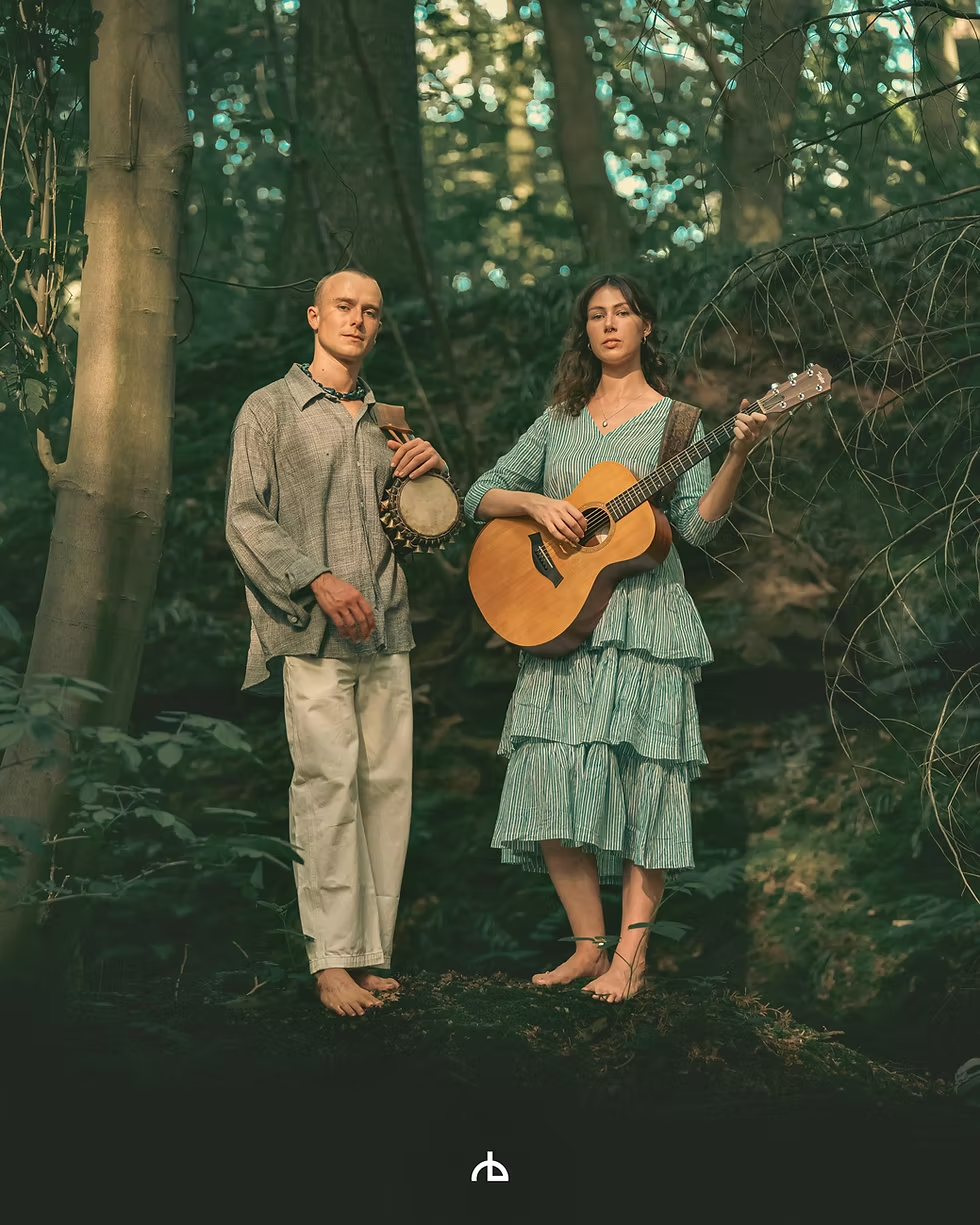
Two collaborations are documented. She has worked with Brit Award winner Ben Howard, a connection that places her in conversation with contemporary British folk at its most widely heard. She has also been part of the folk-soul duo Susie Ro and Ayla, a partnership whose name points to a blend of folk songwriting and soul-inflected vocals. Beyond these, she began performing at sixteen and built her experience across the UK festival scene. Festival stages are where a singer learns to hold an outdoor crowd, and that background fits a musician who now leads ceremonial and workshop settings.
Come to the songs with the lyrics open if you can. Because the repertoire spans three languages, you will probably not understand every line on first hearing. Let the sound of each language register before you look up the meaning. That is part of how the music works.
Several things may surprise you:
- Proto-Celtic is a reconstruction. It is a scholarly rebuilding of an ancestral tongue, so you are hearing an imaginative act of remembrance, not a living language.
- It is not purely soothing. The bio's language of "shadow and rawness" suggests the songs will sometimes stay with difficult feeling rather than resolve it quickly.
- It is folk before it is ritual. Although she is a ceremonial musician, the work is described as songwriting with a poetic repertoire. The song, not an extended chant, is the basic unit.
- It is a long-form journey. The sources describe music shaped by years of travel and learning, so it tends to reward repeated listening.
If you know her through Ben Howard, expect that same folk sensibility to turn more toward earth, ancestry and ceremony.
Within the wider conscious-music landscape, Ayla Schafer sits closer to the folk and songwriter end than to the mantra-and-kirtan end. Her focus on indigenous learning, earth consciousness and ancestral wisdom overlaps with the world of ceremonial and medicine music. Her songwriting craft and festival grounding connect her to the mainstream folk scene. That combination is uncommon. She can speak to listeners who arrive through acoustic folk and to those who arrive through ceremony and presence practices.
Her audience reflects the reach. With about 370,000 Spotify followers, she is well beyond a niche ceremonial act. Higher Plains Music has also written about her work, though the bio's quotation is cut off and is not reproduced here.
In short, she is a multilingual songwriter whose music is rooted in place, in ancestry and in the voice as a carrier of memory.