

Solala Towler
Taoist Teacher
Acerca de
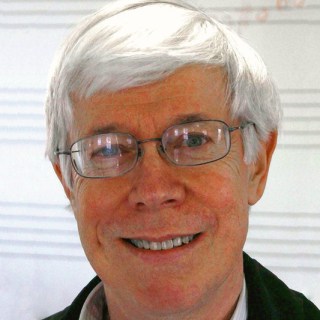
Solala Towler is a teacher and author of the Taoist (Daoist) arts. He has practiced and taught Taoist meditation and qigong for more than 30 years, and he teaches through Abode of the Eternal Tao in Eugene, Oregon.
Solala Towler is a teacher and author of the Taoist (Daoist) arts. He has practiced and taught Taoist meditation and qigong for more than 30 years, and he teaches through Abode of the Eternal Tao in Eugene, Oregon.
He has published 14 books in six languages. They include Practicing the Tao Te Ching: 81 Steps On the Way, Tales From the Tao, The Tao of Intimacy and Ecstasy, and Cha Dao: The Way of Tea. For 25 years he was editor and publisher of The Empty Vessel: The Journal of Daoist Philosophy and Practice.
His teaching presents the Tao Te Ching as a manual for self cultivation, the way he describes Taoists using it for thousands of years. He gives background on how the text was written, and students work through its practices themselves. Hu Xuzhou, author of Revealing the Tao Te Ching, wrote that under Towler's guidance "anyone can deepen their practice as well as digest the core meaning of this classic."
Beyond the Tao Te Ching, he offers private classes in qigong, Taoist meditation, I Ching and a Taoist Gongfu Tea Ceremony. His site also holds articles on subjects such as Taijiquan as qigong, conscious standing and organ balancing meditation. He has led tours to China to study qigong and Taoist meditation in the sacred mountains.
Preguntas
Questions
Solala Towler is a Taoist teacher, qigong instructor, and prolific author who has spent over thirty years studying and transmitting the practices of Daoist philosophy and meditation. Based at the Abode of the Eternal Tao in Eugene, Oregon, he represents a rare lineage bridge: someone equally comfortable translating classical Taoist texts, teaching hands-on qigong and Taoist meditation, and documenting the living tradition through his 14 published books and decades as editor of The Empty Vessel—the preeminent journal of Daoist philosophy and practice. People follow his work because he treats Taoism not as exotic mysticism but as a rigorous system of self-cultivation, with concrete practices you can actually do. Hu Xuzhou, author of Revealing the Tao Te Ching, noted that under Towler's guidance "anyone can deepen their practice as well as digest the core meaning of this classic"—a testament to his ability to make centuries-old wisdom accessible without diluting it. His work appeals to practitioners who want scholarly rigor married to lived experience, and to seekers tired of Taoism being reduced to inspirational poster wisdom.
Solala Towler works within the Daoist (or Taoist) tradition, specifically its philosophical and meditational lineages—not the religious institutional Taoism that developed in medieval China, but the earlier contemplative practices rooted in the Tao Te Ching and I Ching. His teaching emphasizes Taoist meditation and qigong as methods for what traditional Daoists called "self-cultivation": aligning the individual with the Way through breath work, energy circulation, and philosophical inquiry. The Tao Te Ching is central to his lineage interpretation; he frames it not as a poetic text to be passively admired but as a manual of practice, the way Taoist adepts have used it for millennia. Beyond textual study, his practice includes the embodied disciplines: qigong (the cultivation of qi, or life-force energy), Taijiquan (Tai Chi), and even the Taoist Gongfu Tea Ceremony—a formal approach to tea that extends Daoist principles into daily ritual. His work sits at the intersection of philosophical Taoism and somatic practice, treating the body as inseparable from spiritual cultivation rather than as an obstacle to transcendence.
For someone with zero Taoist background, the entry point is his book Practicing the Tao Te Ching: 81 Steps On the Way, which takes the Tao Te Ching's eighty-one verses and pairs each with an actual practice or reflection—not just commentary. This structure makes it immediately practical; you're not reading about self-cultivation, you're doing it. His website at abodetao.com also hosts free articles on foundational concepts like Taijiquan as qigong and organ balancing meditation, which give you a sense of how he bridges classical philosophy with embodied practice. If you prefer learning through teaching rather than reading, his YouTube channel has recorded talks and instruction that show his teaching style directly. The book Tales From the Tao offers a more narrative, less prescriptive entry point if you're drawn to Taoist stories and parables. What matters is that you begin with direct practice or lived example, not abstract theory—Solala's entire approach insists that Taoism is something you do, not something you collect information about. His decades as editor of The Empty Vessel also mean his sensibility has shaped what serious English-language Daoist scholarship looks like, so his curated taste is worth trusting.
Most contemporary Taoist teachers in the West specialize: you find Tai Chi instructors, or qigong healers, or Tao Te Ching scholars, but rarely someone fluent across all three modalities plus the broader philosophical context. Solala's distinction is his integration—he treats the Tao Te Ching as inseparable from qigong practice, Taijiquan, and Taoist meditation, showing how they're expressions of the same underlying principles. His editorial work on The Empty Vessel for 25 years also positioned him as a curator and validator of Daoist scholarship itself, meaning his own teaching reflects decades of dialogue with the field's most serious voices. Unlike teachers who've picked up Taoism as one of several spiritual interests, Solala has made it his exclusive focus for over thirty years, with multiple books on specialized topics: The Tao of Intimacy and Ecstasy addresses Taoist sexuality, while Cha Dao: The Way of Tea extends Daoist principles into formal ceremonial practice. He's also unusual in having led extended study tours to China's sacred mountains for qigong and Taoist meditation training—not as tourist experiences but as immersion in the lineage's geographic and energetic centers. That combination of depth, breadth, and scholarly credibility is rare in the Western Taoist landscape.
Solala's teaching is not for anyone seeking quick spiritual comfort or affirmation. The Tao Te Ching is famously paradoxical and aphoristic—"the Tao that can be named is not the eternal Tao"—and his approach honors that opacity rather than resolving it into easy takeaways. If you come to him looking for a clear path to enlightenment, with steps to follow and goals to achieve, you'll be disappointed; Taoist philosophy explicitly works against that linear, ego-driven orientation. His work is also text and practice-intensive, demanding real engagement with classical Chinese philosophy and embodied commitment to qigong or meditation disciplines—it's not for passive consumers of spiritual content. Anyone allergic to scholarly grounding or who views spirituality as purely internal experience without ritual or external form will find his emphasis on formal tea ceremony, Taijiquan, and structured qigong too formal or historically pedantic. Finally, his teaching is not suited to people who want a teacher who promises transformation or who frames the spiritual path in therapeutic, self-help language. Solala presents Taoism as it has been practiced for millennia: as alignment with what already is, not as self-improvement.
His primary presence is at abodetao.com, where he lists current classes, private instruction offerings (qigong, Taoist meditation, I Ching, and the Gongfu Tea Ceremony), and any public events or tours. The website is your best source for practical information about his Eugene-based teaching at the Abode of the Eternal Tao. He maintains a YouTube channel with recorded teachings and instruction videos, which provides ongoing access to his voice and methods without geographic constraint. For his publishing, you can follow announcements through his website and through distributors of his fourteen books, though note that many are available in multiple languages reflecting his international readership. The Empty Vessel journal, which he edited for 25 years, is archived and available through various channels, though his active editorial involvement has concluded—it remains a window into his curatorial sensibility and the broader Daoist scholarly conversation he shaped. Given his focus on direct teaching rather than marketing, he doesn't maintain a heavy social media presence or touring schedule like younger teachers; his work comes to you through his books, website, YouTube, and the direct classes offered at the Abode of the Eternal Tao. For serious students, the website remains the reliable and primary source.
Practicing the Tao Te Ching: 81 Steps On the Way is foundational—it's his most comprehensive attempt to marry the classical text with actionable practice, making it the logical core of his bibliography. The Tao of Intimacy and Ecstasy tackles a dimension of Taoist philosophy often ignored in the West: the sacred sexuality and embodied experience teachings within the tradition, a specialty topic that sets it apart from general introductions. Cha Dao: The Way of Tea extends Taoist principles into the formal ritual of tea ceremony, demonstrating how Taoist philosophy manifests in daily life rather than remaining abstract. Tales From the Tao offers narrative and parable as an entry point, suitable for readers who prefer stories to systematic instruction. His role as editor and publisher of The Empty Vessel for 25 years means his curatorial eye shaped that journal's standards, and back issues are a window into both his thinking and the broader English-language Daoist conversation he stewarded. Each book reflects his conviction that Taoism is learned through practice and lived example, not intellectual consumption alone. Together, his fourteen published books in six languages represent one of the most comprehensive English-language bodies of Taoist teaching available.
Start with Practicing the Tao Te Ching: 81 Steps On the Way if you're willing to engage actively—to sit with each verse, do the reflected practices, and move at the text's pace. This book treats reading as a spiritual discipline rather than passive consumption, which is entirely consistent with how Taoist practice has always worked. If you prefer narrative and story as entry points before diving into systematic practice, Tales From the Tao offers accessible wisdom through parable and anecdote, giving you a felt sense of Taoist sensibility. The Tao of Intimacy and Ecstasy is not a first book unless sexuality and embodied spirituality are your primary interest, but it's worth circling back to—it's one of the only serious English texts on that dimension of Daoist practice. What unites all his books is the principle that reading itself is part of the practice; he doesn't offer abstract theory with a separate application section. The best reader will come to Solala's work with curiosity about how to actually live as a Taoist—what daily practices look like, how Daoist philosophy transforms decision-making and relationship—rather than seeking intellectual understanding alone. His books reward slow reading and return visits, so commit to one fully before moving through the others.
Solala's teaching is methodical, grounded in text, and demanding of precision—he's equally likely to clarify a mistranslation of the Tao Te Ching or to correct your posture in qigong as to offer philosophical insight. His style reflects thirty years of practice: he doesn't perform spirituality or frame teaching as entertainment, but as transmission of a discipline. A typical engagement might begin with classical Taoist philosophy, move into seated Taoist meditation or qigong instruction (where he's attentive to correct energetic alignment and anatomy), and end with guided practice—all the while anchoring everything in the Daoist texts and principles that inform the practice. His background editing The Empty Vessel means he brings scholarly rigor; he contextualizes practices historically and philosophically rather than treating them as timeless or culture-free. Students working with him report that his presence is calm and clear, without the emotional intensity or performative spirituality some expect from spiritual teachers. He offers private classes in qigong, Taoist meditation, I Ching, and the formal Gongfu Tea Ceremony, each with its own depth and discipline. His approach is best suited to serious practitioners who want a teacher who respects their intelligence and expects them to meet the tradition halfway.
The primacy of self-cultivation appears throughout his work—the notion that Taoism is fundamentally about aligning oneself with the Tao through disciplined practice, not about transcendence or escape from ordinary life. The Tao Te Ching functions not as inspirational literature but as a practical manual, a recurring motif that shapes how he presents the text to students. Balance, non-action (wu wei), and alignment with natural process appear constantly, but he grounds these concepts in specific practices: organ balancing meditation, conscious standing, qigong flows—showing how philosophical principles live in the body and breath. The integration of sexuality and spirituality (a Taoist specialty) appears in his work on intimacy and ecstasy, correcting Western assumptions that spiritual practice requires renunciation of the body. The role of ritual and form is another thread; despite the Taoist emphasis on flowing naturally, Solala insists on the Gongfu Tea Ceremony, formal Taijiquan, and structured qigong as expressions of Daoist principle—not contradictions of it. Finally, the sacred geography of China's mountains recurs in his teachings and tour offerings, treating pilgrimage and direct encounter with lineage sites as part of serious practice. These themes aren't marketing slogans but lived commitments that shape every class, book, and teaching he offers.




¿Eres tú? Reclamar esta página ›
There's more where this came from.
BrightStar is the global directory of artists, teachers, and healers in the wellness and spiritual movement. Find your next experience — or add yourself.
Discover More Artists
Browse 14,000+ curated profiles across kirtan, yoga, meditation, and beyond.
Explore directory →Find an Event Near You
Kirtan, retreats, sound baths, breathwork, ceremonies — happening this week.
Browse events →Add Your Profile
Are you an artist, teacher, or healer? Get listed — free, AI-assisted, live in minutes.
Get started →