P
Praful
Multi Instrumentalist
Acerca de
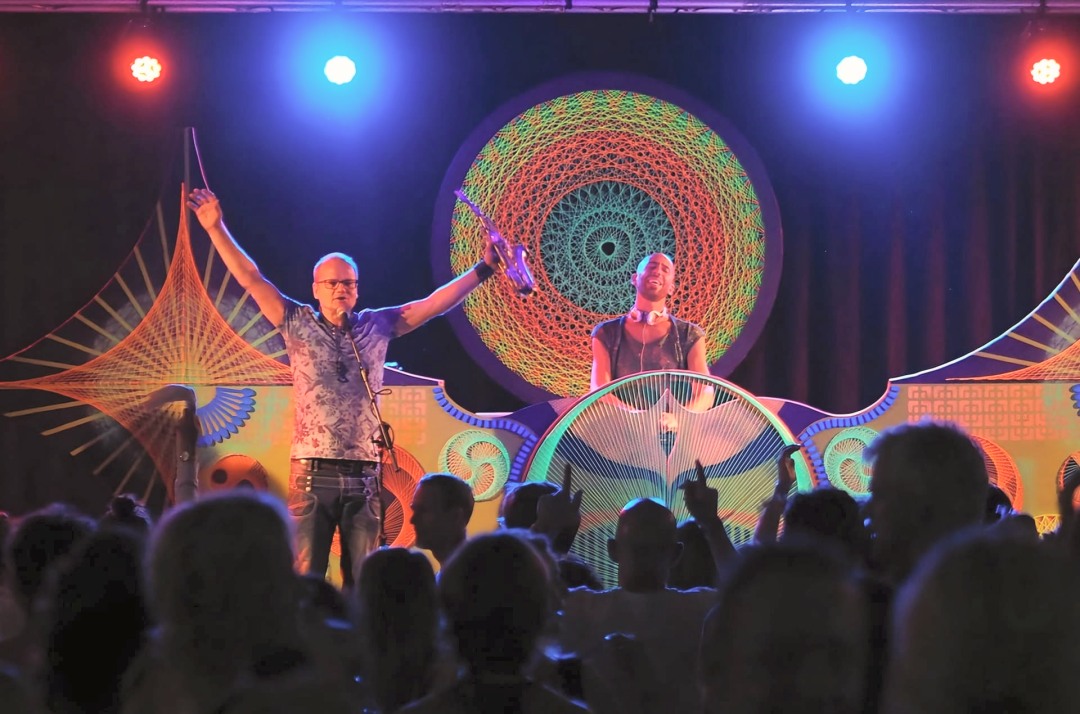
Praful is a multi-instrumentalist, composer and producer who blends bansuri, saxophone and voice into immersive musical experiences. He calls his music Sacred World Fusion, "medicine for the heart."
Praful is a multi-instrumentalist, composer and producer who blends bansuri, saxophone and voice into immersive musical experiences. He calls his music Sacred World Fusion, "medicine for the heart."
In 1992, after completing his studies of jazz sax and flute at the Amsterdam Conservatory (AHK), he went on a spiritual quest to India. There he meditated in the ashram of the mystic Osho and learned the Indian bamboo flute, the bansuri, with Pandit Hariprasad Chaurasia. Equally fascinated by Brazilian music, he then lived for a year in Brazil and immersed himself in the music scene of Rio de Janeiro. Over the years these influences came together in his own Sacred World Fusion, first presented in 2001 on the album One Day Deep.
His solo concerts combine bansuri, saxophone, voice and live looping in what he describes as a heart-centered inner journey. He also makes electric world-fusion with Kareem Raihani in the duo Red Fulka, where divine melodies meet deep dance floor grooves. With his creative partner, the designer Vimal Gabrielsen, he co-leads healing sound concerts and meditation gatherings. He has also taken part in retreats and festivals, among them the DEEP retreats and events, and has made albums with other artists, including Satyaa & Pari and Spirited Tribe. He has also offered a master class for musicians who want to trust the flow of the moment and work with the energy in the room.
His recent releases include Indio Mensageiro do Amor (2025) and Gaia Ma (2025).


Questions
Ulrich Schröder, performing as Praful, is a Berlin-born multi-instrumentalist whose fusion practice has attracted over 44,000 listeners on Spotify—a significant following for an artist working deliberately outside commercial genres. What draws people to Praful is precisely the specificity of his approach: he describes his work as "Sacred World Fusion," a disciplined blend of bansuri (Indian bamboo flute), saxophone, and looped voice that functions, in his words, as "medicine for the heart." His 25-year trajectory—from classical jazz training at Amsterdam's AHK Conservatory in the early '90s to immersion in Osho's ashram meditation practices, then grounding in Brazilian music culture in Rio de Janeiro—gives his work unusual depth and cultural literacy. Listeners drawn to healing sound practice, devotional music, and musicians who move fluently across traditions (not surface-level "world music" eclecticism, but genuine study) form his core audience. His live solo concerts combine bansuri, saxophone, voice and live looping in what Praful describes as a heart-centered inner journey, and his recent album releases (Leben in 2026, Kayanama in 2025) show continued artistic evolution after decades of practice.
Praful's lineage is hybrid, deliberately so, grounded in three distinct but symbiotic traditions. His classical foundation comes from formal jazz study—saxophone and flute at Amsterdam Conservatory—which gave him harmonic and improvisational discipline. His spiritual anchor is the meditative tradition of Osho, the Indian mystic whose ashram became Praful's meditation ground in the early 1990s, and from that immersion he learned bansuri directly from Pandit Hariprasad Chaurasia, one of the most respected classical Indian bamboo flute masters of the last 50 years. Finally, Praful spent a year in Rio de Janeiro absorbing Brazilian music at its source—not as a tourist but as an embedded musician. What makes his work coherent rather than scattered is that all three streams move through the same question: how does sound heal, how does breath become prayer, how do different cultures' approaches to the sacred speak to one another? This is not fusion-for-novelty; it's fusion rooted in lineage study and long apprenticeship.
For listeners completely new to Praful, starting with a recent live recording or his 2026 album Leben offers the clearest entry point, as it contains the full spectrum of his mature voice—bansuri and saxophone interweaving, his alto voice emerging in certain tracks, and the live looping technique he uses to build textural depth in solo performance. If you want to hear the genesis of this sound, his breakthrough 2001 album One Day Deep remains essential and shows the moment when his three traditions (jazz improvisation, Indian classical bansuri study with Pandit Hariprasad Chaurasia, and Brazilian music immersion) first crystallized into a unified approach. For those drawn specifically to meditation and healing sound, Kayanama (2025) leans more directly into the devotional register, and his recent single Gaia Ma (2025) offers a potent 4-5 minute gesture if you have limited time. What surprises newcomers: Praful's restraint—his aesthetic is sparse, not lush, with a single bansuri line, breathing space, saxophone answering like a second voice in conversation, rather than wall-of-sound production. If you expect "world music" exuberance, you'll find instead a chamber-music sensibility applied to cross-cultural material.
Most multi-instrumentalists working in "world fusion" or "new age" categories treat their instruments as flavoring—a bit of sitar here, a bit of flute there, layered over electronic production. Praful's difference is depth of lineage study applied to each tradition. His bansuri training with Pandit Hariprasad Chaurasia means he understands classical Indian phrasing and raag logic at a serious level, not aesthetic dabbling. His jazz education means he doesn't just play "pretty melodies" on saxophone; he improvises with harmonic sophistication and real-time conversation with the energy of a room. His Brazilian immersion—a year living in Rio, not a recording trip—grounds his rhythmic sensibility in vernacular music experience. Most crucially, Praful works alone in live performance with live looping, creating real-time textural complexity without pre-recorded tracks or backing bands. His collaborations—the duo Red Fulka with Kareem Raihani (which brings electronic production and dancefloor grooves), his work with designer Vimal Gabrielsen on healing sound concerts, albums with Satyaa & Pari and Spirited Tribe—show he's not a purist; he moves fluidly between chamber intimacy and collective energy. But solo, he remains singular in his restraint and his refusal to overcomplicate.
Praful's music will not satisfy listeners seeking high-energy electronic dance music or club-oriented grooves as their primary draw—though his collaboration Red Fulka with Kareem Raihani does bridge this (divine melodies meeting deep dance floor grooves, as he describes it), it remains a secondary project, not the center of his practice. Those uncomfortable with spirituality or devotional framing—even light devotional framing—should know that Praful's work is explicitly rooted in meditation practice, mantra, and healing sound intention; his recent album Tibetan Healing Prayers and Mantras and singles like Om Namah Shivaya make that register unavoidable. Listeners seeking guitar-driven indie folk, singer-songwriter introspection, or contemporary pop sensibilities will find his work oblique to their interests. His sparse, chamber-like aesthetic—long silences, single-line melodies, breathing space—is deliberately anti-maximalist; if you prefer densely produced, immediately gratifying sound, Praful's restraint may read as empty rather than contemplative. Additionally, his work does demand patience and repeated listening; there are no hooks designed to stick in the first pass, no chorus payoffs. And finally, for those seeking purely acoustic, instrument-as-traditional-artifact aesthetics, Praful's willingness to layer live looping technology, saxophone amplification, and electronic collaboration (Red Fulka) means he's never a purist or cultural conservationist.
You can track Praful's releases and touring through his website at prafulmusic.com, where announcements typically appear first. His Spotify artist page (44,200+ followers) is automatically updated with new singles and albums, and he maintains active YouTube and social presence at @prafulmusic on YouTube. Based on his recent output cadence—multiple singles and albums released in 2025-2026—new work emerges regularly, so subscribing to Spotify alerts or following his website is advisable. For live performance, his calendar is selective rather than constant; he appears at healing sound gatherings and meditation-oriented events like the DEEP retreats and festivals, as well as more intimate concert venues. His upcoming confirmed appearance is at Blaisantkerk in Gent, Belgium on November 7, 2026. He has also offered master classes for musicians interested in trusting the flow of improvisation and working with the energy of a room, though these are not regularly scheduled. For the most current tour dates and retreat information, his website remains the reliable source; unlike some prolific touring artists, Praful's schedule reflects a contemplative practice rather than a relentless gigging schedule.
Praful's sound is chamber music in aesthetic: intimate, spacious, built on the conversation between two or three voices at a time rather than layered complexity. In solo performance, he typically moves between bansuri (the Indian bamboo flute with its warm, mournful register), saxophone (often tenor or soprano, used as a second voice in call-and-response with the bansuri), and his own voice—an alto range, used sparingly and often wordlessly or in Sanskrit/devotional phrasing. Live looping allows him to build layers in real time: a bansuri phrase loops, saxophone enters, voice emerges, and what started as a single line becomes a three-part fugal-like structure, but never overwhelming. The pacing is slow by contemporary music standards; even his more energetic tracks (see Red Fulka's dance-floor material) rarely exceed 120 BPM, and most solo work hovers in the 60-90 BPM range—meditative tempo. Silence is a core instrument; Praful leaves space for the listener's breath and attention. His production aesthetic (even on studio albums like Leben and Kayanama) avoids reverb-drenched or heavily processed sound—the instruments are distinct, acoustically clear, as if you're in a room with him. Harmonically, his jazz training means unexpected chord movements; his Indian training means he'll sit on a single raga-scale motif, letting it deepen rather than rushing to harmonic resolution.
One Day Deep (2001) remains foundational—it's the album where Praful first synthesized his three traditions (jazz improvisation, Indian classical bansuri study with Pandit Hariprasad Chaurasia, and Brazilian music immersion) into his mature "Sacred World Fusion" sound, making it the essential reference point for understanding his evolution. For recent work, Leben (2026) is his most current full-length statement and contains the latest iteration of his solo voice—bansuri, saxophone, voice, live looping in fully realized arrangements. Kayanama (2025, 11 tracks) offers a substantial album-length immersion in his meditation and healing sound practice, leaning more explicitly into the devotional register than his earlier work. Tibetan Healing Prayers and Mantras (2026, 11 tracks) is his most recent album to explicitly name the spiritual/healing intention, and Gaia Ma (2025) stands as a powerful single-statement if you want a concentrated experience. For those curious about his electric and collaborative work, Red Fulka (the duo project with Kareem Raihani) offers a different energetic texture—the same melodic sophistication but meeting dancefloor grooves—though this represents a side channel rather than his primary voice. His work with Satyaa & Pari and Spirited Tribe appears on those artists' releases rather than under his own name, so they're better explored once you're already familiar with his solo identity.
Praful's core solo setup—bansuri (Indian bamboo flute), tenor/soprano saxophone, voice (alto range), and live looping technology—remains his signature formation, allowing real-time textural building without pre-recorded accompaniment or backing musicians. This trio (or four, including voice) creates a conversational, chamber-music dynamic that's his aesthetic signature. His teacher and lineage anchor was Pandit Hariprasad Chaurasia for bansuri study, one of India's most revered classical flute masters, which grounds his instrument's vocabulary in serious classical tradition. In collaboration, he works with designer and creative partner Vimal Gabrielsen on healing sound concerts and meditation gatherings, a partnership that bridges music with intentional space-holding for group practice. With Kareem Raihani, he co-leads Red Fulka, an electronic world-fusion project that adds synthesizers, deeper bass frequencies, and dancefloor-oriented grooves to his melodic vocabulary—described as "divine melodies meeting deep dance floor grooves." He has also contributed to albums with Satyaa & Pari and Spirited Tribe, collaborations that appear on those artists' releases. His master classes indicate he also mentors younger musicians in improvisational trust and energy-responsive playing. Notably, Praful rarely works with large ensembles or backing bands; his aesthetic privileges intimate collaboration and real-time listening over arranged orchestration.
Yes—his entire body of recent work leans deliberately toward these applications, though with different emphases. For meditation practice specifically, tracks from Kayanama (2025) and Tibetan Healing Prayers and Mantras (2026) are explicitly designed for that register; both albums sit in the 60-90 BPM contemplative range with extended, non-repetitive phrasing that supports sustained attention without inducing trance or drowsiness. The single Gaia Ma (2025) functions as a shorter-form meditation object—concentrated focus, bansuri and voice in devotional register. Om Namah Shivaya (released in multiple versions, including a Chill House Mix in 2025) adapts the classical Hindu mantra into a contemporary production context, available as both an instrumental and voiced version. For yoga asana practice, tracks would need faster pacing than Praful typically offers in solo work; however, Red Fulka's material (the collaboration with Kareem Raihani) inhabits higher tempos and could serve dynamic practice, though it remains grounded in his healing-sound intention rather than generic vinyasa flow music. For ceremony or sacred gathering, his work with Vimal Gabrielsen on healing sound concerts indicates he can hold extended improvisations tailored to group energy and intentional space-holding—this is bespoke work rather than album-based. His master class teaching on "trusting the flow of the moment and working with the energy in the room" suggests he actively develops music in real time for specific ceremonial contexts.


¿Eres tú? Reclamar esta página ›
There's more where this came from.
BrightStar is the global directory of artists, teachers, and healers in the wellness and spiritual movement. Find your next experience — or add yourself.
Discover More Artists
Browse 14,000+ curated profiles across kirtan, yoga, meditation, and beyond.
Explore directory →Find an Event Near You
Kirtan, retreats, sound baths, breathwork, ceremonies — happening this week.
Browse events →Add Your Profile
Are you an artist, teacher, or healer? Get listed — free, AI-assisted, live in minutes.
Get started →