JB
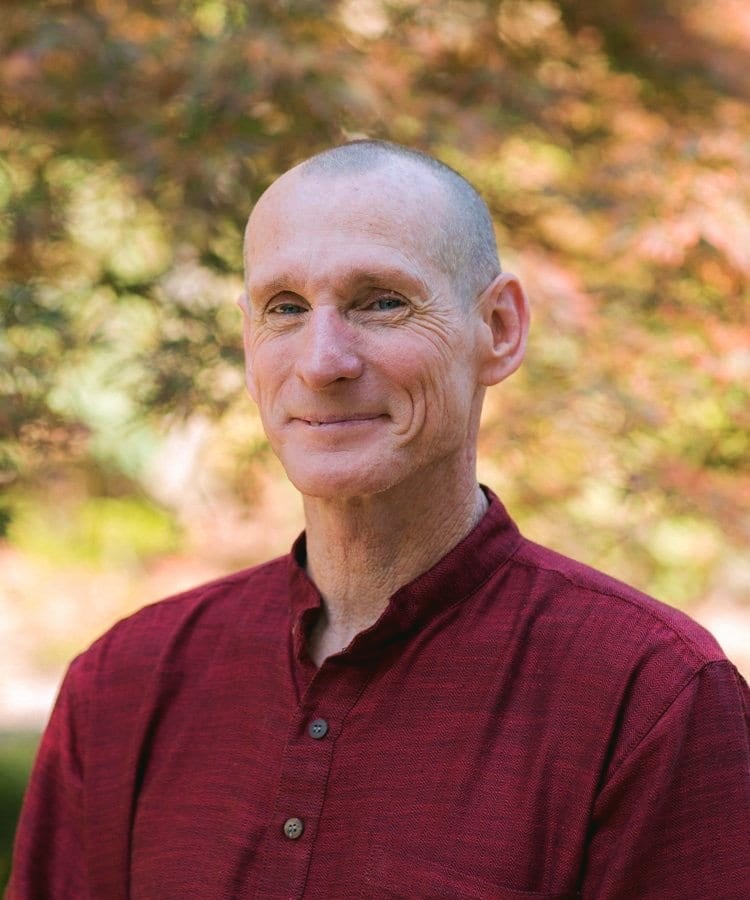
John Bruna
Meditation Teacher
Acerca de
John Bruna, M.Ed., is an author, educator, mindfulness trainer and dharma teacher based in Carbondale, in the Western Rocky Mountains of Colorado. He is a former Tibetan Buddhist monk. His stated mission is to offer teachings that are accessible, practical and help people live a meaningful life in accordance with their own values and belief systems.
John Bruna, M.Ed., is an author, educator, mindfulness trainer and dharma teacher based in Carbondale, in the Western Rocky Mountains of Colorado. He is a former Tibetan Buddhist monk. His stated mission is to offer teachings that are accessible, practical and help people live a meaningful life in accordance with their own values and belief systems.
John grew up in a low-income home after his father died when he was 6, leaving his mother to raise nine children. He has written that this led to addiction and homelessness, until he found recovery in 1984 at the age of 22. He has been in continuous recovery since then and remains active in the recovery community. He began as a drug and alcohol counselor for adolescents and families, then earned his teaching credentials and taught at Jordan High School in Long Beach, California.
A teaching by the 14th Dalai Lama inspired him to become a monk. In August 2005 he was ordained at Gaden Shartse Monastery in India by Lati Rinpoche, and he continued his monastic studies at Thubten Dhargye Ling under Geshe Tsultim Gyeltsen. In 2008 he became Director of the monastery's Cultural Foundation and spent three years organizing Tibetan Buddhist cultural and educational events on the Sacred Earth and Healing Arts of Tibet Tour. After more than six years of monastic life, he returned to lay life.
John is the founder of the Way of Compassion Foundation and a resident teacher and spiritual director at the Way of Compassion Dharma Center. He is also co-founder of the Mindful Life Program and Mindfulness in Recovery®. He wrote The Wisdom of a Meaningful Life: The Essence of Mindfulness and The Essential Guidebook to Mindfulness in Recovery. His TEDx talk is titled "Free Will is a Skill".
He leads workshops, retreats and online courses on mindfulness, meditation, the 12 Steps and loving-kindness. He speaks to treatment centers, universities, teachers, therapists and spiritual communities. He is known for his insight, warmth and humor, and for making teachings practical.
Questions
John Bruna is a mindfulness teacher, dharma teacher, and author based in Carbondale, Colorado, whose teaching draws directly from his lived experience in Tibetan Buddhism and recovery. After being ordained as a Buddhist monk in 2005 at Gaden Shartse Monastery in India under Lati Rinpoche, he spent over six years in monastic study before returning to lay life to make the teachings accessible to secular students and people in recovery communities. What distinguishes him in the meditation teacher landscape is his integration of dharma with practical recovery wisdom—he's been continuously sober since 1984 and centers this hard-won understanding in his work. Students and practitioners seek out his teaching because he brings both scholarly rigor (he holds an M.Ed. and formal training in Tibetan Buddhist philosophy) and authentic vulnerability: he teaches from having lived through poverty, addiction, homelessness, and profound spiritual transformation. His mission is explicitly practical—to help people live meaningful lives aligned with their own values—rather than esoteric or aspirational. People care because he makes the intangible machinery of meditation and dharma feel relevant to everyday struggles, especially for those navigating recovery or wrestling with how to live ethically in a secular world.
John Bruna's teaching is rooted in Tibetan Buddhism, specifically the Gelug lineage tradition preserved at Gaden Shartse Monastery, where he was ordained by Lati Rinpoche in August 2005. His monastic training continued at Thubten Dhargye Ling under the guidance of Geshe Tsultim Gyeltsen, scholars who represent centuries of philosophical and contemplative transmission within Tibetan Buddhist pedagogy. What's significant is that his lineage is not diluted or modernized—he trained in classical Tibetan Buddhist monastic curriculum, which emphasizes rigorous debate, textual study, and formal meditation practice alongside the development of compassion and ethical conduct. However, his return to lay life and his subsequent work as a meditation teacher reflects a deliberate choice to make these teachings accessible outside purely monastic or devotional contexts. He's founded the Way of Compassion Foundation and serves as spiritual director at the Way of Compassion Dharma Center, creating institutional frameworks for meditation and dharma study that are intentionally welcoming to secular students, people in recovery, and those without prior Buddhist background. This represents a thoughtful bridge between authentic lineage transmission and contemporary accessibility—he's not abandoning Tibetan Buddhism but translating it for audiences who need dharma reframed through the lens of modern mindfulness and recovery practice.
If you're approaching John Bruna with no prior experience in Buddhism, meditation, or recovery circles, start with his TEDx talk "Free Will is a Skill," which distills his core insight into accessible language without requiring any spiritual background or specialized vocabulary. This talk introduces his philosophical stance—that agency and ethical choice are learnable capacities, not fixed traits—and gives you a flavor of his teaching voice: direct, warm, and grounded in practical psychology rather than mystical abstraction. From there, his book "The Wisdom of a Meaningful Life: The Essence of Mindfulness" is the natural next step; it's structured as an introduction to both mindfulness practice and the dharmic principles underlying meaningful living, written specifically for secular readers. If you're also interested in recovery or addiction, his co-authored resource "The Essential Guidebook to Mindfulness in Recovery" goes deeper into how meditation and loving-kindness practice support long-term sobriety and healing—this is uniquely valuable if you're navigating that intersection. His YouTube channel and website (ameaningfullife.us) host talks, guided meditations, and resources that require no enrollment or prerequisite knowledge. The beauty of his entry points is that they're genuinely modular: you can start with the TEDx talk alone, or skip to a guided meditation if you prefer learning by doing rather than listening to concepts.
Most contemporary mindfulness teachers come from either secular psychology backgrounds or Asian monasteries; John Bruna is unusual for integrating both without diluting either one. He spent more than six years as an ordained Tibetan Buddhist monk with formal training in Gelug philosophy under established teachers, which gives his dharma teaching actual textual and lineage grounding—this is not pop Buddhism repackaged for wellness. Simultaneously, he worked as a drug and alcohol counselor, high school teacher at Jordan High School in Long Beach, and remains a person in continuous recovery since 1984, which means his teaching is never abstract or aspirational; he's talking about suffering, agency, and transformation as things he's lived through and witnessed in others. While many meditation teachers shy away from explicit discussion of addiction, recovery, and trauma, John Bruna centers these experiences as legitimate contexts for dharma practice and has co-founded Mindfulness in Recovery®, a systematic program integrating the twelve steps with Buddhist meditation—this represents substantive innovation in how we marry Western recovery frameworks with contemplative practice, not just generic "mindfulness for wellness." His teaching style is also marked by humor, directness, and refusal of spiritual pretension; he doesn't position meditation as a path to transcendence or enlightenment-lite, instead teaching it as a skill for living with clarity, kindness, and choice. For seekers tired of either medical-model mindfulness or devotional Buddhism, his integration is genuinely singular.
John Bruna's teaching is not oriented toward practitioners seeking purely devotional or faith-based Buddhism—if you want guru worship, deity yoga, ritual practice, or the devotional aesthetics of Tibetan Buddhism, his secularized approach to meditation and dharma will feel stripped down and philosophically focused rather than numinous. If you're looking for mindfulness that promises rapid results, peak experiences, or spiritual transcendence, his teaching emphasizes skill-building and gradual habituation rather than breakthrough moments; this is contemplative practice as disciplined training, not as mystical shortcut. His work is also not designed for practitioners with no interest in recovery frameworks or the twelve-step tradition—while his teaching is useful to anyone, the Mindfulness in Recovery program specifically targets people navigating addiction and sobriety, and that focus runs through his institutional work in ways that might feel repetitive or off-topic if you're seeking purely philosophical or secular meditation teaching. Additionally, his teaching centers ethical conduct and meaningful living as inseparable from practice; if you want meditation divorced from questions about how to live or what it means to act with integrity, his dharma teaching will pull those threads into every session. Finally, his work requires intellectual engagement and willingness to sit with ambiguity—he's not offering certainty, easy answers, or a pre-packaged spiritual identity. For practitioners who need a clear mythology, a charismatic teacher figure, or permission to stop questioning, his approach may feel too grounded and demand too much intellectual honesty.
John Bruna's primary website, ameaningfullife.us, is the central hub for his teaching calendar, upcoming retreats, workshops, and online courses—this is where retreat schedules, workshop dates, and program information are posted. His YouTube channel hosts archived talks, guided meditations, and recorded teachings that are continuously accessible; subscribing there gives you notification of new content without waiting for a live event. He maintains an active social media presence and email newsletter through his website where he announces workshops, retreat locations, and teaching dates. For a teacher based in Carbondale, Colorado, his primary teaching venues are likely regional—he leads retreats and workshops across the Western Rocky Mountains and appears at treatment centers, universities, and spiritual communities for speaking engagements. You can contact the Way of Compassion Dharma Center directly (linked from his website) for information about his local teaching schedule and residency programs. His YouTube profile and Spotify presence suggest he continues releasing recorded guided meditations and teaching content. The most reliable approach is to visit ameaningfullife.us directly and either subscribe to updates or follow his associated institutions (Way of Compassion Foundation and Dharma Center) for the most current information on retreats, workshops, and upcoming teaching dates.
John Bruna is described as bringing insight, warmth, and humor to his teaching, which means his classes and retreats prioritize accessible, lived wisdom over intellectual complexity or spiritual grandiosity. His sessions typically unfold as a combination of guided meditation, dharmic instruction, and frank dialogue about how these practices translate into real life—he's equally comfortable discussing Buddhist philosophy as he is unpacking the neurological realities of habit and addiction. In a retreat or workshop setting, you'd encounter careful, structured meditation instruction alongside teaching that integrates recovery principles, ethical reflection, and what he calls "making teachings practical"—meaning every concept he introduces connects to how you actually live. His warmth and humor function as teaching tools; he uses lightness to disarm spiritual pretension and create permission for honesty about struggle, doubt, and difficulty. Unlike teachers who maintain mystical distance, John Bruna is generously present and responsive to questions; students often report that his teaching lands as both rigorous and deeply human. His approach to retreat pacing is deliberate rather than intensive—this reflects his understanding that sustainable practice emerges from consistency and integration, not breakthrough intensity. If you attend a retreat or session, expect to work: meditate, study, reflect on your life in light of the teaching, and engage in community practice.
The unifying thread across John Bruna's teaching is the capacity for meaningful choice—his TEDx talk "Free Will is a Skill" crystallizes this: he teaches that ethical agency and conscious decision-making are learnable, not fixed. This theme plays out in his integration of loving-kindness meditation with recovery work; he emphasizes that both sobriety and compassion require training the mind to make different choices, moment by moment. Another central theme is the reframing of suffering: drawing on his Tibetan Buddhist training and his lived experience of poverty, addiction, and homelessness, he doesn't position suffering as something to transcend but as raw material for wisdom and transformation. His teaching consistently emphasizes that mindfulness and meditation are not wellness practices or stress-reduction techniques, but foundational tools for living in alignment with your own values—this grounds meditation in purpose and meaning rather than in self-optimization. Recovery and redemption form another deep current; his teaching centers the reality that people can change, that addiction and trauma are workable, and that the twelve-step tradition and Buddhist dharma offer complementary paths toward sustained transformation. He also teaches the inseparability of practice and ethics—meditation without consideration of how you're living is incomplete; wisdom without compassion is sterile. Finally, accessibility and demystification recur as philosophical commitments; he refuses to position Buddhist teachings as esoteric, lineage-exclusive, or requiring Asian cultural adoption.
John Bruna has published two books: "The Wisdom of a Meaningful Life: The Essence of Mindfulness" and "The Essential Guidebook to Mindfulness in Recovery," both of which are designed for self-study and individual reflection. These texts function both as instructional guides to meditation and mindfulness practice and as philosophical explorations of how contemplative training supports meaningful living and sustained recovery; readers can work through these at their own pace and apply the teachings to their specific circumstances. His TEDx talk "Free Will is a Skill" is publicly available and offers a distilled introduction to one of his core philosophical positions—it's a natural entry point for anyone wanting to hear his teaching voice and core insight without committing to a full workshop or retreat. His YouTube channel hosts recorded talks, guided meditations, and teaching segments that are continuously available for independent study; these range from brief meditation instructions to longer dharma talks that explore specific themes like compassion, recovery, or ethical living. He co-founded the Mindful Life Program, which suggests structured curricula or course materials are available, though the format and accessibility of these resources should be verified through his website. Unlike teachers who gatekeep transmission or require direct relationship, John Bruna has explicitly structured his teaching to be learnable through recorded and written formats—this reflects his commitment to accessibility and his understanding that not everyone can attend retreats or live classes. The combination of published books, recorded talks, and guided meditations means substantial independent study is genuinely possible.
No prior experience with Buddhism, meditation, or recovery is required to engage with John Bruna's teaching—this is by deliberate design. He explicitly positions his work as accessible to secular practitioners and people unfamiliar with Buddhist terminology or practice. His writing and talks introduce foundational concepts (what mindfulness actually is, how meditation works, what dharma means in contemporary context) without assuming prior knowledge. If you're new to meditation, his guided meditations on YouTube and in his courses walk you through technique step-by-step; if you've never heard Buddhist philosophy before, his books unpack key ideas like karma, compassion, and meaningful living in accessible language. That said, intellectual openness is essential—you'll get more from his teaching if you're willing to engage with philosophical questions about how to live, what ethics means, and whether your choices align with your values. If you're in recovery or have struggled with addiction, his integration of dharma with twelve-step principles will deepen your understanding immediately, but recovery experience is not a prerequisite. His teaching assumes you're genuinely interested in understanding your mind and behavior, and willing to practice meditation consistently—these are the real prerequisites, not prior spiritual credentials or cultural knowledge. One important note: if you come to his work seeking spiritual bypass or a substitute for professional mental health support, you'll find he consistently recommends therapy and medical care alongside meditation practice.


¿Eres tú? Reclamar esta página ›
There's more where this came from.
BrightStar is the global directory of artists, teachers, and healers in the wellness and spiritual movement. Find your next experience — or add yourself.
Discover More Artists
Browse 14,000+ curated profiles across kirtan, yoga, meditation, and beyond.
Explore directory →Find an Event Near You
Kirtan, retreats, sound baths, breathwork, ceremonies — happening this week.
Browse events →Add Your Profile
Are you an artist, teacher, or healer? Get listed — free, AI-assisted, live in minutes.
Get started →