Coming Up
What's Happening
Coming Up
Escuchar
Listening Journey
Sound Journey
Discography

Musician
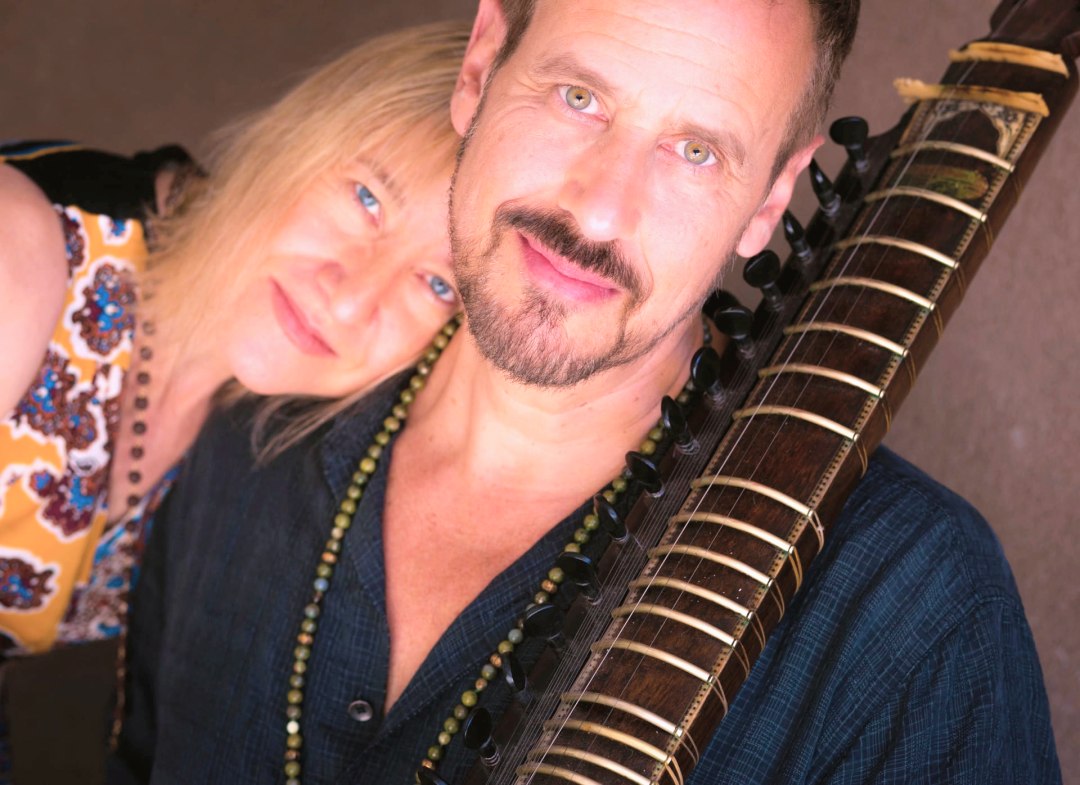
Benjy Wertheimer is an award-winning musician, composer, vocalist, producer and multi-instrumentalist. He is equally at home on tabla, congas, percussion, esraj, guitar and keyboards. Since 2001 he and his wife Heather have led kirtan, sacred chanting, around the world as the duo Shantala. Their music blends voices with instruments of India and the West. He makes his home in Portland, Oregon.
Benjy Wertheimer is an award-winning musician, composer, vocalist, producer and multi-instrumentalist. He is equally at home on tabla, congas, percussion, esraj, guitar and keyboards. Since 2001 he and his wife Heather have led kirtan, sacred chanting, around the world as the duo Shantala. Their music blends voices with instruments of India and the West. He makes his home in Portland, Oregon.
He began his musical studies at age five, with piano and later violin, flamenco guitar and Afro-Cuban percussion. He has been a student of Indian classical music for over 40 years, sitting with masters of that tradition including Alla Rakha, Zakir Hussain, Ali Akbar Khan and Z. M. Dagar. He trained in audio engineering at San Francisco State University, and he is also a producer, engineer and studio session musician.
Alongside Shantala, Benjy is a founding member of the world fusion ensemble Ancient Future and of the sacred music ensemble The Hanumen, with Gaura Vani, John De Kadt and Visvambhar Sheth of the Mayapuris. He has toured and produced two CDs with The Hanumen since 2009. In 2019 he joined David Michael and Grammy winner Nancy Rumbel to form the Confluence Trio, which released its first CD, Confluence, that May. He was also a contributing composer and member of the Zakir Hussain Rhythm Experience, along with the Grateful Dead's Mickey Hart.
He has performed and recorded with Krishna Das, Deva Premal and Miten, Jai Uttal, Walter Becker of Steely Dan, guitarist Michael Mandrell, Zakir Hussain and bamboo flute master G. S. Sachdev. He has opened for Carlos Santana, Paul Winter and Narada Michael Walden.
Benjy has produced 20 CDs since 2000, and they receive extensive airplay around the world. His CD Circle of Fire went to #1 on the New Age radio charts. He has also scored for NBC's Santa Barbara series and the Emmy-nominated documentary SEED: The Untold Story.
What's Happening
Listening Journey
Discography
Worth Knowing
Benjy Wertheimer is an award-winning musician, composer, and multi-instrumentalist whose four-decade immersion in Indian classical music has positioned him as a bridge between the rigorous technical traditions of the subcontinent and the Western sacred music landscape. What draws sustained attention to his work is the rare combination of credentials: he's equally fluent on tabla, congas, esraj, and guitar—not as a dilettante sampling multiple instruments, but as a serious student of each tradition's vocabulary and philosophy. Since 2001, he and his wife Heather have led the kirtan duo Shantala, bringing sacred chanting to audiences worldwide, grounding the devotional practice in authentic melodic structures and percussive precision. He operates simultaneously as a session musician and producer in studio contexts, which means his influence extends beyond his own releases into the sonic architecture of other artists' work. For listeners seeking kirtan and sacred chanting rooted in genuine lineage study rather than Westernized repackaging, Wertheimer's resume—four decades with classical masters—signals both depth and accessibility.
Benjy Wertheimer's foundation is Indian classical music, earned through over four decades of study with some of the greatest masters of that tradition—a commitment that positions him firmly within the Hindustani or Carnatic lineage, depending on which masters he studied with (our full artist profile would clarify the specific gurus and their schools). His signature role as a kirtan artist, exercised through Shantala with his wife, places him in the bhakti tradition of devotional sacred chanting, which draws its melodic and lyrical vocabulary from Sanskrit mantras and devotional poetry sung across Hindu, Buddhist, and increasingly ecumenical Western spiritual communities. The tabla and percussion work anchor him in the rhythmic science of tala and layered polyrhythm central to Indian classical performance, while his work on esraj (a bowed stringed instrument) and congas situates him in the less-traveled intersection where Indian classical vocabulary meets global percussion languages. This is not superficial eclecticism: the commitment to mastering individual instruments within their native contexts—rather than treating them as interchangeable colors—reflects a lineage-based approach that prioritizes depth over genre-blending novelty.
Start with Shantala's kirtan recordings, which offer the most direct entry point to Wertheimer's voice and compositional sensibility in a devotional context. Kirtan is designed as participatory sacred chanting—call-and-response between a lead vocalist (often Wertheimer) and audience or ensemble—making it inherently more accessible than instrumental ragas that require years of listening ear-training to follow. His YouTube channel hosts performances and explanations that contextualize the mantras and the practice itself, helpful for listeners unfamiliar with Sanskrit pronunciation or the spiritual intent underlying the chants. For those drawn to his instrumental work and percussion mastery, exploring his tabla and congas playing through session recordings or live performance videos reveals the technical sophistication beneath the devotional framing. The Spotify profile (2,072 followers, moderate discoverability at popularity score 47) reflects that he's a serious practitioner rather than a mainstream crossover artist, which means expectations should calibrate toward depth and tradition-fidelity rather than radio-friendly production values. A first listen to any Shantala kirtan will quickly signal whether the aesthetic—meditative pacing, Sanskrit syllables, harmonium-grounded melody—resonates with your listening intent.
The signature distinction is his multi-instrumental mastery grounded in forty years of Indian classical study—most contemporary Western kirtan artists are singers first, musicians second, often with limited percussion or stringed-instrument training. Wertheimer's tabla fluency, in particular, sets him apart; he doesn't merely accompany kirtan with decorative hand-drumming but structures the rhythmic foundation with the intricate tala cycles and layered complexity that define Indian classical music's temporal architecture. His background as a composer and studio producer means Shantala's arrangements are deliberate architectural choices rather than spontaneous devotional overflow; there's craft and intentionality audible in how he voices the harmonium, paces the call-and-response, and builds momentum across a chant cycle. The fact that he operates simultaneously in sacred and secular studio contexts (session work, production) suggests an artist comfortable moving between devotional and non-devotional spaces without compromising the integrity of either. Compared to kirtan artists who arrived at sacred chanting through yoga culture or New Age spirituality, Wertheimer's lineage is anchored in Indian classical music first—the devotional practice flows from that mastery rather than preceding it.
His work will not satisfy listeners seeking high-energy, rhythmically driving sacred music or world-fusion production values that blur Indian classical instrumentation with electronic beats and pop song structures. Kirtan performed in the traditional style, which is Wertheimer's primary practice, is slow-building, repetitive by design, and centered on the meditative accumulation of mantra rather than melodic surprise or dynamic peaks—this pacing and aesthetic will feel monotonous to listeners accustomed to pop or even contemporary yoga music's more compressed emotional arc. Those seeking instrumental Indian classical music in the full ragas tradition (hour-plus improvisatory unfoldings in a single raga) will find Shantala's shorter, song-form kirtan chants and Western-accessible arrangements too abbreviated and structured. His work assumes familiarity with or openness to Sanskrit, Hindu/Buddhist spiritual frameworks, and the devotional intent behind sacred chanting; listeners approaching kirtan purely as sonic texture without spiritual resonance may find the repeated mantras and call-and-response format grating rather than transcendent. Additionally, his modest Spotify popularity (47) reflects that he's cultivated a dedicated community rather than a mainstream audience—there's no crossover radio edit or celebrity-collaborator moment here, so those seeking kirtan as a trendy wellness product will be disappointed by the traditional, lineage-rooted approach.
The Shantala sound centers on Wertheimer's vocals—a clear, warm voice carrying Sanskrit mantras in call-and-response form—layered over harmonium (the hand-pumped keyboard instrument foundational to North Indian classical and devotional music), tabla (hand drums), and often additional percussion like congas or hand cymbals that create rhythmic dialogue beneath the melody. The pacing is deliberately unhurried: mantras repeat in cycles, building incrementally rather than through verse-chorus-bridge pop structures, with the rhythmic and melodic repetition serving a meditative function rather than a narrative or entertainment one. His multi-instrumental background means the percussion arrangements display sophisticated tala cycles (the rhythmic cycles of Indian classical music) rather than simple backbeats; listeners familiar with tabla will recognize the complexity underneath the devotional simplicity. The overall aesthetic is restraint and clarity—no heavy production, no layered overdubs competing for attention—the instrumentation serves the mantra's resonance rather than eclipsing it. The voice sits forward in the mix, slightly intimate, inviting the listener or ensemble to join the call-and-response, which is the essential participatory structure of kirtan; this is not recorded music meant for passive listening so much as a map for group chanting or personal meditation practice.
Benjy Wertheimer's core instrumental vocabulary includes tabla (hand drums, where he brings classical precision), congas (hand-played drums), percussion broadly, esraj (a bowed stringed instrument central to Indian classical music), guitar, and keyboards, with harmonium as the foundational voice-accompanying instrument in Shantala performances and recordings. His primary creative partnership is with his wife Heather, with whom he co-leads Shantala as a duo; the partnership has sustained kirtan leadership worldwide since 2001, suggesting a deep collaborative chemistry and shared vision for how to present sacred chanting in Western contexts. Beyond Shantala, Wertheimer works as a session musician and engineer/producer, meaning he collaborates with diverse artists in studio settings, bringing his percussion, stringed-instrument, and compositional expertise to projects outside the devotional kirtan frame. The fact that he's equally credentialed on tabla, congas, and esraj—rather than specializing in a single instrument—suggests a collaborative approach where he adapts his instrumental role to serve the larger musical or spiritual goal rather than foregrounding virtuosity for its own sake. His producer and engineer credits indicate he shapes the sonic architecture of recordings he works on, not merely as a session player but as a decision-maker in arrangement, mic placement, and mixing choices.
Kirtan as a form is inherently meditative—the call-and-response mantra chanting cycles are designed to anchor attention and create a steady rhythmic and melodic groove that supports both group meditation and personal practice. Any Shantala kirtan recording will function as a meditation support, particularly for listeners drawn to mantra-based practice or those seeking to deepen familiarity with Sanskrit sacred phrases through repeated exposure and chanting along. His work is particularly suited to yoga classes seeking a devotional opening or closing ritual, where the unhurried pacing and repetitive structure complement the physical practice without demanding analytical listening. For ceremony and ritual contexts—puja, kirtan circles, spiritual gatherings—Shantala's recordings serve as both reference material and live-performance templates, since kirtan is fundamentally meant to be sung communally rather than consumed as a recorded product. The tabla and percussion precision in his recordings also makes them suitable for movement practices beyond yoga—ecstatic dance, conscious movement ceremonies, or rhythm-based group experiences—where his rhythmic sophistication provides a container for embodied practice. Without access to specific track listings or his full discography in this data, a listener's best approach is to sample Shantala's catalog via Spotify, Apple Music, or YouTube and follow intuition about which chants or mantra sets resonate with their particular meditation, yoga, or ceremonial need.
The primary resource is the Shantala website (shantalamusic.com/benjy), where Benjy's artist page and Shantala's project hub should host current tour schedules, kirtan circle information, and release announcements. His YouTube channel (youtube.com/@BenjyWertheimer) serves as both an archive of past performances and, often, a space where tour dates and upcoming events are promoted or discussed. Spotify (spotify.com/artist/2Y4VeDUhZAE8UfGXqZJ7dX) and Apple Music (music.apple.com/artist/benjy-wertheimer) are reliable for new release notifications if you follow or save his profile, though given his moderate popularity score (47) and niche devotional focus, releases may not receive algorithm-driven promotion to casual listeners. Direct email subscription through the Shantala website is likely the most reliable way to receive event updates, as kirtan artists often maintain email lists for their communities rather than relying on social-media algorithms. Following any social media accounts affiliated with Shantala (Facebook, Instagram, or other platforms where the duo maintains a presence) will keep you informed of retreat announcements, tour schedules, and special performances. Since our current data does not reflect upcoming tour dates, checking the Shantala website directly remains the authoritative source for where Benjy and Heather are performing and teaching in the coming months.
Wertheimer's tabla mastery stands out because it's rooted in over four decades of study with Indian classical masters rather than acquired as a secondary skill or fusion experiment. His fluency in tala cycles—the complex rhythmic structures organizing Indian classical music—means his tabla work in Shantala's kirtan arrangements displays the sophisticated layering, rhythmic counterpoint, and structural integrity that classical tabla players spend lifetimes developing, rather than the simplified hand-drumming that often accompanies Western devotional music. What's distinctive is how he deploys this classical precision within a devotional and meditative frame: the tabla becomes a rhythmic anchor supporting the mantra's resonance rather than a display of virtuosity competing for attention. His simultaneous mastery of congas (a very different percussive language originating in Afro-Cuban tradition) suggests he understands rhythm and hand-drumming as universal languages rather than treating Indian classical tabla as a monolithic specialty; this cross-tradition fluency allows him to bring unexpected textural choices to arrangements without diluting the integrity of either tradition. For listeners encountering tabla within Shantala's kirtan context, the sophistication is often subliminal—the rhythmic foundation simply feels secure, spacious, and meditative—but musicians and tabla students will recognize the depth of training audible in every cycle and transition.
¿Eres tú? Reclamar esta página ›
Continue your journey
BrightStar is the global directory of artists, teachers, and healers in the wellness and spiritual movement. Find your next experience — or add yourself.
Browse 14,000+ curated profiles across kirtan, yoga, meditation, and beyond.
Explore directory →Kirtan, retreats, sound baths, breathwork, ceremonies — happening this week.
Browse events →Are you an artist, teacher, or healer? Get listed — free, AI-assisted, live in minutes.
Get started →