When the mind spirals into loops of worry, when to-do lists multiply in your head, when external noise and stress seem to colonize your awareness—this is what yoga philosophy calls citta vritti, or "mind chatter." It's the static that clouds mental clarity. And according to Patanjali's Yoga Sutras, the very definition of yoga is the stilling of these fluctuations of the mind. That intention—moving from noise toward silence—is the spine of any serious practice designed to meet anxiety where it lives: in the undisciplined terrain between stimulus and response.
Understanding Mental Overload in Yoga Philosophy
Mental overload doesn't arrive randomly. It accumulates. Stimuli pile up. Stress compounds. External influences and old conditioning layer themselves into the nervous system until the mind feels like a browser with a hundred tabs open, each one demanding attention. Yoga recognizes this pattern and doesn't pathologize it; instead, it offers diagnosis followed by remedy. The problem is identified as a restless mind. The solution is a disciplined practice that gradually retrains awareness.
This retraining begins with a simple shift: checking in rather than checking out. Before movement, before technique, comes honest assessment. Yoga teacher Donna Farhi calls this an "internal weather report"—a moment of genuine recognition of where you are, how you feel, what emotional temperature you're carrying. This isn't visualization or aspiration. It's ruthless honesty. Are you scattered? Ruminating? Distracted? The practice only works if you name what's actually present, not what you wish were present.
Why Does Breath Technique Calm the Overthinking Mind?
The breath is the only autonomous nervous system function humans can voluntarily control. You cannot will your heart to slow by force, but you can extend your exhalation, and your vagus nerve—the primary pathway of the parasympathetic nervous system—responds almost immediately. The practice uses a deliberate ratio: inhaling for a count of four, exhaling for a count of six. This isn't arbitrary. A longer exhale signals safety to your nervous system. It says, There is no threat right now. You can rest.
When you anchor this breath technique with a subtle throat restriction—ujjayi breath, the "oceanic" or whispered breath—you create another layer of focus. The soft hiss of restricted airflow gives the mind something to attend to besides its own loops. You're not fighting the thoughts; you're redirecting attention. Over time, with repetition, the thinking mind begins to quiet not from suppression but from boredom—it was never the real resource you needed.
The Architecture of a Grounded Practice
This sequence stays intentionally low to the ground. Seated work, then tabletop, then child's pose, then supine. There's biomechanical wisdom here. Gravity itself becomes an ally when you're prone or kneeling rather than standing or in deep backbends. The earth beneath you is no longer abstract. You can feel your sit bones root into the earth, your hands press into the mat, your forehead lower toward the ground. Proximity to the earth is grounding—literally and neurologically.
The practice opens with shoulder release, a somatic acknowledgment that many people carry emotional weight in the upper trapezius and neck. That tension—physical manifestation of mental burden—doesn't release through cognition alone. It releases through movement that gives the body permission to let go. "Any weight that you've been carrying" is invited to soften on the exhale. The body learns that release is possible.
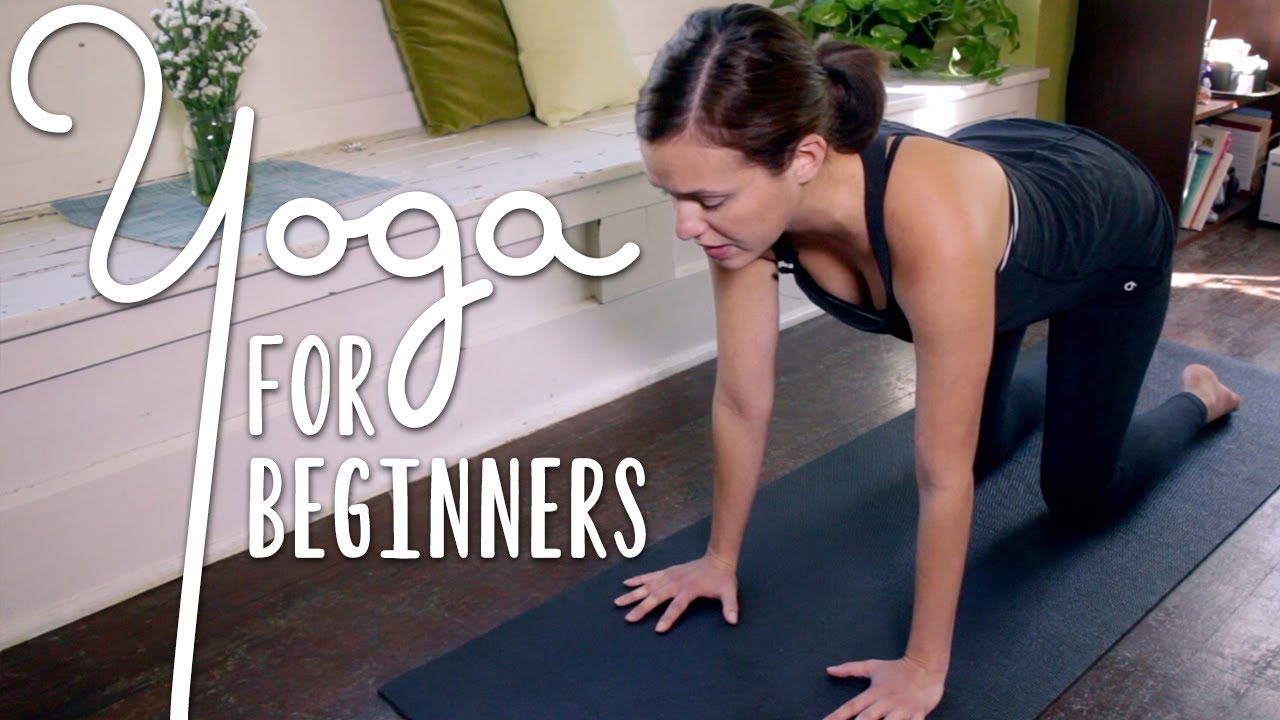
Gentle cat-cow sequences follow, slow enough to sense what's actually happening rather than fast enough to escape. The instruction here is stark: "Resist the urge to move fast." Anxiety wants speed. It wants to outrun itself. Yoga offers the opposite—movement slow enough that you can't out-think it, can't distract yourself from the present moment through momentum.
Active Awareness in Child's Pose
The practice moves into extended child's pose with active arms—a pose that usually suggests passivity but is performed here with conscious engagement. The fingertips press forward, the elbows lift, and the shoulders draw up and back. There's a tug all the way from the palms through the arms to the hips pulling back. It's what the practice calls "embodiment"—a state where your attention is in your body, not in your head. When attention is embodied, the thinking mind finally gets a break. The to-do list is set down, not forcibly suppressed but simply placed on hold while sensing takes over.
Positioning the Heart and Gut Centers
A significant moment comes when hands are placed specifically: left hand to heart center, right hand to low belly. This isn't decorative. In yoga philosophy, these are centers of different forms of intelligence. The heart holds emotional intelligence and wisdom. The low belly—the "gut"—holds visceral knowing, instinct. Anxiety often lives in the spinning mind because it has been divorced from these deeper intelligences. By bringing awareness to both centers simultaneously and deepening the breath while that awareness is placed there, you're reintegrating fragmented parts of self. The breath becomes the vehicle for that reintegration.
Preparation for Stillness, Not Stillness Itself
The practice takes pains to note that stilling the mind "does not happen right away." This matters. It's an inoculation against the secondary anxiety that arises when you sit to meditate and your mind immediately betrays you with a cascade of thoughts. The instruction to "allow this whole session to just be about checking in" reframes success. You're not trying to achieve blankness. You're not failing because thoughts arise. You're simply training attention through a guided sequence that gradually, naturally, creates conditions for the mind to settle. It's preparation, not performance.
Environmental awareness enters through a sonic exercise: notice a distant sound, then a close sound. This isn't meditation instruction pasted into yoga class. It's training the mind to move from externalized attention to internalized focus—from the far sound to the close sound to, eventually, to internal sensation. It's a graduated inward turning, scaffolded and gentle.
The Role of Micro-Adjustments
The practice repeatedly emphasizes small physical adjustments—repositioning a blanket, finding the right place for arms and hands to rest. This teaches something fundamental: you don't have to be anywhere else. The urge to be someplace other than here, doing something other than this, is the soil from which anxiety grows. By creating permission for micro-adjustments, by saying "make yourself comfortable," the practice communicates: This time is for you. There is no performance. No right way to sit. Your comfort and ease matter. That's not soft; it's radical.
Where to Go From Here
A single 20-minute session is an intervention, not a cure. Anxiety and overthinking are often chronic patterns, woven into nervous system habits developed over years. One practice creates a taste of what's possible—a temporary opening, a moment of clarity. The practice itself acknowledges this: "this too shall pass." But so does the anxiety. The value of returning to the practice, again and again, is that you begin to trust the process. You begin to believe that your mind can quiet, that your nervous system can down-regulate, that relief is not theoretical but somatically available to you. The practice works not through force but through repetition and trust.