BrightStar

Ver todos os Events

Descubra encontros conscientes

events

Yoga
Meditation
Breathwork
Qigong
Tai Chi
Sacred Music
World Music
Medicine Music
Sound Healing
Ecstatic Dance
Destinos populares
BaliSedonaLos AngelesCosta RicaNew YorkSan FranciscoAustinMiamiJoshua TreeTulum
Ver todas as categoriasVer todos os destinos

Explorar todos os recursos

Ferramentas poderosas para expandir seus eventos

Recursos da plataforma

Precificação dinâmica inteligente
Categorias de ingressos
Lugares marcados
Recuperação de carrinho abandonado
Recuperação de visitantes
Doações e preço variável
Sistema de afiliados
Scanner de ingressos
Códigos de desconto
Perguntas personalizadas
Compartilhamento de ingressos
Upsells e adicionais
Análises e relatórios
Sequências de e-mail
Lista de espera / Notificar / Lembrar
Pessoas e Lugares
Artists & TeachersEvent OrganizersVenues & StudiosKnowledge BaseGlossaryInspiration
Ver todos os recursosSobre nós
PreçosBlog
Language
Saved events
Ver todos os eventos

events

YogaMeditationBreathworkQigongTai ChiSacred MusicWorld MusicMedicine Music

Destinos populares

BaliSedonaLos AngelesCosta RicaNew YorkSan Francisco

Pessoas e Lugares

Artists & TeachersEvent OrganizersVenues & StudiosKnowledge BaseGlossaryInspiration

Recursos da plataforma

Precificação dinâmica inteligenteCategorias de ingressosLugares marcadosRecuperação de carrinho abandonadoRecuperação de visitantesDoações e preço variávelSistema de afiliadosScanner de ingressosCódigos de descontoPerguntas personalizadasCompartilhamento de ingressosUpsells e adicionaisAnálises e relatóriosSequências de e-mailLista de espera / Notificar / Lembrar
Ver todos os recursosSobre nós
PreçosBlog
EntrarBuscadoresCriadores
  • Ver todos os Eventos
  • Para buscadores
  • Yoga
  • Meditação
  • Respiração consciente
  • Qigong
  • Tai chi
  • Música sagrada
  • World music
  • Música de medicina
  • Terapia sonora
  • Dança extática
  • Retiros
  • Workshops
  • Todas as categorias →
  • Bali
  • Sedona
  • Los Angeles
  • Costa Rica
  • Tulum
  • Byron Bay
  • San Francisco
  • Austin
  • New York
  • San Diego
  • Denver
  • Seattle
  • Portland
  • Miami
  • Todas as cidades →
  • Join the Movement
  • Why we list
  • Sell Globally
  • Para criadores
  • Para equipes
  • Para escritores
  • Para professores
  • Para artistas de kirtan
  • Para estúdios
  • Para festivais
  • Para centros de retiro
  • Para organizações sem fins lucrativos
  • Embaixador da marca
  • Ingressos grátis
  • Elevate
  • Amplify
  • Rede de 500K+ compradores
  • Recuperação de carrinho abandonado
  • Precificação dinâmica inteligente
  • Categorias de ingressos
  • Eventos recorrentes
  • Lugares marcados
  • Sistema de afiliados
  • Lista de espera / Notificar
  • Scanner de ingressos
  • Widget incorporável
  • Distribuição de eventos
  • Central de mensagens
  • Integrações
  • Relatórios
  • Todos os recursos →
  • Sobre
  • O ecossistema
  • Blog
  • Glossário
  • Inspiração
  • Central de ajuda
  • Contato
  • Documentação da API
  • Recursos da marca
  • Carreiras
  • Imprensa
  • Termos de Serviço
  • Política de Privacidade

Eventos

  • Ver todos os Eventos
  • Para buscadores
  • Yoga
  • Meditação
  • Respiração consciente
  • Qigong
  • Tai chi
  • Música sagrada
  • World music
  • Música de medicina
  • Terapia sonora
  • Dança extática
  • Retiros
  • Workshops
  • Todas as categorias →

Destinos

  • Bali
  • Sedona
  • Los Angeles
  • Costa Rica
  • Tulum
  • Byron Bay
  • San Francisco
  • Austin
  • New York
  • San Diego
  • Denver
  • Seattle
  • Portland
  • Miami
  • Todas as cidades →

Para criadores

  • Join the Movement
  • Why we list
  • Sell Globally
  • Para criadores
  • Para equipes
  • Para escritores
  • Para professores
  • Para artistas de kirtan
  • Para estúdios
  • Para festivais
  • Para centros de retiro
  • Para organizações sem fins lucrativos
  • Embaixador da marca
  • Ingressos grátis
  • Elevate
  • Amplify

Recursos

  • Rede de 500K+ compradores
  • Recuperação de carrinho abandonado
  • Precificação dinâmica inteligente
  • Categorias de ingressos
  • Eventos recorrentes
  • Lugares marcados
  • Sistema de afiliados
  • Lista de espera / Notificar
  • Scanner de ingressos
  • Widget incorporável
  • Distribuição de eventos
  • Central de mensagens
  • Integrações
  • Relatórios
  • Todos os recursos →

Empresa

  • Sobre
  • O ecossistema
  • Blog
  • Glossário
  • Inspiração
  • Central de ajuda
  • Contato
  • Documentação da API
  • Recursos da marca
  • Carreiras
  • Imprensa
  • Termos de Serviço
  • Política de Privacidade
BrightStar
Baixe o app
Baixar naApp StoreDisponível noGoogle Play
© 2026 BrightStar. Todos os direitos reservados.
Inspiration

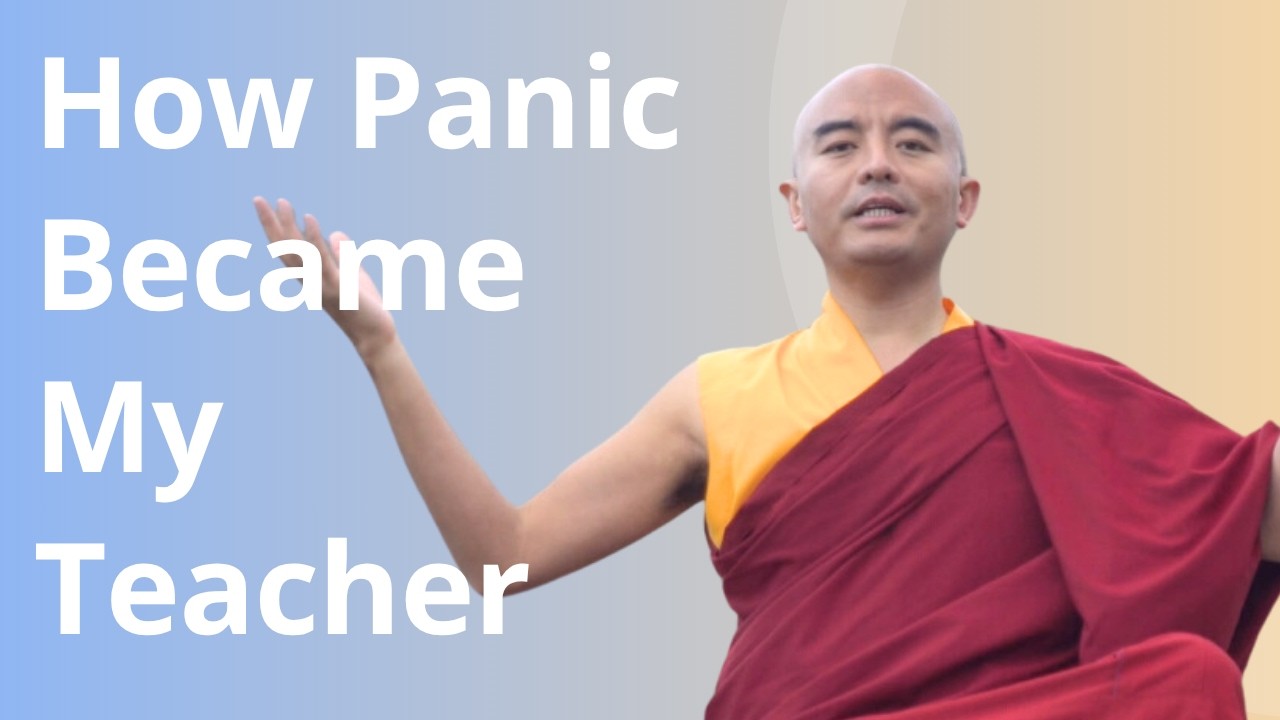
Why Fighting Panic Makes It Grow, and What to Try Instead

Yongey Mingyur Rinpoche
Oct 19, 2026
7 min de leitura
Assistir · 7

Picture the moment. The heart is climbing, the breath has gone shallow, and a voice inside says only one thing: make this stop. Almost everyone knows that reflex. In a two-minute teaching, Yongey Mingyur Rinpoche takes that reflex apart. His argument is that the effort to banish panic, worry, or anxiety often feeds the very thing we are fighting, and that the way out runs in the opposite direction from where most of us are pushing. Drawing on his own panic attacks as a child, he describes a three-stage shift: from trying to get rid of panic, to greeting it, to using it as a support for meditation. What follows unpacks each stage, why the logic holds together, and where the limits of the idea lie.

Leitura · 7 seções

What happens when you try to get rid of panic?

The teaching opens with its thesis, stated flatly:

"Don't try to get rid of panic. If you try to get rid of panic, panic become bigger." (Mingyur Rinpoche, YouTube teaching, 0:00)

What makes this more than a slogan is the second layer he identifies. Panic is one experience. The reaction to panic is another. He says he came to see that "the panic of panic is stronger than panic," and then names the mechanism directly: "The fear of panic, aversion of panic, that makes panic bigger actually." (0:09–0:21)

Consider what that means in practice. A racing heart is alarming on its own. But if every sensation is met with a silent verdict, this is dangerous, this must not be happening, I have to stop it, then the body receives a signal that the situation is an emergency. The attempt to escape the feeling becomes evidence that the feeling is a threat. The resistance adds fuel. This is the loop Mingyur Rinpoche describes, and it explains why the harder someone pushes against panic, the more total it can seem.

The insight is not that panic is pleasant or that the body's alarm is imaginary. It is that the struggle against the experience is a separate, often larger, source of suffering than the experience itself.

Why did he start saying "Hello, panic. Welcome."?

Having seen the loop, he began to learn meditation and tried a different approach. In his words: "what I did is, 'Hello, panic. Welcome.'" (0:27–0:30) He reports the result plainly: "Actually, it helps. When I say, 'Welcome to panic.' The intense is diminishing. I was quite happy." (0:33–0:43)

The move here is subtle. He is not telling himself the panic is fine, and he is not asking it to leave. He is changing the stance from opposition to acknowledgment. Instead of treating the surge as an enemy to be defeated, he treats it as a visitor who has arrived. That shift removes the second layer, the aversion, and the first layer, the sensation, often loses intensity when it is no longer being fought.

Readers who have lived with anxiety will recognize how counterintuitive this is. Welcoming a feeling of dread sounds like giving it permission. Mingyur Rinpoche's point, as stated in the teaching, is that the permission is exactly what releases the grip.

Is a "fake welcome" still a real practice?

This is the most honest part of the teaching, and it deserves attention. He does not present the greeting as a finished realization. He describes the trap that comes next: "So, the next time what I'm doing is, 'Hello, panic. Welcome.' If I say welcome, then you will not come back again, right?" (0:52–0:60)

He catches the flaw himself. The welcome is being used as a bargain, a way to make panic leave. "So, in a way, it become circle again, like dog chasing tail. Like fake fake welcome." (1:02–1:07) Then the twist: "But even though that is fake welcome, it helps." (1:07–1:12)

This matters for anyone trying the idea. A welcome offered in order to get rid of something is still a strategy, and strategies can circle back into resistance. Mingyur Rinpoche's account suggests the practice is not about getting the words perfectly sincere before beginning. Imperfect, even self-serving greetings can loosen the original grip, and the deeper shift arrives through repeated practice. The teaching frames this as movement, not arrival.

How does panic become a support for meditation?

From there, he describes a progression in what he uses as an anchor. "So, then I begin to learn meditation and then let panic come, let the panic go, but I was discovering more and more about awareness, love and compassion, wisdom behind the panic. The essence of the panic." (1:14–1:27)

Then the sequence becomes clear: "At the beginning, I use breathing as support for meditation, sound as support for meditation. But in the end, panic become support for meditation." (1:33–1:44)

Anyone who has learned meditation will recognize the logic of a support. Beginners typically rest attention on the breath or on a sound, returning to it each time the mind wanders. Mingyur Rinpoche's claim is that panic can join that list, not as a problem standing in the way of practice, but as the object the attention rests on. Once that happens, he says, "awareness become bigger than panic. So, panic is supporting awareness, almost like to remember the awareness." (1:46–1:58)

The word "remember" is worth pausing on. Panic, in this framing, does not have to be eliminated for awareness to grow. It becomes a reminder to notice, the thing that brings the mind back to the present moment with each surge.

What does "when you see the river, you are out of river" mean?

He offers an image to describe the new relationship: "And sometime what we call when you see the river, you are out of river. When you see the panic, you are out of panic. But at the same time, panic still there." (1:58–2:10)

The metaphor points to a shift in vantage point. When you are inside a river, you are carried by its current and cannot see its shape. Stepping onto the bank lets you observe the water, including its force, without being swept away. Mingyur Rinpoche says the same can happen with panic. The panic is not gone. It is still there, sometimes strongly. But the observer is no longer identical with it.

That distinction is at the center of his whole approach. The suffering is not only the sensation; it is the sense of being fully inside it, with no space around it. Awareness creates that space.

What does it mean that panic became a friend and teacher?

He closes with the line that gives the teaching its title: "My panic really become my friend, my teacher." (2:10–2:18)

It would be easy to read this as a neat conclusion, but the speech itself does not resolve every question. It does not say panic disappears, and it does not offer a timeline. What it offers is a direction: stop treating the experience as an enemy to defeat, notice what it reveals, and let it serve as a point of return.

A practical note from the editors, not from the teacher: this is a brief teaching, and panic attacks can be serious. Anyone experiencing frequent or severe panic should involve a qualified health professional alongside any contemplative practice. Mingyur Rinpoche's account is a personal one, and it is offered as his experience.

Where to go from here

This clip is a short excerpt of a longer teaching. The full version is available at youtu.be/HUfcPiuMzdU. For readers who want to learn meditation under his guidance at their own pace, the Joy of Living Meditation Program is listed at joy.tergar.org, along with Vajrayana study and online events on the Tergar site. Start with the three stages described here: notice the resistance, try a welcome even if it feels imperfect, and then observe whether the panic can become a point of return for your attention rather than only something to escape.
Comments

Loading the conversation…

Transcript

[0:00] Don't try to get rid of panic. If you

[0:03] try to get rid of panic, panic become

[0:04] bigger.

[0:06] Then I was thinking, maybe that's true.

[0:09] So, later I discover actually for me,

[0:13] the panic of panic is stronger than

[0:16] panic. The fear of panic, aversion of

[0:20] panic,

[0:21] that makes panic bigger actually.

[0:24] So, then I begin to learn meditation.

[0:27] And what I did is, "Hello, panic.

[0:30] Welcome."

[0:33] And what happened? Actually, it helps.

[0:37] When I say, "Welcome to panic."

[0:41] The intense

[0:43] is diminishing. I was quite happy.

[0:47] Now I know

[0:49] how to do. So, the next time what I'm

[0:52] doing is, "Hello, panic. Welcome."

[0:55] If I say welcome,

[0:58] then you will not come back again,

[1:00] right?

[1:02] So, in a way,

[1:04] it become circle again, like dog chasing

[1:06] tail.

[1:07] Like fake fake welcome.

[1:10] But even though that is fake welcome, it

[1:12] helps.

[1:14] So, then I begin to learn meditation and

[1:17] then let panic come, let the panic go,

[1:19] but I was discovering more and more

[1:22] about awareness, love and compassion,

[1:24] wisdom behind the panic.

[1:27] The essence of the panic. Then it slowly

[1:29] slowly there's another meditation

[1:31] technique that

[1:33] I can use panic as support for my

[1:35] meditation. So, at the beginning, I use

[1:38] breathing as support for meditation,

[1:40] sound as support for meditation. But in

[1:42] the end, panic become support for

[1:44] meditation.

[1:46] So, what happened? Now awareness become

[1:49] bigger than panic.

[1:51] So, panic is supporting awareness,

[1:54] almost like to remember the awareness.

[1:58] And sometime what we call when you see

[2:00] the river, you are out of river.

[2:03] When you see the panic, you are out of

[2:06] panic.

[2:07] But at the same time, panic still there.

[2:10] My panic really become my friend, my

[2:12] teacher.

Yongey Mingyur Rinpoche
ArtistYongey Mingyur Rinpoche

A Tibetan Buddhist meditation teacher known for presenting ancient Tibetan wisdom in a fresh, playful way, whose bestselling book The Joy of Living has reached readers worldwide.

Ver perfilSite
Explorar temas
Panic-attacksMingyur-rinpocheMeditation-for-anxietyAversionAwareness

Tem perguntas?

Perguntas frequentes

In this teaching, Mingyur Rinpoche says the fear of panic and the aversion to it can make panic bigger. Resisting a sensation can be read by the body as evidence of danger, which adds intensity to the original experience.
He describes greeting panic with 'Hello, panic. Welcome.' He reports that this helped reduce the intensity, shifting from opposition to acknowledgment.
Mingyur Rinpoche admits that a welcome offered to make panic leave can become a circular strategy, like a dog chasing its tail. He still says that even this imperfect welcome helps, and that the deeper shift comes with practice.
He describes a progression from breathing and sound as supports to panic itself. In his account, panic eventually becomes an object that reminds him to return to awareness.
It is an image for observing an experience from outside it. Mingyur Rinpoche says that when you see the panic, you are out of panic, even though the panic is still there.
No. The teaching says that panic still remains even when awareness grows bigger than it. It describes a changed relationship to panic, not its disappearance.

Continuar lendo

More from Yongey

Ver Tudo
Why Panic Can Become a Meditation Teacher, Not an Enemy
Inspire

Why Panic Can Become a Meditation Teacher, Not an Enemy

Mingyur Rinpoche recalls how fighting panic only made it grow, and how welcoming it turned panic into a support for meditation and awareness…

1 min read
Brain on Meditation: Neuroscience of Inner Transformation
Inspire

Brain on Meditation: Neuroscience of Inner Transformation

A Tibetan Buddhist teacher's groundbreaking brain scans reveal meditation physically rewires neural pathways, offering scientific proof we c…

1 min read
Awareness Beyond the Person: The Direct Path to Universal Consciousness
Inspire

Awareness Beyond the Person: The Direct Path to Universal Consciousness

At Monte Sahaja, a seeker discovers that consciousness itself—not the person—is the unchanging witness of all experience. A radical shift in…

1 min read
What You Know for Sure: Consciousness Aware of Itself
Inspire

What You Know for Sure: Consciousness Aware of Itself

Tolle answers Oprah's closing question with one certainty: you are conscious. Here is why noticing that awareness halts thought, and the sma…

1 min read

Continue explorando

Continue sua jornada

Mais sabedoria e mais encontros de todo o diretório BrightStar.

Mais artigos

Explore a biblioteca completa de ensinamentos, entrevistas e guias.

Voltar a todos os artigos →

Professores e artistas

Conheça as linhagens, os músicos e os guias do mundo consciente.

Explorar artistas →

Encontre um evento

Kirtan, retiros, banhos de som, breathwork, festivais — acontecendo em breve.

Ver eventos →