BrightStar

Ver todos os Events

Descubra encontros conscientes

events

Yoga
Meditation
Breathwork
Qigong
Tai Chi
Sacred Music
World Music
Medicine Music
Sound Healing
Ecstatic Dance
Destinos populares
BaliSedonaLos AngelesCosta RicaNew YorkSan FranciscoAustinMiamiJoshua TreeTulum
Ver todas as categoriasVer todos os destinos

Explorar todos os recursos

Ferramentas poderosas para expandir seus eventos

Recursos da plataforma

Precificação dinâmica inteligente
Categorias de ingressos
Lugares marcados
Recuperação de carrinho abandonado
Recuperação de visitantes
Doações e preço variável
Sistema de afiliados
Scanner de ingressos
Códigos de desconto
Perguntas personalizadas
Compartilhamento de ingressos
Upsells e adicionais
Análises e relatórios
Sequências de e-mail
Lista de espera / Notificar / Lembrar
Pessoas e Lugares
Artists & TeachersEvent OrganizersVenues & StudiosKnowledge BaseGlossaryInspiration
Ver todos os recursosSobre nós
PreçosBlog
Language
Saved events
Ver todos os eventos

events

YogaMeditationBreathworkQigongTai ChiSacred MusicWorld MusicMedicine Music

Destinos populares

BaliSedonaLos AngelesCosta RicaNew YorkSan Francisco

Pessoas e Lugares

Artists & TeachersEvent OrganizersVenues & StudiosKnowledge BaseGlossaryInspiration

Recursos da plataforma

Precificação dinâmica inteligenteCategorias de ingressosLugares marcadosRecuperação de carrinho abandonadoRecuperação de visitantesDoações e preço variávelSistema de afiliadosScanner de ingressosCódigos de descontoPerguntas personalizadasCompartilhamento de ingressosUpsells e adicionaisAnálises e relatóriosSequências de e-mailLista de espera / Notificar / Lembrar
Ver todos os recursosSobre nós
PreçosBlog
EntrarBuscadoresCriadores
  • Ver todos os Eventos
  • Para buscadores
  • Yoga
  • Meditação
  • Respiração consciente
  • Qigong
  • Tai chi
  • Música sagrada
  • World music
  • Música de medicina
  • Terapia sonora
  • Dança extática
  • Retiros
  • Workshops
  • Todas as categorias →
  • Bali
  • Sedona
  • Los Angeles
  • Costa Rica
  • Tulum
  • Byron Bay
  • San Francisco
  • Austin
  • New York
  • San Diego
  • Denver
  • Seattle
  • Portland
  • Miami
  • Todas as cidades →
  • Join the Movement
  • Why we list
  • Sell Globally
  • Para criadores
  • Para equipes
  • Para escritores
  • Para professores
  • Para artistas de kirtan
  • Para estúdios
  • Para festivais
  • Para centros de retiro
  • Para organizações sem fins lucrativos
  • Embaixador da marca
  • Ingressos grátis
  • Elevate
  • Amplify
  • Rede de 500K+ compradores
  • Recuperação de carrinho abandonado
  • Precificação dinâmica inteligente
  • Categorias de ingressos
  • Eventos recorrentes
  • Lugares marcados
  • Sistema de afiliados
  • Lista de espera / Notificar
  • Scanner de ingressos
  • Widget incorporável
  • Distribuição de eventos
  • Central de mensagens
  • Integrações
  • Relatórios
  • Todos os recursos →
  • Sobre
  • O ecossistema
  • Blog
  • Glossário
  • Inspiração
  • Central de ajuda
  • Contato
  • Documentação da API
  • Recursos da marca
  • Carreiras
  • Imprensa
  • Termos de Serviço
  • Política de Privacidade

Eventos

  • Ver todos os Eventos
  • Para buscadores
  • Yoga
  • Meditação
  • Respiração consciente
  • Qigong
  • Tai chi
  • Música sagrada
  • World music
  • Música de medicina
  • Terapia sonora
  • Dança extática
  • Retiros
  • Workshops
  • Todas as categorias →

Destinos

  • Bali
  • Sedona
  • Los Angeles
  • Costa Rica
  • Tulum
  • Byron Bay
  • San Francisco
  • Austin
  • New York
  • San Diego
  • Denver
  • Seattle
  • Portland
  • Miami
  • Todas as cidades →

Para criadores

  • Join the Movement
  • Why we list
  • Sell Globally
  • Para criadores
  • Para equipes
  • Para escritores
  • Para professores
  • Para artistas de kirtan
  • Para estúdios
  • Para festivais
  • Para centros de retiro
  • Para organizações sem fins lucrativos
  • Embaixador da marca
  • Ingressos grátis
  • Elevate
  • Amplify

Recursos

  • Rede de 500K+ compradores
  • Recuperação de carrinho abandonado
  • Precificação dinâmica inteligente
  • Categorias de ingressos
  • Eventos recorrentes
  • Lugares marcados
  • Sistema de afiliados
  • Lista de espera / Notificar
  • Scanner de ingressos
  • Widget incorporável
  • Distribuição de eventos
  • Central de mensagens
  • Integrações
  • Relatórios
  • Todos os recursos →

Empresa

  • Sobre
  • O ecossistema
  • Blog
  • Glossário
  • Inspiração
  • Central de ajuda
  • Contato
  • Documentação da API
  • Recursos da marca
  • Carreiras
  • Imprensa
  • Termos de Serviço
  • Política de Privacidade
BrightStar
Baixe o app
Baixar naApp StoreDisponível noGoogle Play
© 2026 BrightStar. Todos os direitos reservados.
Inspiration

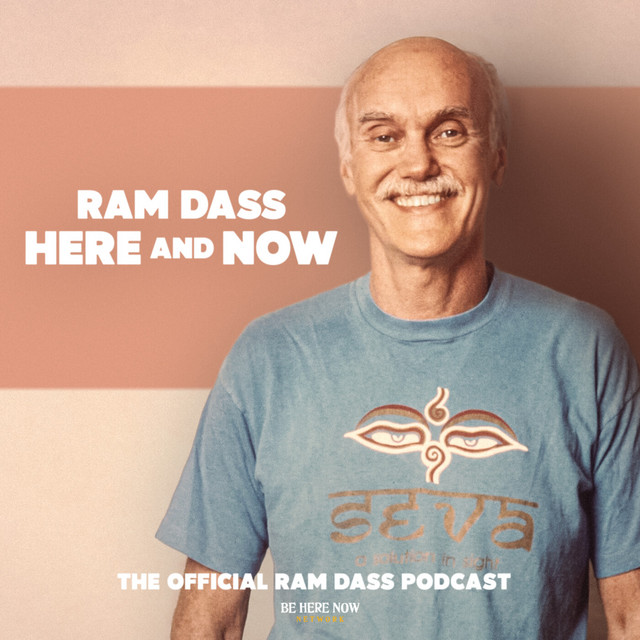
Scenarios, Myths, and Spiritual Truth: Ram Dass & Timothy Leary

Be Here Now Network
Be Here Now Network
Dec 10, 2024
8 min de leitura

At a 1983 Harvard reunion Q&A, Ram Dass and Timothy Leary examine the stories we tell ourselves about spirituality, the future, and consciousness exploration. Their central argument: we construct elaborate scenarios and myths to make sense of reality, but liberation comes from seeing through these narratives and acting with integrity moment to moment, free from the structural projections we've inherited or invented. The session touches on the future of psychedelics, the nature of emptiness and form, the risks of spiritual hierarchy, and what remains when you strip away all the mythology.

Leitura · 9 seções

What Are Scenarios and Myths in Spiritual Practice?

Ram Dass and Timothy Leary's core insight in this reunion dialogue centers on the idea that human consciousness doesn't encounter raw experience—it encounters experience *through* scenarios and myths. These are the narratives, belief systems, and structural frameworks we inherit or create to make sense of life. A scenario might be "enlightenment is a distant goal I must achieve through years of practice." A myth might be "psychedelics are sacred keys that unlock higher consciousness" or "the future will bring a spiritual revolution."

Ram Dass articulates this problem directly: "My feeling is that we see through scenarios and myths so much that all we can do from here is be true to our self from moment to moment. Because every time we say, 'Well, where we go from here is…' We are already sending a whole structural thing forward." This observation cuts to the heart of spiritual practice. The moment you construct a narrative about the future—even an optimistic one about collective awakening—you've already imposed a mental structure that obscures the immediate, unmediated present.

The distinction is crucial. Seeing through scenarios doesn't mean they disappear; it means you stop mistaking them for reality. A spiritual seeker might recognize that the whole framework of "spiritual progress" is a useful myth for organizing practice, but not the thing itself. When you see the myth clearly, you're no longer trapped inside it.

How Do We Construct Narratives About the Future?

Much of the Q&A session grapples with predictions and forward-looking claims. Both teachers acknowledge the temptation to prophesy—to say what "will" happen in the 1980s, where psychedelics are heading, or what collective consciousness might look like. Yet Ram Dass seems acutely aware of the trap: every prediction is itself a scenario imposed on the open field of what's possible.

Timothy Leary, known for his enthusiasm about technological futures and psychedelic possibility, brings his own optimism to the conversation. The discussion around whether psychedelics will gain acceptance, how brain chemistry works, and what neural expansion might entail—these are scenarios too. They're useful frameworks for thinking and collaborating, but they're not final truths.

The banter about their different orientations is revealing. Leary leans toward future-oriented speculation and technological optimism (including his "Revelations per Minute meter," a whimsical way of measuring spiritual intensity). Ram Dass seems more concerned with the present-moment integrity that underlies any authentic vision. Neither dismisses the other's approach entirely; instead, they model a dialogue between visionary projection and present-centered awareness.

What Role Do Psychedelics Play in Seeing Through Myths?

The reunion touches on the history both teachers share: their early experiments with psychedelics, the controversies surrounding them, and the persistent questions about safety and efficacy. The question of whether psychedelics cause brain damage appears to have been a live concern in 1983—a myth or fear they address, presumably with evidence from their own experience and observation.

What's implicit in their discussion is that psychedelics themselves can reveal the constructed nature of consciousness. An LSD experience, for example, might temporarily dissolve the normal scenarios you live through—identity, time, narrative continuity—and show you that those structures are built, not fundamental. But that revelation, too, becomes a memory, a story you tell about the experience. The myth "I had a mystical experience on acid" is itself a scenario.

The deeper question is not whether psychedelics work (they clearly had effects), but what you do with the perspective they offer. Do you become attached to the experience as proof of hidden realities? Do you construct a new myth around it? Or do you use it as a tool to see the mythic nature of all frameworks, including spiritual ones?

Emptiness and Form: The Fundamental Duality

The Q&A mentions questions about "emptiness and form"—a foundational Buddhist and Hindu teaching. Emptiness (sunyata) refers to the lack of inherent, independent existence; form refers to the manifest world of phenomena. Most spiritual traditions recognize that you can't live entirely in the realm of emptiness—you need form to function. The art is moving fluidly between them without being trapped in either.

This connects directly to Ram Dass and Leary's scenario-myth theme. Forms—social structures, narratives, spiritual practices—are necessary. The Buddhist monk's robes, the spiritual community, the Q&A session itself are forms. But mistaking form for the ultimate reality is the trap. You can honor the scenario without being imprisoned by it.

What About the Brotherhood of Eternal Love and Ken Kesey?

The session includes questions about historical figures and movements: the Brotherhood of Eternal Love (a spiritual community associated with psychedelic exploration) and Ken Kesey (author of One Flew Over the Cuckoo's Nest and a fellow consciousness explorer). While the full Q&A answers aren't detailed in available material, these references point to a lived community of seekers who were experimenting with these ideas in real time.

Ram Dass and Leary weren't theorizing in a vacuum. They were part of a movement, part of a shared mythology about what was possible in consciousness exploration. The reunion itself—bringing together figures from that era—is a kind of myth-making: the attempt to recover and honor a particular moment in cultural history. Yet even this nostalgia is a scenario, a story about "the good old days of authentic exploration."

Collaboration, Writing, and Authorship

The two teachers discuss their work as collaborators and writers. This is relevant because writing itself is a scenario-making activity. You take the amorphous experience of consciousness, meditation, or psychedelic states and translate it into language and structure. That translation inevitably distorts. The best written collaborations, Ram Dass and Leary seem to suggest, are those where both authors are aware they're working with myth and willing to let the reader see the seams.

Their book Dying to Know, which celebrates their friendship, is itself part of this mythmaking. It tells a story about two spiritual pioneers and their decades-long dialogue. That story is real—their friendship happened—but it's also a narrative imposed on lived experience. Both teachers, given their sophistication, likely understand this paradox.

Gandhi Versus ET: A Debate on Values

The session includes a "lively debate" about Gandhi versus ET (the alien from Spielberg's film). This seems like playful intellectual sparring, but it's also a window into different scenarios about what matters spiritually. Gandhi represents a scenario of renunciation, nonviolence, and disciplined social transformation. ET represents wonder, innocence, and extraterrestrial otherness. The debate, implicitly, asks: which narrative guides how we should be in the world?

Neither answer is final, Ram Dass and Leary seem to suggest. You can appreciate Gandhi's commitment without being bound by his particular scenario. You can wonder about ET without needing to believe in actual alien visitors. The point is to see through the mythology to the authentic impulse underneath.

Righteousness, Voting, and Breaking Bread

The session wraps up with "banter about voting, righteousness, and breaking bread with old enemies." This is significant because it points to a practical ethics that emerges from seeing through scenarios. If you realize that all political ideologies are myths (useful ones, perhaps, but myths nonetheless), how do you vote? If you see through the myth of the righteous self versus the unrighteous other, how do you relate to enemies?

Breaking bread with an enemy is a profound spiritual practice. It says: I refuse the scenario that divides us into opposed camps. I will sit across the table from you and remember our shared humanity, even if we disagree. This isn't naive pacifism; it's a refusal of the mythic structure that makes enemies absolute.

For Ram Dass and Leary, these practical implications matter. Spiritual seeing—clarity about the constructed nature of identity and narrative—has consequences for how you vote, whom you break bread with, and whether you insist on being right.

Where to Go From Here

The paradox both teachers grapple with is that you can't actually step outside scenarios entirely while you're alive. You need narratives to organize experience and coordinate with others. What changes is transparency: you see the scenario as a scenario. The question "where do we go from here?" remains live, but you hold it lightly, knowing it's already a story.

The Harvard reunion captures a moment when both teachers had decades of practice and exploration behind them. They'd tested mythologies against direct experience. They'd seen psychedelics' possibilities and limits. They'd encountered the spiritual hierarchies and ego games that spring up even (or especially) in liberation-focused communities. Out of that maturity comes not certainty, but a kind of grounded skepticism—toward their own visions as much as anyone else's.

The legacy of this conversation, then, is an invitation: examine the scenarios and myths you live through. Recognize that spirituality itself has myths—enlightenment as a destination, the guru as infallible, the psychedelic experience as the gateway to truth. See the myth clearly, and you're free to work with it, collaborate with others who hold different myths, and act with integrity in each moment rather than serving the larger narrative structure.

Comments

Loading the conversation…

Be Here Now Network
ArtistBe Here Now Network

Be Here Now Network is the creator of Heart Wisdom with Jack Kornfield, a podcast exploring consciousness, spirituality, and personal transformation. With 313 episodes, they have c…

Ver perfilSite
Explorar temas
Scenarios-mythsSpiritual-narrativePsychedelics-consciousnessPresent-moment-awarenessEgo-spirituality

Tem perguntas?

Perguntas frequentes

They refer to the constructed narratives and belief systems through which we interpret experience—from 'enlightenment requires years of practice' to 'the future will bring spiritual revolution.' Seeing through these scenarios means recognizing them as useful frameworks rather than final truths, allowing you to act with authentic presence rather than being trapped within the storyline.
Yes, according to the discussion. Psychedelics can temporarily dissolve ordinary narratives about identity and time, revealing their constructed nature. However, the experience itself becomes a new story you tell, so the deeper practice is using that perspective to see all frameworks—including spiritual ones—as useful myths rather than absolute realities.
Ram Dass suggests the key is being true to yourself moment to moment, without imposing a larger narrative structure onto the present. You can use spiritual practices and communities (forms), but you remain aware they're scenarios. This allows you to act with integrity without being imprisoned by ideology or false certainty.
Emptiness refers to the lack of inherent, independent existence; form refers to the manifest world of phenomena and structures. You need form to function (robes, practices, communities), but the art is moving fluidly between emptiness and form without mistaking form for ultimate reality or being trapped in either.
Because every prediction, even an optimistic one about collective awakening, imposes a mental structure on the open field of what's possible. By claiming 'where we go from here is…' you've already sent a whole structural narrative forward that may obscure the present moment and authentic responsiveness to what's actually emerging.
If you see through the myth that divides humans into righteous and unrighteous camps, it changes how you relate to political opponents. You can vote and act, but without absolute righteousness. Ram Dass and Leary emphasize practices like breaking bread with enemies—refusing the mythic structure that makes others absolute opponents.
No. Both Ram Dass and Leary acknowledge you need narratives to organize experience and coordinate with others. The shift is transparency: you see the scenario as a scenario, work with it skillfully, and act with integrity rather than serving the larger narrative structure.
Continuar lendo

More from Be

Ver Tudo
Your Life as Preparation for Dying: Lessons from Banaras
Inspire

Your Life as Preparation for Dying: Lessons from Banaras

Ram Dass recalls the burning ghats of Varanasi, a devotee's vision at his guru's death, and Huxley's last words on letting go. Here is what …

1 min read
The Up-Level Trap: Why Oneness Still Means Doing the Dishes
Inspire

The Up-Level Trap: Why Oneness Still Means Doing the Dishes

In a 1978 talk, Ram Dass warns about the spiritual up-level game, the attachment to blissful states, and the difference between seeing onene…

1 min read
Stories as Medicine: How Compassion Heals Division and Builds Connection
Inspire

Stories as Medicine: How Compassion Heals Division and Builds Connection

In this profound exploration of human connection, renowned spiritual teacher Jack Kornfield reveals how stories serve as medicine for our di…

1 min read
Walking the Tightrope: How to Serve Both Heaven and Earth Without Losing Your Balance
Inspire

Walking the Tightrope: How to Serve Both Heaven and Earth Without Losing Your Balance

Ram Dass reveals the spiritual challenge of our time: staying connected to divine consciousness while remaining present to human suffering a…

1 min read

Continue explorando

Continue sua jornada

Mais sabedoria e mais encontros de todo o diretório BrightStar.

Mais artigos

Explore a biblioteca completa de ensinamentos, entrevistas e guias.

Voltar a todos os artigos →

Professores e artistas

Conheça as linhagens, os músicos e os guias do mundo consciente.

Explorar artistas →

Encontre um evento

Kirtan, retiros, banhos de som, breathwork, festivais — acontecendo em breve.

Ver eventos →
Com

Artistas nesta história

Ram Dass
Ram Dass
Spiritual Teacher

Ram Dass (born Richard Alpert; April 6, 1931 – December 22, 2019), also known as Baba Ram Dass, was an American spiritual teacher, guru of modern yoga, psychologist, and writer.…