Piper (A Dagger & A Poem) is a four-minute music video from Ayla Nereo's REIMAGINATION, a piece of melodic house and conscious dance built around a direct address to a figure called Piper. Nereo's own description frames the film as a remembrance of aliveness in the face of apathy, a nod to older ways of dancing and making things by hand, and a movement toward resilient food systems: regenerative farms, living soil, artists lifting artists. The lyrics ask Piper to sing, to guide, to open, and to let the river move. The film was shot at First Rain Farm on a day when a prescribed burn was taking place. That combination of fire, soil, ritual, and dance is what makes the piece more than a standard dance clip, and it is worth slowing down to see how the pieces fit.
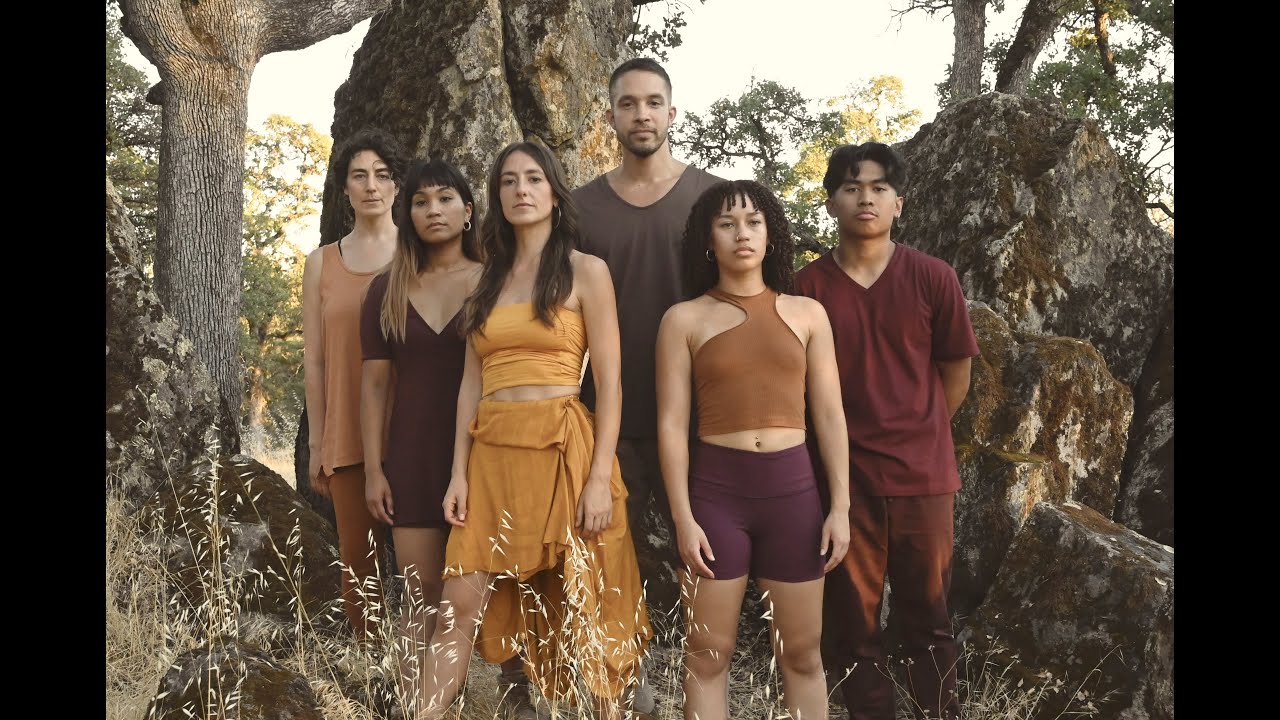
Most dance videos are shot in studios or on city rooftops. Piper was made on a working farm. The video's description thanks First Rain Farm "for hosting this feast of beauty and for your devotion to regenerative farming (all around us in this film), prescribed burns (which was happening that day), and being a living embodiment of true systems that support community resilience and food sovereignty."
That line does a lot of work. The farm is not a backdrop chosen for pretty greenery. It is named as a participant in the film, a place that embodies the values the song is reaching toward. Regenerative farming generally refers to practices meant to rebuild soil health rather than simply extract from it, and the video's credits and description treat that ground as a collaborator in the making of the work.
The song opens with a question rather than a statement: "Piper, you have a song to sing. Will you sing today?" (0:05). Piper is never fully described. They are asked to sing, to guide, to be the one who opens things up. The second invocation, around the 0:47 mark, returns to the name, and the closing verse arrives at a clearer role: "Piper of an opening, do what you must do" (3:30).
Piper reads less like a character in a story and more like a role any listener or dancer might step into. The song is calling someone to take up the work of singing, of opening, of trusting the moment. Nereo's description suggests the same idea in plainer language, describing the film as a remembrance, the kind of reminder you give someone who has half-forgotten what they already know.
Early in the song comes one of its most striking lines: "I'm feeling like a wildfire. Will you guide my way?" (0:08). The singer does not ask for protection from fire. They ask for guidance through it, and they identify with it. Then the verse moves into a rush through "the underbrush till I see my next turn" (0:11), which describes the energy of moving through overgrowth toward a clearing.
The description does not spell out a connection between the lyric and the prescribed burn happening on set. The juxtaposition, though, is hard to miss. A prescribed burn is a controlled fire, set deliberately to manage land. The song pictures fire as a force that clears, reveals, and sends a person toward the next turn, not only as something to fear. Read alongside the regenerative farm credits, the wildfire image becomes one of the film's quieter arguments: destruction and renewal are not always opposites, and the land itself has long depended on fire.
The lyrics are dense with images that belong to older practices and to the body's own knowledge. Roses, a course set for "Windborn," a glass tipped "for temperance" and red wine, a dagger and a poem carried "at my side." Then the hawthorn and the moonbeam, a ribbon wrapped around and left "as an offering" (0:58). Each image points toward ritual, folklore, and the kind of gesture people have made for centuries without needing to explain it.
The line that best captures the film's intention appears at 0:59 to 1:08: "Hear the rounds of lovers calling dancers with a kiss. So imparting here the love we never miss." The phrasing is elliptical, the way songs often are. But the sense is that love is passed along in gestures and gatherings, and that the people in the room are the carriers of it. The ribbon as offering is the most concrete example. It is a small act made with the hands, and the film treats it as meaningful precisely because it is simple.
A later verse makes the emotional stakes explicit: "Bellow for the eyes to see a brightness to what's known. Bellow for the lungs to breathe and find their way back home" (1:45 to 1:51). The song is asking for attention and breath, for the senses to wake up to what they already have. The transcript captures the words as "bellow," which reads as a shout or a call, not a whisper.
The video's description names its intentions directly: "A tip of the hat to older ways, to tradition, to dance, to creating with our hands and bodies." The credits back this up. Concept and creative vision are credited to Isaac Samuel Williams and Ayla Nereo. Choreography is credited to Ayla Nereo, Chaundra Martino, and Daniella Noguera. Filming, editing, and coloring are credited to Julie Romano. Hair and makeup are credited to Misty Spinney of Threshold Adornment, and set design and production to Lauren Gauthier. Twelve featured performers are listed by name, including Bria (Diamonde), Ruby Chase, Deva Runa, Xion Ra, Ryker Kay, Maya Hernandez, and Melissa Lea.
The credit list reads like a crew of makers, not a roster of stars. Every role on that list is a craft: choreography, filming, coloring, makeup, set building, and the physical work of dancing in a field. That is the point the description keeps returning to. Making things with the body is presented as a form of resistance to the sense that life has been reduced to scrolling and consumption. The film is trying to show what it looks like when people are, in the description's words, "unplugged from the program, present with what is before us."
The description lists a set of commitments: "regenerative farms and food systems, living soil, artists lifting artists." The Special Thanks line adds "food sovereignty" and "community resilience" as values the farm embodies. Taken together, these phrases describe a loose philosophy. Resilience, in this sense, means systems that can keep feeding and supporting people because they are rooted in the land and in each other.
"Artists lifting artists" stands out because it applies the same logic to culture. The film is a collaborative piece, with many performers and makers credited by name. The structure mirrors the values: nobody is the single source, and the work depends on a network of people who each contribute a skill. That is a small, practical model of the resilient community the description is describing.
The video is tagged as "Melodic house, conscious dance, heart vocals. A reimagined pulse to move your dreams to." Those three phrases capture the sonic approach. Melodic house gives the track a steady, moving pulse suited to dancing. Heart vocals keep the lyrics intimate rather than anthemic. And the structure leaves room for the body: the transcript shows long instrumental stretches, including passages around 0:28 to 0:47 and again between roughly 2:10 and 3:30, where the singing drops away and the music carries the moment.
Those open passages are a deliberate choice for a dance film. They give dancers and viewers time to move without a lyric pulling attention away. The song's own words describe this need: "Show me every fear so I can dance with them till morning" (1:58 to 2:02). The music is built to make that possible, so that fear becomes material for movement rather than something to stand still in.
The closing section returns to the river and the compass. "The dams are bound for breaking, so you let the river move" (3:34). The verse acknowledges that change is coming whether anyone wants it or not, and it suggests that the right response is to let it move through rather than hold it back. "Though there are twists and turns, a storm will see you through if you keep your compass aimed by your own rules" (3:40). The last line is an instruction to trust one's own direction, which fits the description's emphasis on presence and self-led resilience.
The answer to apathy, in other words, is not a slogan. It is a set of practices: sing when asked, move when the music opens, make things by hand, tend the soil, and notice what is in front of you. Piper is the figure who reminds the listener that they already know how.
"A remembrance of our aliveness in the face of apathy. The beauty we create when we come together."
(Ayla Nereo, video description, Piper (A Dagger & A Poem), YouTube)
If the film has stayed with you, the most useful next step is to listen to the full track from REIMAGINATION through the link in the video description (sym.ffm.to/reimagination). Hearing the song outside the video lets the instrumental passages carry more weight. Then watch again with the description open beside you, and look at the farm, the choreography, and the credits as parts of one argument rather than separate pieces. Finally, consider the questions the film raises about your own week: where do you make things with your hands, who lifts you, and what would it look like to be present with what is in front of you today.