BrightStar

Ver todos os Events

Descubra encontros conscientes

events

Yoga
Meditation
Breathwork
Qigong
Tai Chi
Sacred Music
World Music
Medicine Music
Sound Healing
Ecstatic Dance
Destinos populares
BaliSedonaLos AngelesCosta RicaNew YorkSan FranciscoAustinMiamiJoshua TreeTulum
Ver todas as categoriasVer todos os destinos

Explorar todos os recursos

Ferramentas poderosas para expandir seus eventos

Recursos da plataforma

Precificação dinâmica inteligente
Categorias de ingressos
Lugares marcados
Recuperação de carrinho abandonado
Recuperação de visitantes
Doações e preço variável
Sistema de afiliados
Scanner de ingressos
Códigos de desconto
Perguntas personalizadas
Compartilhamento de ingressos
Upsells e adicionais
Análises e relatórios
Sequências de e-mail
Lista de espera / Notificar / Lembrar
Pessoas e Lugares
Artists & TeachersEvent OrganizersVenues & StudiosKnowledge BaseGlossaryInspiration
Ver todos os recursosSobre nós
PreçosBlog
Language
Saved events
Ver todos os eventos

events

YogaMeditationBreathworkQigongTai ChiSacred MusicWorld MusicMedicine Music

Destinos populares

BaliSedonaLos AngelesCosta RicaNew YorkSan Francisco

Pessoas e Lugares

Artists & TeachersEvent OrganizersVenues & StudiosKnowledge BaseGlossaryInspiration

Recursos da plataforma

Precificação dinâmica inteligenteCategorias de ingressosLugares marcadosRecuperação de carrinho abandonadoRecuperação de visitantesDoações e preço variávelSistema de afiliadosScanner de ingressosCódigos de descontoPerguntas personalizadasCompartilhamento de ingressosUpsells e adicionaisAnálises e relatóriosSequências de e-mailLista de espera / Notificar / Lembrar
Ver todos os recursosSobre nós
PreçosBlog
EntrarBuscadoresCriadores
  • Ver todos os Eventos
  • Para buscadores
  • Yoga
  • Meditação
  • Respiração consciente
  • Qigong
  • Tai chi
  • Música sagrada
  • World music
  • Música de medicina
  • Terapia sonora
  • Dança extática
  • Retiros
  • Workshops
  • Todas as categorias →
  • Bali
  • Sedona
  • Los Angeles
  • Costa Rica
  • Tulum
  • Byron Bay
  • San Francisco
  • Austin
  • New York
  • San Diego
  • Denver
  • Seattle
  • Portland
  • Miami
  • Todas as cidades →
  • Join the Movement
  • Why we list
  • Sell Globally
  • Para criadores
  • Para equipes
  • Para escritores
  • Para professores
  • Para artistas de kirtan
  • Para estúdios
  • Para festivais
  • Para centros de retiro
  • Para organizações sem fins lucrativos
  • Embaixador da marca
  • Ingressos grátis
  • Elevate
  • Amplify
  • Rede de 500K+ compradores
  • Recuperação de carrinho abandonado
  • Precificação dinâmica inteligente
  • Categorias de ingressos
  • Eventos recorrentes
  • Lugares marcados
  • Sistema de afiliados
  • Lista de espera / Notificar
  • Scanner de ingressos
  • Widget incorporável
  • Distribuição de eventos
  • Central de mensagens
  • Integrações
  • Relatórios
  • Todos os recursos →
  • Sobre
  • O ecossistema
  • Blog
  • Glossário
  • Inspiração
  • Central de ajuda
  • Contato
  • Documentação da API
  • Recursos da marca
  • Carreiras
  • Imprensa
  • Termos de Serviço
  • Política de Privacidade

Eventos

  • Ver todos os Eventos
  • Para buscadores
  • Yoga
  • Meditação
  • Respiração consciente
  • Qigong
  • Tai chi
  • Música sagrada
  • World music
  • Música de medicina
  • Terapia sonora
  • Dança extática
  • Retiros
  • Workshops
  • Todas as categorias →

Destinos

  • Bali
  • Sedona
  • Los Angeles
  • Costa Rica
  • Tulum
  • Byron Bay
  • San Francisco
  • Austin
  • New York
  • San Diego
  • Denver
  • Seattle
  • Portland
  • Miami
  • Todas as cidades →

Para criadores

  • Join the Movement
  • Why we list
  • Sell Globally
  • Para criadores
  • Para equipes
  • Para escritores
  • Para professores
  • Para artistas de kirtan
  • Para estúdios
  • Para festivais
  • Para centros de retiro
  • Para organizações sem fins lucrativos
  • Embaixador da marca
  • Ingressos grátis
  • Elevate
  • Amplify

Recursos

  • Rede de 500K+ compradores
  • Recuperação de carrinho abandonado
  • Precificação dinâmica inteligente
  • Categorias de ingressos
  • Eventos recorrentes
  • Lugares marcados
  • Sistema de afiliados
  • Lista de espera / Notificar
  • Scanner de ingressos
  • Widget incorporável
  • Distribuição de eventos
  • Central de mensagens
  • Integrações
  • Relatórios
  • Todos os recursos →

Empresa

  • Sobre
  • O ecossistema
  • Blog
  • Glossário
  • Inspiração
  • Central de ajuda
  • Contato
  • Documentação da API
  • Recursos da marca
  • Carreiras
  • Imprensa
  • Termos de Serviço
  • Política de Privacidade
BrightStar
Baixe o app
Baixar naApp StoreDisponível noGoogle Play
© 2026 BrightStar. Todos os direitos reservados.
Inspiration

Lalita Sahasranama and the Navaratri Mantra Teaching

Sri Karunamayi
Sri Karunamayi
Oct 17, 2026
9 min de leitura
Assistir · 8

An old man lies bedridden, sick and in pain, somewhere between eighty and ninety years old. His mother died years ago. And in the hour of his suffering, the word that comes out of him is "Amma." That is the image Sri Karunamayi opens with in her Navaratri message for 2026, and she uses it to make a larger claim: the call reaches the Divine Mother, Lalita Ambikadevi, and the chanting of the Lalita Sahasranama is a way of making that call on purpose, with discipline and devotion. The talk, published October 17, 2026 and running about ten and a half minutes, is less a lecture on scripture than a close look at how a single mantra is meant to work on a human being, from the first breath of recitation to the final realization of Brahman.

Leitura · 8 seções

What is the Lalita Sahasranama, really?

Most people who have heard of the Lalita Sahasranama think of it as a long devotional list: a thousand names of the Goddess, recited in sequence. Karunamayi pushes against that picture from the start. "Lalita Sahasranama is not just like a stotram," she says, and she is careful about the word itself. A stotram, in her framing, is not merely "a recitation." The Sahasranama is "a great garland of mantra-shakti," a garland of mantras, which she calls the mantra-shastra.

That distinction matters for how the practice is approached. A list of names read as poetry is one thing. A string of mantras understood as carriers of power is another. She treats each name as a working unit, and she describes the whole as containing "secret bija mantras" (seed syllables) whose force is concentrated rather than diffuse. The opening invocation of the talk, "Om Srividyam janatam dhatrim... Om Sri Matre Namaha," is presented as the mahamantra, the great mantra, to which no other is equal.

"This mantra is the mahamantra; no other mantra is equal to this mahamantra." (Sri Karunamayi, Navaratri message 2026, YouTube, October 17, 2026)

Can a mantra really change a tamasic nature?

This is the question at the center of the teaching, and Karunamayi answers it with an appeal to the sage Valmiki. Tamas (dullness, inertia) and rajas (restless, grasping activity) are the two temperaments that keep a person stuck in harmful patterns. Sattva is clarity and balance. The difficulty, as she frames it, is that the ordinary path to sattva is slow. "When people are very tamasic and very rajasic, they need to take some thousands of lifetimes to get a sattvic nature," she says.

She cites the Ramayana, where Valmiki says "svabhavo duratikramah," which she glosses as the recognition that when one has tamasic and rajasic natures, those negative tendencies are very hard to change. "It is impossible to change bad natures," she says, in the plain voice of someone naming a known difficulty. Then comes the turn: Valmiki's own transformation, she says, came about through the recitation of mantra-shakti. The claim she makes for the Lalita Sahasranama is the same kind of claim. In this lifetime, chanting it can produce a completely sattvic nature, "a beautiful sattvic nature," rather than leaving a person to wait out thousands of incarnations.

Whether one accepts that as literal or as a framework for practice, the logic she lays out is internally consistent. The problem is the nature of the mind. The remedy is a sustained, repeated, devotional input that gradually reorders it.

How is a mantra like a seed?

Karunamayi's central image is botanical, and it is worth taking seriously because it describes a process rather than an instant. "Om Sri Matre Namaha, we are taking this mantra like a seed," she says. The seed becomes a sapling, the sapling becomes a plant, and the plant grows into "the biggest tree, the tree is like a banyan, spreading and spreading and spreading." Only at the end of that growth does the fruit arrive.

The fruit she names is sattvic nature, and beyond that, a pure, blemishless nature (she uses the word vishuddhi). From that purity, she says, comes "the fruit of salvation, liberation from all of our negative instincts in our life," which she equates with moksha and the jivanmukta state, the liberated-while-living condition. The metaphor does useful work for a practitioner. It tells you that the early stage of chanting looks small, that the effect is cumulative, and that you are not supposed to judge a seed by whether it looks like a tree yet.

She also describes the scale of what she thinks the mantra can burn away. "Crores and crores of karmic bondages, heinous karmas, so many heinous karmas that people did knowingly or unknowingly day and night, everything is burned and purity comes by the recitation of Lalita Sahasranama." It is a sweeping claim, and it is delivered as a matter of faith in the practice rather than as a footnote.

Where did the Sri Vidya come from?

Around the 4:34 mark, Karunamayi lays out a transmission lineage, and it is the most unusual piece of the talk. The Lalita Sahasranama Sri Vidya, she says, was first given to the world by Sri Guru Dakshinamurthy Swami, who is Lord Shiva in the form of the teacher. That Vidya was then brought into the human world by Lord Hayagriva, whom she identifies with Lord Vishnu. Hayagriva handed it to the sage Agastya. From there, Agastya, who "asked numerous questions," brought the Vidya to all of humanity.

Her point in naming this chain is to establish that the practice is not a human invention. "Shiva and Vishnu both brought this Vidya to human beings," she says. The lineage gives the mantra a pedigree that makes the claims about its power feel, to her audience, less like folk belief and more like inheritance. Agastya's role is significant too: he is the one who received the instruction and carried it into the world of people, and she says it is the source of what she calls Lalita Sahasranama Mahavidya, Sri Vidya, and Brahma Vidya.

What merit do the holy sites and charities really give?

One of the most striking passages in the excerpt is a catalogue of merits. Karunamayi asks her listeners to imagine what they gain from the things devout people have long valued: bathing in the Ganga and the holy rivers, especially at Kumbh Mela, going to Kashi, which she calls Abhimukta Kshetram, to install a crore of Shivalingas, visiting Kurukshetra, where Krishna gave the Bhagavad Gita, and giving a crore of cows in charity during a solar eclipse. Each of these is a recognized form of religious merit. Her claim is that the same merit comes "by reciting it one time" from the Lalita Sahasranama, and that chanting it with devotion produces the fruit of the Kumbh dip "immediately."

She extends the same logic to practical generosity. She speaks of the desert, where water is scarce, and of digging wells: a crore of wells in the desert, she says, would benefit people, birds, and animals, and the merit of that would also come to the reciter. She compares it to famine relief: "Just as giving food charity to needy people brings great merits, chanting the Lalita Sahasranamam brings the same amount of merit to people." She also claims the recitation burns karma, sharpens the mind until it "want[s] to do good things," and fills a person with the qualities of pure love and service.

Whatever one thinks of these equivalences, they tell you something about her theology. She is arguing that the practice is a form of dana and tirtha at once: a gift, a pilgrimage, and a source of purification, all compressed into the act of chanting.

Is chanting just two names enough?

Here Karunamayi makes her most practical and most generous move. Not everyone can chant all thousand names. "Suppose you are not able to chant all the 1000 names of Lalitambika, at least you have to." Then she gives the minimum: "Om Sri Matre Namaha" and "Om Sri Lalitambikayai Namaha." Two names, she says, "that itself is also grand, the greatest boon of all these merits."

This reframing lowers the threshold for the practice without lowering its ambition. Someone who is ill, elderly, or short on time, like the old man at the opening, can still call out to the Mother. The two names become a portable form of the whole. It is also, perhaps, the most accessible way to test her seed metaphor: start with two names, and let the repetition do its work.

What is the end point she describes?

Near the close, around the ten-minute mark, Karunamayi sets out the arc of the practice in a sequence. Break the karmic bonds. Get liberated from anger, greed, jealousy, negativity, and impatience. Develop the attributes of pure love, helping others, and loving others. See the Divine Mother in all of creation. Experience the divine effulgence within. And then the final realization, which she expresses in three Upanishadic-style statements: "Aham Brahmasmi," "Ayamatma Brahma," and "Sarvam Khalvidam Brahma." Everything is Brahman, and nothing else exists apart from it. She says that experience "will be attained through the Brahma Vidya of Lalita Sahasranama."

The talk closes with the same warmth it opened with, as she sends "Amma's special motherly love" to her listeners. The structure is worth noticing. It begins with a dying man calling for a mother, and it ends with the claim that the mother and the self are, finally, the same reality. The mantra is the thread between those two points.

Where to go from here

Start with the two names. Sri Karunamayi gives them explicitly, and her own argument suggests that they are enough to begin. Chant "Om Sri Matre Namaha" and "Om Sri Lalitambikayai Namaha" with devotion, and observe what the seed does over time.

If the lineage interests you, follow the Agastya and Hayagriva thread in the Sanskrit sources she names, and read the Valmiki passage on svabhavo duratikramah for its own sake. The Ramayana context is where her argument about changing a nature becomes most vivid.

Finally, watch the full Navaratri message. This excerpt covers the core teaching, but the video is part of a series, and the tone of her delivery, the repetition of key phrases, and her shifts between Sanskrit and English carry a sense of how she intends the practice to be lived.

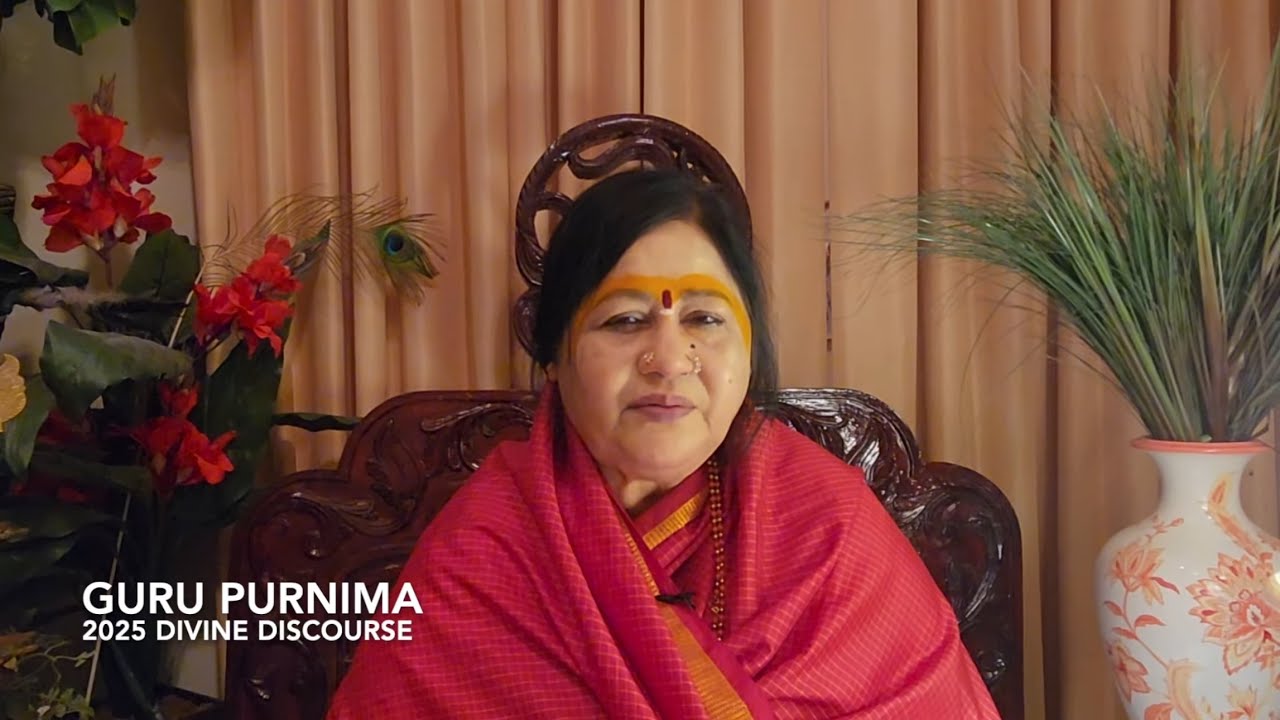
Comments

Loading the conversation…

Transcript

[0:06] Om Srividyam janatam dhatrim,

[0:10] sargasthityesvarim, namami lalitam,

[0:16] nityam, maha tripura sundari. Om Sri

[0:22] Matre Namaha. Om Sri Lalitambikayai

[0:27] Namaha. Beautiful! Om Sri Matre Namaha.

[0:35] This mantra is the mahamantra; no other

[0:38] mantra is equal to this mahamantra. Sri

[0:42] Matre Namaha. An old man, he was sick,

[0:47] suffering, bedridden, and suffering

[0:51] with pain; what is he calling now? Amma

[0:56] , Amma, he was...calling Mother. His

[1:01] mother had already passed away because

[1:05] he was 80 or 90 years old, he was

[1:08] suffering, bedridden, and his mother

[1:12] had departed to other worlds some years

[1:15] ago; so he called the Divine Mother,

[1:19] this "Amma" call reaches the real

[1:22] Mother, the Divine Mother Lalita

[1:25] Ambikadevi; Lalita Sahasranama is not

[1:29] just like a stotram. Stotram does not

[1:34] just mean......like a recitation,

[1:37] Lalita Sahasranamas are a great garland

[1:40] of mantra-shakti, a great garland of

[1:43] mantras, the mantra-shastra. By

[1:47] performing this stotram, these mantras,

[1:51] in this lifetime, for a tamasic person,

[1:55] a very bad rajasic person to become a

[1:59] sattvic person is impossible. For

[2:02] tamasic and rajasic natures to change

[2:06] and become sattvic is very impossible.

[2:10] In Ramayana, Valmiki Maharshi says "

[2:13] svabhavo duratikramah" when one is with

[2:17] tamasic and......rajasic natures, it is

[2:20] very hard to change those negative

[2:23] natures; it's not that easy, that's why

[2:27] he says svabhavo duratikramah. It is

[2:31] impossible to change bad natures. A

[2:35] miracle happened to him, that miracle

[2:38] happened to Valmiki Maharshi by the

[2:41] recitation of the mantra-shakti.

[2:45] Similarly, here, when people are very

[2:49] tamasic and very rajasic, they need to

[2:52] take some thousands of lifetimes to get

[2:56] a sattvic nature, but in this lifetime

[2:59] when we start to chant...Lalita

[3:02] Sahasranamas. This mantra recitation

[3:07] gives us a completely sattvic nature, a

[3:10] beautiful sattvic nature. Om Sri Matre

[3:14] Namaha, we are taking this mantra like

[3:17] a seed. Just like when we have a seed,

[3:23] the seed becomes a small sapling, and

[3:27] then it becomes a small plant. The

[3:32] plant becomes the biggest tree, the

[3:35] tree is like a banyan, spreading and

[3:37] spreading and spreading, and completely

[3:40] , a beautiful fruit comes to us. The

[3:43] fruit of sattvic nature, from that

[3:46] sattvic nature, a pure (vishuddhi)

[3:49] sattvic nature. From that vishuddhi

[3:53] sattvic nature, a blemishless nature,

[3:56] we get the fruit of salvation,

[3:58] liberation from all of our negative

[4:01] instincts in our life; that itself is

[4:04] moksha, the jivanmukta state. That is

[4:09] the power embedded in the Lalita

[4:11] Sahasranama secret bija mantras. Crores

[4:15] and crores of karmic bondages, heinous

[4:19] karmas, so many heinous karmas that

[4:21] people did knowingly or unknowingly day

[4:25] and night, everything is burned and

[4:28] purity comes by the recitation of

[4:30] Lalita Sahasranama. Who told this?

[4:34] Hayagriva Bhagavan told this. Actually,

[4:38] Lalita Sahasranama Sri Vidya was given

[4:41] by Sri Guru Dakshinamurthy Swami to the

[4:44] world first, and that Vidya was brought

[4:47] to the world by Lord Hayagriva, who

[4:50] handed over this Vidya to Agastya

[4:53] Maharishi. Who gave Lalita Sahasranamam

[4:57] first? Lord Shankar Dakshinamurthy, and

[5:00] who brought this Vidya to this human

[5:03] world? Lord Hayagriva, Lord Vishnu. So,

[5:07] Shiva and Vishnu both brought this

[5:10] Vidya to human beings. And then Guru

[5:14] Agastya Maharishi asked numerous

[5:16] questions, and he brought this Vidya to

[5:19] the entire mankind. That’s why Lalita

[5:23] Sahasranama Mahavidya, Sri Vidya, and

[5:25] Brahma Vidya came to the human race.

[5:28] Lord Hayagriva told Agastya Maharishi

[5:30] crores of things. And over crores and

[5:34] crores of lifetimes, people have been

[5:37] born and taken baths in the Ganga river

[5:40] and all the holy rivers, and they took

[5:43] baths during the Kumbh Mela and holy

[5:46] times. What kind of merits do they get

[5:50] by taking a holy dip in the Ganga river

[5:52] and holy rivers during the Kumbh time?

[5:55] When we chant this stotram with

[5:58] devotion, people will get that fruit

[6:01] immediately by the recitation of the

[6:05] Lalita Sahasranama. That is a beautiful

[6:09] secret Agastya Bhagavan got from Lord

[6:12] Hayagriva. Second thing, all karmas

[6:16] will be destroyed and disappear from

[6:20] their life. Then our mind will become

[6:24] absolutely blemishless and we will want

[6:27] to do good things. That is why

[6:30] Abhimukta Kshetram, Abhimukta Kshetram

[6:33] is Kashi. People’s minds want to do

[6:37] good things, right? They want to go to

[6:41] the Kashi Kshetram, Abhimukta Kshetram,

[6:43] and want to install Koti Shivalingas—

[6:46] that is one crore Shivalingas, ten

[6:48] million Shivalingas—they want to

[6:51] perform the Kotilinga Pratishta.

[6:54] Whatever merits people get, that merit

[6:58] comes to you by reciting it one time

[7:01] during Navaratri or at any time as well

[7:04] . Okay! Kurukshetra, Kurukshetra is

[7:09] where Lord Krishna gave the Bhagavad

[7:12] Gita in that holy place. Grahana

[7:16] Samayam, that is Surya Grahana Samayam

[7:20] (solar eclipse time), when we give one

[7:24] crore cows in Godanam (cow charity)—

[7:27] meaning 10 million cows in charity—

[7:31] how much merit comes to us? That merit

[7:35] comes to you by the recitation of the

[7:38] Lalita Sahasranamam. Very beautiful,

[7:42] people will get the merit of Koti

[7:44] Ashvamedha Yagas by the recitation of

[7:47] the Lalitambika divine Rahasya Nama

[7:50] Sahasras, which are very powerful names

[7:53] . In the desert, there is no water, and

[7:59] so many people are living in the desert

[8:02] ; I have traveled to many deserts of

[8:05] the world and seen that there is no

[8:08] water, so when we dig for water, more

[8:11] people get water. So, in the desert,

[8:15] when we create more wells—if we

[8:18] create one crore wells in the desert—

[8:21] how much merit comes to us? Some people

[8:26] will get the benefit of drinking water,

[8:29] birds, animals, everything; that much

[8:32] merit comes to you by the recitation of

[8:35] the Lalita. Sahasranamam during famine

[8:40] time, a very hard time, when people

[8:43] have no food to eat, that...Just as

[8:46] giving food charity to needy people

[8:50] brings great merits, chanting the

[8:53] Lalita Sahasranamam brings the same

[8:56] amount of merit to people. At least you

[9:01] have to chant "Om Sri Matre Namaha, Om

[9:04] Sri Lalitambikayai Namaha," these names

[9:07] . Suppose you are not able to chant all

[9:10] the 1000 names of Lalitambika, at least

[9:12] you have to. Chant "Om Sri Matre Namaha

[9:16] ,""Om Sri Lalitambikayai Namaha." Only

[9:19] these two names; that itself is also

[9:22] grand, the greatest boon of all these

[9:25] merits. So, embodiment of divine souls,

[9:28] chant the divine names of Ambika. Break

[9:33] all the karmic bondages, get liberation

[9:36] from anger, greed, jealousy, negativity

[9:38] , impatience, and all those impurities.

[9:43] Have more attributes of pure love,

[9:46] helping others, loving others, and see

[9:49] the Divine Mother in the entire

[9:52] creation. Experience the divine

[9:55] effulgence within you and finally

[9:59] experience "Aham Brahmasmi,""Ayamatma

[10:03] Brahma,""Sarvam Khalvidam Brahma."

[10:06] Everything is only Brahman, nothing

[10:09] else in the world; everything is

[10:11] Brahman only. That experience will be

[10:14] attained through the Brahma Vidya of

[10:16] Lalita Sahasranama. Amma's special

[10:19] motherly love always from the bottom of

[10:21] my heart to all of you. Love you so

[10:23] much, children. Thank you.

Sri Karunamayi
ArtistSri Karunamayi

Spiritual teacher born in 1968 in Andhra Pradesh who embodies love and compassion, conducting retreats and sharing devotional music to foster spiritual awakening and unity across t…

Ver perfilSite
Explorar temas
Lalita-sahasranamaSri-vidyaNavaratriMantra-practiceSattva

Tem perguntas?

Perguntas frequentes

The Lalita Sahasranama is a set of one thousand names of the Goddess Lalita Ambikadevi. Sri Karunamayi describes it not as a simple stotram but as a garland of mantra-shakti, a string of mantras whose recitation is meant to purify the mind and move a person from tamasic and rajasic tendencies toward sattva.
Yes, according to Sri Karunamayi, if you cannot chant all thousand names you should at least chant "Om Sri Matre Namaha" and "Om Sri Lalitambikayai Namaha." She says even these two names carry great merit and are the greatest boon among the merits she describes.
Sri Karunamayi cites Valmiki's phrase "svabhavo duratikramah" and glosses it as the difficulty of changing deeply tamasic and rajasic natures. She uses it to argue that ordinary inner transformation is very hard, which is why she presents mantra recitation as a remedy.
She says the Sri Vidya was first given to the world by Sri Guru Dakshinamurthy Swami, then brought to the human world by Lord Hayagriva, whom she identifies with Lord Vishnu. Hayagriva passed it to the sage Agastya, who spread it to all of humanity.
In this teaching, Sri Karunamayi says chanting with devotion brings the same merit as bathing in the Ganga at Kumbh, visiting Kashi, giving cows in charity during an eclipse, or digging wells in the desert. She presents this as a claim of her tradition rather than a measurable outcome.
Sri Karunamayi says the merit comes from reciting it one time during Navaratri or at any other time. Her message frames Navaratri as a special season while affirming that the practice is available year-round.
She describes liberation from anger, greed, jealousy, and impatience, the development of pure love, and seeing the Divine Mother in all creation. The final stage, she says, is the realization of Brahman, expressed in statements like "Aham Brahmasmi" and "Sarvam Khalvidam Brahma."

Continuar lendo

More from Sri

Ver Tudo
How Navarathri Amplifies Spiritual Practice Exponentially
Inspire

How Navarathri Amplifies Spiritual Practice Exponentially

In a crisis year, Navarathri offers exponential spiritual amplification. This nine-day festival multiplies prayer and mantra benefits by ten…

1 min read
Guru Purnima 2025: Significance, Sacred Rituals, and Spiritual Transformation
Inspire

Guru Purnima 2025: Significance, Sacred Rituals, and Spiritual Transformation

Sri Karunamayi explores Guru Purnima's significance, the symbolic offering of bilva leaves, and how guru's grace cuts karmic bondages and op…

1 min read
Why Does God Allow Suffering? A Reframing of the Argument
Inspire

Why Does God Allow Suffering? A Reframing of the Argument

A therapist's question about suffering becomes a lesson on why the classic argument against God rests on a flawed picture. Here is Tolle's r…

1 min read
Awareness Beyond the Person: The Direct Path to Universal Consciousness
Inspire

Awareness Beyond the Person: The Direct Path to Universal Consciousness

At Monte Sahaja, a seeker discovers that consciousness itself—not the person—is the unchanging witness of all experience. A radical shift in…

1 min read

Continue explorando

Continue sua jornada

Mais sabedoria e mais encontros de todo o diretório BrightStar.

Mais artigos

Explore a biblioteca completa de ensinamentos, entrevistas e guias.

Voltar a todos os artigos →

Professores e artistas

Conheça as linhagens, os músicos e os guias do mundo consciente.

Explorar artistas →

Encontre um evento

Kirtan, retiros, banhos de som, breathwork, festivais — acontecendo em breve.

Ver eventos →